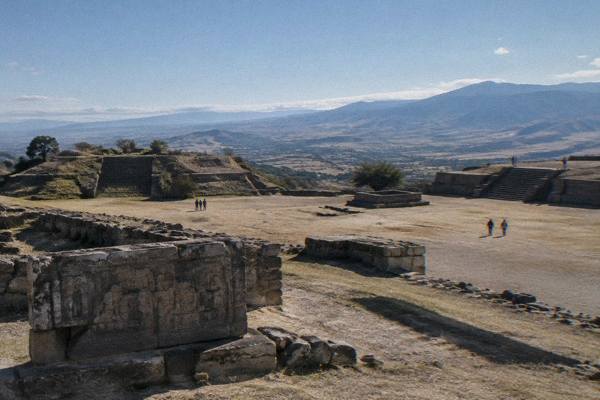
Oaxaca History: Zapotec, Mixtec, Colonial And Today
Oaxaca City's documented past runs from the Monte Albán archaeological zone to a colonial centre inscribed by UNESCO, and this guide reports what the primary sources actually say about each layer, including entry fees, opening hours and how the sites relate to one another.
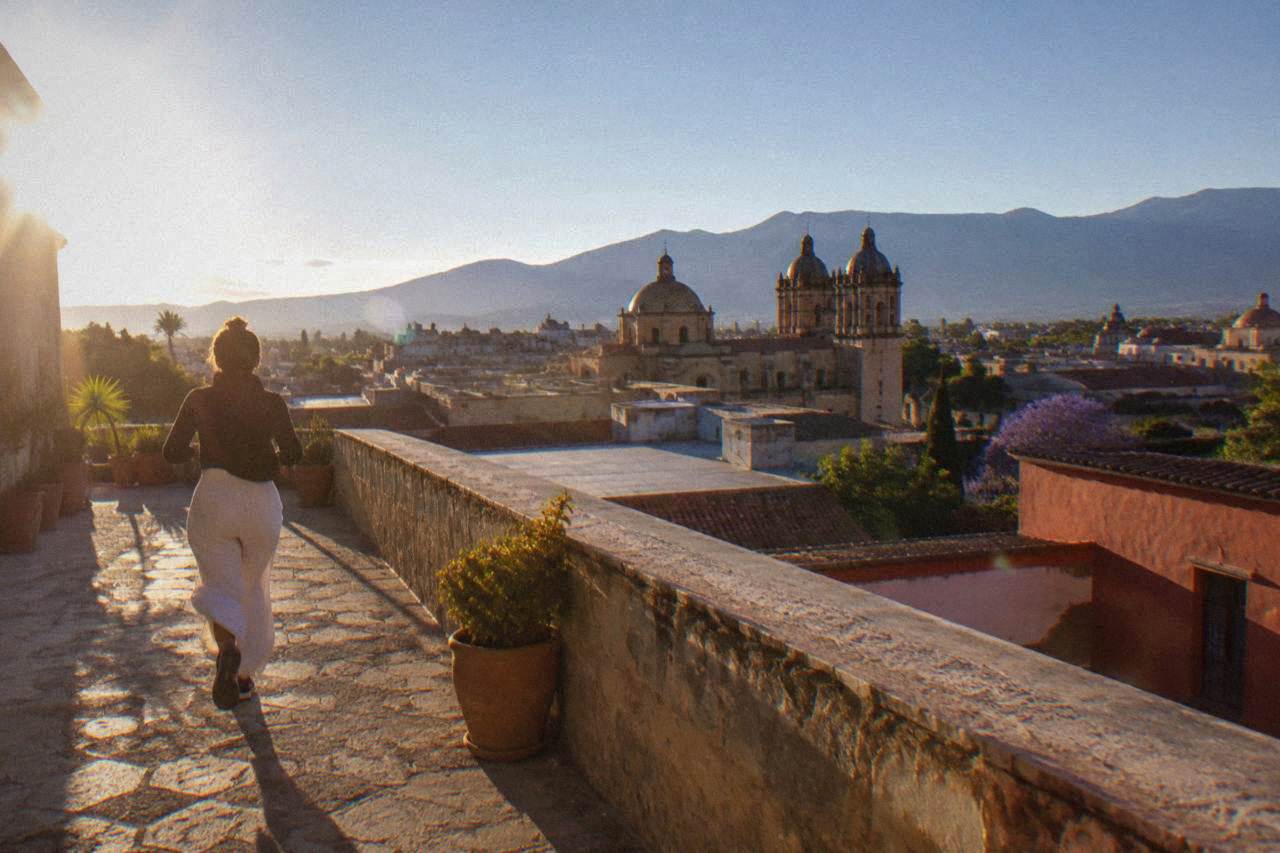
Oaxaca de Juárez was founded in 1529 as Antequera, and UNESCO lists the Historic Centre of Oaxaca and Archaeological Site of Monte Albán together as World Heritage property 415. Monte Albán is a Category I INAH site charging 105 MXN for nationals and 210 MXN for foreign visitors, open daily 08:00 to 17:00 with last access at 16:00.
Oaxaca City, the capital of the state of Oaxaca in Mexico, sits inland in the Valles Centrales at about 1,550 m, and its documented past is unusual in one respect: UNESCO inscribes the city and its principal archaeological zone as a single property. The listing, property 415, is named "Historic Centre of Oaxaca and Archaeological Site of Monte Albán", and the city itself was founded in 1529 as Antequera, per the UNESCO page. This guide reports what primary sources say about each historical layer, and pairs every site with the hours and fees the INAH pages actually print. The municipality counted 270,955 inhabitants at the 2020 census, inside a state of 4,132,148, and the city is compact enough that most of the historic core is covered on foot, as the Oaxaca Travel Guide walking coverage explains in detail.
What Is The History Of Oaxaca City?
Oaxaca de Juárez was founded in 1529 as Antequera, and UNESCO lists the Historic Centre of Oaxaca and Archaeological Site of Monte Albán together as World Heritage property 415, tying the colonial city and the pre-Hispanic zone into one inscribed property. The INAH pages give Monte Albán daily hours of 08:00 to 17:00, and the city's INAH museums publish their own schedules, which differ site by site.
The UNESCO page is the anchor for any historical summary of the city, because this guide dates the founding era only to 1529 and the name Antequera. Everything older than the founding belongs to the archaeological zones in the valleys, and everything the INAH pages print about those zones is practical: hours, last-access times and two-tier entry fees in pesos.
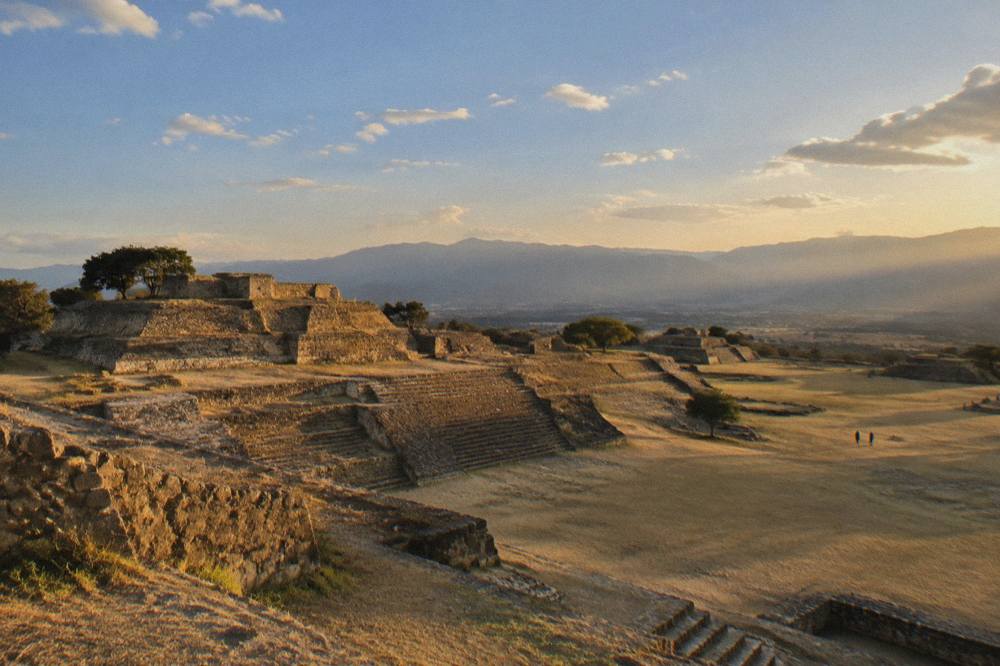
The scale of visitation tells its own story. Sectur's 2025 indicators count 1,324,332 tourist arrivals in the city of Oaxaca across the year, of which 1,111,799 were national and 212,533 foreign, with an average stay of 2.00 nights. Monte Albán alone received 416,675 visitors in 2025, more than Mitla, Yagul, Lambityeco, Dainzú and Zaachila combined. The history here is not a museum piece; it is the destination's main draw, and the numbers bear that out.
For a first visit built around these layers, the one-day Oaxaca itinerary is the natural companion to this page, and the first-time visitor guide covers the arrival basics.
What Can You See Of Oaxaca's Zapotec Past Around Oaxaca City?
Monte Albán, Mitla, Yagul, Dainzú, Lambityeco, Atzompa and Zaachila are the seven INAH archaeological zones around Oaxaca City, all managed by INAH and all publishing hours and fees on their lugares.inah.gob.mx pages. Monte Albán, Mitla and Yagul charge Category I rates of 105 MXN for nationals and 210 MXN for foreign visitors; Dainzú, Lambityeco and Zaachila charge Category III rates of 80 and 145 MXN.
Monte Albán is the head site and the one UNESCO names alongside the city. Its INAH page lists daily opening, 08:00 to 17:00, with last access at 16:00. The Monte Albán attraction guide covers the zone in depth. Mitla, the second-most-visited zone at 104,428 visitors in 2025, opens daily 08:00 to 17:00 with a later last access of 16:30; the Mitla guide has the detail. Yagul matches Monte Albán's hours, closing access at 16:00.
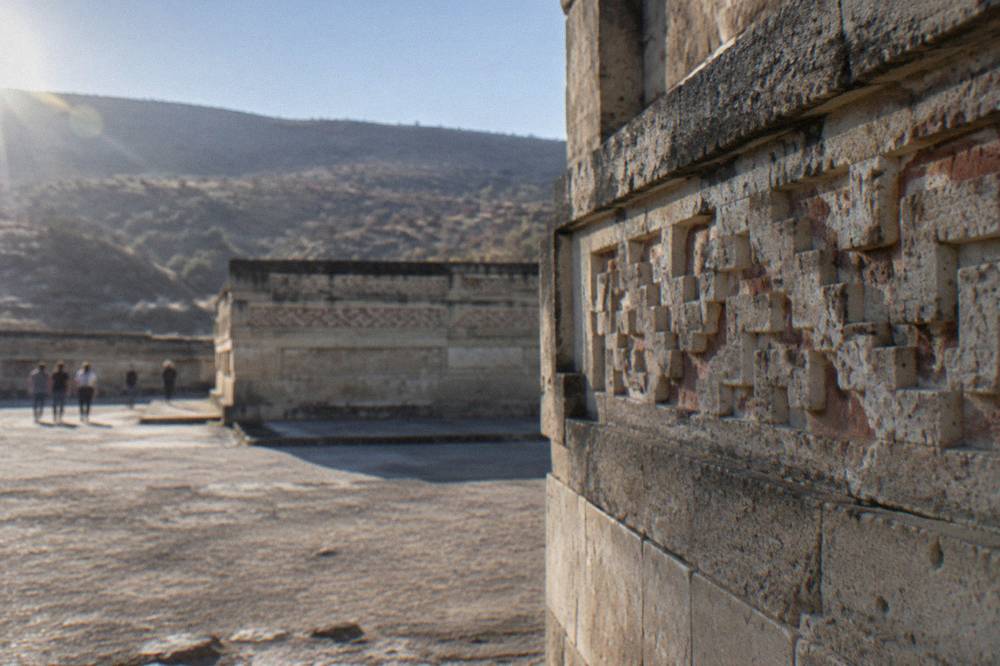
The smaller zones reward careful planning because their schedules differ. Zaachila opens Thursday to Sunday only, 10:00 to 16:00, a four-day week that catches out visitors who assume all INAH zones run daily. Atzompa opens daily 08:00 to 16:00 with last access at 15:00, the earliest cutoff in the set, and its INAH page lists hours without an entry fee, so this guide prints none. One further figure appears on several INAH pages: visits outside normal hours are offered at 730 MXN, listed on the Yagul, Lambityeco, Atzompa and Museo de las Culturas pages.
| INAH Zone | Open Days | Hours | Last Access | Fee Nationals (MXN) | Fee Foreigners (MXN) |
|---|---|---|---|---|---|
| Monte Albán | Daily | 08:00-17:00 | 16:00 | 105 | 210 |
| Mitla | Daily | 08:00-17:00 | 16:30 | 105 | 210 |
| Yagul | Daily | 08:00-17:00 | 16:00 | 105 | 210 |
| Dainzú | Daily | 08:00-17:00 | 16:30 | 80 | 145 |
| Lambityeco | Daily | 08:00-17:00 | 16:30 | 80 | 145 |
| Zaachila | Thu-Sun only | 10:00-16:00 | n/a | 80 | 145 |
| Atzompa | Daily | 08:00-16:00 | 15:00 | not listed | not listed |
The two fee categories are the key to budgeting. Category I covers the three zones with the highest 2025 visitation, and Category III covers Dainzú, Lambityeco and Zaachila, where 2025 visitation ran 10,185 at Yagul-adjacent Dainzú's small neighbours, 5,545 at Lambityeco and 4,229 at Zaachila, all per Sectur's indicators. A visitor doing Monte Albán and Mitla on a Category I basis pays 210 MXN per site as a foreigner, while a Thursday-to-Sunday Zaachila add-on costs 145 MXN.
How Do The Archaeological Zones Sit Relative To Oaxaca City?
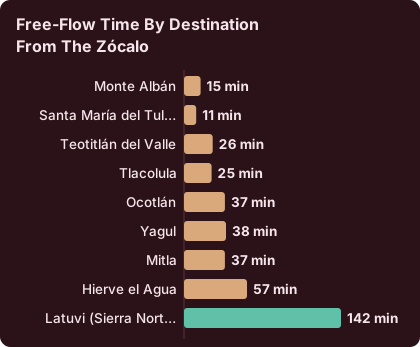
Monte Albán is the closest major zone at about 8.7 km and about 15 minutes' drive from the Zócalo, while Mitla, the farthest commonly visited, is about 44.6 km and about 37 minutes on free-flowing roads, and Hierve el Agua beyond it about 67.1 km and about 57 minutes. These are derived free-flow times; real traffic and mountain roads are slower, so round up.
The distances come from route computation on OSM roads from the Zócalo at 17.0605953, -96.7253435, and they are planning figures, not timetables. The cluster logic is simple: Tule, Teotitlán del Valle, Tlacolula and Mitla string along one corridor east of the city, which is why valley day trips bundle them, and Yagul and Dainzú sit close to that same corridor. Zaachila and Atzompa sit on the other side of the city, which makes them candidates for a separate half day.
| Destination From The Zócalo | Distance (km) | Free-Flow Time |
|---|---|---|
| Monte Albán | 8.7 | about 15 min |
| Santa María del Tule | 10.2 | about 11 min |
| Teotitlán del Valle | 29.2 | about 26 min |
| Tlacolula | 31.2 | about 25 min |
| Ocotlán | 32.5 | about 37 min |
| Yagul | 41.9 | about 38 min |
| Mitla | 44.6 | about 37 min |
| Hierve el Agua | 67.1 | about 57 min |
| Latuvi (Sierra Norte) | 110.4 | about 142 min |
For visitors without a car, the getting around Oaxaca guide covers the transport options, and the Teotitlán del Valle day trip and Yagul and Dainzú pages plan the eastern corridor in detail. The Zaachila and Thursday market page pairs the four-day-week zone with its market day.
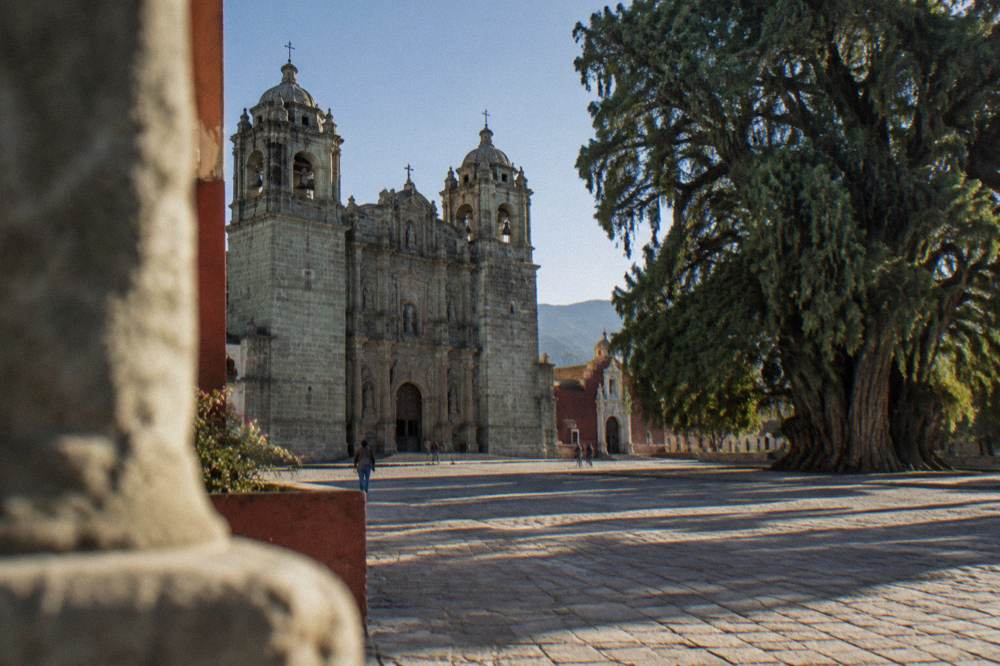
A guided half day at Monte Albán is the most direct way to engage the zone UNESCO names with the city, and the listing covers transport and a guide; Check availability on the operator's booking page.
What Colonial-Era Oaxaca Can You Visit In The City?
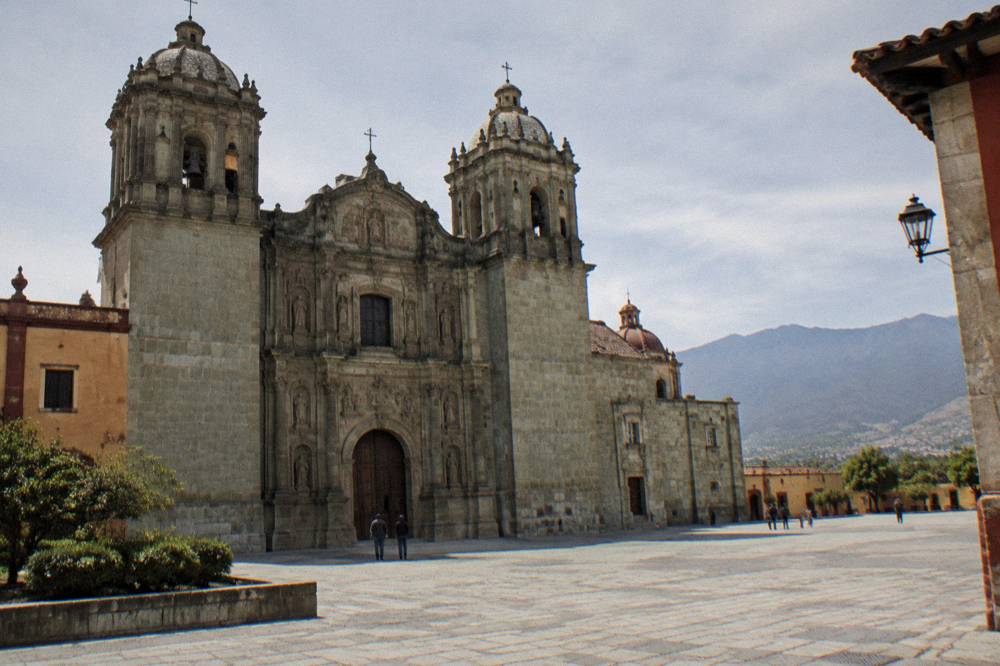
The Santo Domingo de Guzmán complex anchors the colonial city: the Museo de las Culturas de Oaxaca inside it opens Tuesday to Saturday only, 10:00 to 16:00, charging 105 MXN for nationals and 210 MXN for foreign visitors, and the adjacent Jardín Etnobotánico runs free guided tours Monday to Friday at 10:30, 11:00, 11:30, 12:00 and 17:00, and Saturday from 10:30 to 12:00.
The museum's Tuesday-to-Saturday week is the single most consequential opening detail in the city for history-focused visitors, because it is closed on both weekend days that many travellers set aside for museums. The INAH page for the museum, node 4252, lists the 10:00 to 16:00 hours and the Category I fee pair. The Museo de las Culturas guide and the Santo Domingo church page cover the complex.
The Jardín Etnobotánico's tour schedule comes from a state government release of 18 August 2025: the tours are free, run at the listed weekday times and the Saturday block, and large groups and school groups need reservations two weeks ahead. The Jardín Etnobotánico guide covers it.
| City Site | Open Days | Hours | Fee |
|---|---|---|---|
| Museo de las Culturas de Oaxaca | Tue-Sat only | 10:00-16:00 | 105 / 210 MXN |
| Jardín Etnobotánico guided tours | Mon-Sat | 10:30, 11:00, 11:30, 12:00, 17:00 weekdays; Sat 10:30-12:00 | free |
| Visits outside normal INAH hours (multiple sites) | by arrangement | n/a | 730 MXN |
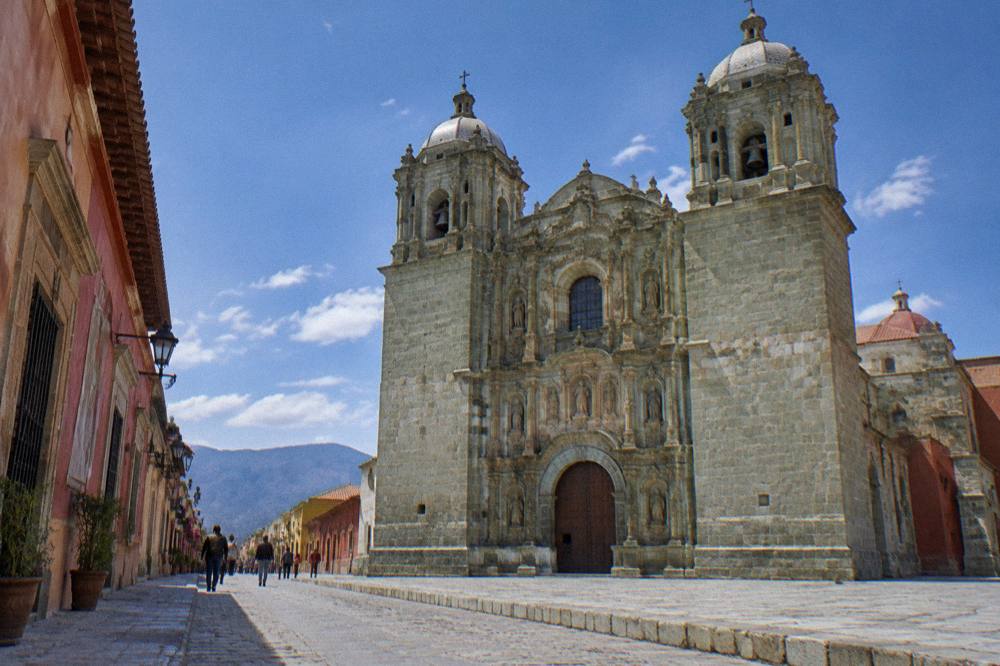
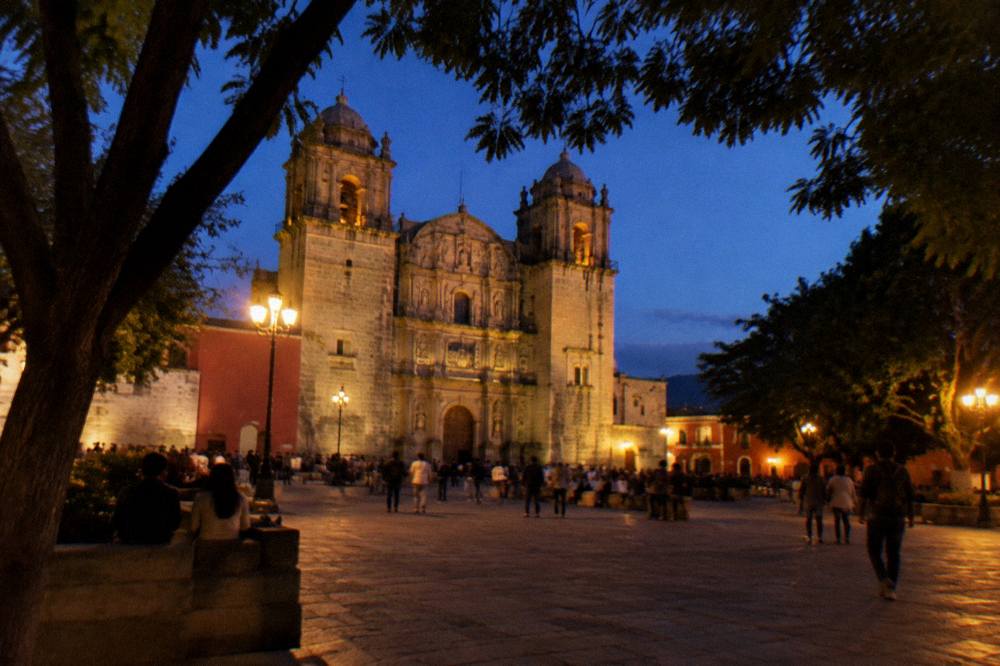
Beyond Santo Domingo, the historic core holds the Zócalo, the Basílica de la Soledad, the Cathedral and the Andador Macedonio Alcalá, each with its own guide page, plus the Museo Textil de Oaxaca, covered in the Museo Textil guide. The Oaxaca Centro Histórico guide walks the whole quarter, and the Oaxaca museums roundup puts the collections in order. The Jalatlaco and Xochimilco neighbourhood pages cover the quarters just outside the core.
How Does Oaxaca Keep Its History Alive Today?
Guelaguetza runs as two Mondays in July, Lunes del Cerro, at the Auditorio Guelaguetza on the Cerro del Fortín, and the 2026 edition held its performances on 20 and 27 July at 10:00 and 17:00, with Palco A at 1,632 MXN, Palco B at 1,321 MXN plus fees, and Palcos C and D free. Día de Muertos centres on the traditional dates of 31 October to 2 November, and the 2026 programme has not been announced.
The Guelaguetza figures come from the state ticketing releases for the 2026 edition, with sales through the official Superboletos channel and a two-ticket limit per account; the paid Palco A and B sections sold out quickly, per the state's own release. The 2027 dates were not announced, so this page gives only the standing pattern plus the 2026 reference figures. The Guelaguetza guide covers the festival in full.
Día de Muertos follows the same rule: the traditional dates are 31 October to 2 November, with cemetery visits concentrated on 1 and 2 November, and the state's 25 October to 4 November programme with 140-plus activities belongs to the 2025 edition, not 2026. The Día de Muertos guide explains the pattern, and the Noche de Rábanos page covers the 23 December tradition, whose 2026 edition was likewise unannounced.
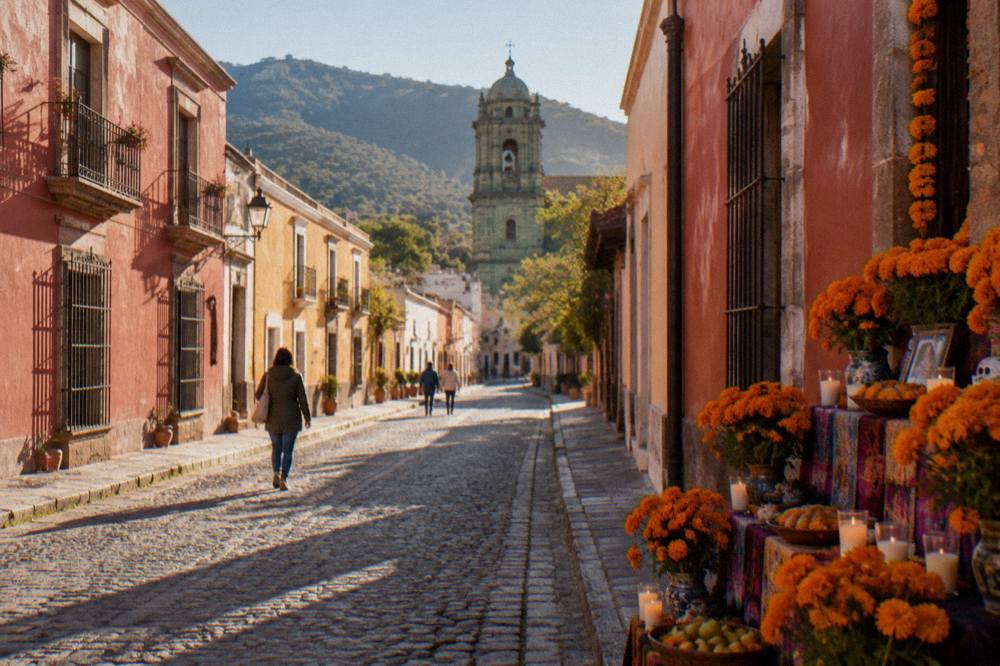
A festival-focused visit changes the practical calculus: hotel demand, city crowds and the value of booking any guided experience well ahead all rise, and the best time to visit Oaxaca guide weighs the seasons against these dates.
How Many Days Do You Need For Oaxaca's History?
Two full days cover the core: one for Monte Albán plus the Santo Domingo complex and the historic centre, and one for the eastern valley corridor of Tule, Mitla and optionally Hierve el Agua, with a third day for Yagul, Dainzú, Zaachila or Atzompa. Sectur's 2025 data shows an average stay of 2.00 nights, so the typical visit matches the two-day core rather than the full archaeological set.
The sequencing follows the hours, not preference. Monte Albán's 16:00 last access argues for a morning start; the Museo de las Culturas's Tuesday-to-Saturday week and 16:00 close argue for a weekday; Zaachila's Thursday-to-Sunday window fixes that zone's day if it is on the list. Atzompa's 15:00 last access is the earliest in the region and rewards a morning slot.
| Day | Focus | Anchoring Detail |
|---|---|---|
| Day 1 | Monte Albán morning; Santo Domingo complex and Centro Histórico afternoon | Monte Albán last access 16:00; Museo de las Culturas Tue-Sat, closes 16:00 |
| Day 2 | Eastern valley: Tule, Teotitlán, Mitla, optional Hierve el Agua | Mitla last access 16:30; Hierve el Agua about 57 min beyond Mitla |
| Day 3 | Zaachila (Thu-Sun) or Atzompa plus Ocotlán | Zaachila 10:00-16:00; Atzompa last access 15:00 |
The how many days in Oaxaca page builds these out day by day, from the two-day plan to the five-day plan, and the Oaxaca itinerary planning guide handles the trade-offs. For a comparison with another colonial-era Mexican city, the Oaxaca versus San Miguel de Allende page weighs the two.
When Is The Best Time To Explore Oaxaca's Historical Sites?
The dry season runs November to April and the rainy season May to October, with rain peaking June to September, per the SMN station normals for Oaxaca: June averages 188.3 mm of rain across 19.9 rain days, while January averages 2.4 mm across 1.4 days. April's average daily high is 34.9 C and January's average nightly low is 10.3 C.
The climate table is the honest basis for timing. The winter months combine the lowest rainfall totals with cool nights, while the June-to-September peak brings afternoon rain on roughly two days in three. Zone hours do not change seasonally on the INAH pages, so the timing question is purely weather and festival crowds. The weather by month guide carries the full table month by month.
| Month | Mean High (C) | Mean Low (C) | Rain (mm) | Rain Days |
|---|---|---|---|---|
| January | 28.9 | 10.3 | 2.4 | 1.4 |
| April | 34.9 | 15.8 | 47.3 | 7.6 |
| June | 30.9 | 16.7 | 188.3 | 19.9 |
| September | 29.1 | 16.1 | 163.6 | 21.4 |
| November | 29.0 | 12.3 | 9.1 | 3.5 |
| Annual | 30.8 | 14.2 | 853.3 | 128 |
Altitude matters for the outdoor zones: the city sits at about 1,550 m, so April's heat at exposed sites pairs with thin mountain air, and the Oaxaca altitude and sun guide covers preparation. What to bring is handled in the packing guide.
Is Oaxaca Safe For A History-Focused Trip?
The UK FCDO advises against all but essential travel to parts of Mexico and does not name Oaxaca on its main page; Canada advises a high degree of caution for Mexico overall with regional advisories, and the US State Department lists Oaxaca state at Level 2, Exercise Increased Caution, with restrictions only in the Isthmus region. Road blockades by teachers' unions are a standing risk that can disrupt road and airport access.
None of the advisory wording names Oaxaca City or its archaeological zones as restricted areas, and the main practical risk the sources describe is episodic: blockade actions that close roads and airport access for hours rather than weeks, then clear. The Oaxaca safety guide covers this in full, and the Oaxaca airport guide handles arrival logistics, with the flights to Oaxaca and Mexico City to Oaxaca pages covering the two main approaches.
Practicalities around money, connectivity and water are covered in the money and ATMs guide and the drinking water guide, and the wider set of things to do in Oaxaca extends beyond the historical core.
Common Questions About Oaxaca History
How Old Is Oaxaca City?
Oaxaca de Juárez was founded in 1529 as Antequera, per the UNESCO listing for property 415, "Historic Centre of Oaxaca and Archaeological Site of Monte Albán". The listing inscribes the colonial centre and the Monte Albán archaeological zone as one property.
How Much Does Monte Albán Cost To Visit?
Monte Albán is a Category I INAH site: 105 MXN for Mexican nationals and 210 MXN for foreign visitors. It opens daily 08:00 to 17:00 with last access at 16:00, per its INAH page.
Which Oaxaca Archaeological Sites Are Cheapest?
Dainzú, Lambityeco and Zaachila charge Category III fees of 80 MXN for nationals and 145 MXN for foreigners. Zaachila opens Thursday to Sunday only, 10:00 to 16:00; Dainzú and Lambityeco open daily with last access at 16:30.
Is The Museo De Las Culturas De Oaxaca Open On Sunday?
No. The Museo de las Culturas de Oaxaca, inside the Santo Domingo complex, opens Tuesday to Saturday only, 10:00 to 16:00, with entry at 105 MXN for nationals and 210 MXN for foreign visitors.
What Are The Traditional Dates Of Día De Muertos In Oaxaca?
The festival centres on the traditional dates of 31 October to 2 November, with cemetery visits concentrated on 1 and 2 November.
How Far Is Mitla From Oaxaca City?
Mitla is about 44.6 km from the Zócalo, about 37 minutes on free-flowing roads. Real traffic and mountain roads are slower, so round up when planning; the Mitla INAH zone opens daily 08:00 to 17:00 with last access at 16:30.
The historical record that primary sources support for Oaxaca City is a tight one: a founding year, a UNESCO property, and a set of well-documented sites whose hours and fees are printed by INAH itself, and a visitor who plans around those printed details will see every layer of it.