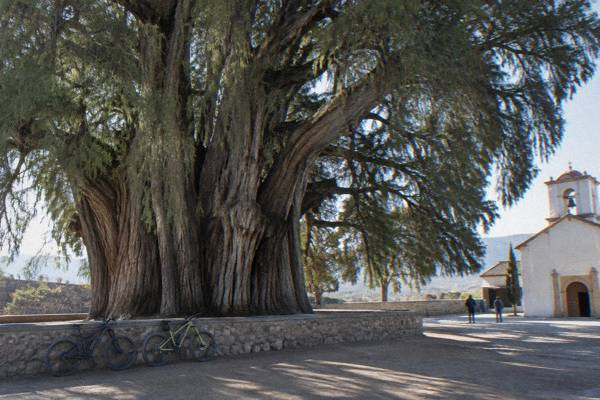
Árbol Del Tule: The Ancient Cypress In Santa María Del Tule
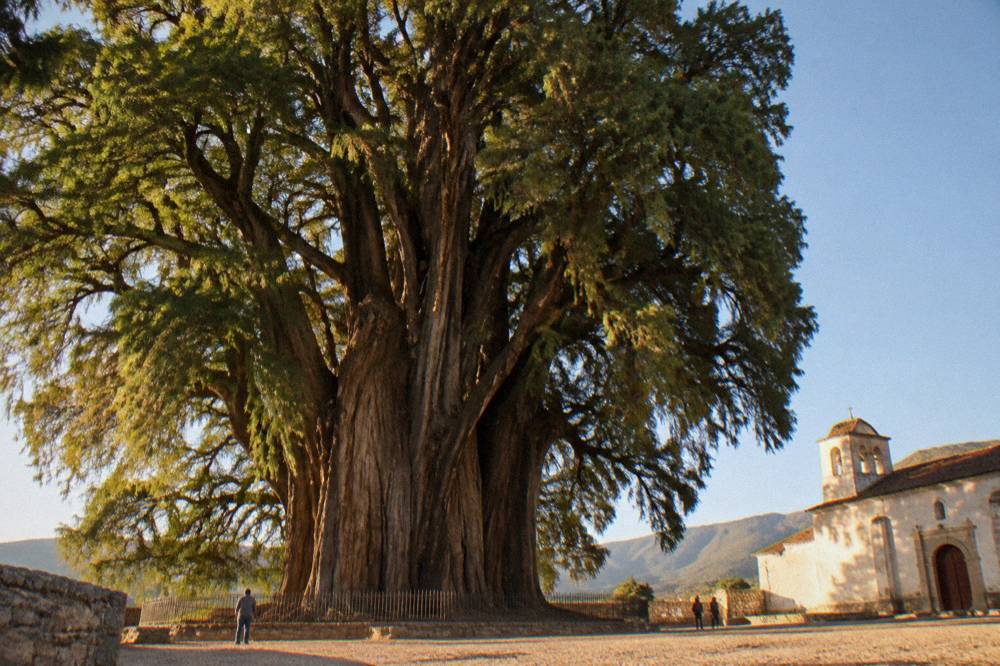
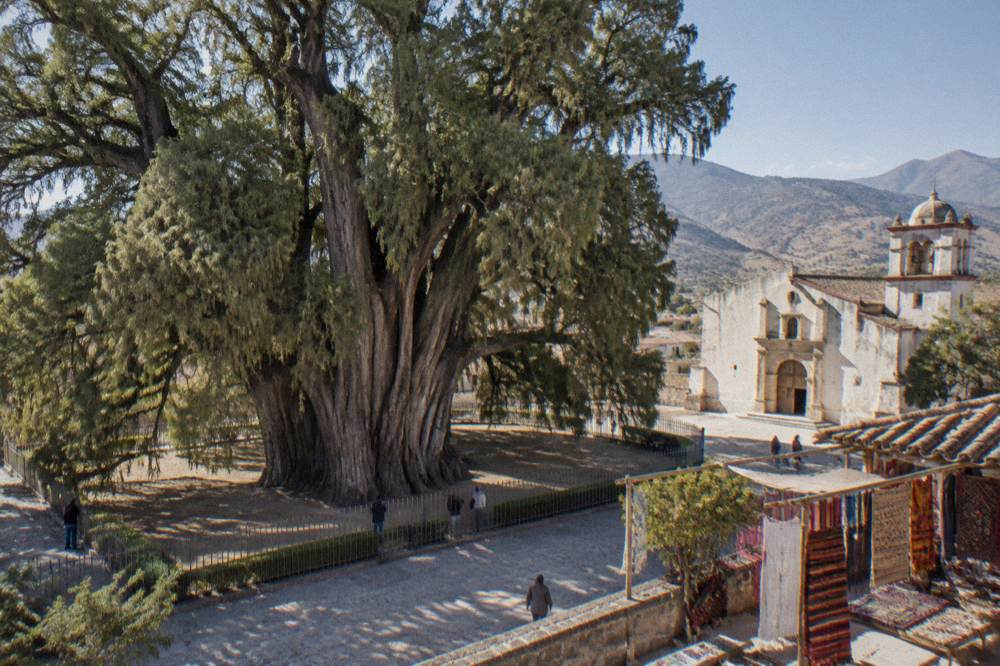
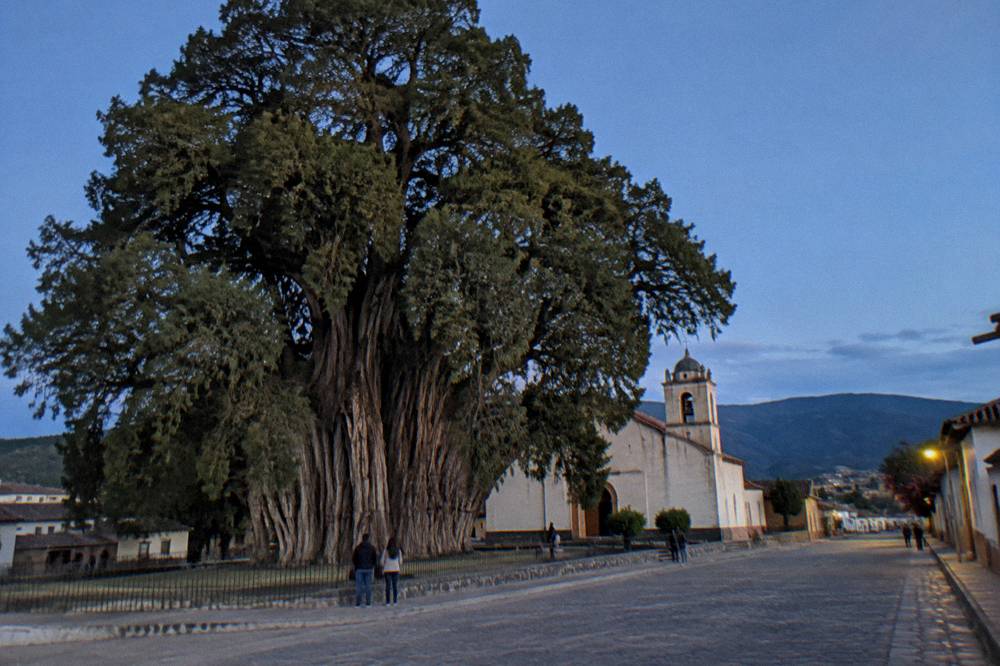
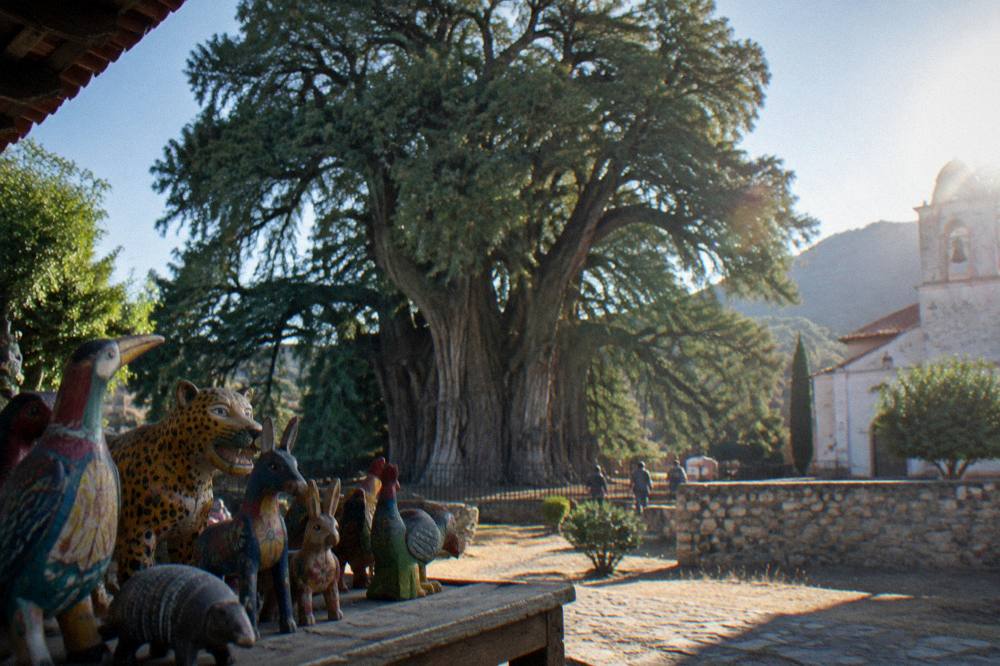
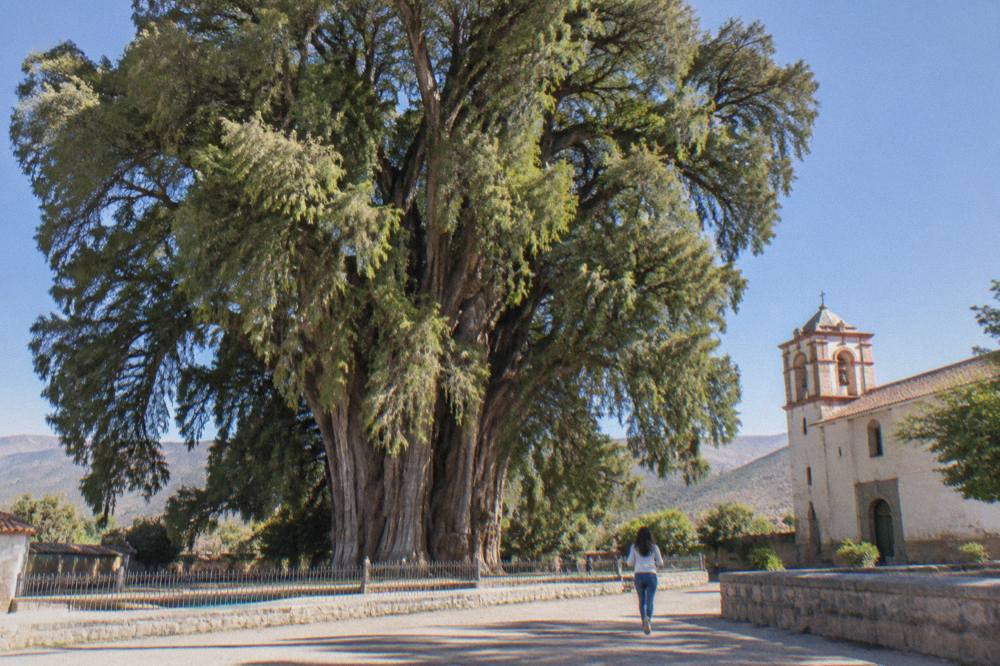
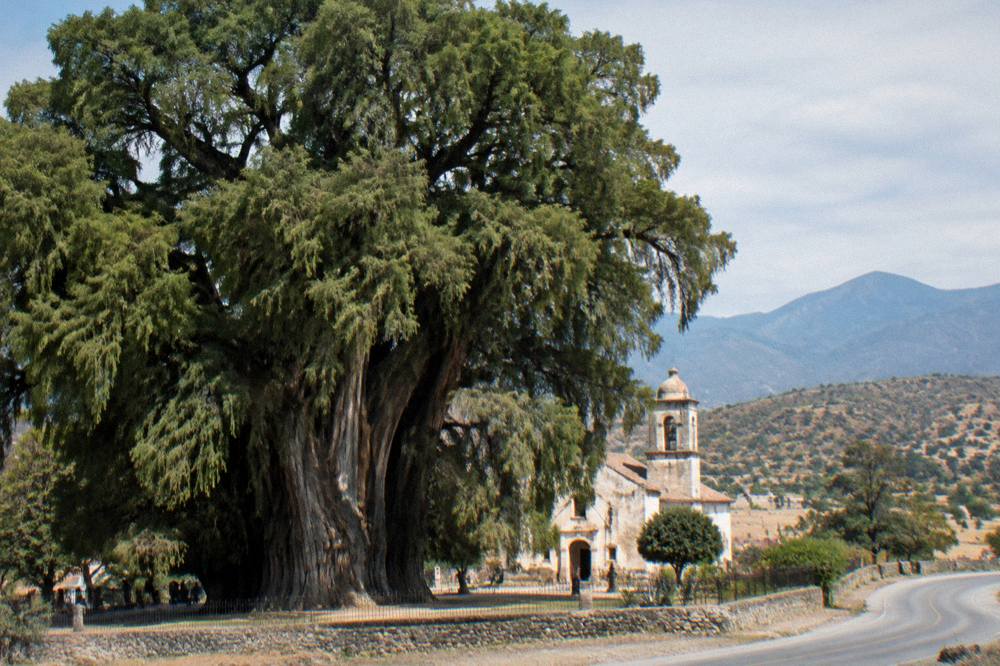
The Árbol del Tule stands in Santa María del Tule, a town about 10 km east of the Zócalo of Oaxaca City, and it anchors one of the easiest half-day outings in the Valles Centrales.
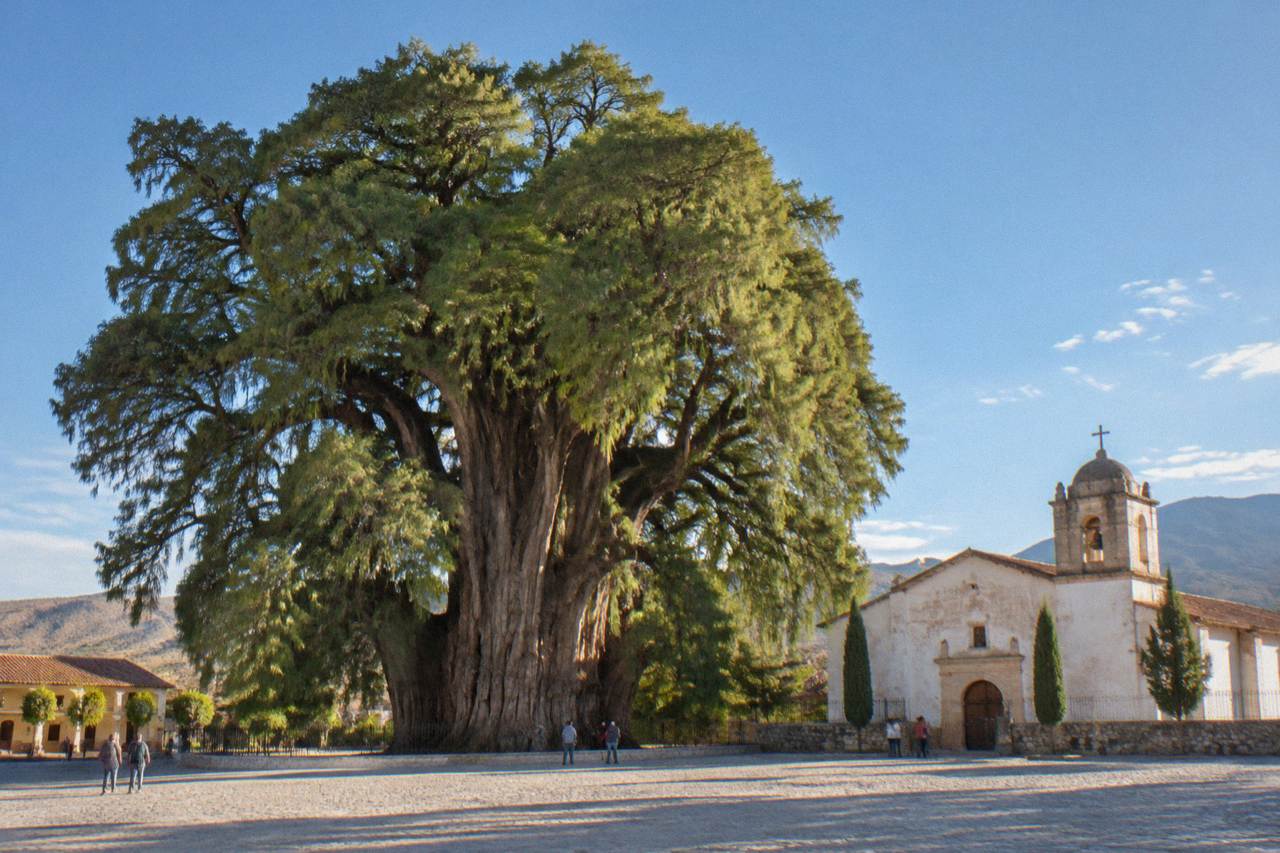
Santa María del Tule sits about 10 km and about 11 minutes by road from the Zócalo of Oaxaca City. The tree gives its name to the town, and the stop pairs naturally with Mitla, Teotitlán del Valle, Yagul and Hierve el Agua on a single valley day trip.
The Árbol del Tule stands in Santa María del Tule, a town about 10 km east of the Zócalo of Oaxaca City, the inland highland capital of the state of Oaxaca in Mexico's Valles Centrales at about 1,550 m. The tree gives the town its name, and the stop has become a fixed call on the valley circuit that runs out to Teotitlán del Valle, Tlacolula, Mitla and Hierve el Agua.
That discipline matters at Tule more than anywhere: the tree is on nearly every valley itinerary, yet several of the numbers a traveller might expect, from parking to guided-entry pricing, sit outside what any official page states.
Where Exactly Is The Árbol Del Tule Near Oaxaca City?
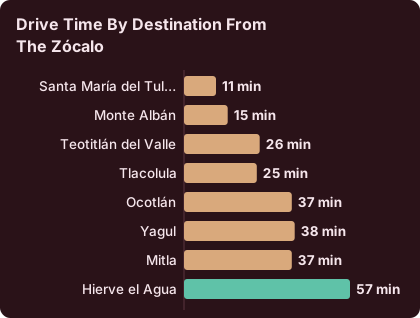
The Árbol del Tule stands in Santa María del Tule, a town about 10 km east of the Zócalo of Oaxaca City, roughly an 11-minute drive on a free-flow road. The town sits on the eastern side of the Valles Centrales, the highland valley system that holds Oaxaca City itself, and it lies on the natural route toward Tlacolula, about 25 minutes further out, and Mitla, about 37 minutes from the Zócalo.
Those drive times are derived from route calculations on the road network, measured from the Zócalo at 17.0605953, -96.7253435 under free-flow conditions, and real traffic in the valley can make them longer. The distances and times in the table below come from the same set, so they are comparable with each other even though none is an official published figure.
| Destination from the Zócalo | Distance (km) | Drive time (about) |
|---|---|---|
| Santa María del Tule | 10.2 | 11 min |
| Monte Albán | 8.7 | 15 min |
| Teotitlán del Valle | 29.2 | 26 min |
| Tlacolula | 31.2 | 25 min |
| Ocotlán | 32.5 | 37 min |
| Yagul | 41.9 | 38 min |
| Mitla | 44.6 | 37 min |
| Hierve el Agua | 67.1 | 57 min |
Read the table as a route map rather than a list of equals. Tule is the near anchor of the eastern valley run. Teotitlán del Valle, covered in the Teotitlán del Valle day-trip guide, and Tlacolula come next, then Yagul and Mitla, with Hierve el Agua the far point at about 67 km. A driver doing the whole chain in one day covers a lot of ground; the tours that bundle these stops exist precisely because of that.
The Zócalo, formally the Plaza de la Constitución, is the reference point for all of these figures, and it is the hub the site's Zócalo guide covers in detail. Everything in this article radiates from it.
Can You Visit El Tule Without A Tour From Oaxaca?
Yes. Santa María del Tule is about 11 minutes from central Oaxaca City by road, so an independent visit is a short outing, and the town stop can be combined on foot-and-road logic with Teotitlán del Valle at about 26 minutes and Mitla at about 37 minutes from the Zócalo.
What an independent plan does not get you is the scheduling of the archaeological sites' last-access times, which the INAH pages set at 16:00 for Monte Albán and Yagul and 16:30 for Mitla, Dainzú and Lambityeco.
That last-access point decides the shape of a day. The ruins on the eastern side are the ones with the clocks.
| INAH site | Days open | Hours | Last access |
|---|---|---|---|
| Monte Albán | Monday to Sunday | 08:00 to 17:00 | 16:00 |
| Mitla | Monday to Sunday | 08:00 to 17:00 | 16:30 |
| Yagul | Monday to Sunday | 08:00 to 17:00 | 16:00 |
| Dainzú | Monday to Sunday | 08:00 to 17:00 | 16:30 |
| Lambityeco | Monday to Sunday | 08:00 to 17:00 | 16:30 |
| Zaachila | Thursday to Sunday only | 10:00 to 16:00 | not stated |
| Atzompa | Monday to Sunday | 08:00 to 16:00 | 15:00 |
| Museo de las Culturas de Oaxaca | Tuesday to Saturday only | 10:00 to 16:00 | not stated |
Two of those lines catch planners out. Zaachila, on the western side of the valley, opens Thursday to Sunday only, 10:00 to 16:00. Atzompa closes earlier than its neighbours, at 16:00 with last access at 15:00, not 17:00. The Monte Albán guide and the Mitla guide carry the fuller treatment of the two big zones.
For travellers who would rather not run their own clock, the guided products are the practical answer. The featured option on this page is the Hierve el Agua, Tule Tree, Mitla and Mezcal Distillery Tour, whose listing carries the current price and availability: Check availability.
How Much Time Should You Give Santa María Del Tule?
Plan for Tule as a stop of well under an hour in the town itself, plus about 11 minutes each way from the Zócalo of Oaxaca City, and more if the day continues to Teotitlán del Valle at about 26 minutes or Mitla at about 37 minutes. The stop is short by nature: the pull is a single tree in a single small town, and the valley's timed sites, which close their last access between 15:00 and 16:30, reward arriving early.
In itinerary terms, Tule works as the opening stop of an eastern valley day or as a short standalone outing from the city. The site's planning pages that frame this are Oaxaca in one day and the eastern valley routes, where Tule sits first on the chain by distance.
What fills the rest of that day is the real decision, and the next two sections take it in order: the craft and archaeology stops in the middle valley, then Hierve el Agua at the far end.
What Can You Combine With El Tule On A Valley Day Trip?
The standard combinations from Oaxaca City pair Tule with Teotitlán del Valle at about 26 minutes from the Zócalo, Tlacolula at about 25 minutes, Mitla at about 37 minutes, Yagul at about 38 minutes and Hierve el Agua at about 57 minutes. Mitla and Yagul charge INAH Category I admission of 105 MXN for Mexican nationals and 210 MXN for foreign visitors.
The fee table matters because the valley splits cleanly into two price bands.
| INAH category | Sites | Nationals (MXN) | Foreign visitors (MXN) |
|---|---|---|---|
| Category I | Monte Albán, Mitla, Yagul | 105 | 210 |
| Category III | Dainzú, Lambityeco, Zaachila | 80 | 145 |
| Museum rate | Museo de las Culturas de Oaxaca | 105 | 210 |
Mitla is the anchor most routes share with Tule, and its page at Mitla, the Oaxaca archaeological site goes deeper on the zone itself. Teotitlán del Valle, the weaving town, and Hierve el Agua, the far stop at about 57 minutes, each have full guides as well: Hierve el Agua, the Oaxaca valley stop. On the craft side, the Santo Domingo church page and the Jardín Etnobotánico guide cover the city-side pair that a valley day can bookend.
How Popular Is El Tule Compared With Oaxaca's Other Sites?
The state tourism indicators for 2025 count 416,675 visitors at Monte Albán, 104,428 at Mitla, 10,185 at Yagul, 5,545 at Lambityeco and 4,229 at Zaachila, while Oaxaca City recorded 1,324,332 tourist arrivals across the year, of which 1,111,799 were national and 212,533 foreign. The published set does not break out a separate visitor figure for Santa María del Tule.
The numbers say something useful about pacing. The eastern valley's archaeological sites together draw a fraction of Monte Albán's total, which is consistent with the pattern of most valley traffic concentrating on the one big zone and on the combined tours that pass through the towns. City arrivals averaged a 2.00-night stay and 51.73 percent hotel occupancy across 2025, and 83.95 percent of arrivals were national against 16.05 percent foreign. The full index of guides sits on Oaxaca Travel Guide.
| Site or city, 2025 | Visitors |
|---|---|
| Oaxaca City tourist arrivals | 1,324,332 |
| Monte Albán | 416,675 |
| Mitla | 104,428 |
| Yagul | 10,185 |
| Lambityeco | 5,545 |
| Zaachila | 4,229 |
What Is The Weather Like In Santa María Del Tule?
The climate figures for Oaxaca's valley, from the SMN station normals for 1991 to 2020, show a dry season from November to April and a rainy season from May to October with its peak from June to September: June averages 188.3 mm of rain, September 163.6 mm, while January averages 2.4 mm and December 9.0 mm. April's average daily high is 34.9 C and January's average overnight low is 10.3 C.
Santa María del Tule shares the valley's climate; the station sits in Oaxaca City at 1,594 msnm, and the whole Valles Centrales runs at altitude, with the city at about 1,550 m. The practical reading for a Tule stop is simple: the dry months bring negligible rain, and the rainy months concentrate their fall in the afternoon hours of the June-to-September window, with 19.9 to 21.4 days of rain per month across that stretch.
| Month | Avg high C | Avg low C | Rain mm |
|---|---|---|---|
| January | 28.9 | 10.3 | 2.4 |
| February | 31.1 | 11.6 | 4.6 |
| March | 33.3 | 13.6 | 17.6 |
| April | 34.9 | 15.8 | 47.3 |
| May | 33.8 | 16.7 | 97.9 |
| June | 30.9 | 16.7 | 188.3 |
| July | 30.1 | 15.9 | 118.6 |
| August | 30.0 | 15.9 | 131.8 |
| September | 29.1 | 16.1 | 163.6 |
| October | 29.3 | 14.5 | 63.1 |
| November | 29.0 | 12.3 | 9.1 |
| December | 28.9 | 11.0 | 9.0 |
Annual rainfall totals 853.3 mm, almost all of it inside the May-to-October window. There is no snow at this altitude, and the valley is far inland, so nothing about the city's weather behaves like a coastal resort's; the Pacific coast stops are separate long extensions, as the site's coast pages explain.
Do You Need A Guided Tour To Enjoy The Tule Stop?
No, but a tour is the simplest way to chain Tule with the timed sites around it: the drive times put Mitla at about 37 minutes and Hierve el Agua at about 57 minutes from the Zócalo, and the INAH last-access cutoffs of 16:00 and 16:30 constrain any self-driven afternoon.
The choice, in plain terms, is between a short independent outing to Tule alone and a scheduled day that sweeps the eastern valley. Travellers who want the city experience instead of, or before, the valley run can start with a walking product: the Oaxaca Walking Tour covers culture and food in the centre and makes a sensible first morning in the city before any eastern driving.
For a slower city afternoon after a valley morning, a craft option such as the art printing workshop with a local artist keeps the day hands-on without more road time. Its listing prints the current price and times, and the operator's booking page carries the cancellation terms.
What Should A One-Day Tule Valley Itinerary Look Like?
A workable day opens at the Zócalo of Oaxaca City, reaches Santa María del Tule after about 11 minutes of driving, continues to Teotitlán del Valle at about 26 minutes, then Tlacolula or Yagul, then Mitla at about 37 minutes, and ends at Hierve el Agua at about 57 minutes, reversing the same road home. The fixed constraints are Mitla's 16:30 last access and the fact that every drive time here is a free-flow figure that real traffic extends.
Build the schedule backwards from the cutoffs. An 08:00 start from the Zócalo gives a full morning across Tule and Teotitlán del Valle with lunch in Tlacolula, Mitla after midday, and the run out to Hierve el Agua in the early afternoon. A start after noon compresses the same route into a choice between Mitla and Hierve el Agua rather than both.
City-side bookends are worth reserving time for on a separate day, since the timed institutions cluster there. The Jardín Etnobotánico runs free guided visits Monday to Friday at 10:30, 11:00, 11:30, 12:00 and 17:00, and Saturday from 10:30 to 12:00, with large groups booking two weeks ahead. The Museo de las Culturas de Oaxaca opens Tuesday to Saturday, 10:00 to 16:00, and charges 105 MXN for nationals and 210 MXN for foreign visitors. Both belong to the same cultural thread as the valley crafts, and both sit minutes from the Andador Macedonio Alcalá.
| City institution | Days | Times | Cost |
|---|---|---|---|
| Jardín Etnobotánico guided visits | Monday to Friday | 10:30, 11:00, 11:30, 12:00, 17:00 | free |
| Jardín Etnobotánico guided visits | Saturday | 10:30 to 12:00 | free |
| Museo de las Culturas de Oaxaca | Tuesday to Saturday | 10:00 to 16:00 | 105 / 210 MXN |
What Does "Tule" Actually Mean In Oaxaca?
"Tule" is the name the town of Santa María del Tule carries, and the tree in turn carries the town's name; the site's own answer page on the question traces the word to the Nahuatl term for the wetland plants of Mexico's valleys, a derivation the language pages document. The town lies about 10 km east of the Zócalo of Oaxaca City, and no visitor needs any of the etymology to enjoy the stop, but it explains why the same word appears across Mexican place names.
The fuller treatment lives at What does El Tule mean in English. In practical terms the name matters for one thing only: when a tour listing says "Tule Tree", it means this town and this stop, about 11 minutes from the centre of Oaxaca City, and nothing else in the valley answers to the name.
Is A Day Trip To Tule A Good Idea With Limited Time In Oaxaca?
Yes, and the arithmetic favours it: Tule sits about 11 minutes from the Zócalo, the shortest drive of any major stop in the valley after Monte Albán at about 15 minutes, so even a half-day window covers Tule plus Teotitlán del Valle at about 26 minutes. Travellers with a single full day can add Mitla at about 37 minutes, and only the Hierve el Agua leg at about 57 minutes each way demands a committed whole day.
The site's broader itinerary pages break these windows down by length of stay. The comparison worth holding in mind is Monte Albán on the western side, at about 15 minutes, versus the eastern chain that starts with Tule: a first-time visitor with two half-days does one of each, and a visitor with one day picks the east, with Tule first on the road out.
For anyone weighing the full spread of options, the site's root planning page on things to do in Oaxaca indexes every stop, tour and day trip covered here, and the food side of the city, from the Mercado 20 de Noviembre to the Mercado Benito Juárez, fills the evenings a valley day leaves open.
Common Questions About The Árbol Del Tule
How Far Is The Árbol Del Tule From Oaxaca City?
Santa María del Tule is about 10 km from the Zócalo of Oaxaca City, about an 11-minute drive under free-flow conditions, with real traffic often slower.
Can You Visit El Tule And Hierve El Agua In One Day?
Yes. Tule sits about 11 minutes from the Zócalo and Hierve el Agua about 57 minutes, so a single day covers both, usually with Teotitlán del Valle, Tlacolula or Mitla in between, Mitla being about 37 minutes out with last access at 16:30.
What Are The Admission Fees Near Santa María Del Tule?
Mitla and Yagul, both INAH Category I, charge 105 MXN for Mexican nationals and 210 MXN for foreign visitors. Dainzú, Lambityeco and Zaachila, Category III, charge 80 and 145 MXN.
When Are The Valley's Archaeological Sites Open?
Mitla, Yagul, Dainzú and Lambityeco open Monday to Sunday 08:00 to 17:00, with last access at 16:30 for Mitla and Dainzú and 16:00 for Yagul. Zaachila opens Thursday to Sunday only, 10:00 to 16:00, and Atzompa closes at 16:00 with last access at 15:00.
Do You Need A Tour To See The Árbol Del Tule?
No. The town is about 11 minutes by road from central Oaxaca City, so an independent visit is straightforward. Tours earn their place by chaining Tule with the timed sites further out, whose last-access cutoffs fall between 15:00 and 16:30.
What Is The Rainiest Part Of The Year For A Tule Visit?
June averages 188.3 mm of rain and September 163.6 mm, against 2.4 mm in January, per the SMN station normals for 1991 to 2020. The dry season runs November to April and the rainy season May to October, with the peak from June to September.
The Árbol del Tule earns its place on a Oaxaca City itinerary by being the easiest stop in the eastern valley: about 11 minutes from the Zócalo, first on the road to Teotitlán del Valle, Tlacolula, Mitla and Hierve el Agua, and short enough that the only real planning question is what to pair it with on the way out.