Oaxaca In The Rainy Season: May To October Without Regrets
Oaxaca City's rainy season runs May to October, and the numbers behind it are less dramatic than the name suggests. Here is what the climate record shows, what closes, what does not, and how to plan a green-season trip to the Valles Centrales without regrets.
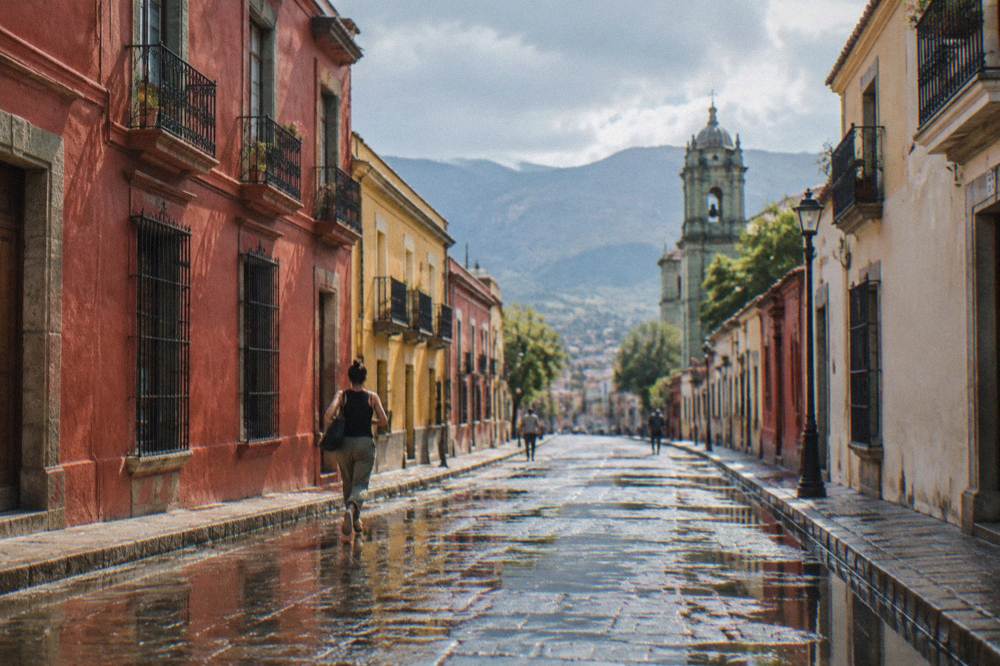
The rainy season in Oaxaca City runs May to October, peaking June to September, with June averaging 188.3 mm of rain. Days usually start dry and storms arrive in the afternoon, so mornings work for Monte Albán and the valleys while museums, markets and cooking classes absorb the wet hours.
Oaxaca City, the inland highland capital of the state of Oaxaca in Mexico, sits in the Valles Centrales at about 1,550 m, and from May to October it lives through its rainy season. The SMN station normals for the city, covering 1991 to 2020, put the annual rainfall at 853.3 mm, with almost all of it falling in those six months. That sounds like a washout, and it is not: the same table shows January averaging just 2.4 mm and June 188.3 mm, with the rain concentrated in the afternoons rather than spread across the day. This guide lays out what the climate record actually says, which sights and day trips hold up in the green season, and how to build an itinerary around the pattern instead of against it. For the wider framing of when to come, see the best time to visit Oaxaca.
What Is The Rainy Season Actually Like In Oaxaca?
The rainy season in Oaxaca City runs from May to October, with rainfall peaking between June and September, and the character of the season is afternoon storms rather than all-day drizzle. June averages 188.3 mm of rain across 19.9 days with rain, yet daytime highs still average 30.9 C, and the surrounding valley turns green between showers. The season is real, but it keeps predictable hours.
The pattern matters more than the totals. Mornings in the green season generally start clear, and the SMN normals show the temperature spread stays wide even in the wet months: June's mean minimum is 16.7 C against a mean maximum of 30.9 C. Clouds build through the middle of the day, rain usually arrives in the afternoon or early evening, and the streets drain overnight. A traveller who puts Monte Albán, Hierve el Agua or a market walk in the morning and a museum, a cooking class or a mezcal tasting in the afternoon is working with the season rather than fighting it.
One planning note that has nothing to do with weather: road blockades by teachers' unions are a standing risk in Oaxaca that can disrupt road and airport access from time to time, in any season. Build a little slack into travel days and check conditions before a long transfer.
How Much Rain Falls Each Month In Oaxaca?
The SMN station 20079 normals for Oaxaca City, 1991 to 2020, show monthly rainfall rising from 47.3 mm in April to 188.3 mm in June, staying above 118 mm through July, August and September, then dropping to 63.1 mm in October and 9.1 mm in November. June, July, August and September each average roughly 20 days with rain. The table below carries the full record.
| Month | Mean max C | Mean min C | Rain mm | Days with rain |
|---|---|---|---|---|
| May | 33.8 | 16.7 | 97.9 | 13.7 |
| June | 30.9 | 16.7 | 188.3 | 19.9 |
| July | 30.1 | 15.9 | 118.6 | 20.4 |
| August | 30.0 | 15.9 | 131.8 | 20.5 |
| September | 29.1 | 16.1 | 163.6 | 21.4 |
| October | 29.3 | 14.5 | 63.1 | 12.0 |
Read the two columns together. July averages 118.6 mm of rain but 20.4 days with rain, which tells you the rain arrives often and lightly rather than in a few catastrophic dumps. September, at 163.6 mm across 21.4 days, is similar. May is the transition month: 97.9 mm over 13.7 days, with the highest mean maximum of the season at 33.8 C, so early May can feel like the dry season with building afternoon clouds. October falls off fast, and by November the city is back to 9.1 mm.
For comparison, the dry half of the year is quiet: January 2.4 mm, February 4.6 mm, March 17.6 mm, November 9.1 mm, December 9.0 mm. The month-by-month detail, including the temperature curve across the whole year, sits in Oaxaca weather by month.
What To Do In Oaxaca City When It Rains?
The strongest rainy-hour options in Oaxaca City are indoors and mostly central: the Museo de las Culturas de Oaxaca at Santo Domingo, open Tuesday to Saturday 10:00 to 16:00, the markets around the Centro Histórico, and the cooking classes, mezcal tastings and print workshops that run year-round under roofs. The Jardín Etnobotánico runs free guided tours on weekdays at fixed times regardless of weather. None of these depends on a clear sky.
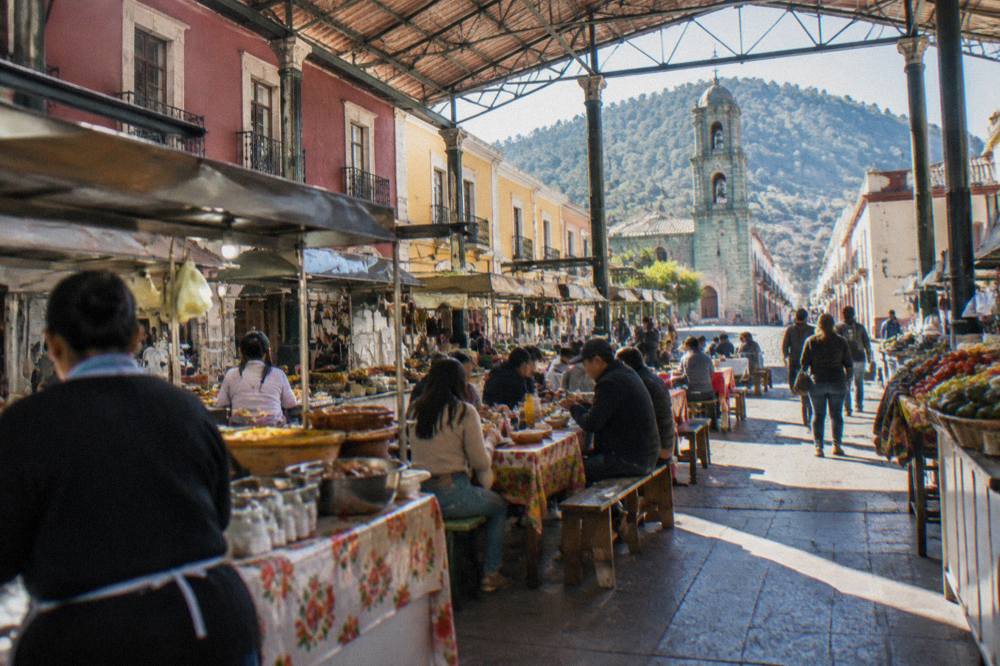
The INAH page for the Museo de las Culturas lists Tuesday to Saturday, 10:00 to 16:00, with admission at 105 MXN for Mexican nationals and 210 MXN for foreign visitors. Note the closed day: it does not open Sundays or Mondays, so a rainy Monday needs a different plan. The museum guide covers what the collection holds. Markets are the other all-weather answer: the Mercado 20 de Noviembre and the Mercado Benito Juárez sit within a few blocks of the Zócalo, under roofs, and the state government's own material on the city's markets describes them as working food institutions rather than tourist sets.
The Jardín Etnobotánico, beside Santo Domingo, is a partially open-air stop that works in dry windows: the state schedule lists free guided tours Monday to Friday at 10:30, 11:00, 11:30, 12:00 and 17:00, and Saturday between 10:30 and 12:00, with large and school groups asked to book two weeks ahead. A tour at 12:00 finishes right as the afternoon clouds typically build.
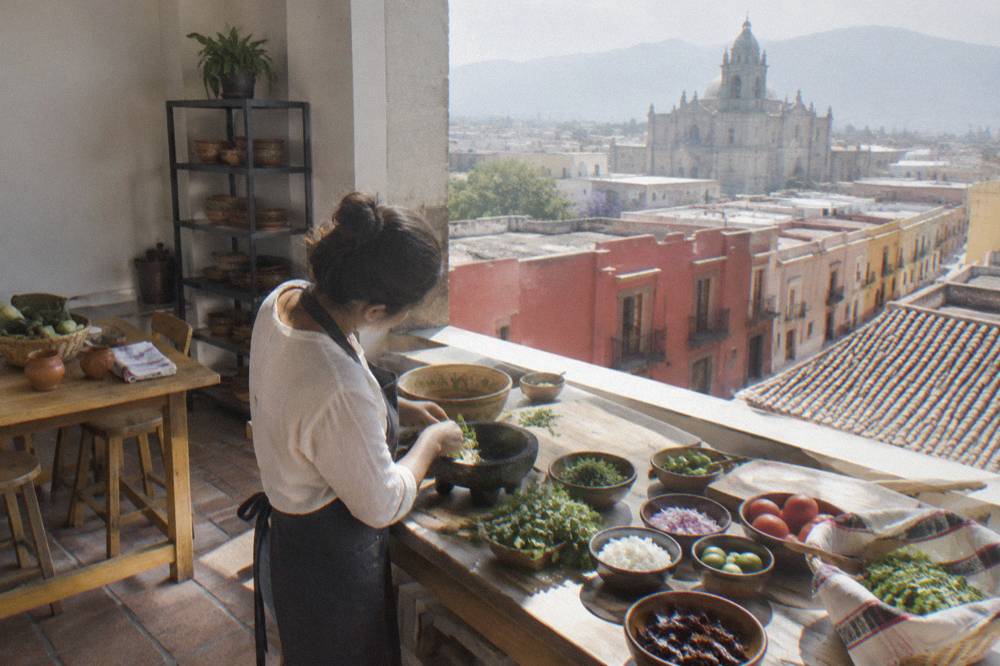
Cooking classes are the deepest rainy-afternoon option in the city, because they fill an afternoon with market shopping and kitchen work, all of it indoors or under cover. The pairing that fits this page's season best is a traditional Oaxacan class: Check availability for the class the tour list lists as traditional Oaxaqueña cooking with recipes framed around home kitchens. The food tour angle, with more walking and tasting, is covered in what to eat in Oaxaca.
Do Monte Albán And The Other INAH Sites Work In The Rain?
Monte Albán, Mitla and Yagul all keep the same hours year-round, Monday to Sunday 08:00 to 17:00, and entry is 105 MXN for nationals and 210 MXN for foreign visitors at all three, so a rainy-season visit costs and opens exactly the same as a dry-season one. The sites are unroofed, which makes the morning-first rule the real adaptation. Monte Albán's last access is 16:00; Mitla's is 16:30.
The full opening picture, from the INAH zone pages, is in the table below. Two sites have restricted days that matter more than any weather: Zaachila opens Thursday to Sunday only, 10:00 to 16:00, and Atzompa closes earlier than the rest, at 16:00 with last access at 15:00. Other pages covering the same trip are gathered on Oaxaca Travel Guide.
| Site | Days | Hours | Last access | Fee nationals / foreigners (MXN) |
|---|---|---|---|---|
| Monte Albán | Mon to Sun | 08:00 to 17:00 | 16:00 | 105 / 210 |
| Mitla | Mon to Sun | 08:00 to 17:00 | 16:30 | 105 / 210 |
| Yagul | Mon to Sun | 08:00 to 17:00 | 16:00 | 105 / 210 |
| Dainzú | Mon to Sun | 08:00 to 17:00 | 16:30 | 80 / 145 |
| Lambityeco | Mon to Sun | 08:00 to 17:00 | 16:30 | 80 / 145 |
| Zaachila | Thu to Sun | 10:00 to 16:00 | not listed | 80 / 145 |
| Atzompa | Mon to Sun | 08:00 to 16:00 | 15:00 | not listed on the page |
Monte Albán is about 15 minutes from the Zócalo by road, a derived free-flow estimate that real traffic and mountain switchbacks stretch. An 08:00 arrival puts the full visit before the afternoon build-up. The archaeological detail on the site itself is in the Monte Albán guide, and the half-day tour options in the Monte Albán tour guide include morning departures that fit this window.
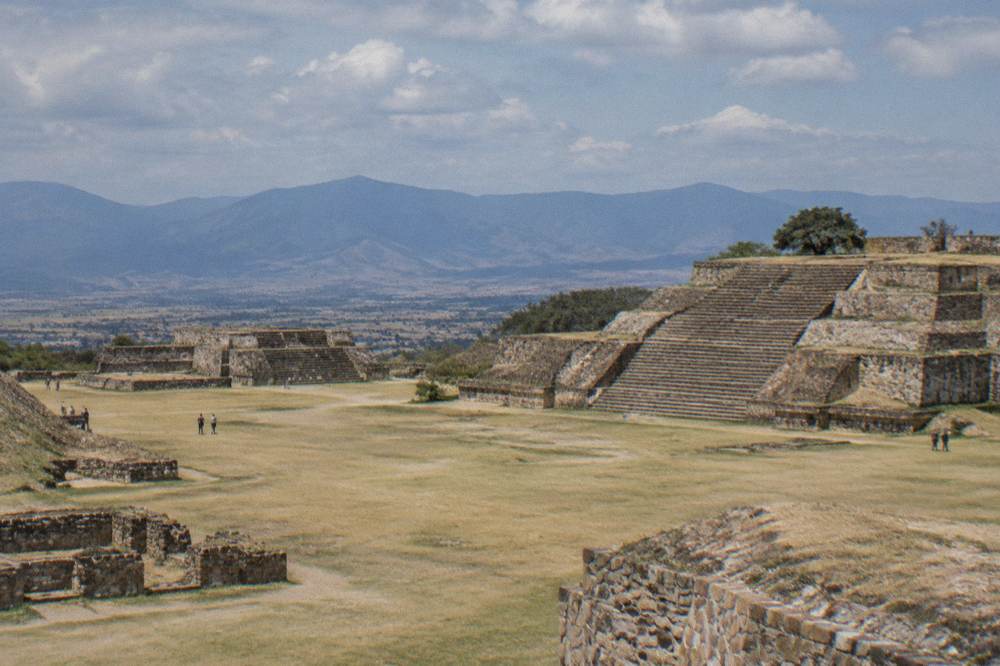
Wet stone is the one genuine caution at the open sites: the rainy season makes stepped plazas and paths slippery, and shoes with grip matter more in June than in January. If a storm arrives mid-visit, the sites have no shelter to speak of, which is the honest case for going early and being willing to leave early.
Does Rain Ruin Day Trips To Hierve El Agua, Mitla And The Craft Towns?
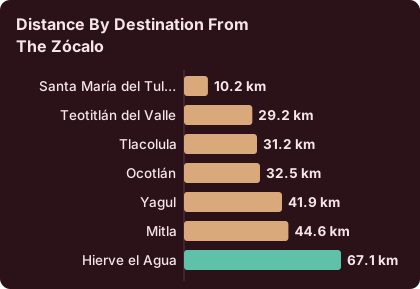
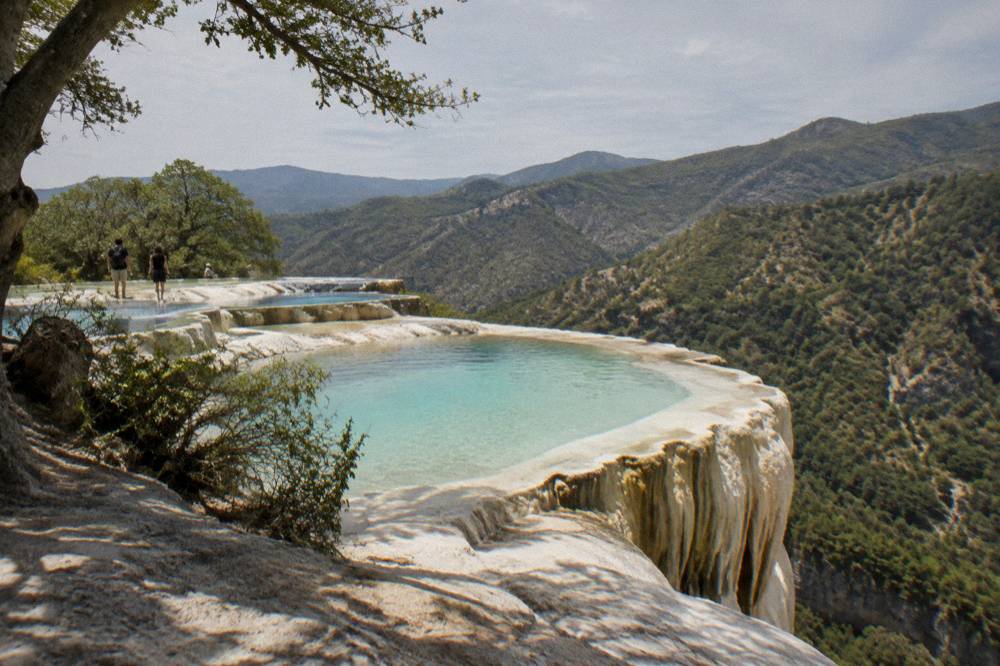
The valley day trips still run in the rainy season, and the drive times barely change on paper: Mitla is about 37 minutes from the Zócalo, Hierve el Agua about 57, and Teotitlán del Valle about 26, all derived free-flow estimates that mountain roads and weather extend. What the rain changes is the scenery, turning the valleys green, and the footing at the unsheltered stops. Tours operate year-round; the season changes the experience, not the schedule.
| Destination from the Zócalo | Distance | Free-flow time |
|---|---|---|
| Santa María del Tule | 10.2 km | about 11 min |
| Teotitlán del Valle | 29.2 km | about 26 min |
| Tlacolula | 31.2 km | about 25 min |
| Ocotlán | 32.5 km | about 37 min |
| Yagul | 41.9 km | about 38 min |
| Mitla | 44.6 km | about 37 min |
| Hierve el Agua | 67.1 km | about 57 min |
The classic loop that stacks Tule, Mitla, Hierve el Agua, a rug town and a mezcal stop into one day is the one most affected by afternoon rain, because Hierve el Agua sits at the far end and involves walking on unpaved paths around the springs. Doing the loop on a tour moves the logistics onto an operator, and the tour list's most-booked version of exactly this circuit is covered in the Hierve el Agua tour guide. The site itself, including the fact that it is community-run rather than an INAH zone, is covered in the Hierve el Agua guide.
The craft towns are the better rainy-day valley calls, because workshops are indoors. Teotitlán del Valle's weaving workshops, San Bartolo Coyotepec's black pottery and San Martín Tilcajete's alebrije workshops all sit under roofs, and the town-by-town guides, including Teotitlán del Valle and San Martín Tilcajete, cover what each village works in. Tlacolula's Sunday market, the region's big weekly tianguis, is open-air, so a wet Sunday there is a morning proposition.
What Should You Pack For Oaxaca's Rainy Season?
Pack for two climates in one day: the rainy season's mean minimums run 14.5 C to 16.7 C overnight and in the early morning while mean maximums reach 29.1 C to 33.8 C, so layers, a real rain layer for the afternoons, and shoes with wet-stone grip cover the whole spread. An umbrella or light rain jacket earns its place from June through September, when roughly one day in three brings measurable rain.
The numbers behind that: May through October mean minimums of 16.7, 16.7, 15.9, 15.9, 16.1 and 14.5 C, and mean maximums of 33.8, 30.9, 30.1, 30.0, 29.1 and 29.3 C. The city's altitude, about 1,550 m, is what keeps the nights cool even after a warm afternoon, and it also means the sun is strong when the sky clears, so sun protection belongs in the same bag as the rain layer. The full list, including what the altitude asks of you, is in what to pack for Oaxaca.
Is The Rainy Season A Good Time To Visit Oaxaca?
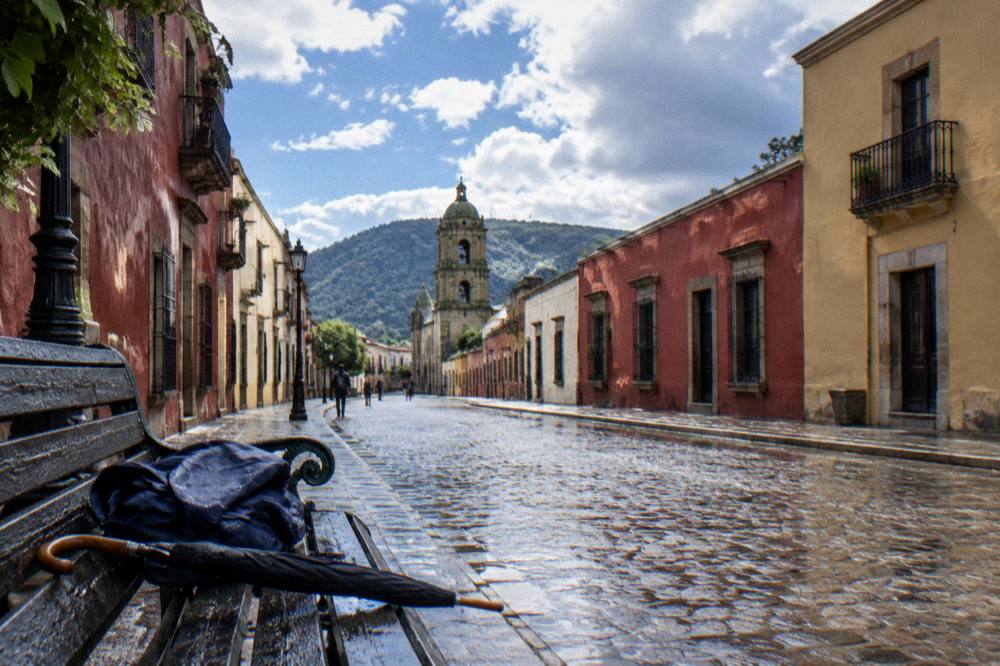
The rainy season is a workable and in some ways better time to visit Oaxaca City: temperatures are milder than April's 34.9 C mean maximum, the valleys are green rather than dry, and the city's core experiences, from markets to museums to cooking classes, are weatherproof. The trade is simple: about 20 days with rain per month from June to September, mostly in the afternoons, and a small chance a blockade or storm disrupts a travel day.
| Season | Months | Rain pattern | Mean max range | Best hours outdoors |
|---|---|---|---|---|
| Dry | Nov to Apr | 2.4 to 47.3 mm per month | 28.9 to 34.9 C | all day |
| Early rainy | May | 97.9 mm, 13.7 rain days | 33.8 C | morning |
| Peak rainy | Jun to Sep | 118.6 to 188.3 mm, about 20 rain days | 29.1 to 30.9 C | morning |
| Late rainy | Oct | 63.1 mm, 12.0 rain days | 29.3 C | morning to midday |
The city's own visitor numbers show the season's rhythm: the Sectur indicator report counts 1,324,332 tourist arrivals in the city across 2025, with hotel occupancy averaging 51.73 percent, so even the busy framework leaves room, and the rainy months sit outside the July Guelaguetza spike and the late-October Día de Muertos period. Guelaguetza itself, two Mondays in July at the Auditorio Guelaguetza on the Cerro del Fortín, falls inside the rainy season; the 2026 edition ran 20 and 27 July with Palco A at 1,632 MXN and Palco B at 1,321 MXN, and those figures stand as reference only, since the 2027 dates are not announced. The festival detail is in the Guelaguetza guide.
On safety, the standing advisories do not single the city out: the UK FCDO advises against all but essential travel to parts of Mexico and does not name Oaxaca on its main page, Canada advises a high degree of caution in Mexico with regional advisories, and the US State Department lists Oaxaca state at Level 2, exercise increased caution, with restrictions only in the Isthmus region. The full picture is in is Oaxaca safe.
Can You Enjoy Oaxaca Without A Car In The Rainy Season?
Yes: the Centro Histórico is walkable, the INAH sites and valley towns are reachable by tour, and a car adds little in the rainy season beyond parking and wet mountain roads. The city's core answers, museums, markets, classes and tasting rooms, sit within walking distance of most central hotels, and day tours handle the valley driving. The car-free detail, including colectivos and the airport question, is in can you do Oaxaca without a car.
Rain sharpens the case slightly. Driving the Hierve el Agua road or the valley routes in a downpour is a job for someone who does it daily, and the rainy season's afternoon storms make the 08:00 departures on organised valley tours the more restful structure. Within the city, the distances are short: the Zócalo to Santo Domingo is a few blocks, and the whole central grid is covered in Oaxaca Centro Histórico.
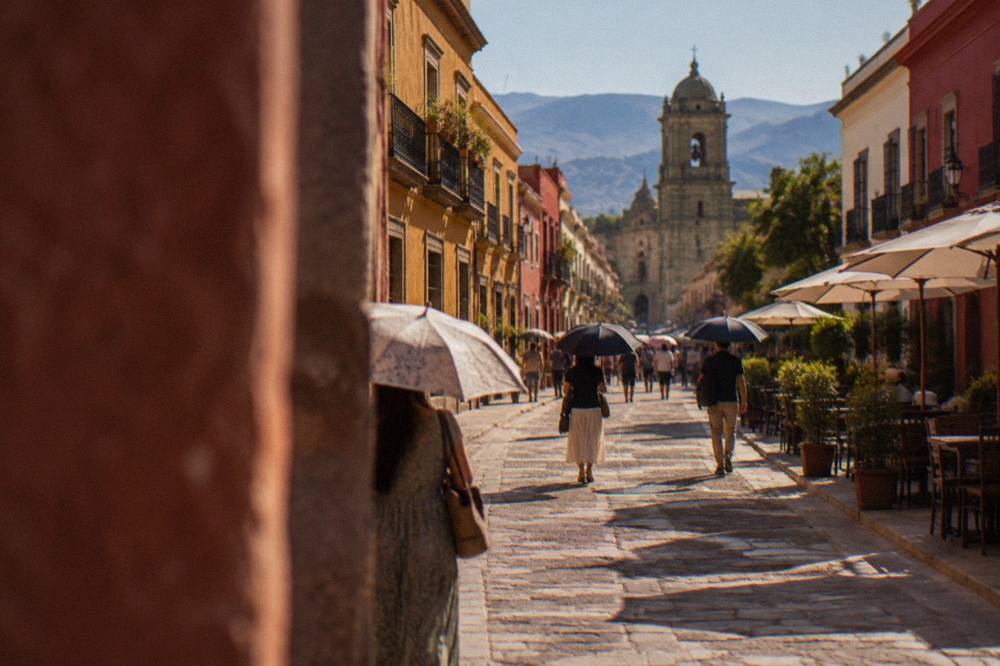
For the days when the rain sets in properly, the city has depth: the rooftop-bar and nightlife scene runs under cover in the evenings, the mezcal tastings and pairing sessions are indoor by definition, and the coverage in mezcal in Oaxaca and Oaxaca rooftop bars and nightlife gives the wet-evening options. How many days to give the city overall, rainy or not, is the question how many days in Oaxaca answers.
Common Questions About Oaxaca In The Rainy Season
What Is The Rainiest Month In Oaxaca?
June, with an average of 188.3 mm of rain across 19.9 days with rain, per the SMN station normals for Oaxaca City, 1991 to 2020. September is close behind at 163.6 mm across 21.4 days.
Does It Rain All Day In Oaxaca In The Rainy Season?
The pattern the climate table supports is frequent rain rather than continuous rain: June through September each average about 20 days with measurable rain, but those months still have mean maximum temperatures of 29.1 C to 30.9 C, and the rain concentrates in the afternoon and evening hours.
Is Monte Albán Open In The Rainy Season?
Yes. The INAH page lists Monte Albán Monday to Sunday, 08:00 to 17:00, with last access at 16:00, year-round. Entry is 105 MXN for Mexican nationals and 210 MXN for foreign visitors.
What Should I Do In Oaxaca City On A Rainy Afternoon?
The strongest options are indoors: the Museo de las Culturas de Oaxaca, open Tuesday to Saturday 10:00 to 16:00, the covered markets near the Zócalo, and the city's cooking classes, mezcal tastings and print workshops. The Jardín Etnobotánico's free guided tours also run on a fixed weekday schedule.
Is October A Rainy Month In Oaxaca?
Only partly. October averages 63.1 mm of rain across 12.0 days, down sharply from September's 163.6 mm, with a mean maximum of 29.3 C. By November the average falls to 9.1 mm.
Is The Rainy Season Cheaper In Oaxaca?
The climate record shows milder temperatures and green valleys in the rainy months, but no official source publishes a seasonal price band for hotels or tours. What the season does change is timing: July's Guelaguetza and the late-October Día de Muertos period sit inside it and drive demand.
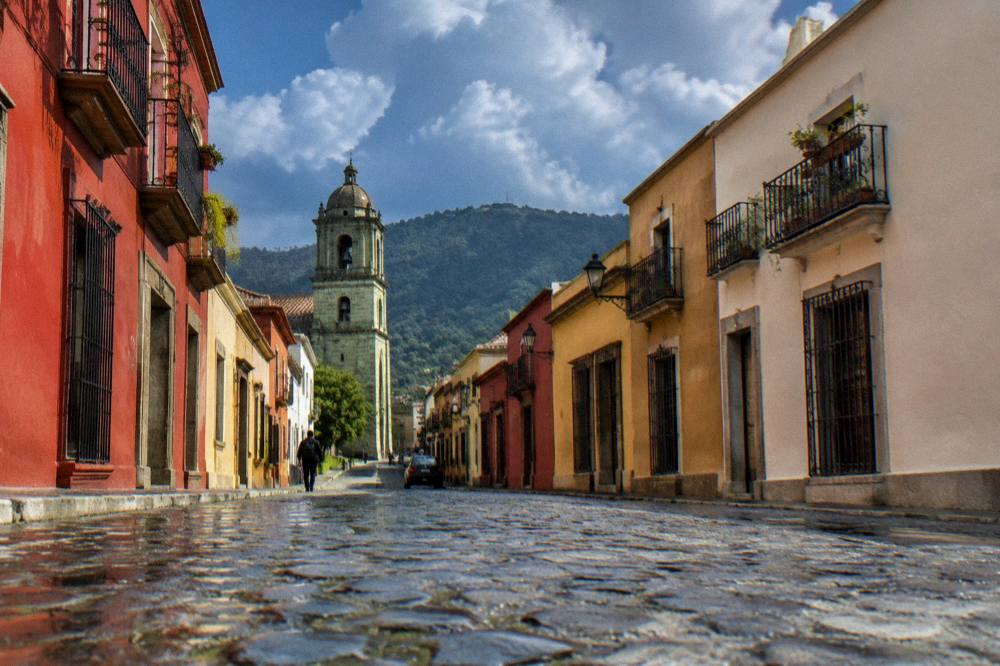
The rainy season in Oaxaca City is a scheduling problem with a known solution: mornings outdoors at the sites and in the valleys, afternoons under the roofs where the city keeps its best indoor hours, and a rain layer in the bag from June through September. The SMN normals behind every figure in this guide are averages, not forecasts, so check the live picture as the trip approaches and let the green season do what it does best, which is hand you a clear morning and a dramatic sky.