Oaxaca Street Art: Murals, Stencils And The Graphic Workshop
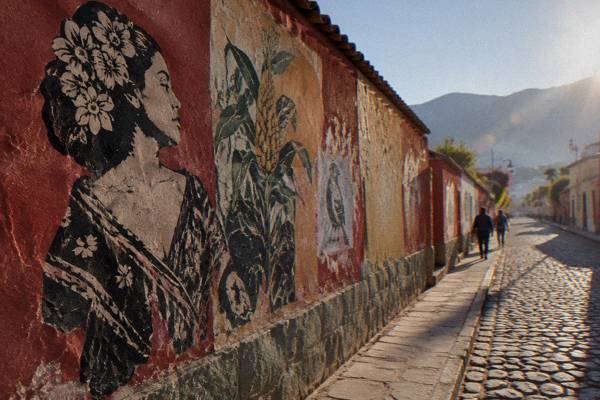
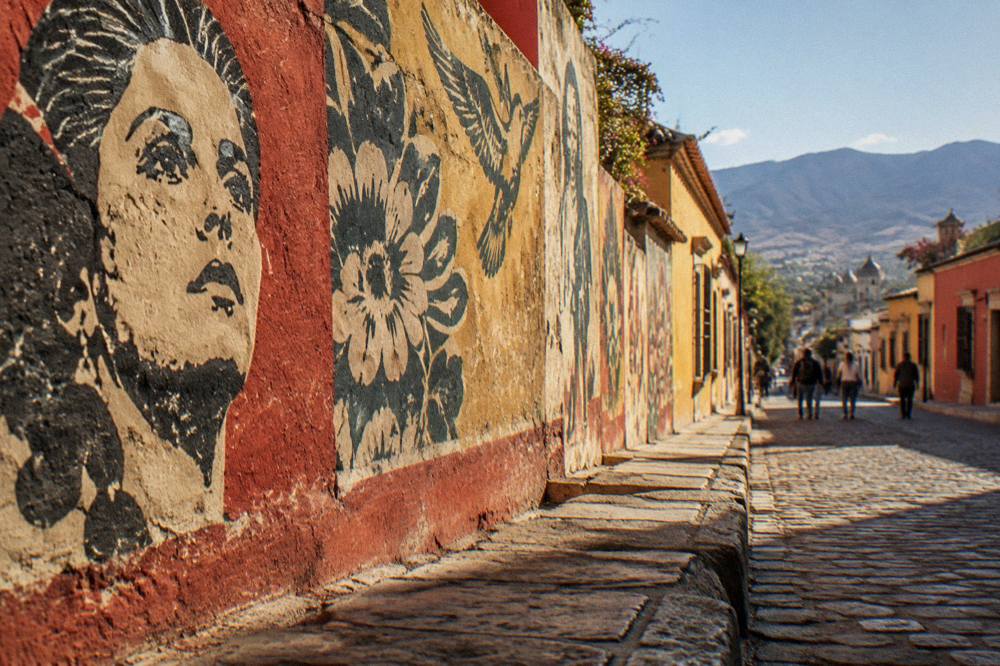
Oaxaca City, the inland highland capital of the state of Oaxaca in Mexico, carries one of the densest concentrations of murals, stencils and printed graphic work of any mid-sized city in the country, concentrated in a handful of walkable neighbourhoods around the historic centre.
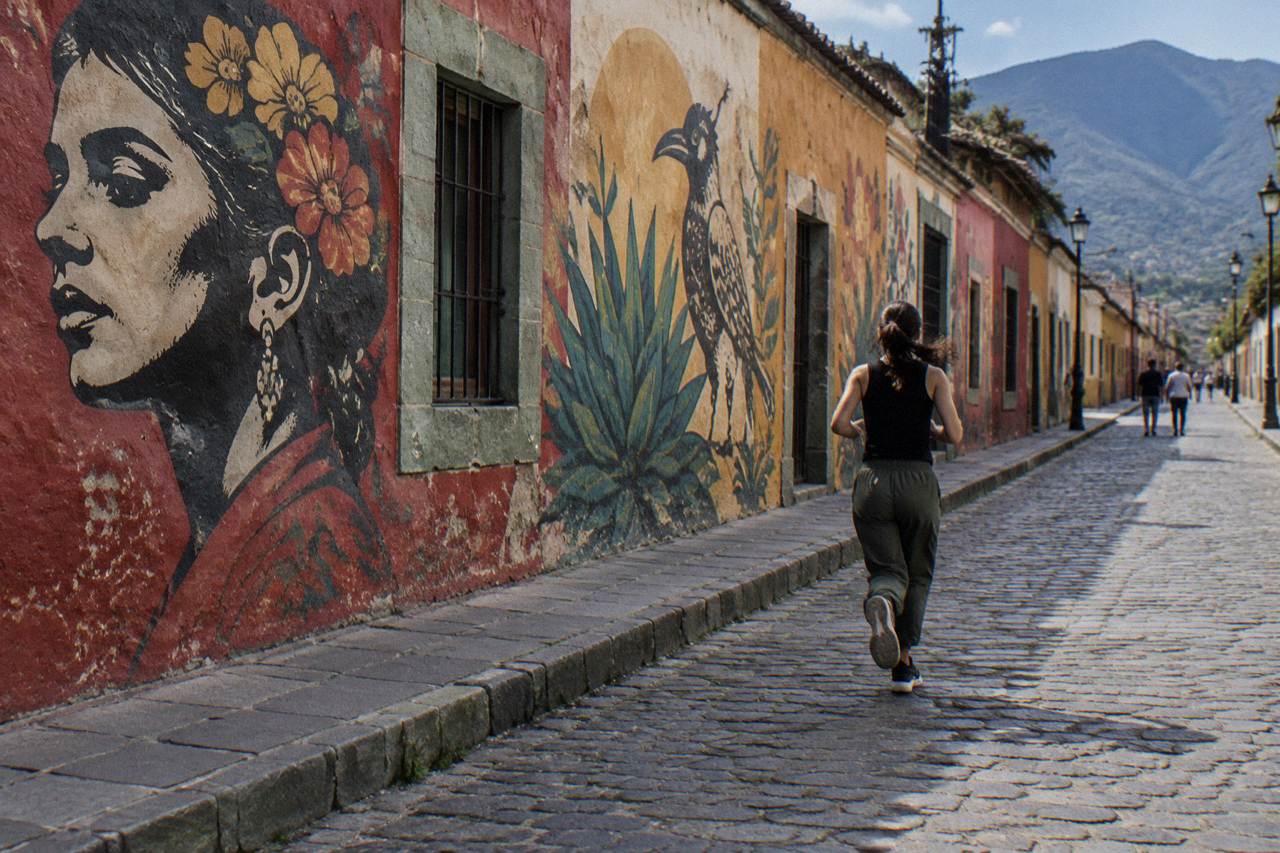
Oaxaca City street art clusters in the neighbourhoods of Jalatlaco, Xochimilco, the Centro Histórico and Reforma, all within walking or short bike distance of the Zócalo. Murals and stencils sit beside a living printmaking tradition, and the practical way to see the walls is a guided street art walk or a bike ride, with a printing workshop as the hands-on complement.
Oaxaca City, the capital of the state of Oaxaca in Mexico, is an inland highland city in the Valles Centrales at about 1,550 m, and its walls do a lot of the talking. Murals and stencils run through the neighbourhoods that ring the historic centre, and the city's graphic tradition extends beyond paint into printmaking, the craft this page pairs with the murals in its title. The streets that carry the densest concentrations are all close together: Jalatlaco and Xochimilco sit beside the Centro Histórico, with Reforma a little further out. Nothing here is more than a short walk or ride from the Zócalo, and the whole subject fits naturally into a wider plan built around the things to do in Oaxaca.
This page on the Oaxaca Travel Guide lays out where the work is, how the neighbourhoods compare, what the print workshop strand of the scene involves, and which guided formats cover it. The factual anchors, opening days, admission figures and distances, come from the sources this site reports on: INAH site pages, the state tourism indicators and the SMN climate normals for the city.
What Is Oaxaca Street Art And Where Do You Find It?
Oaxaca street art is the mural, stencil and graphic work spread across the walls of Oaxaca City, concentrated in the neighbourhoods of Jalatlaco, Xochimilco, the Centro Histórico and Reforma, all of which sit within walking or short-riding distance of the Zócalo at the heart of the city. The work ranges from small stencils to full wall-sized murals, and the scene runs alongside a printmaking tradition that visitors can take part in directly.
The city itself is compact. Oaxaca de Juárez had 270,955 inhabitants at the 2020 census, and the street art neighbourhoods are stitched into the grid around the historic centre rather than scattered across the municipality. Jalatlaco and Xochimilco are the two names that come up again and again in connection with murals, and the tour list reflects it: the free walking tours on this site's tour list include walks dedicated specifically to Jalatlaco's murals and to Xochimilco's walls, which is as direct a signal as any that those two neighbourhoods are where the concentration sits.
The distinction between the neighbourhoods matters for planning. The Centro Histórico, the UNESCO-listed "Historic Centre of Oaxaca and Archaeological Site of Monte Albán", property 415, holds the monuments, the Museo de Arte Prehispánico Rufino Tamayo and the heavier visitor footfall that comes with them. Jalatlaco and Xochimilco hold the walls. Reforma sits outside the immediate centre and rounds out the circuit. A walk that links all of them is a half-day commitment at an unhurried pace; a bike compresses it.
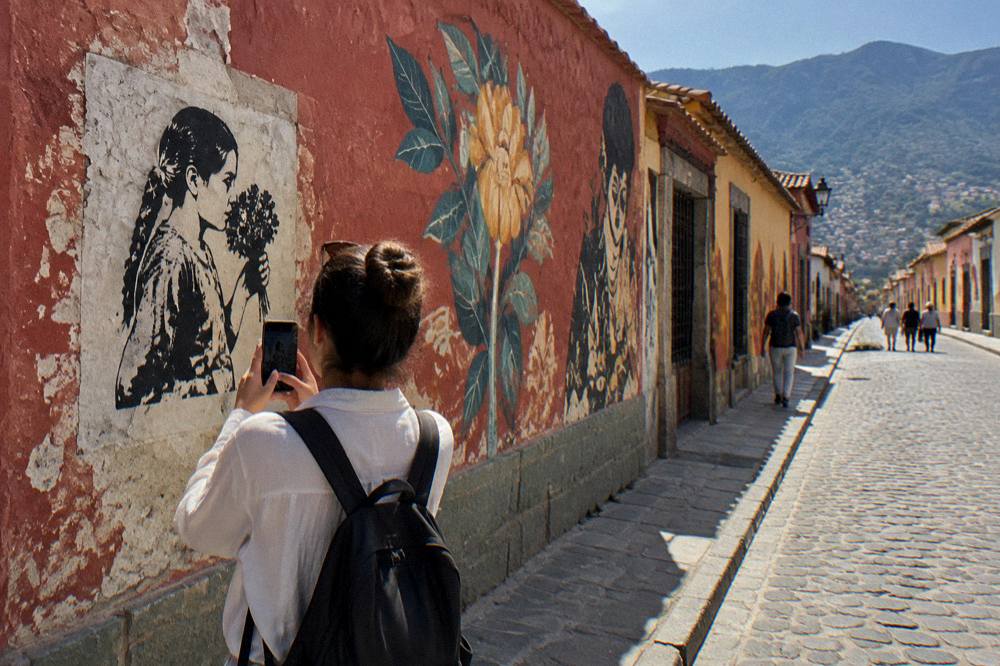
What the walls contain is documented by the people who lead walks there rather than by any official register. The tour list of tours sold from the city includes a street art walk led by a working artist, bike rides built around urban art, and multiple free walks that make Jalatlaco's murals their whole subject. The practical conclusion for a visitor is simple: the scene is real, it is guided, and it is easy to reach.
Which Oaxaca Neighbourhoods Carry The Most Murals?
Jalatlaco carries the heaviest concentration of murals in Oaxaca City, with Xochimilco second, both immediately adjacent to the Centro Histórico, and Reforma extending the circuit further out; every one of these neighbourhoods lies within about three kilometres of the Zócalo, so the full mural circuit is a walk or a short ride rather than a commute. The state tourism indicators for 2025 record 1,324,332 visitor arrivals in the city, and the mural neighbourhoods absorb a large share of that movement.
The evidence for where the murals sit is the guiding market itself. The tour list carries a walk titled "Free tour in the Magical Neighbourhood of Jalatlaco: Murals and Art Workshops", and another, "Xochimilco Walking Tour", that covers the neighbourhood's walls alongside its colonial aqueduct. When separate guided products make the same two neighbourhoods their subject, the geography is settled.
The comparison between them comes down to what surrounds the walls. Jalatlaco and Xochimilco are residential neighbourhoods with the murals woven into ordinary streets. The Centro Histórico is the monument core: the Santo Domingo church, the Museo de las Culturas de Oaxaca and the Jardín Etnobotánico all sit there, open on their own schedules. A mural day in Oaxaca City usually splits in two: walls in the morning in Jalatlaco and Xochimilco, monuments in the afternoon in the centre.
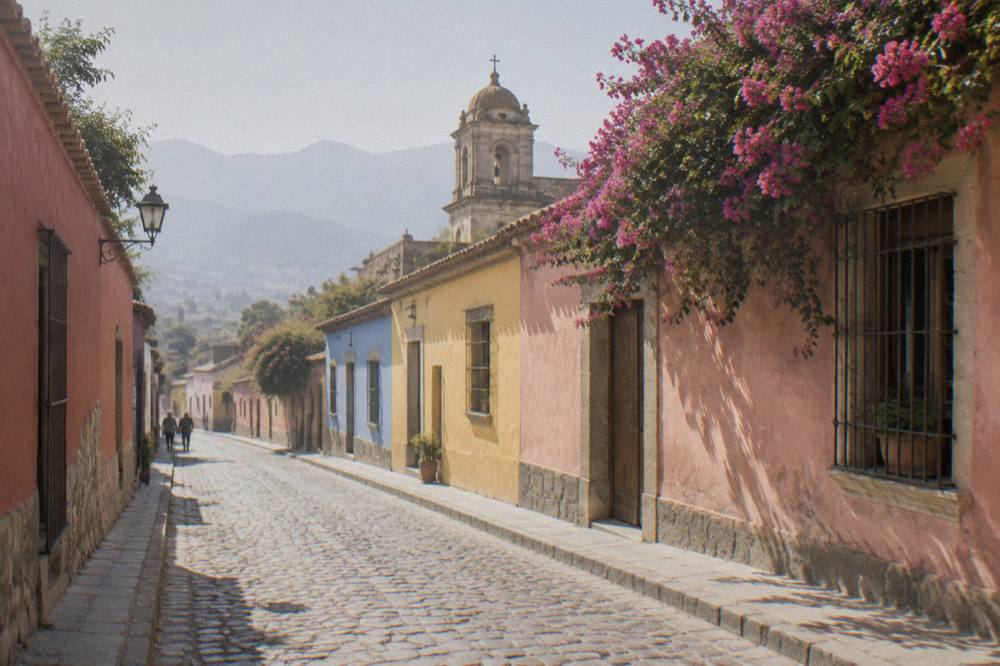
For grounding, here is how the main mural neighbourhoods and the centre relate in distance and character. Drive times below are derived from routed distances measured from the Zócalo on open-street-map roads, free-flow, and real traffic in a city of this size is slower, so treat them as floors rather than promises.
| Neighbourhood | Role In The Street Art Circuit | Distance From The Zócalo | How It Fits A Day |
|---|---|---|---|
| Jalatlaco | Densest mural concentration, dedicated walks | Adjacent, walkable | Morning or late afternoon |
| Xochimilco | Murals plus the colonial aqueduct | Adjacent, walkable | Combine with Jalatlaco |
| Centro Histórico | Stencils and graphic work among the monuments | 0 km, the reference point | Monument sightseeing core |
| Reforma | Extension of the circuit outward | Under 3 km | By bike or short ride |
The Centro Histórico's own institutions run on fixed schedules worth knowing before you plan the monument half of the day. The Museo de las Culturas de Oaxaca is open Tuesday to Saturday only, 10:00 to 16:00, and charges 105 MXN for Mexican nationals and 210 MXN for foreign visitors. The Jardín Etnobotánico runs free guided tours Monday to Friday at 10:30, 11:00, 11:30, 12:00 and 17:00, and Saturday from 10:30 to 12:00, with large and school groups asked to book two weeks ahead.
Can You See Oaxaca Street Art On Foot Or Do You Need A Bike?
Both work in Oaxaca City, and the choice is about coverage rather than access: Jalatlaco, Xochimilco and the Centro Histórico are walkable from the Zócalo in a single loop, while adding Reforma or the outer streets is faster by bike, and the city has no bike-share scheme, so a bike means a guided ride or a rental. The guided market covers both formats, with artist-led walks in the core neighbourhoods and street art bike rides that reach further out.
The walking case is strong because the geography is small. The three core neighbourhoods touch each other, and the free walking walks on the tour list run around two to two and a half hours each, which tells you the scale: these are stroll-sized districts, not districts you commute into. The paid options include a street art walk led by a working artist, which is the format that turns a wall into an explanation.
The bike case is about reach. The tour list's street art bike ride covers the city's urban art at riding pace, and there is a second, shorter art-and-history bicycle tour as well. Bikes also open the pairing that fits this page's subject: after the murals, the print workshop. An art printing workshop with a local artist is a bookable product in its own right, and it is the hands-on version of the graphic tradition the walls display. The street art bike ride is this site's featured pick for the subject, and you can check dates on Check availability.
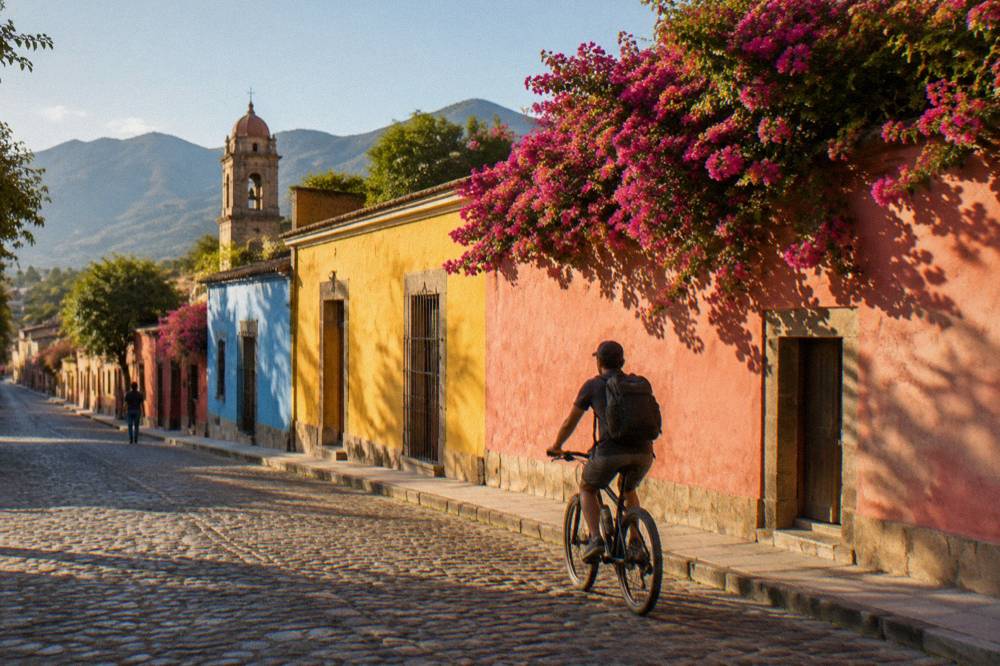
Walking, riding and workshop formats each answer a different question, and the comparison is worth a table before you commit.
| Format | What It Covers | Neighbourhood Reach | Best For |
|---|---|---|---|
| Artist-led walk | Murals and stencils with explanation | Core neighbourhoods | Depth and context |
| Free walking walk | Neighbourhood overview, tip-based | Jalatlaco or centre | Budget and first orientation |
| Street art bike ride | Urban art across the city at riding pace | Core plus outer streets | Coverage in limited time |
| Printing workshop | Hands-on printmaking with a local artist | A studio session | Making, not just looking |
One planning note on timing: the SMN station normals for Oaxaca show the dry season runs November to April, with January averaging just 2.4 mm of rain across about 1.4 days, and the rainy season May to October, with September averaging 163.6 mm across 21.4 days. A walking or riding mural day is a dry-season pleasure in the strict sense of the figures, and in the rainy season the mornings are the safer bet given how the rain concentrates later in the day in the Valles Centrales.
How Does The Graphic Workshop Tradition Fit The Oaxaca Street Art Scene?
The graphic workshop strand of Oaxaca City's art scene is the printmaking counterpart to the murals: the same graphic language, stencils, bold figures, political edge, practised on paper in workshops rather than on walls, and visitors can join it directly through a bookable art printing workshop with a local artist, a three-hour studio session that sits among this site's recommended picks for the subject alongside the mural walks and rides.
The connection is visible in the products themselves. The tour list pairs the mural formats with printmaking: the art printing workshop with a local artist runs as a studio session where participants produce their own printed work, and the tour list also carries a second printmaking product, a session framed around printing a work of art for your home. Two independent print products in one city's tour market is a signal about the depth of the tradition, and this site reports the market rather than the mythology.
What this means practically is that the street art subject in Oaxaca City has a making half, not just a looking half. A full day built around the theme runs: murals in the morning, in Jalatlaco and Xochimilco, on foot or by bike; lunch in or near the Mercado 20 de Noviembre; a print workshop session in the afternoon. The food side of that itinerary has its own page in the guide to what to eat in Oaxaca, and the street food strand is covered separately in the street food in Oaxaca guide.
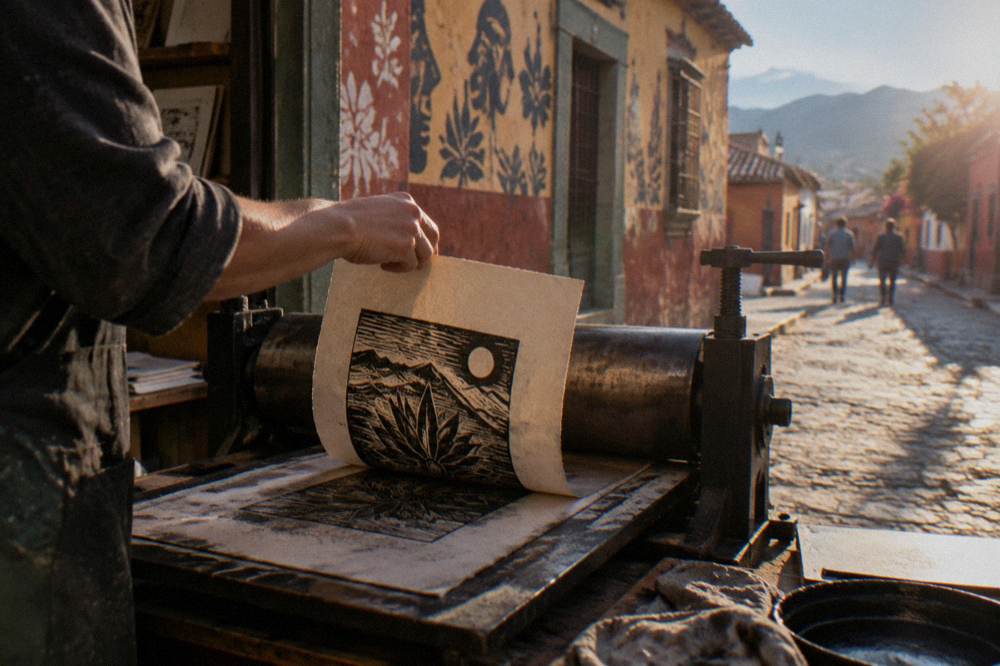
The workshop strand also travels well. A print made in a session is the kind of object that survives a flight home, which is one reason the making half of the scene earns its place in an itinerary. Between the walls and the press, the graphic arts in Oaxaca City give a visitor both an audience experience and a participation experience, and few mid-sized cities offer the two so close together.
What Does A Guided Street Art Tour Of Oaxaca Actually Include?
A guided street art tour in Oaxaca City means either an artist-led walking tour of the mural neighbourhoods, a bike ride covering urban art across the city, or a free, tip-based walking walk focused on Jalatlaco or the historic centre, and the paid formats are bookable on this site. The walk formats concentrate on Jalatlaco and Xochimilco, and the ride format extends across the city's outer streets.
The artist-led walk is the format with the clearest value claim: a working artist leading a walk through walls gives context no plaque provides. The ride format trades depth for reach. The free walks, tip-based at the end, are listed on the tour list at two to two and a half hours and make Jalatlaco's murals their explicit subject, which confirms the neighbourhood's standing once again.
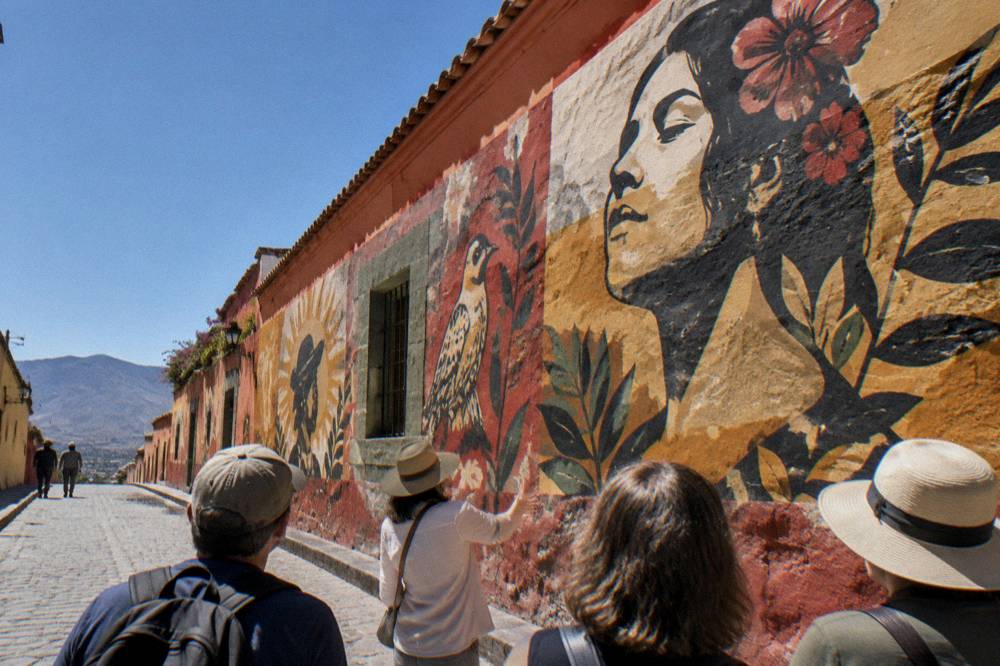
What no guided product can fix is the calendar around it. If the mural day doubles as a monument day, the fixed schedules bite: the Museo de las Culturas is closed Sunday and Monday, and if the plan stretches to the archaeological sites, Zaachila opens Thursday to Sunday, 10:00 to 16:00, only. The INAH sites charge by category, and the figures are set out below from the INAH site pages.
| INAH Site | Category | Nationals MXN | Foreigners MXN | Hours | Last Access |
|---|---|---|---|---|---|
| Monte Albán | I | 105 | 210 | Mon to Sun 08:00 to 17:00 | 16:00 |
| Mitla | I | 105 | 210 | Mon to Sun 08:00 to 17:00 | 16:30 |
| Yagul | I | 105 | 210 | Mon to Sun 08:00 to 17:00 | 16:00 |
| Dainzú | III | 80 | 145 | Mon to Sun 08:00 to 17:00 | 16:30 |
| Lambityeco | III | 80 | 145 | Mon to Sun 08:00 to 17:00 | 16:30 |
| Zaachila | III | 80 | 145 | Thu to Sun 10:00 to 16:00 | closing time |
Those sites are day-trip material, not street art material, but they enter the plan because the same visit that brings someone to Oaxaca City for the walls usually includes them. The 2025 visitor counts compiled by the state tourism authority show the pull: Monte Albán recorded 416,675 visitors in 2025, Mitla 104,428, Yagul 10,185, Lambityeco 5,545 and Zaachila 4,229.
How Far Are The Street Art Neighbourhoods From Everything Else In Oaxaca?
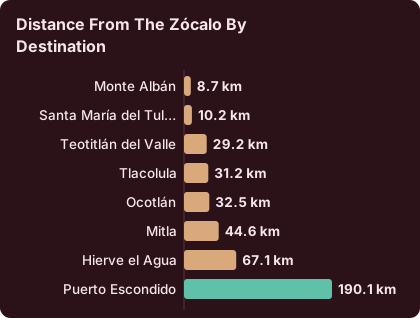
The street art neighbourhoods of Oaxaca City sit at the centre of the destination's map: Jalatlaco and Xochimilco are adjacent to the Centro Histórico, and the major excursions run outward from there, with Monte Albán about 15 minutes by road, Hierve el Agua about 57 minutes, and Puerto Escondido about 165 minutes on the newer highway, all measured as free-flow drive times from the Zócalo that real traffic and mountain roads will extend.
The derived drive times below are computed from routed distances on open-map roads and are floors, not promises. They matter for one reason: a street art day costs half a day at most, and the arithmetic of the rest of the trip depends on what sits within reach.
| Destination | Distance From The Zócalo | Free-Flow Drive Time |
|---|---|---|
| Monte Albán | 8.7 km | about 15 minutes |
| Santa María del Tule | 10.2 km | about 11 minutes |
| Teotitlán del Valle | 29.2 km | about 26 minutes |
| Tlacolula | 31.2 km | about 25 minutes |
| Ocotlán | 32.5 km | about 37 minutes |
| Mitla | 44.6 km | about 37 minutes |
| Hierve el Agua | 67.1 km | about 57 minutes |
| Puerto Escondido | 190.1 km | about 165 minutes |
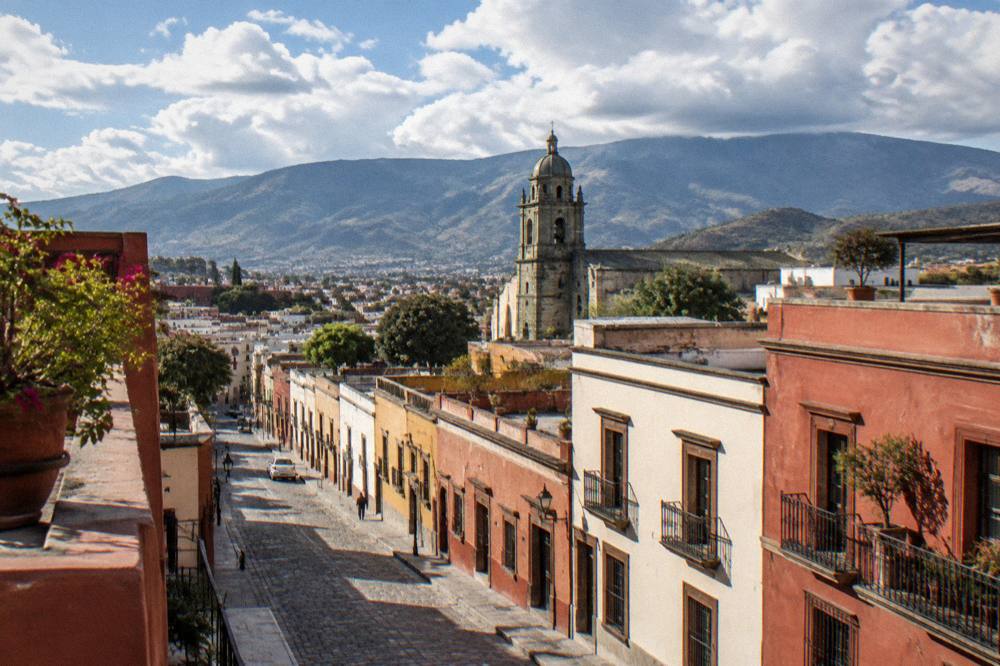
The practical reading is that the mural neighbourhoods cost you nothing in travel time: they are the city. Everything further out is a scheduled trip, and the valley loop that takes in Hierve el Agua, Mitla and the Tule tree is the classic pairing with a city day. The two halves of a week, walls and valley, divide cleanly along that table.
When Should You Plan A Street Art Trip To Oaxaca?
Plan a street art trip to Oaxaca City around the dry season, November to April, when the SMN station normals show monthly rainfall between 2.4 mm in January and 47.3 mm in April, against the rainy season's peak of 188.3 mm in June, because walking and biking the mural neighbourhoods is an outdoor activity with no indoor fallback beyond the museums.
The figures come from the SMN station normals for Oaxaca, 1991 to 2020, and they are averages, not forecasts. The full monthly picture:
| Month | Mean High C | Mean Low C | Rain mm | Days With Rain |
|---|---|---|---|---|
| Jan | 28.9 | 10.3 | 2.4 | 1.4 |
| Feb | 31.1 | 11.6 | 4.6 | 1.1 |
| Mar | 33.3 | 13.6 | 17.6 | 4.1 |
| Apr | 34.9 | 15.8 | 47.3 | 7.6 |
| May | 33.8 | 16.7 | 97.9 | 13.7 |
| Jun | 30.9 | 16.7 | 188.3 | 19.9 |
| Jul | 30.1 | 15.9 | 118.6 | 20.4 |
| Aug | 30.0 | 15.9 | 131.8 | 20.5 |
| Sep | 29.1 | 16.1 | 163.6 | 21.4 |
| Oct | 29.3 | 14.5 | 63.1 | 12.0 |
| Nov | 29.0 | 12.3 | 9.1 | 3.5 |
| Dec | 28.9 | 11.0 | 9.0 | 2.4 |
The calendar also carries two events that reshape the city's accommodation picture. Guelaguetza runs as two Mondays in July at the Auditorio Guelaguetza on the Cerro del Fortín; the 2026 edition, 20 and 27 July, priced Palco A seats at 1,632 MXN and Palco B at 1,321 MXN through Superboletos, with Palcos C and D free, and that edition has passed, with 2027 dates not announced. Día de Muertos centres on the traditional dates of 31 October to 2 November; the 2026 programme has not been announced, so no 2026 schedule should be assumed. July and late October into early November are the periods when the city is at its fullest, and a street art trip aimed at the walls rather than the festivals travels easier outside them.
For travellers weighing practicalities, the advisory picture is worth a line: the UK FCDO advises against all but essential travel to parts of Mexico and does not name Oaxaca on its main page; Canada advises a high degree of caution for Mexico overall with regional advisories; and the US State Department lists Oaxaca state at Level 2, exercise increased caution. Road blockades by teachers' unions are a standing risk that can disrupt road and airport access for hours at a time.
Common Questions About Oaxaca Street Art
Where Is The Best Street Art In Oaxaca City?
Jalatlaco carries the densest concentration of murals, with Xochimilco second and stencils and graphic work scattered through the Centro Histórico. All three neighbourhoods are within walking distance of the Zócalo, and Reforma extends the circuit by bike.
Can You See Oaxaca Street Art On A Free Walking Tour?
Yes. The tour list of walks sold from the city includes free, tip-based walks dedicated to Jalatlaco's murals and to the historic centre, typically running around two to two and a half hours, with the tip paid at the end at your discretion.
Is There A Street Art Bike Tour In Oaxaca?
Yes. A street art bike ride covers the city's urban art at riding pace, and a shorter art-and-history bicycle tour also runs. The city has no bike-share scheme, so a ride means a guided tour or a rental.
What Is The Graphic Workshop Side Of Oaxaca Street Art?
It is the printmaking counterpart to the murals: the same graphic language practised on paper in studios. Visitors can join an art printing workshop with a local artist, a studio session where participants print their own work.
When Is The Best Time Of Year To Walk The Mural Neighbourhoods?
The dry season, November to April, when SMN station normals show monthly rainfall between 2.4 mm and 47.3 mm. In the rainy season, May to October, mornings are the safer bet, with September averaging 163.6 mm of rain across 21.4 days.
How Long Does A Street Art Day In Oaxaca Take?
A walking loop of Jalatlaco, Xochimilco and the Centro Histórico is a half-day at an unhurried pace; guided walks run about two hours and the rides longer. Adding a printing workshop makes it a full day built entirely around the graphic arts.
The walls of Oaxaca City reward both the passer-by and the guided visitor, and the strongest plan uses both: a walk or ride through Jalatlaco and Xochimilco for the murals, a studio session for the print tradition behind them, and the rest of the itinerary filled from the monuments and valley sites that sit within an hour of the Zócalo.