Museo Rufino Tamayo: Pre-Hispanic Art Collected By A Painter
The Museo de Arte Prehispánico de México Rufino Tamayo in Oaxaca City holds the pre-Hispanic art collection assembled by the Oaxacan-born painter, and it returned to public view in August 2025 after a state restoration.
The Museo Rufino Tamayo is a pre-Hispanic art museum in Oaxaca City's historic centre, built around pieces collected by the painter Rufino Tamayo. It reopened in August 2025 after more than three years closed, following a state restoration of about 6.1 million MXN. Confirm hours before visiting, then pair it with Santo Domingo, the Museo de las Culturas and the Jardín Etnobotánico.
The Museo de Arte Prehispánico de México Rufino Tamayo stands in the historic centre of Oaxaca City, the inland highland capital of the state of Oaxaca in Mexico, and it holds one of the city's more unusual collections: pre-Hispanic art assembled not by an institution but by a painter. The museum, known locally as the Museo Rufino Tamayo, reopened its doors to the public in August 2025 after more than three years closed, following an intervention by the state's culture ministry with a reported restoration cost of about 6.1 million MXN. Its return matters for anyone planning museum time in the city, because it rejoins a compact cluster of collections around Santo Domingo de Guzmán that can occupy a full day on foot.
What Is The Museo Rufino Tamayo In Oaxaca?
The Museo Rufino Tamayo is an art museum in Oaxaca City devoted to pre-Hispanic pieces, assembled by the Oaxacan-born painter whose name it carries, rather than by an archaeological institute. It forms part of the museum quarter around Santo Domingo de Guzmán in the Centro Histórico, and it reopened in August 2025 after a state restoration. It forms part of the museum quarter around Santo Domingo de Guzmán in the Centro Histórico, and it reopened in August 2025 after a state restoration reported at about 6.1 million MXN. The distinction matters for visitors: INAH sites such as Monte Albán and Mitla are archaeological zones with their own fee categories, while this is a curated art collection, and its presentation follows an artist's eye rather than an excavation report.
The reopening came after more than three years with the doors shut. The state's culture secretariat led the intervention, and the museum now operates again as one of the city's named collections alongside the Museo de las Culturas de Oaxaca inside the Santo Domingo ex-convent, the Museo Textil de Oaxaca and the street art ecosystem tracked around IF. For a fuller picture of the city's collection of museums, the Oaxaca Travel Guide keeps a dedicated Oaxaca museums overview and a practical page on the whole Centro Histórico.
Because reopening details evolve, treat hours and admission as things to confirm on the day. What is fixed is the location: the museum sits in the historic core, within the UNESCO World Heritage property "Historic Centre of Oaxaca and Archaeological Site of Monte Albán", inscribed as property 415. That inscription covers the whole colonial grid you will walk through to reach it.
What Can You See Inside The Museo Rufino Tamayo In Oaxaca?
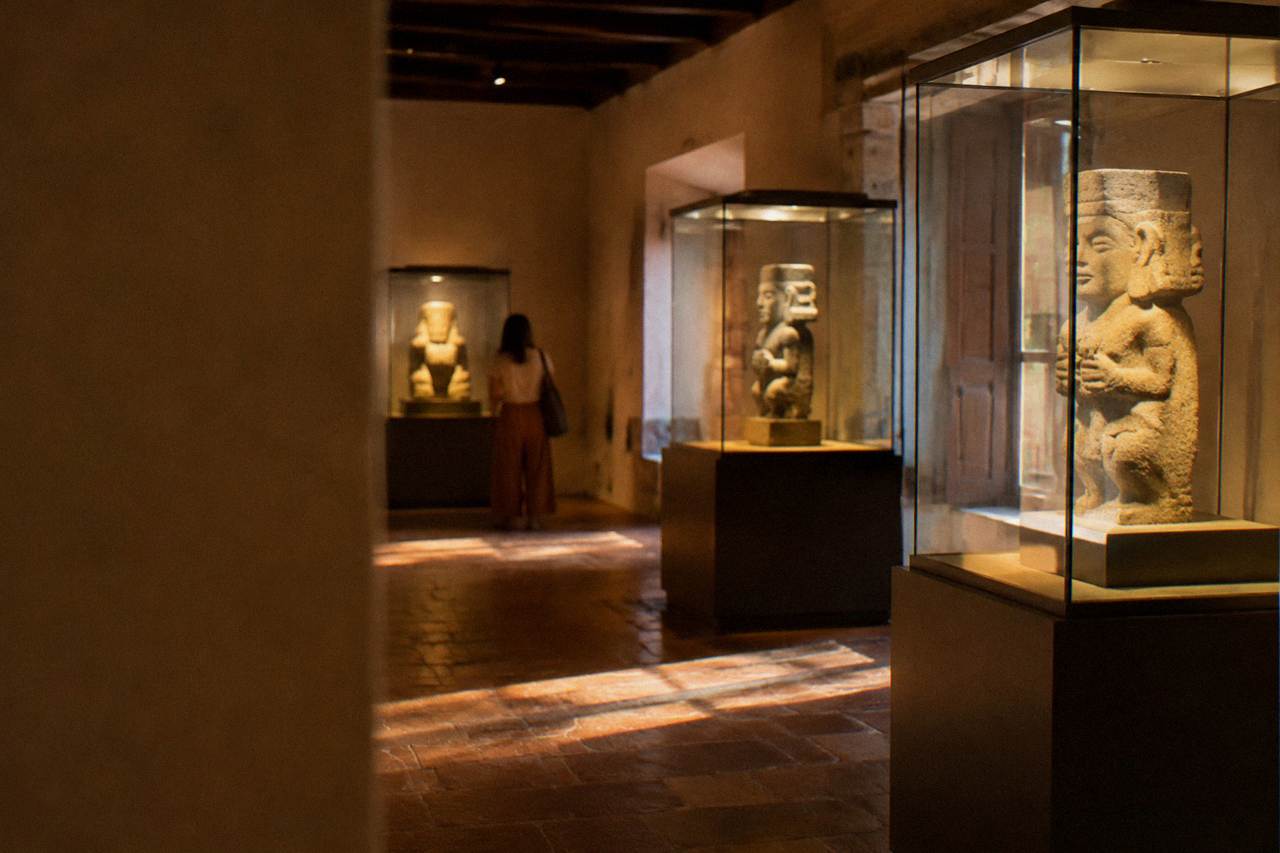
Inside you can see the painter Rufino Tamayo's collection of pre-Hispanic art, pieces he chose for their form and expressiveness and displayed as art objects rather than as site finds. The museum spent over three years closed before its August 2025 reopening, when the restoration of the building and the return of the collection to public display were announced. The concept of the museum is the painter's own collecting project: pieces chosen for their form and expressiveness. The state release that announced the reopening describes the restoration work on the building and the return of the collection to public display; it does not itemise galleries.
What a visit reliably delivers, then, is the collection itself plus a central location. What it does not deliver, on its own, is context: the INAH network does that. Monte Albán, the Category I archaeological zone about 15 minutes' drive from the Zócalo, is where much of the region's pre-Hispanic material comes from, and the Monte Albán attraction guide covers its hours, 08:00 to 17:00 with last access at 16:00, and its fee of 105 MXN for Mexican nationals and 210 MXN for foreign visitors. Mitla, also Category I with the same fee, is covered on the Mitla page.
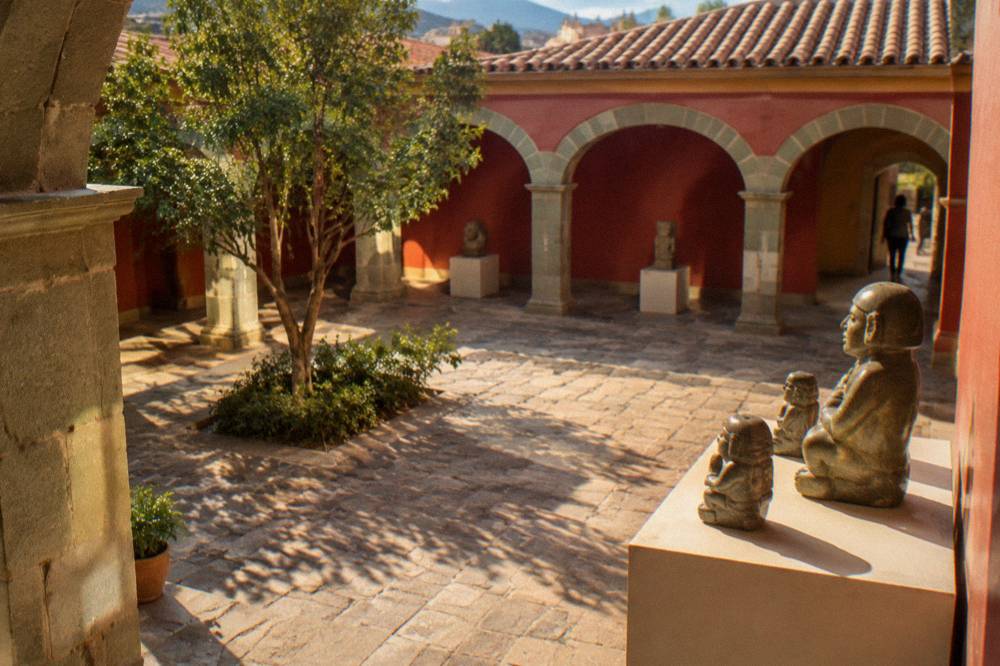
The practical pairing is this: see the objects as art at the Museo Rufino Tamayo, then see the worlds they came from at the INAH zones. The 2025 visitor counts from the state tourism indicators put Monte Albán at 416,675 visitors for the year, Mitla at 104,428, Yagul at 10,185, Lambityeco at 5,545 and Zaachila at 4,229, which shows where the interest concentrates. If you would rather have a guide carry that context through the historic centre itself, the historic centre walking tour covers the core sights on foot, and you can Check availability on the operator's booking page.
Where Is The Museum And How Do You Reach It In Oaxaca City?
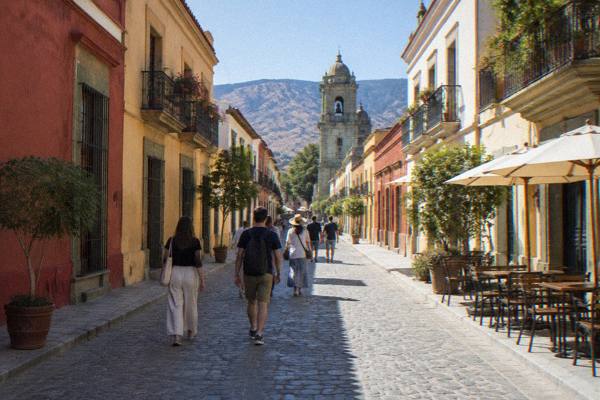
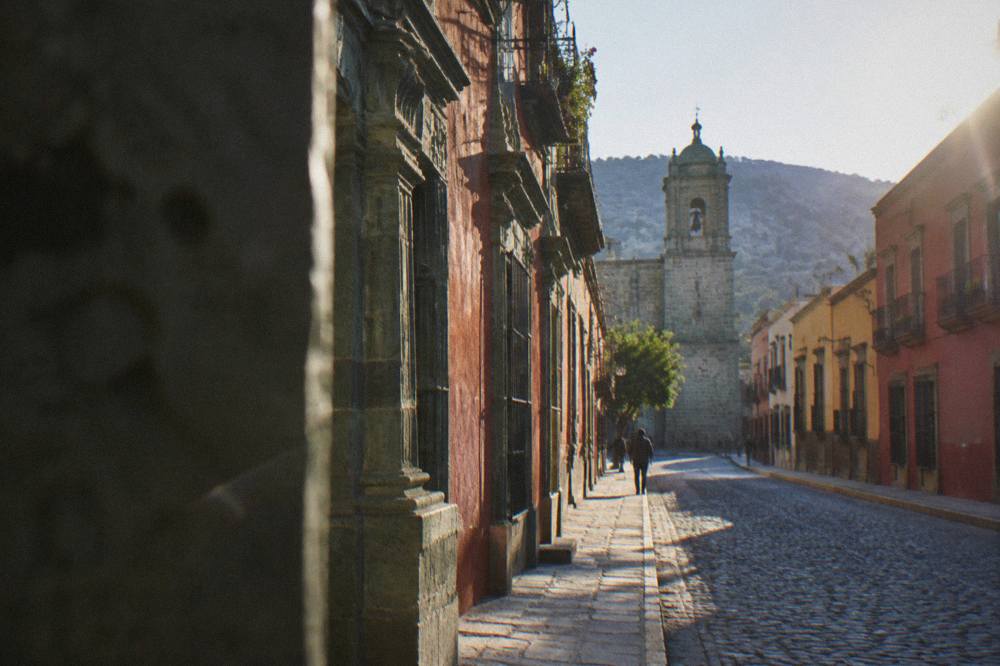
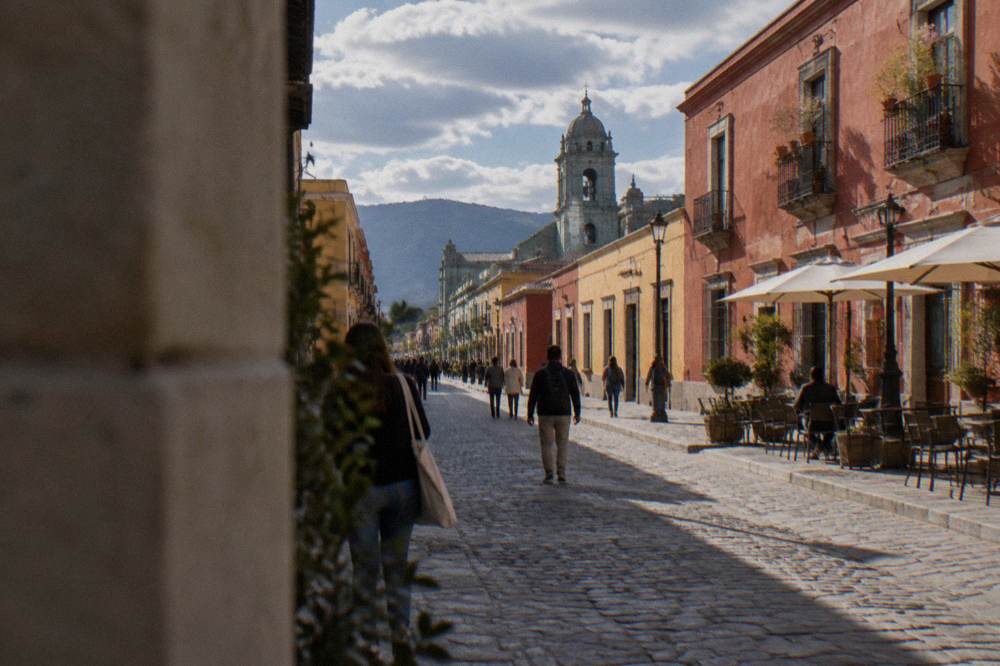
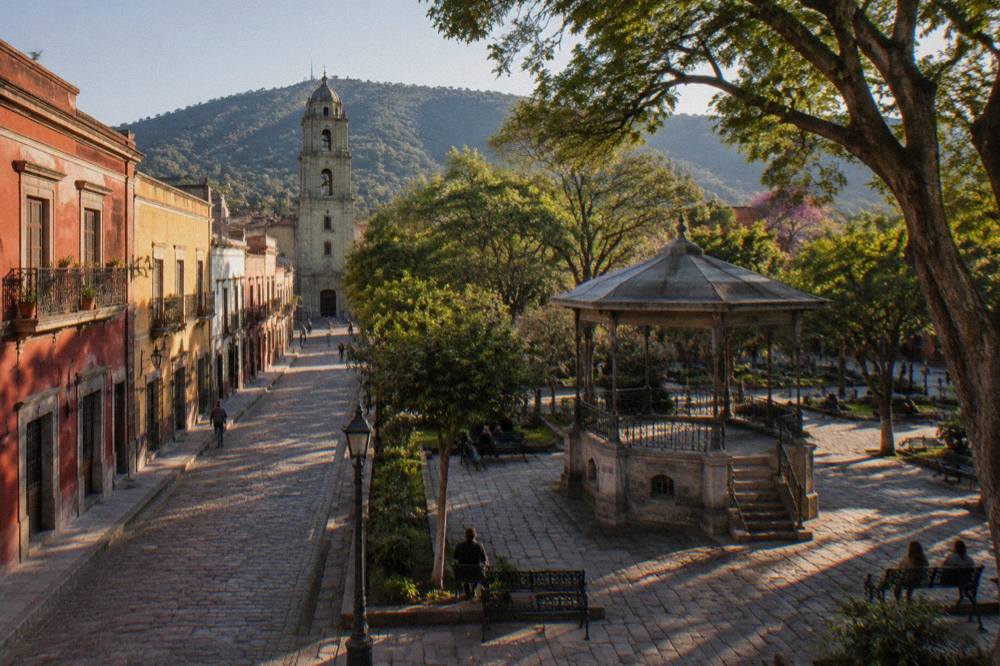
The Museo Rufino Tamayo sits in Oaxaca City's Centro Histórico, the UNESCO-listed colonial core that is flat, compact and walkable, a few minutes on foot from Santo Domingo de Guzmán, the Andador Macedonio Alcalá and the Zócalo (Plaza de la Constitución). There is no bike-share in Oaxaca, and none is needed here.
The walking logic of the centre is simple: the Zócalo anchors the grid, the Andador Macedonio Alcalá runs north from it toward Santo Domingo, and the museum cluster sits around that axis together with the Oaxaca Cathedral, the Basílica de la Soledad and the Jardín Etnobotánico. The question of whether you even need transport inside the centre is answered on the site's walkability page, and for everything beyond it, from colectivos to driving, the getting around guide lays out the options that exist.
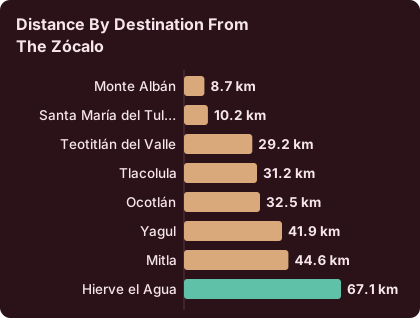
Distances from the Zócalo are short inside the city and grow quickly outside it. The derived drive times below come from routing on OSM roads at free-flow speeds; real traffic and mountain roads are slower, so treat them as "about".
| Destination from the Zócalo | Distance | Drive time (about) |
|---|---|---|
| Monte Albán | 8.7 km | 15 min |
| Santa María del Tule | 10.2 km | 11 min |
| Teotitlán del Valle | 29.2 km | 26 min |
| Tlacolula | 31.2 km | 25 min |
| Ocotlán | 32.5 km | 37 min |
| Yagul | 41.9 km | 38 min |
| Mitla | 44.6 km | 37 min |
| Hierve el Agua | 67.1 km | 57 min |
A museum morning followed by an afternoon in the valleys is a standard shape for a day here. The hierve el Agua day trip guide and the Mitla and Tlacolula day trip guide cover the eastern valley runs that pair naturally with a city morning.
What Do Oaxaca Museums And INAH Sites Cost?
The figures are these: INAH Category I sites, Monte Albán, Mitla and Yagul, charge 105 MXN for Mexican nationals and 210 MXN for foreign visitors; Category III sites, Dainzú, Lambityeco and Zaachila, charge 80 and 145 MXN; and the Museo de las Culturas de Oaxaca charges 105 and 210 MXN, open Tuesday to Saturday 10:00 to 16:00. The Jardín Etnobotánico's guided tours are free, and the Museo Rufino Tamayo's current admission is confirmed on the day of your visit.
| Site | Category | Nationals (MXN) | Foreigners (MXN) |
|---|---|---|---|
| Monte Albán | INAH I | 105 | 210 |
| Mitla | INAH I | 105 | 210 |
| Yagul | INAH I | 105 | 210 |
| Dainzú | INAH III | 80 | 145 |
| Lambityeco | INAH III | 80 | 145 |
| Zaachila | INAH III | 80 | 145 |
| Museo de las Culturas de Oaxaca | INAH museum | 105 | 210 |
Opening patterns are just as uneven as the fees, and mixing them up is the classic planning error in this city. Two sites break the seven-day pattern: Zaachila opens Thursday to Sunday, 10:00 to 16:00, and the Museo de las Culturas is closed Sunday and Monday entirely. Atzompa closes earlier than the rest, at 16:00 with last access at 15:00.
| Site | Open days | Hours | Last access |
|---|---|---|---|
| Monte Albán | Mon to Sun | 08:00 to 17:00 | 16:00 |
| Mitla | Mon to Sun | 08:00 to 17:00 | 16:30 |
| Yagul | Mon to Sun | 08:00 to 17:00 | 16:00 |
| Dainzú | Mon to Sun | 08:00 to 17:00 | 16:30 |
| Lambityeco | Mon to Sun | 08:00 to 17:00 | 16:30 |
| Zaachila | Thu to Sun | 10:00 to 16:00 | not stated |
| Atzompa | Mon to Sun | 08:00 to 16:00 | 15:00 |
| Museo de las Culturas | Tue to Sat | 10:00 to 16:00 | not stated |
| Jardín Etnobotánico tours | Mon to Fri at 10:30, 11:00, 11:30, 12:00, 17:00; Sat 10:30 to 12:00 | guided visits | not applicable |
INAH also lists a fixed price of 730 MXN for visits outside normal hours at Yagul, Lambityeco, Atzompa and the Museo de las Culturas, for anyone with a specific reason to arrange one. For everyone else, the table above is the planning spine of a museum-and-ruins trip.
How Does The Museo Rufino Tamayo Compare With Oaxaca's Other Museums?
The Museo Rufino Tamayo differs from the Museo de las Culturas de Oaxaca in origin and opening pattern: the Tamayo is a painter's pre-Hispanic collection newly reopened in August 2025, while the Museo de las Culturas is the INAH museum inside the Santo Domingo ex-convent, open Tuesday to Saturday 10:00 to 16:00 at 105 and 210 MXN. A third contrast is the Museo Textil de Oaxaca, whose subject is textile tradition rather than pre-Hispanic art, and a fourth is MACO, the contemporary art museum, whose administrative troubles were resolved when it reopened under state management. The Rufino Tamayo's own recent history, more than three years closed before the August 2025 state restoration, makes it the newest return to this tour list.
For trip design, treat them as complementary rather than competing. The Santo Domingo church page and the Museo de las Culturas guide cover the ex-convent complex that anchors the cluster; the Jardín Etnobotánico next door runs its free guided tours on the schedule in the table above, with large and school groups booking two weeks ahead. The Museo Textil has its own dedicated page, and the city's mural and graphic art scene is covered under IF and Oaxaca street art.
The working itinerary that falls out of these opening patterns is a Tuesday-to-Saturday one: those are the days the Museo de las Culturas is open, and they collide with nothing in the seven-day INAH schedule. A Sunday or Monday museum day in Oaxaca City leans instead on the Tamayo, the Textil and the street-level sights, with Monte Albán open daily from 08:00. The site's one-day and multi-day itineraries, from Oaxaca in one day to Oaxaca in 3 days, already encode this logic.
Can You Combine The Museo Rufino Tamayo With A Guided Walk In Oaxaca?
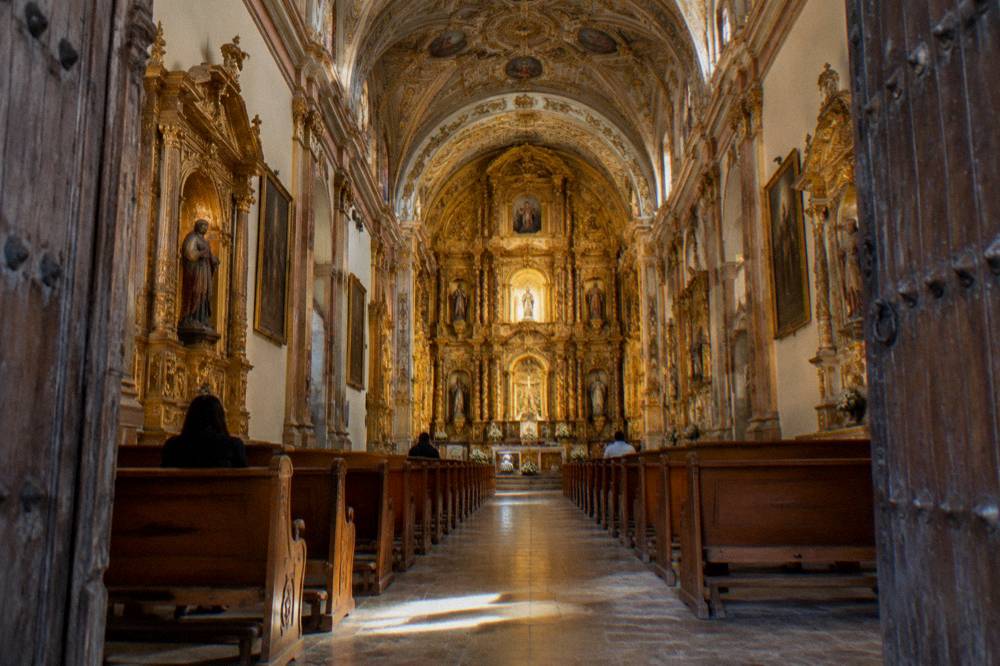
Yes: the museum's position inside the Centro Histórico makes it a natural stop on a guided walking circuit that takes in the Zócalo, the Andador Macedonio Alcalá, Santo Domingo de Guzmán and the surrounding museum cluster, all within a compact pedestrian zone. A professional local guide puts the pre-Hispanic collection in context with the colonial streets around it, and the walk needs no transport at any point. This is the single most efficient way to cover the museum quarter if your time in the city is short.
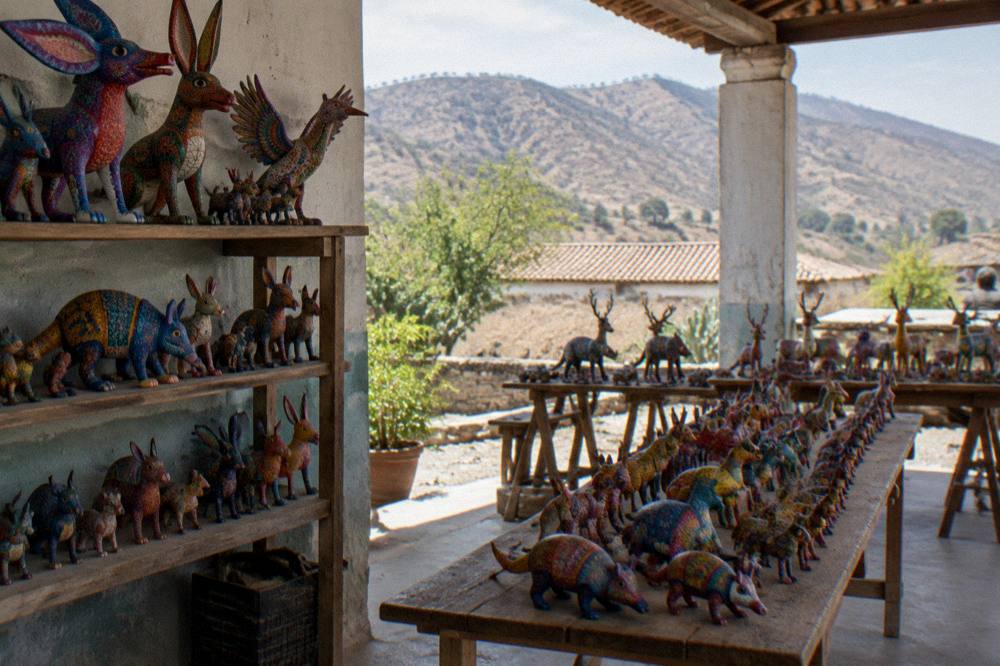
The related walk on this page covers the historic centre with a professional local guide, and its live listing carries the current price, schedule and review figures. If the craft tradition is what drew you to Oaxaca rather than the archaeology, the alebrije painting workshop in San Martín Tilcajete, reached with pickup from the city, puts you in front of working artisans in the village where the pieces are made; the San Martín Tilcajete guide on this site covers the town in depth.
Guided options also extend out of the valley. The Monte Albán guided half-day tour pairs a museum morning with the archaeological zone that supplies its context, and the trio of picks on this page spans history walking, ruins and craft workshop: three angles on the same valley culture. For food-led visits, the Oaxaca food tour guide and the mezcal tour guide cover the tasting side of the city, with the Mercado 20 de Noviembre and Mercado Benito Juárez as the market anchors.
What Else Sits Within Walking Distance In Oaxaca Centro?
Within the same walkable core you can reach the Zócalo, the Oaxaca Cathedral, the Basílica de la Soledad, the Andador Macedonio Alcalá, Santo Domingo de Guzmán, the Museo de las Culturas, the Jardín Etnobotánico and the Mercado 20 de Noviembre, all inside the UNESCO-inscribed historic centre and none requiring a vehicle. The Barrio de Jalatlaco and Barrio de Xochimilco sit at the edges of this core, and the Cerro del Fortín rises above it to the west, with the Guelaguetza auditorium on its slopes.
The neighbourhood geography is worth one paragraph before you walk it. The Centro Histórico area page maps the grid; the neighbourhood guide breaks down Jalatlaco, Xochimilco and the streets south of centre toward the markets. The Paseo Juárez el Llano, the Cerro del Fortín and the Paseo Juárez El Llano page round out the green spaces inside or beside the core. A museum visit slots into any of these circuits without replanning transport, because everything listed here is on foot.
When Should You Plan A Museum Day In Oaxaca?
Oaxaca City's dry season runs November to April and the rainy season May to October with its peak from June to September, and the monthly rain normals from the SMN station show June at 188.3 mm and January at 2.4 mm, so indoor museum days are easiest to schedule without giving up outdoor sightseeing. A museum-first morning with an archaeological zone after it works in any month, because the INAH zones open at 08:00 and the museums open later, which suits the pattern of rain arriving in the afternoon in the rainy season.
| Month | Mean high C | Mean low C | Rain mm | Days with rain |
|---|---|---|---|---|
| Jan | 28.9 | 10.3 | 2.4 | 1.4 |
| Feb | 31.1 | 11.6 | 4.6 | 1.1 |
| Mar | 33.3 | 13.6 | 17.6 | 4.1 |
| Apr | 34.9 | 15.8 | 47.3 | 7.6 |
| May | 33.8 | 16.7 | 97.9 | 13.7 |
| Jun | 30.9 | 16.7 | 188.3 | 19.9 |
| Jul | 30.1 | 15.9 | 118.6 | 20.4 |
| Aug | 30.0 | 15.9 | 131.8 | 20.5 |
| Sep | 29.1 | 16.1 | 163.6 | 21.4 |
| Oct | 29.3 | 14.5 | 63.1 | 12.0 |
| Nov | 29.0 | 12.3 | 9.1 | 3.5 |
| Dec | 28.9 | 11.0 | 9.0 | 2.4 |
Those are climate normals from the SMN station in the city, averages over the 1991 to 2020 period, not a forecast; any given day can differ. The city sits at about 1,550 m, so nights run cool even when afternoons reach the low 30s, and April's mean daily high of 34.9 C and January's mean nightly low of 10.3 C mark the range. The full month-by-month breakdown, including what each month means for planning, sits on the Oaxaca weather by month and best time to visit Oaxaca pages.
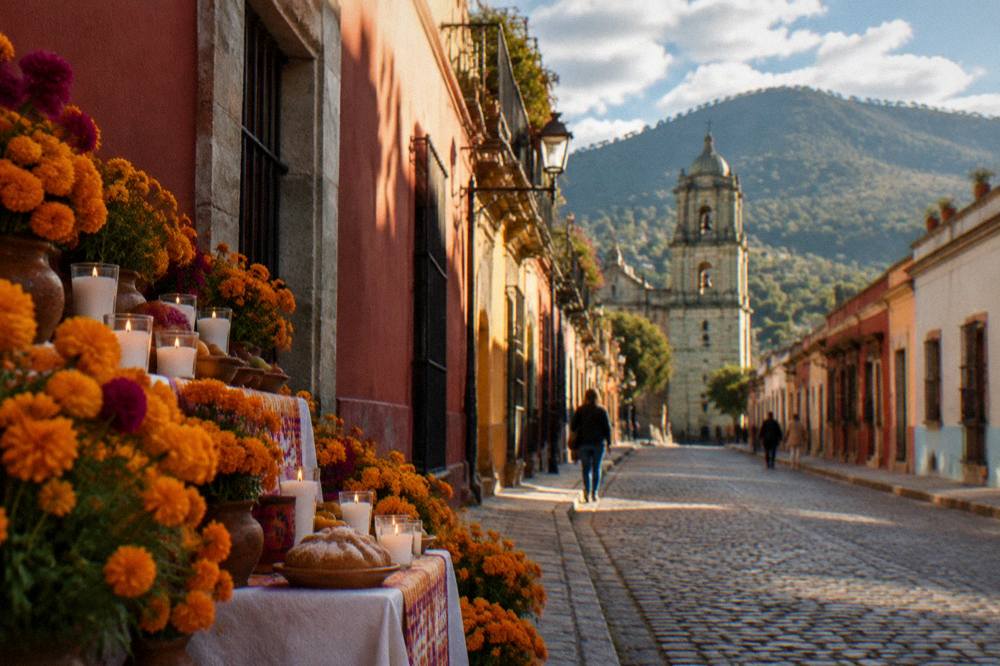
Two calendar anchors deserve a note because they shape museum-adjacent travel. Guelaguetza fills the city on two Mondays in July, and the 2026 edition, 20 and 27 July at the Auditorio Guelaguetza, sold its Palco A seats at 1,632 MXN and Palco B at 1,321 MXN with free sections C and D; 2027 dates are not announced. Día de Muertos centres on 31 October to 2 November by tradition, and the state's 2026 programme has not been announced, so the standing pattern, late-October decorations and cemetery nights, is all any planner can rely on. The Guelaguetza guide and the Día de Muertos in Oaxaca guide cover both in detail.
Is The Museo Rufino Tamayo Worth Adding To An Oaxaca Itinerary?
For a visitor with any interest in pre-Hispanic art, yes: it is the one collection in Oaxaca City assembled by a painter rather than an institute, it has only been fully back open since August 2025 after a 6.1 million MXN restoration, and it costs you almost no travel time because it sits inside the walkable museum cluster around Santo Domingo. The honest sizing is that the INAH zones and the Museo de las Culturas carry more volume, so the Tamayo works as a focused stop on a circuit rather than as a standalone destination that justifies its own transport.
Build the day this way: confirm the museum's opening hours for your date, walk the Centro Histólero core in the morning while the light is on the Andador, put the museum and the Museo de las Culturas in the late morning, and take lunch at the Mercado 20 de Noviembre before deciding between an afternoon at the Jardín Etnobotánico on a guided tour slot or a colectivo run east toward Mitla and Hierve el Agua. On a Tuesday-to-Saturday visit every door in that sentence is open; on Sunday and Monday the Museo de las Culturas is not, and the plan flexes around the Tamayo, the Textil and the archaeological zones instead.
The 2025 state indicators recorded 1,324,332 tourist arrivals in Oaxaca City across the year, with hotel occupancy at 51.73 percent and an average stay of 2.00 nights, which is the quantitative case for a museum circuit: on a two-night stay, a single well-ordered museum morning inside the walkable core is the realistic budget, and the Museo Rufino Tamayo, newly reopened and centrally placed, is a natural part of it. For everything the city offers beyond the museums, the full things to do in Oaxaca index is the site's root planning page.
Common Questions About The Museo Rufino Tamayo
What Is The Museo Rufino Tamayo In Oaxaca?
It is the Museo de Arte Prehispánico de México Rufino Tamayo, a museum in Oaxaca City's historic centre holding pre-Hispanic art collected by the Oaxacan-born painter. It reopened in August 2025 after more than three years closed, following a state restoration reported at about 6.1 million MXN.
Is The Museo Rufino Tamayo Open Now?
Yes, the state culture ministry announced its reopening in August 2025 after an intervention of about 6.1 million MXN and more than three years of closure. Opening hours and any admission fee are confirmed on the day of a visit, since reopening schedules can shift.
How Much Does The Museo Rufino Tamayo Cost?
For comparison, the Museo de las Culturas de Oaxaca, also an INAH operation, charges 105 MXN for Mexican nationals and 210 MXN for foreign visitors.
Which Oaxaca Museums Are Closed On Monday?
The Museo de las Culturas de Oaxaca, inside the Santo Domingo ex-convent, is open Tuesday to Saturday only, 10:00 to 16:00, so it is closed Sunday and Monday. The INAH archaeological zones, including Monte Albán, Mitla and Yagul, open every day of the week.
Can You Walk To The Museo Rufino Tamayo From The Zócalo?
Yes. The museum sits in the Centro Histórico, the walkable UNESCO-inscribed core whose sights, from the Zócalo up the Andador Macedonio Alcalá to Santo Domingo de Guzmán, the Museo de las Culturas and the Jardín Etnobotánico, all sit within a short pedestrian circuit.
How Long Should You Allow For The Museums Around Santo Domingo?
A realistic half-day covers the Museo Rufino Tamayo, the Museo de las Culturas de Oaxaca within its Tuesday-to-Saturday 10:00 to 16:00 hours, and one of the Jardín Etnobotánico's free guided tour slots, which run Monday to Friday at 10:30, 11:00, 11:30, 12:00 and 17:00 and Saturday from 10:30 to 12:00.