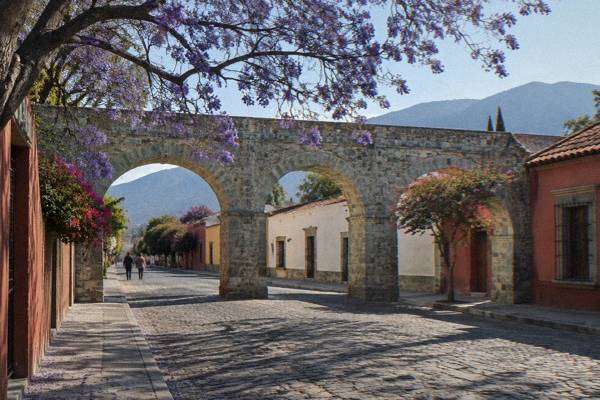
Xochimilco: The Aqueduct Barrio North Of Santo Domingo
This page covers how the barrio fits into a visit, what sits within walking distance, and which hours and fees apply to the sights around it.
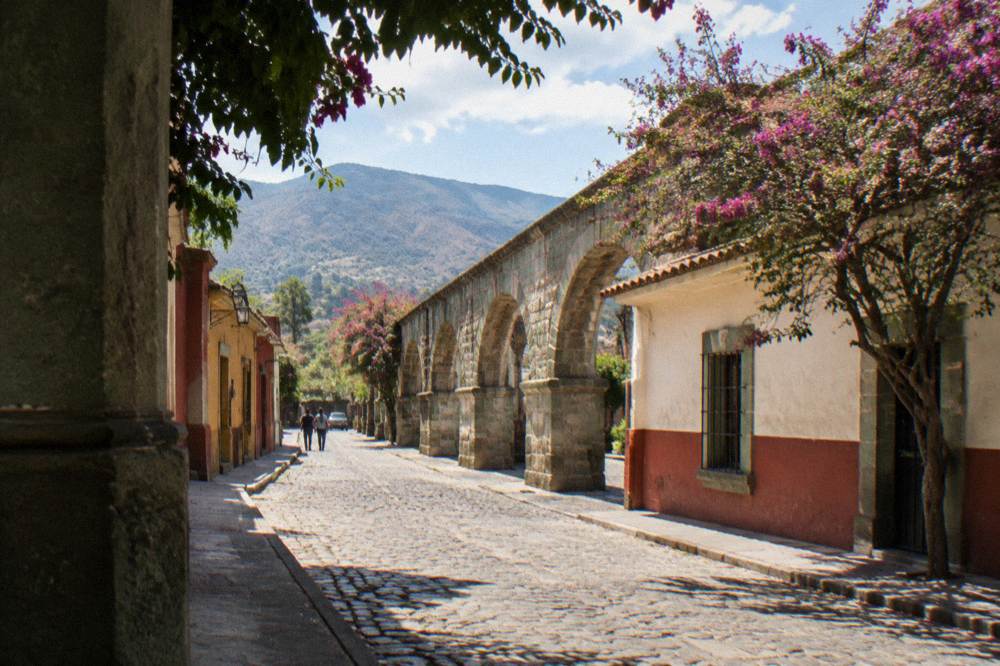
Xochimilco is the aqueduct barrio immediately north of Santo Domingo de Guzmán in Oaxaca City. It sits within easy walking distance of the church, the Jardín Etnobotánico and the Museo de las Culturas de Oaxaca, which opens Tuesday to Saturday 10:00 to 16:00 and charges 105 MXN for nationals and 210 MXN for foreigners.
Xochimilco is the aqueduct barrio that sits north of Santo Domingo de Guzmán in Oaxaca City, the inland highland capital of the state of Oaxaca in Mexico, set at about 1,550 m in the Valles Centrales. There is no sea, no beach and no port here: the Pacific coast at Puerto Escondido is about a 165-minute drive away on the new highway and belongs to a different kind of trip entirely. What Xochimilco offers instead is proximity. The barrio sits beside one of the most visited church complexes in the city and within walking range of the museum and garden that sit behind it, which makes it a natural first stop on any walk that starts at the Zócalo and heads north. This page sets out what the sources say about the barrio and the sights around it: INAH hours and fees, the state-published garden tour schedule, derived drive times to the valley sites, and the guided options that cover this part of the center.
What Is Xochimilco In Oaxaca City?
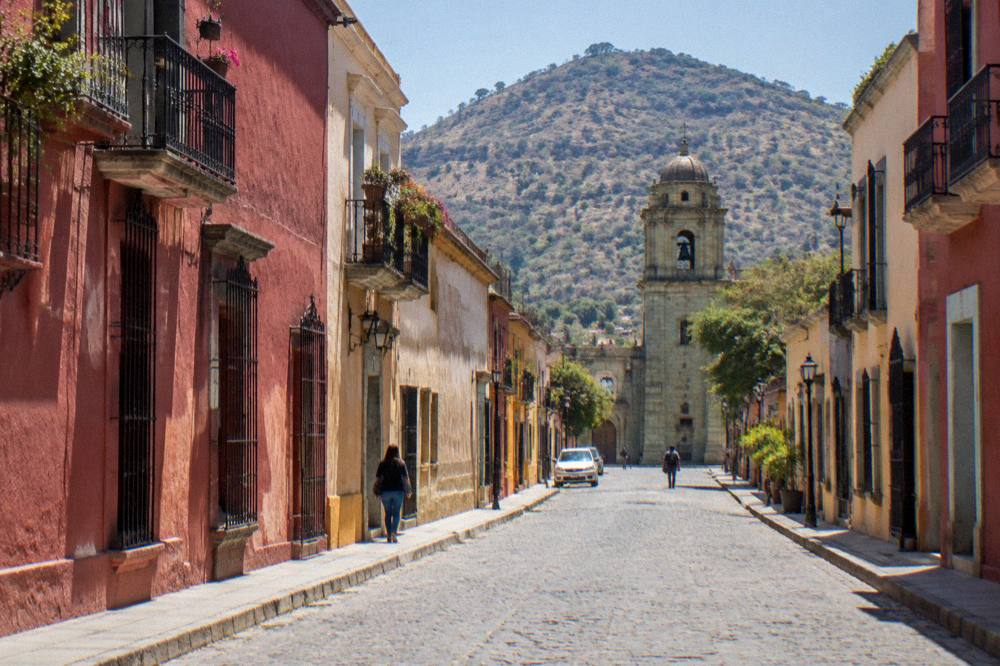
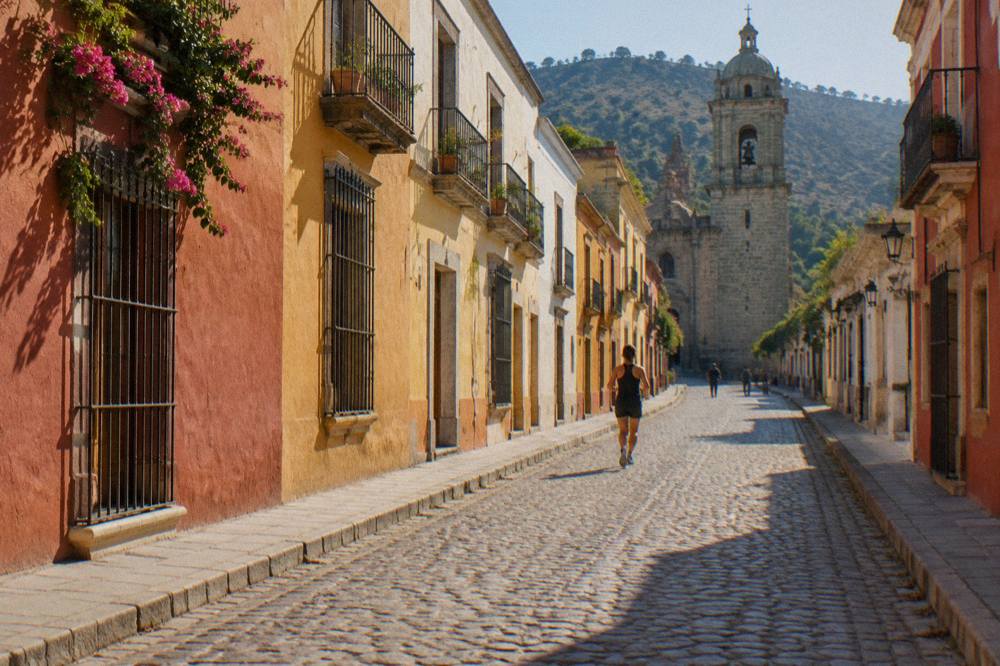
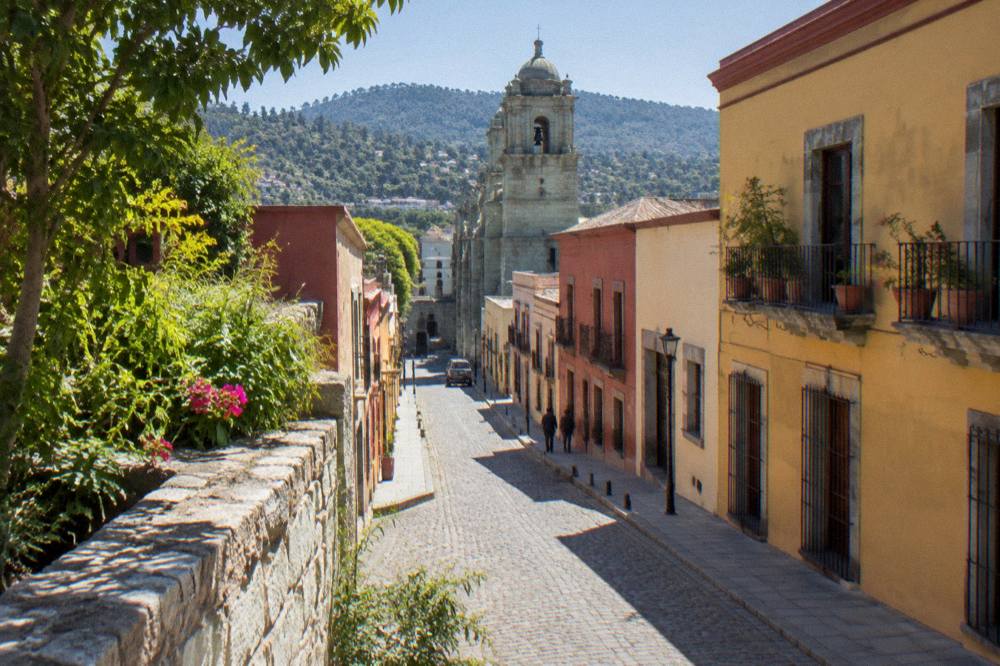
Xochimilco is a residential barrio of Oaxaca City, the state capital, known for the aqueduct remains that give it its standing name, and it sits directly north of the Santo Domingo de Guzmán church complex. It is one of the historic barrios that ring the Centro Histórico rather than a sight with a ticket gate, so visiting it costs nothing and takes as long as the walk itself. The barrio belongs to the same UNESCO-listed property as the rest of the historic center: the inscription is "Historic Centre of Oaxaca and Archaeological Site of Monte Albán", property 415, and Oaxaca de Juárez was founded in 1529 as Antequera. For a fuller picture of how the city's barrios compare, the Oaxaca neighbourhoods overview covers Xochimilco alongside Jalatlaco, Reforma and the blocks south of the center.
Because the barrio has no ticket office, no published hours and no entrance fee of its own, the practical questions all concern what surrounds it. The sights that draw visitors to this northern edge of the center are covered in the sections below, with their hours and fees exactly as the official pages list them. The barrio itself is best understood as connective tissue: a stretch of the walk between the Santo Domingo church and the streets further north and west.
Where Is Xochimilco Oaxaca Relative To Santo Domingo And The Centro Histórico?
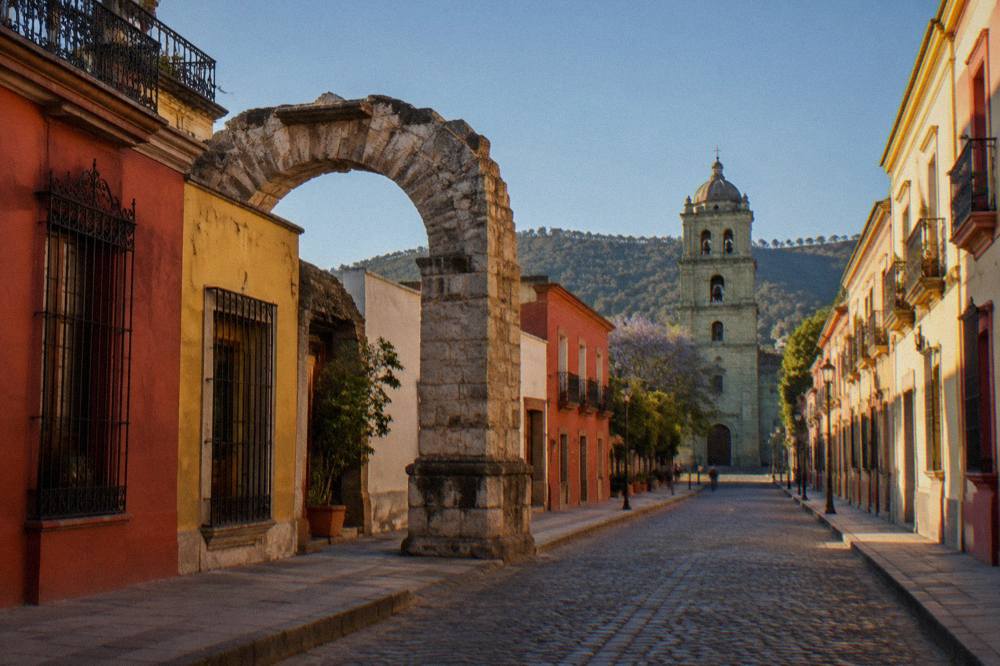
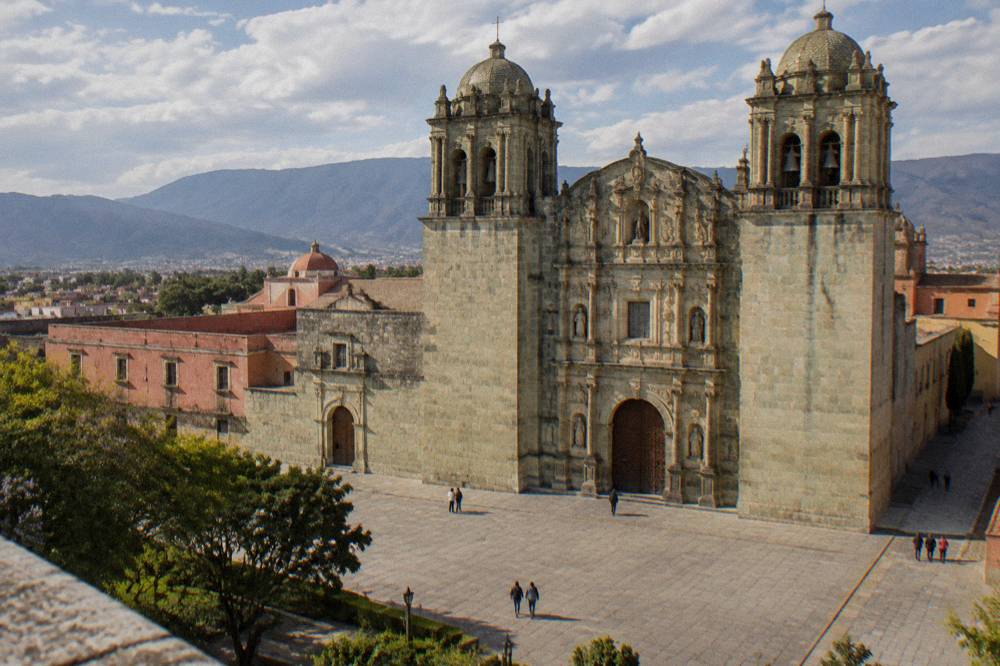
Xochimilco sits immediately north of the Santo Domingo de Guzmán complex, which itself stands at the northern end of the Andador Macedonio Alcalá, the pedestrian street that runs down to the Zócalo, the Plaza de la Constitución. The whole chain, Zócalo to Andador to Santo Domingo to Xochimilco, is walkable in one continuous line, and the barrio sits at the far end of it away from the main square. That geography is the reason the barrio appears on so many walking routes. A visitor who starts at the Zócalo and walks up the Andador Macedonio Alcalá reaches Santo Domingo first, then crosses into the barrio beyond it. The neighboring barrio of Jalatlaco, covered separately in the Jalatlaco area guide, lies east of this line and pairs naturally with it on a longer loop.
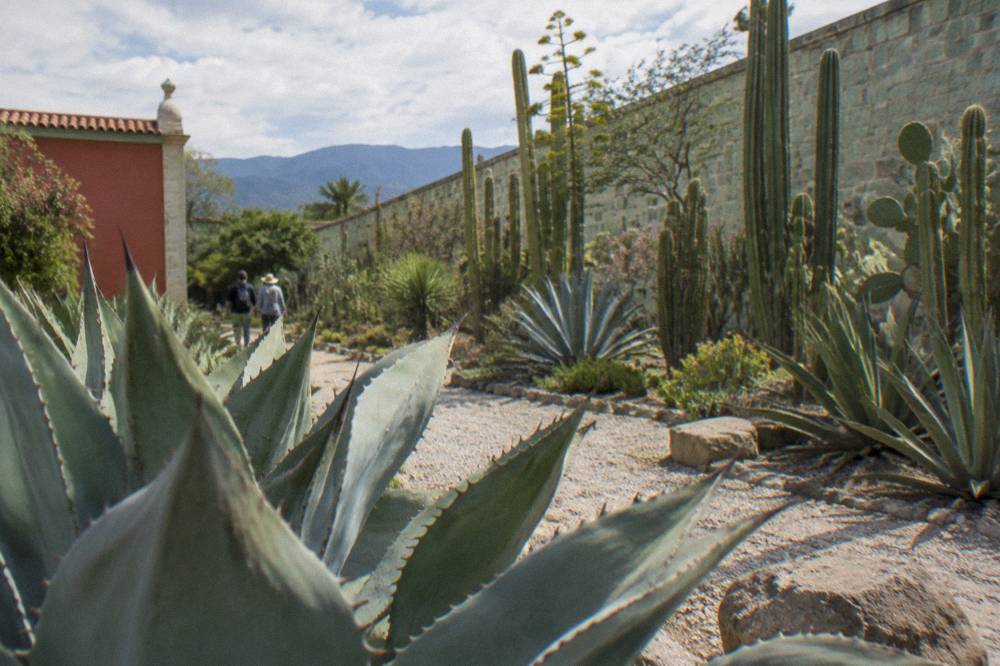
Two sights sit directly behind Santo Domingo and serve as the anchor points for this part of the center. The Jardín Etnobotánico is the walled garden whose free guided visits run on the state-published schedule listed below. The Museo de las Culturas de Oaxaca occupies the former convent building of the Santo Domingo complex, and its INAH page lists hours and fees that differ from the archaeological zones in the valley. Both are covered with their exact figures further down this page, in the section on museums near the barrio.
What Are The Best Xochimilco Oaxaca Walking Tour Options?
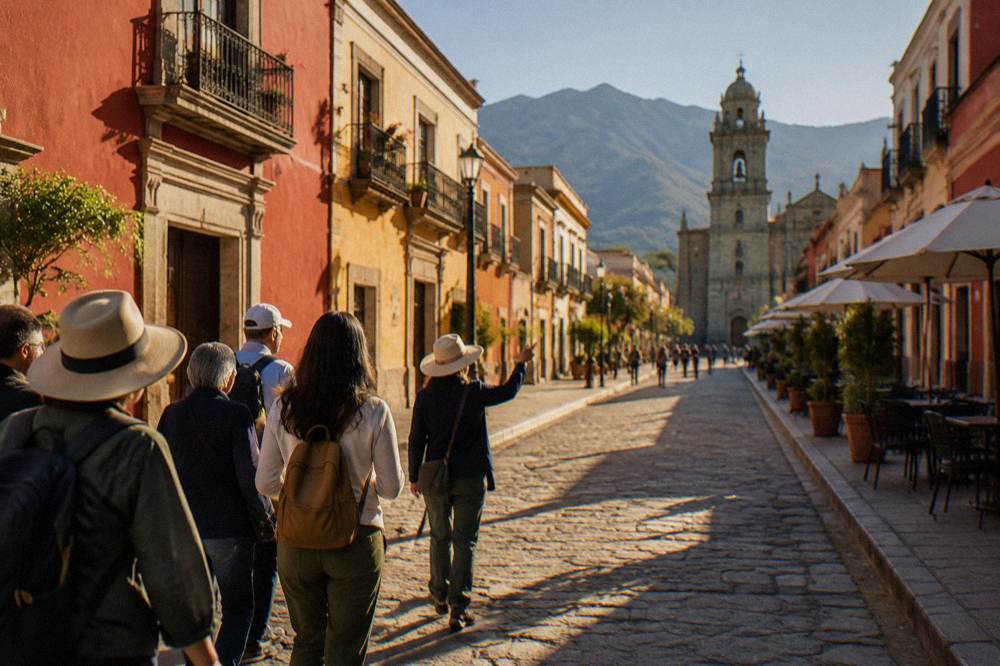
The strongest fit for the barrio is the Historic Center Walking Tour with a Professional Local Guide, a paid walk that covers the center and its historic streets, including the ground north of Santo Domingo. Beyond it, the Food and Markets Tour covers the center's food streets, and the Pantheons, flower fields and traditional dinner tour runs as an evening option centered on the city's cemeteries and Día de Muertos traditions. A guided walk solves the one thing a map cannot: the barrio's points of interest sit among ordinary residential streets, and a guide's route strings them together with the church, the garden and the Andador into a single narrative.
The paid historic-center walk is the one to book if the barrio is a priority rather than an afterthought. The operator's booking page covers the center's principal buildings and streets, and the walk starts from the center, which keeps the logistics simple. The Oaxaca food tour guide is the fuller companion for the markets side, and the Oaxaca walking tour guide sets out self-guided routes for anyone who prefers to walk without a guide. For a one-day plan that already threads the center together, the Oaxaca in one day itinerary sequences the Zócalo, the Andador and Santo Domingo in order.
The table below compares the three walks by what each one actually covers, using the decision names from the tour list.
| Tour | Decision name | Kind | Area |
|---|---|---|---|
| Oaxaca's Historic Center: Walking Tour with a Professional Local Guide | 2-Hour Historic Center Walk | walking-and-history-tours | Oaxaca City |
| Pantheons, flower fields, and traditional dinner | Pantheons, Flowers, Dinner | dia-de-muertos | Oaxaca City |
| Food and Markets Tour | Food and Markets Walk | food-and-market-tours | Oaxaca City |
If the historic center walk fits the plan, it can be reserved directly: Check availability.
How Do You Get To Xochimilco Oaxaca From The Zócalo?
There is no transport question to solve: Xochimilco is reached on foot from the Zócalo by walking up the Andador Macedonio Alcalá to Santo Domingo and continuing north, a single continuous pedestrian line through the historic center. No bus, taxi or colectivo is needed, since the walk to the center costs nothing. The practical notes are about timing instead. The sights at the northern end of the walk keep different clocks: the Museo de las Culturas de Oaxaca is open Tuesday to Saturday only, 10:00 to 16:00, and closed on Sunday and Monday, while the Jardín Etnobotánico runs its guided visits on the weekday and Saturday schedule listed in the next section. A walk that reaches the barrio on a Sunday or Monday therefore finds the church and the streets open but the museum shut.
Coming from further out, everything funnels into the center first. The city has no bike-share scheme of any kind, so the options are walking, taxis, ride-hailing in the city, or arriving on one of the ADO buses and walking from the terminal area. The getting around Oaxaca guide covers the center-to-valley transport picture, and the is Oaxaca walkable guide addresses the center specifically.
What Can You Pair With Xochimilco Oaxaca On The Same Morning Or Afternoon?
The strongest pairing is Santo Domingo de Guzmán, the Jardín Etnobotánico and the Museo de las Culturas de Oaxaca, all of which sit at the barrio's edge within a few minutes' walk of one another, followed by the walk back down the Andador Macedonio Alcalá to the Zócalo. All three anchor sights keep different schedules, so the order matters more than the distance. The garden's free guided tours run Monday to Friday at 10:30, 11:00, 11:30, 12:00 and 17:00, and Saturday from 10:30 to 12:00, with large and school groups required to book two weeks ahead, per the state release of 18 August 2025. The museum opens Tuesday to Saturday, 10:00 to 16:00. A weekday morning therefore fits everything: one of the mid-morning garden slots, the museum, the church, and then the barrio streets and the Andador on the way back to the Zócalo.
| Sight | Days open | Hours | Fee |
|---|---|---|---|
| Jardín Etnobotánico (guided visits) | Monday to Saturday | Mon-Fri 10:30, 11:00, 11:30, 12:00, 17:00; Sat 10:30 to 12:00 | Free |
| Museo de las Culturas de Oaxaca | Tuesday to Saturday | 10:00 to 16:00 | 105 MXN nationals, 210 MXN foreigners |
| Santo Domingo de Guzmán complex | see the church guide | see the church guide | see the church guide |
The Jardín Etnobotánico guide and the Museo de las Culturas guide carry the fuller detail for each. From there, the walk south past the Mercado Benito Juárez and the Mercado 20 de Noviembre turns the morning into a full center loop, and the Oaxaca Centro Histórico area guide frames the whole district.
Which INAH Sites And Museums Sit Near Xochimilco Oaxaca?
The INAH presence closest to the barrio is the Museo de las Culturas de Oaxaca inside the Santo Domingo complex, open Tuesday to Saturday 10:00 to 16:00 and charging the Category I fees of 105 MXN for nationals and 210 MXN for foreigners. The archaeological zones themselves, Monte Albán, Mitla and Yagul, all lie outside the city in the valleys, and each opens Monday to Sunday 08:00 to 17:00 under the same Category I fees. INAH charges by category, and the figures do not move between sites: Category I covers Monte Albán, Mitla and Yagul at 105 and 210 MXN, while Category III covers Dainzú, Lambityeco and Zaachila at 80 and 145 MXN. Zaachila opens Thursday to Sunday, 10:00 to 16:00, only. The INAH pages also list a flat 730 MXN rate for visits outside normal hours at several of the zones.
| INAH site | Days | Hours | Category | Fee MXN, nationals / foreigners |
|---|---|---|---|---|
| Museo de las Culturas de Oaxaca | Tuesday to Saturday | 10:00 to 16:00 | I | 105 / 210 |
| Monte Albán | Monday to Sunday | 08:00 to 17:00, last access 16:00 | I | 105 / 210 |
| Mitla | Monday to Sunday | 08:00 to 17:00, last access 16:30 | I | 105 / 210 |
| Yagul | Monday to Sunday | 08:00 to 17:00, last access 16:00 | I | 105 / 210 |
| Dainzú | Monday to Sunday | 08:00 to 17:00, last access 16:30 | III | 80 / 145 |
| Lambityeco | Monday to Sunday | 08:00 to 17:00, last access 16:30 | III | 80 / 145 |
| Zaachila | Thursday to Sunday | 10:00 to 16:00 | III | 80 / 145 |
| Atzompa | Monday to Sunday | 08:00 to 16:00, last access 15:00 | fee not listed on the page | n/a |
The full sight detail for the big zones sits in the Monte Albán guide, the Mitla guide and the Hierve el Agua guide. For touring them rather than driving, the Monte Albán tour guide and the Hierve el Agua tour guide compare the bookable options. More of these guides are collected on Oaxaca Travel Guide.
How Far Are The Valley Sites From Xochimilco Oaxaca?
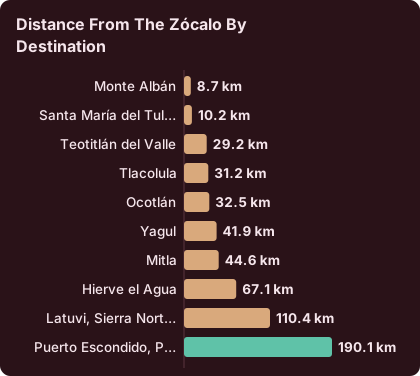
Measured from the Zócalo, the anchor point of the center beside the barrio, the valley sites run from about 15 minutes by road to Monte Albán out to about 57 minutes to Hierve el Agua, with Mitla about 37 minutes, Yagul about 38 minutes and Teotitlán del Valle about 26 minutes. These are derived free-flow drive times, and real traffic and mountain roads make them slower, so treat every figure as about rather than exact. The barrio sits a few minutes' walk north of the Zócalo, which adds nothing material to any road journey. What the table shows is the basic geometry of a Oaxaca visit: the center and its barrios are walkable, and everything else in the valleys is a drive.
| Destination | Distance from the Zócalo | Free-flow drive time |
|---|---|---|
| Monte Albán | 8.7 km | about 15 minutes |
| Santa María del Tule | 10.2 km | about 11 minutes |
| Teotitlán del Valle | 29.2 km | about 26 minutes |
| Tlacolula | 31.2 km | about 25 minutes |
| Ocotlán | 32.5 km | about 37 minutes |
| Yagul | 41.9 km | about 38 minutes |
| Mitla | 44.6 km | about 37 minutes |
| Hierve el Agua | 67.1 km | about 57 minutes |
| Latuvi, Sierra Norte | 110.4 km | about 142 minutes |
| Puerto Escondido, Pacific coast | 190.1 km | about 165 minutes |
The coast figure deserves its own caution: Puerto Escondido is a far extension, on the new highway, and prior guides put the real drive at 2.5 to 3.5 hours. It is not a day trip to combine with a center morning. The Tule tree guide covers the closest of the valley stops, at about 11 minutes from the center.
What Is The Weather Like In Xochimilco Oaxaca Through The Year?
Xochimilco shares the climate of Oaxaca City as a whole, at about 1,550 m in the Valles Centrales: a dry season from November to April and a rainy season from May to October with its peak from June to September, per the SMN station normals for 1991 to 2020. April carries a mean daily high of 34.9 C, June averages 188.3 mm of rain, and December and January bring the lowest mean minimums at 11.0 C and 10.3 C. There is no winter snow at this altitude and no sea to moderate anything. For a walking neighbourhood like this one, the numbers translate simply: dry-season months are the comfortable walking months, and rainy-season afternoons are when a walk through the barrio is best started early.
| Month | Mean high C | Mean low C | Rain mm |
|---|---|---|---|
| Jan | 28.9 | 10.3 | 2.4 |
| Feb | 31.1 | 11.6 | 4.6 |
| Mar | 33.3 | 13.6 | 17.6 |
| Apr | 34.9 | 15.8 | 47.3 |
| May | 33.8 | 16.7 | 97.9 |
| Jun | 30.9 | 16.7 | 188.3 |
| Jul | 30.1 | 15.9 | 118.6 |
| Aug | 30.0 | 15.9 | 131.8 |
| Sep | 29.1 | 16.1 | 163.6 |
| Oct | 29.3 | 14.5 | 63.1 |
| Nov | 29.0 | 12.3 | 9.1 |
| Dec | 28.9 | 11.0 | 9.0 |
September averages 163.6 mm of rain and June 188.3 mm, while January averages 2.4 mm. The month-by-month detail, including the rainy-season picture, sits in the Oaxaca weather by month guide, and the seasonal trade-offs are weighed in the best time to visit Oaxaca guide and the Oaxaca in the rainy season guide.
Is Xochimilco Oaxaca Worth A Dedicated Trip From The Center?
For a first visit of one or two days, no: the barrio belongs on an existing walk, strung onto the line between the Zócalo and Santo Domingo rather than visited as a destination in itself. For a third day onward, or for a visitor based in the center who has already walked the Andador, yes: the barrio rewards a slow loop paired with the garden tour slots and the museum's Tuesday to Saturday hours. The honest framing is that the barrio's value is positional. It costs nothing, it adds a short stretch to any center walk, and its two institutional anchors, the garden and the museum, carry schedules that decide whether a given morning works. Plan around those clocks and the barrio takes care of itself.
For the evening, the food walk and the pantheon dinner tour both extend the day beyond the walkable center hours, and both are picked below. Longer planning questions, from neighbourhood choice to full itineraries, are covered in the first time in Oaxaca guide and the where to stay in Oaxaca guide.
What Should You Know Before Walking Xochimilco Oaxaca?
Three practical facts shape the walk: the Museo de las Culturas de Oaxaca closes on Sunday and Monday, the Jardín Etnobotánico's free guided tours run on fixed weekday and Saturday slots rather than open access, and Oaxaca City sits on UTC-6 all year with no daylight saving, since Mexico abolished the seasonal change in 2022. Beyond those, the barrio asks for nothing but walking shoes and sun sense, given the altitude of about 1,550 m. The timezone point matters more than it looks: a 17:00 garden slot in midwinter is a late-afternoon slot, and the dry-season sun at altitude is strong even when the morning starts cool. The Oaxaca altitude and sun guide and the what to pack for Oaxaca guide carry the fuller practical detail.
For safety questions, the standing advisories are these: the UK FCDO advises against all but essential travel to parts of Mexico and does not name Oaxaca on its main page; Canada advises a high degree of caution for Mexico with regional advisories; the US State Department lists Oaxaca state at Level 2, Exercise Increased Caution, with restrictions in the Isthmus region away from the city. Road blockades by teachers' unions are a standing risk that can disrupt road and airport access. The Oaxaca safety guide unpacks all of it.
How Does Xochimilco Oaxaca Compare With The City's Other Barrios?
Xochimilco is the quiet, position-driven option among Oaxaca City's historic barrios: it sits closest to Santo Domingo and the museum-garden cluster, while Jalatlaco lies east of the center around its own church square, and Barrio de la Reforma and the blocks south of the center around the Basílica de la Soledad each anchor a different walking direction. All are walkable from the Zócalo, and none charges anything to enter. The comparison that matters for planning is which sights sit beside which barrio. This barrio's neighbors are the church, the garden and the museum. Jalatlaco pairs with the aqueduct-side streets on a longer loop. The south-of-center blocks pair with the two big markets, Benito Juárez and 20 de Noviembre, and the Oaxaca south of center and mercados guide covers that half of the city in full.
| Barrio or area | Direction from the Zócalo | Pairs best with |
|---|---|---|
| Xochimilco | north, past Santo Domingo | Jardín Etnobotánico, Museo de las Culturas |
| Jalatlaco | east | its own church square and street art |
| Centro Histórico core | at the Zócalo | Andador Macedonio Alcalá, cathedral |
| South of center | south | Mercado Benito Juárez, Mercado 20 de Noviembre |
| Reforma | west | Basílica de la Soledad direction walks |
The Reforma Oaxaca guide completes the set. Whichever direction the walk takes, the barrio north of Santo Domingo is the one that turns a church visit into a half-day of garden, museum and quiet streets, all within the same walkable corner of the city.
Common Questions About Xochimilco Oaxaca
What Is Xochimilco In Oaxaca City?
It is the aqueduct barrio that sits north of the Santo Domingo de Guzmán complex in Oaxaca City, the state capital. It is a walkable residential barrio within the UNESCO-listed Historic Centre of Oaxaca and Archaeological Site of Monte Albán property, not a ticketed sight.
How Far Is Xochimilco From The Zócalo In Oaxaca?
It sits at the far end of a continuous pedestrian line: Zócalo, then the Andador Macedonio Alcalá, then Santo Domingo de Guzmán, then the barrio. The whole stretch is walked without transport of any kind.
What Are The Museo De Las Culturas De Oaxaca Hours And Fees?
Per its INAH page, the museum opens Tuesday to Saturday, 10:00 to 16:00, and is closed Sunday and Monday. Entry is 105 MXN for nationals and 210 MXN for foreigners, the Category I rate.
When Do The Jardín Etnobotánico Guided Tours Run?
Free guided tours run Monday to Friday at 10:30, 11:00, 11:30, 12:00 and 17:00, and Saturday from 10:30 to 12:00, per the state release of 18 August 2025. Large and school groups book two weeks ahead.
Is There A Fee To Walk Through Xochimilco Oaxaca?
No. The barrio is public street, with no ticket gate, hours or entrance fee. Only the adjacent sights charge: the museum at its INAH rate, and the archaeological zones in the valleys at their category rates.
Can You Visit Monte Albán From Xochimilco Oaxaca?
Yes. Monte Albán lies about 15 minutes by road from the Zócalo, a derived free-flow figure, and real traffic makes it slower. It opens Monday to Sunday, 08:00 to 17:00 with last access at 16:00, at 105 MXN for nationals and 210 MXN for foreigners.