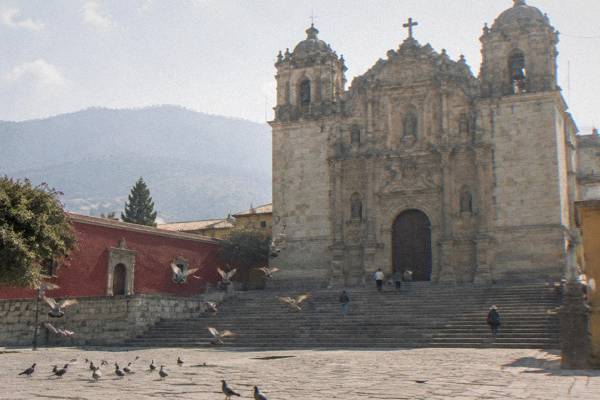
Free Things To Do In Oaxaca
Oaxaca City keeps a large share of its everyday sights free: the plazas, the churches, the neighbourhood murals, the free guided tours of the Jardín Etnobotánico and the pay-what-you-want walks of the historic centre. This page lists what costs nothing, what charges INAH admission, and how to build days around the free layer.
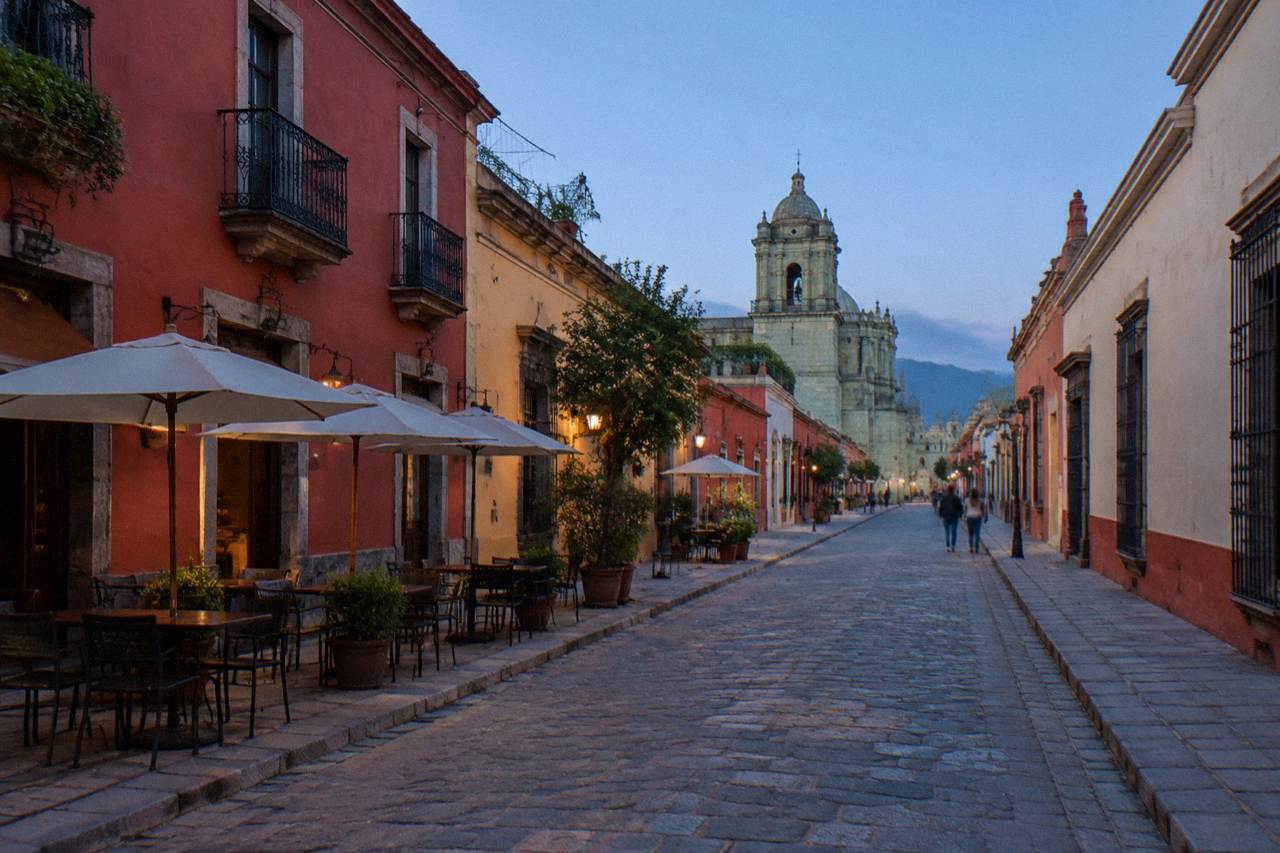
The genuinely free layer of Oaxaca City includes the Zócalo and Andador Macedonio Alcalá, the city's open churches, the murals of Jalatlaco and Xochimilco, the free guided tours of the Jardín Etnobotánico (Monday to Friday 10:30, 11:00, 11:30, 12:00 and 17:00; Saturday 10:30 to 12:00), and the pay-what-you-want GuruWalk tours of the centre. Monte Albán, Mitla and the city's INAH museums charge admission in pesos.
Oaxaca City, the capital of the state of Oaxaca in Mexico, gives away more of itself than many visitors expect. The historic centre is a UNESCO property, "Historic Centre of Oaxaca and Archaeological Site of Monte Albán", listed as property 415, and walking it costs nothing. So do the open churches, the mural-lined lanes of Jalatlaco and Xochimilco, the free guided tours of the Jardín Etnobotánico and the tip-based historic-centre walks listed in this site's tour list. What does charge is the INAH layer: the big archaeological zones and the city museums, at fixed peso rates this page sets out plainly so the free days and the paid days can be planned apart. For the full paid picture, start with the root guide at Oaxaca Travel Guide and the master page for everything worth doing in Oaxaca.
What Can You Do In Oaxaca City Without Paying Admission?
The free layer of Oaxaca City covers the Zócalo, the Andador Macedonio Alcalá, the neighbourhoods of Jalatlaco and Xochimilco with their street murals, the open interiors of the city's churches, the paseo of Paseo Juárez El Llano, and the free guided tours of the Jardín Etnobotánico, which run Monday to Friday at 10:30, 11:00, 11:30, 12:00 and 17:00 and on Saturday between 10:30 and 12:00.
The city is compact and walkable, which is what makes a free itinerary work: the historic centre strings the Zócalo, the Oaxaca Cathedral, the Andador Macedonio Alcalá and Santo Domingo de Guzmán along routes you can cover on foot without transport costs. The Zócalo is the Plaza de la Constitución, the city's central square, and the Andador is the pedestrian stretch that runs north from it toward Santo Domingo. Neither charges anything, and both anchor every walking route through the centre.
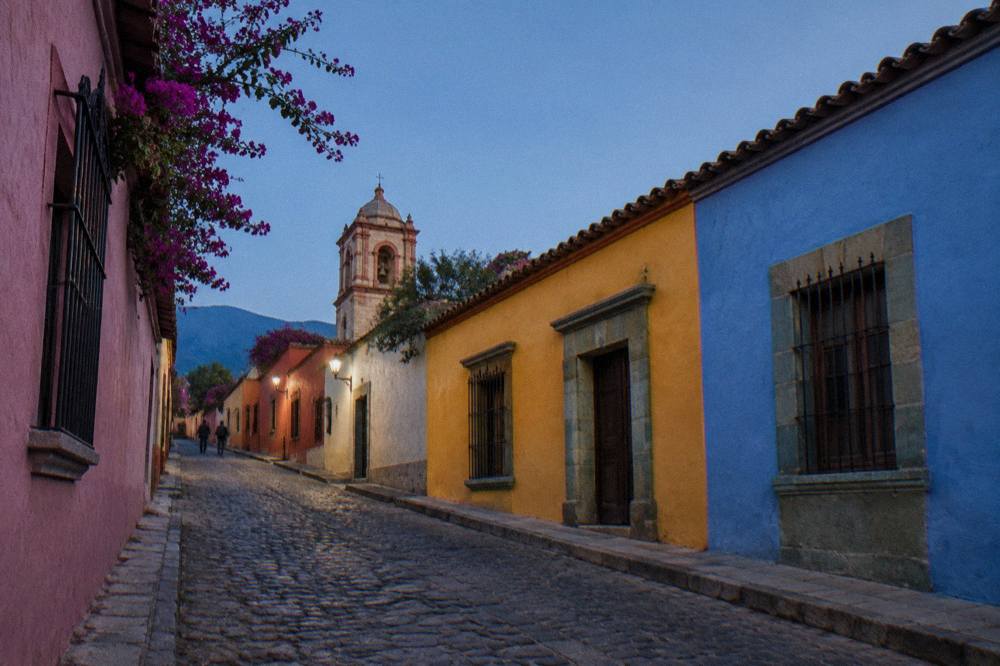
Around that spine sit the neighbourhoods. Jalatlaco and Xochimilco are the two barrios most visited for their painted walls and lanes, and street art here is public art: no ticket, no opening hour. This site carries dedicated guides to Jalatlaco's murals and lanes and to Xochimilco's streets for readers who want routes rather than a name.
The distinction that matters for budgeting is between the free civic layer and the INAH layer. The Instituto Nacional de Antropología e Historía runs the archaeological zones and several museums, and it charges by category. Category I sites, Monte Albán, Mitla and Yagul, cost 105 MXN for Mexican nationals and 210 MXN for foreign visitors. Category III sites, Dainzú, Lambityeco and Zaachila, cost 80 and 145 MXN. The Museo de las Culturas de Oaxaca at Santo Domingo charges the Category I rates and opens Tuesday to Saturday only, 10:00 to 16:00.
| Sight | Cost | Notes |
|---|---|---|
| Zócalo (Plaza de la Constitución) | Free | Central square of the historic centre |
| Andador Macedonio Alcalá | Free | Pedestrian street running north from the Zócalo |
| Jalatlaco and Xochimilco lanes | Free | Street art and neighbourhood walking |
| Jardín Etnobotánico guided tours | Free | Mon to Fri 10:30, 11:00, 11:30, 12:00, 17:00; Sat 10:30 to 12:00 |
| City churches (open hours) | Free | Including Santo Domingo de Guzmán and the Basílica de la Soledad |
| Monte Albán | 105 MXN nationals / 210 MXN foreigners | Category I, open daily 08:00 to 17:00 |
| Museo de las Culturas de Oaxaca | 105 MXN / 210 MXN | Tuesday to Saturday only, 10:00 to 16:00 |
Which Free Walking Tours Cover The Historic Center Of Oaxaca?
The tour list on this site includes several free, pay-what-you-want walking tours of Oaxaca City, among them Free Walking Tour Oaxaca by locals, a GuruWalk free walk: it costs nothing to join and you pay what you want at the end, with no set tip and no printed price. Others cover Jalatlaco's murals, Xochimilco's aqueduct and a general historic-centre introduction, all on the same pay-what-you-want basis.
The free-walk layer is one of Oaxaca's real bargains because the historic centre is dense enough that a two-hour route can carry a lot of it. Nine free walks are listed on this site. The one selected for this page's picks, Free Walking Tour Oaxaca by locals, is a GuruWalk walk: joining is free, the guide is paid by whatever the group chooses to give at the end, and the listing on this site carries its rating and length. Readers who prefer a fixed-price professional guide have that option too, and the historic centre walking tour pairs naturally with a free walk taken on a different day.
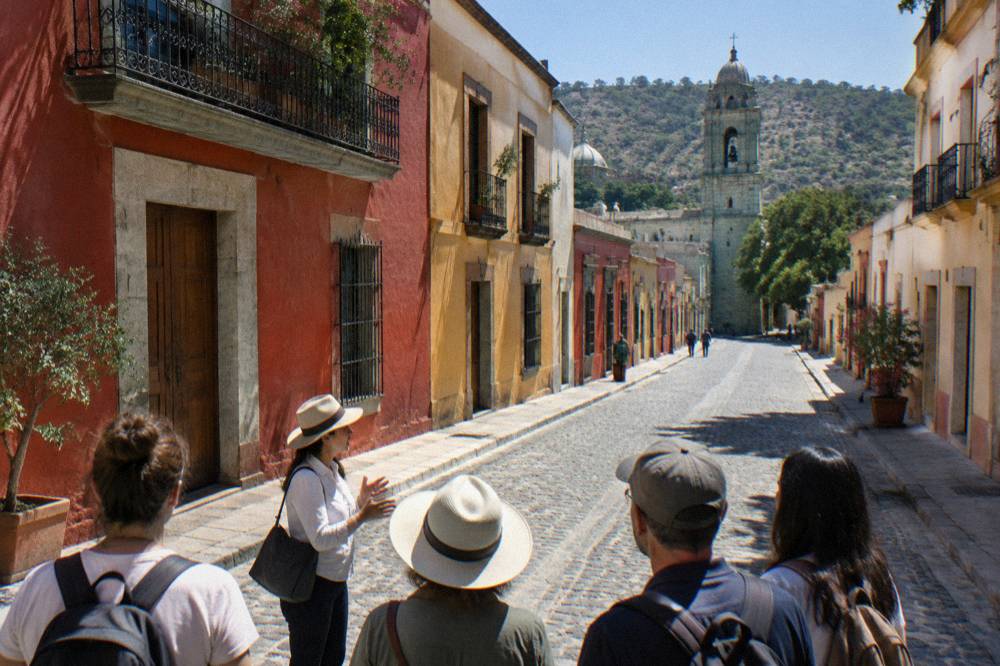
A practical pattern is to take one free walk early in a stay, as orientation, and spend the remaining days walking the same lanes alone. The city centre's scale rewards that: the Zócalo to Santo Domingo stretch is a short walk, and from Santo Domingo the routes into Jalatlaco and Xochimilco branch off on foot. The site's one-day itinerary shows how the free core fits into a single day, and the three-day itinerary adds the valley.
What Free Sights Fill A Day In Oaxaca Centro?
A full free day in Oaxaca Centro runs from the Zócalo north along the Andador Macedonio Alcalá to Santo Domingo de Guzmán, continues with the free Jardín Etnobotánico tour at a listed hour, then crosses into Jalatlaco and Xochimilco for the murals, and closes in the evening back at the Zócalo or the Basílica de la Soledad, all without an admission charge anywhere on the route.
Start at the Zócalo, the Plaza de la Constitución. From there the Andador Macedonio Alcalá, the pedestrian street, carries you past the Oaxaca Cathedral toward Santo Domingo de Guzmán, the church that anchors the northern end of the centre. This site carries a full guide to Santo Domingo church. The church interior is open to visitors without charge, unlike the Museo de las Culturas de Oaxaca housed in the former convent beside it, which charges Category I rates and opens Tuesday to Saturday only.
The Jardín Etnobotánico sits beside Santo Domingo, and its visits are guided and free: tours run Monday to Friday at 10:30, 11:00, 11:30, 12:00 and 17:00, and Saturday between 10:30 and 12:00. Large and school groups are asked to reserve two weeks ahead. Timing a Santo Domingo visit to one of those hours is the single most structured free hour available in the city, and it is worth planning the morning around.
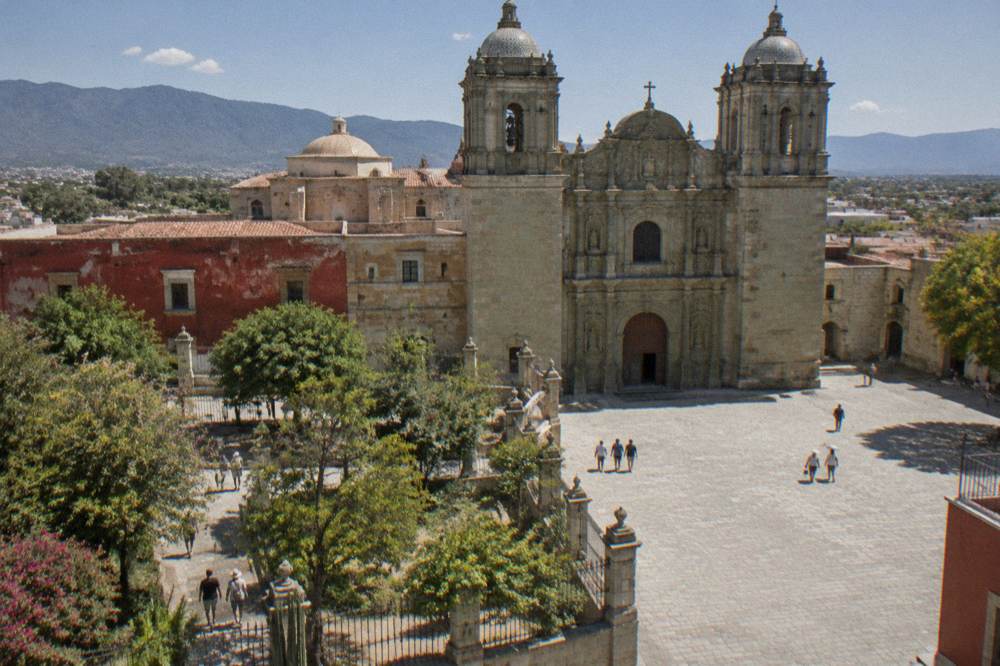
Afternoon belongs to the barrios. Jalatlaco lies east of the centre and Xochimilco north of it; both are ordinary residential neighbourhoods whose painted walls have made them walking destinations, and this site's guide to Oaxaca street art and IFAM murals maps the detail. The return leg can pass the Basílica de la Soledad, another open church, before ending at the Zócalo. Nothing on the route requires a ticket, a booking or a vehicle.
| Time of day | Free sight | What the sources give |
|---|---|---|
| Morning | Zócalo and Andador Macedonio Alcalá | Central square and pedestrian street, no charge |
| Late morning | Jardín Etnobotánico tour | Free guided tours Mon to Fri 10:30, 11:00, 11:30, 12:00, 17:00; Sat 10:30 to 12:00 |
| Midday | Santo Domingo de Guzmán | Open church interior, no charge; museum beside it is paid |
| Afternoon | Jalatlaco and Xochimilco | Street art in public lanes, no charge |
| Evening | Basílica de la Soledad and Zócalo | Open church and square, no charge |
What Free Museums And Gardens Are In Oaxaca City?
The one free guided visit among the city's cultural institutions is the Jardín Etnobotánico, whose tours cost nothing and run Monday to Friday at 10:30, 11:00, 11:30, 12:00 and 17:00, and Saturday 10:30 to 12:00. The INAH museums charge: the Museo de las Culturas de Oaxaca at Santo Domingo opens Tuesday to Saturday, 10:00 to 16:00, at 105 MXN for nationals and 210 MXN for foreign visitors.
The garden is the headline free item, and its schedule rewards punctuality: the weekday slots cluster in the late morning with a single 17:00 option, and Saturday offers the 10:30 to 12:00 window. Groups book two weeks ahead. The rest of the museum layer is paid, and the site's guide to Oaxaca's museums covers which ones charge and when. One dated item from the closures file: the Museo de Arte Prehispánico de México Rufino Tamayo reopened in August 2025 after more than three years closed, following a state restoration.
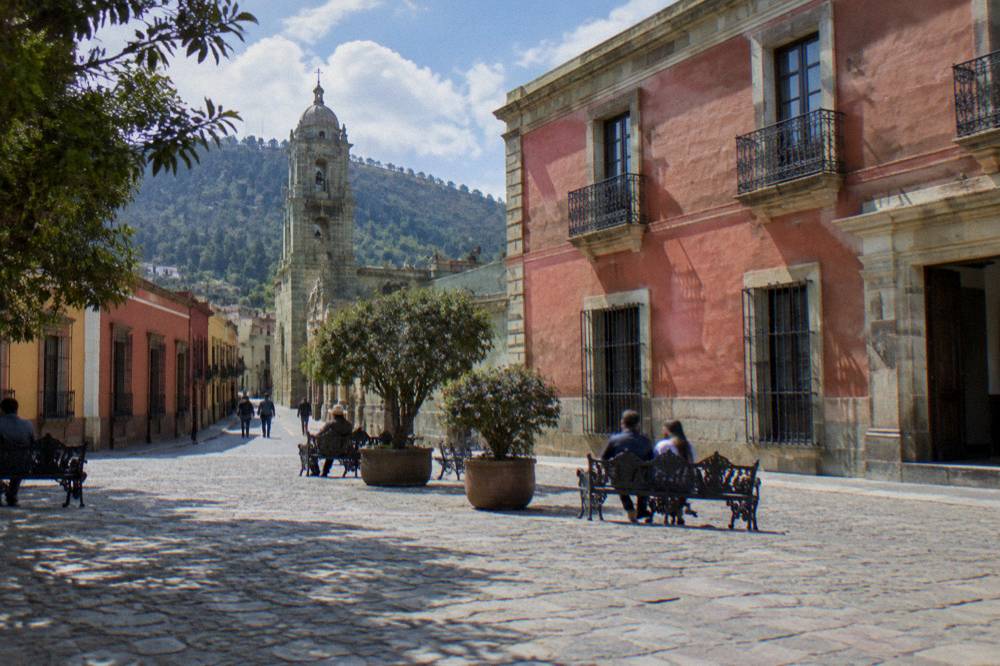
For a longer stay, the honest framing is that the free layer covers the outdoors and the civic spaces, while the paid layer covers the interiors with collections. A budget of zero still yields full days: plazas, churches, murals, the garden tour and the paseo along Paseo Juárez El Llano, the shaded walk this site covers in its own guide. A budget that stretches to one paid interior can put it toward the Museo de las Culturas, keeping in mind it is closed Sunday and Monday.
| Institution | Admission | Days open |
|---|---|---|
| Jardín Etnobotánico | Free guided tours | Monday to Saturday (listed hours) |
| Museo de las Culturas de Oaxaca | 105 MXN / 210 MXN | Tuesday to Saturday, 10:00 to 16:00 |
| Monte Albán | 105 MXN / 210 MXN | Monday to Sunday, 08:00 to 17:00 |
| Mitla | 105 MXN / 210 MXN | Monday to Sunday, 08:00 to 17:00 |
| Zaachila | 80 MXN / 145 MXN | Thursday to Sunday, 10:00 to 16:00 |
Which Free Churches And Plazas Can You Visit In Oaxaca?
The free ecclesiastical circuit in Oaxaca City runs from the Oaxaca Cathedral on the Zócalo, north along the Andador Macedonio Alcalá to Santo Domingo de Guzmán, and out to the Basílica de la Soledad, with all three interiors open to visitors at no charge, alongside the neighbourhood churches of Jalatlaco and Xochimilco whose doors face public streets and lanes.
The Zócalo itself is the first plaza: the Plaza de la Constitución, flanked by the cathedral and the state buildings. The Andador connects it to Santo Domingo, the largest of the city's church interiors open to walk-in visitors. The Basílica de la Soledad sits a few blocks west, and this site gives it its own guide. Beyond the big three, the barrio churches are smaller and sit directly on their lanes, so a mural walk through Jalatlaco doubles as a church walk.
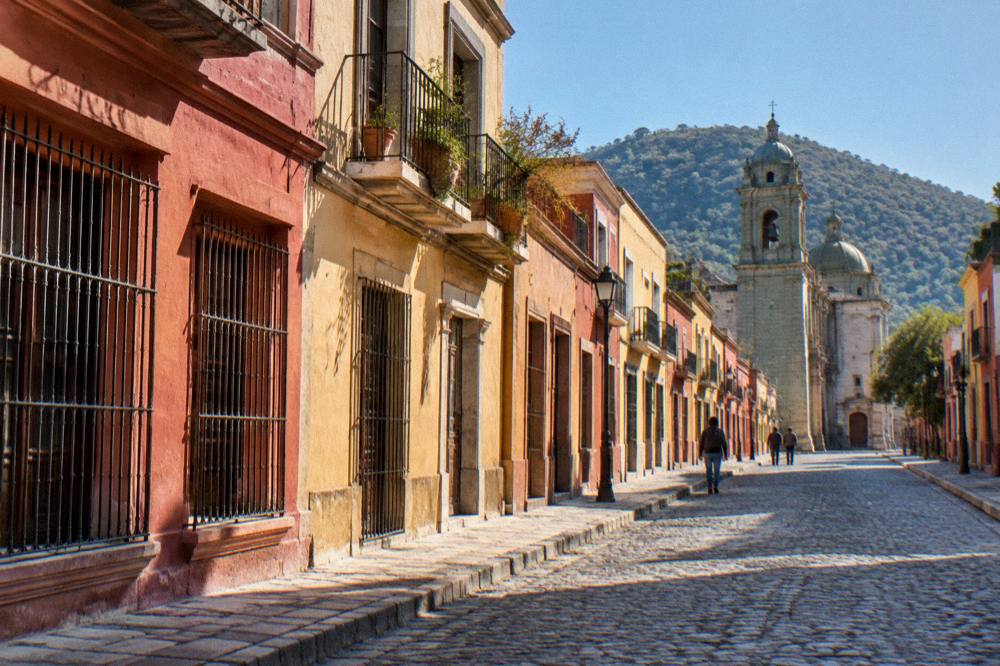
First, the paid item attached to Santo Domingo is the museum, not the church: the former convent's Museo de las Culturas charges and closes Sunday and Monday, while the church itself remains free. Second, the plaza layer is not only the Zócalo: Paseo Juárez El Llano, the planted walk to the south of the centre, is a public space with no gate, and it is covered in this site's guide to parks and walks.
What Free Views And Hills Are Around Oaxaca City?
The free viewpoint closest to the centre is the Cerro del Fortín, the hill west of the historic centre that gives its name to the Auditorio Guelaguetza and carries walking ground as a protected natural area; climbing it costs nothing, and the reforestation of 1.5 hectares with native species there in 2025 is the most recent management work reported by the state government.
The hill is the city's own open space. The auditorium on its upper slope is a ticketed venue only on performance days; the ground around it is public. The site's guide to Cerro del Fortín covers the approaches. Beyond the hill, the free viewing layer is largely the rooftop-and-terrace question, and this site keeps that in its guide to rooftop bars and nightlife, where a drink, not a ticket, is the price of the view.
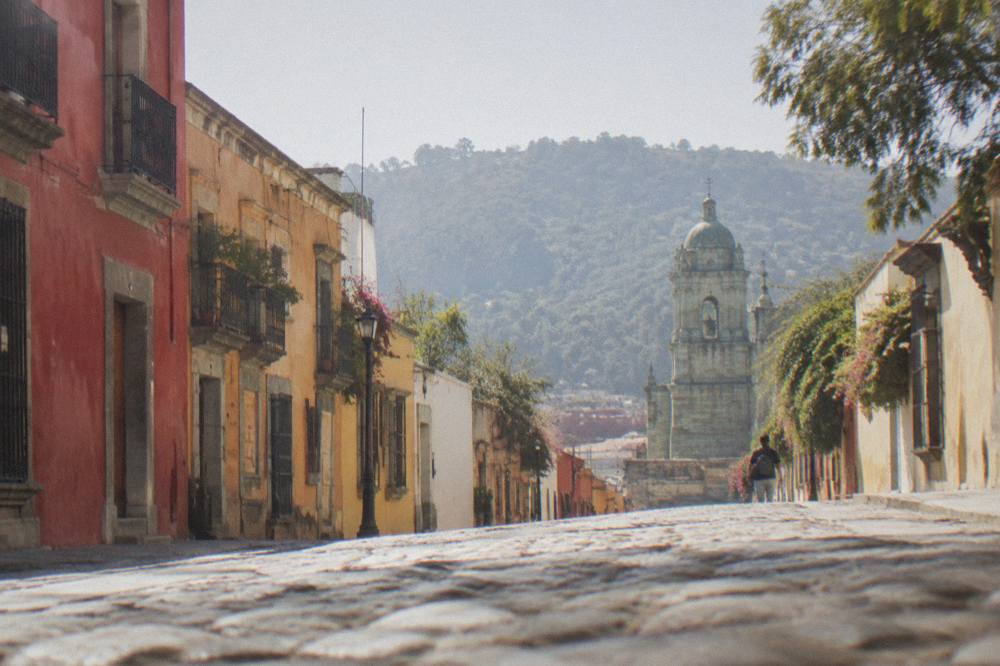
The other free outdoor layer is the valley's landscape seen from the road: the drive to Hierve el Agua, about 57 minutes from the Zócalo by the derived free-flow estimate, and to Teotitlán del Valle, about 26 minutes, pass through open country at no toll to the eye. The sites at the end of those roads charge or are run by their communities. The site's Hierve el Agua guide covers the visit.
What Free Events Happen In Oaxaca Through The Year?
The one reliably free ticketed event in the Oaxaca calendar is the Guelaguetza's Palcos C and D, the two free sections of the Auditorio Guelaguetza filled by arrival order, which stood in the 2026 edition alongside paid Palco A at 1,632 MXN and Palco B at 1,321 MXN; beyond it, the free event layer is the city's public processions and the street programme around festivals, where the core dates of Día de Muertos are 31 October to 2 November.
The Guelaguetza is the standing July event: two Mondays, the Lunes del Cerro, at the Auditorio Guelaguetza on the Cerro del Fortín. The 2026 edition ran 20 and 27 July with performances at 10:00 and 17:00, its paid sections sold through Superboletos from 1 June, and Palcos C and D free by arrival. The 2027 dates are not announced, so this page gives the pattern, not a date to book against. The related programme, the Calendas, processions that left the Fuente de las Ocho Regiones in the 2026 edition, is street theatre: watching it costs nothing.
| Event | Standing pattern | Free element |
|---|---|---|
| Guelaguetza | Two Mondays in July, Auditorio Guelaguetza | Palcos C and D free by arrival order |
| Calendas de las Culturas | Processions during Guelaguetza month | Street procession, no charge |
| Día de Muertos | Core dates 31 October to 2 November | Comparsas and cemetery vigils in public space |
| Noche de Rábanos | Traditional date 23 December | Display in the Zócalo area, public viewing |
Día de Muertos centres on 31 October to 2 November: the traditional dates. The 2025 state programme ran 25 October to 4 November with more than 140 activities; the 2026 programme had not been announced, so no 2026 dates are given. The festival's free layer is the public one: the decorated Zócalo, the comparsas in the streets, and the cemeteries open at night around 1 and 2 November, above all Xoxocotlán. Noche de Rábanos keeps its traditional date of 23 December; the 2026 edition's details are likewise unannounced, and the site's festival guide holds the standing patterns.
How Do You Build Free Days Around Oaxaca's Weather?
Free sightseeing in Oaxaca City works year-round, but the SMN station normals shape it: the dry season runs November to April, with January averaging 2.4 mm of rain, and the rainy season May to October, with June averaging 188.3 mm and September 163.6 mm, so free outdoor days cluster most easily in the November to April window and rainy-season days need an indoor or covered fallback.
The station figures are averages, not forecasts, but they are the planning tool that exists. A free day built on the Zócalo, the Andador and the mural lanes is exposed to the sky; the Jardín Etnobotánico tour runs on a schedule regardless; and the church interiors are roofed. That makes the rainy-season free itinerary an easy shuffle: gardens and plazas in the morning, churches and covered market halls when the afternoon rain arrives, since the June to September peak delivers most of the annual 853.3 mm.
| Month | Average rain mm | Average high C | Free-day planning |
|---|---|---|---|
| January | 2.4 | 28.9 | Fully outdoor free days |
| April | 47.3 | 34.9 | Outdoor mornings, shade at midday |
| June | 188.3 | 30.9 | Indoor fallbacks in the afternoon |
| September | 163.6 | 29.1 | Indoor fallbacks in the afternoon |
| November | 9.1 | 29.0 | Fully outdoor free days |
The site's guide to Oaxaca in the rain and the month-by-month weather guide carry the full table and the seasonal logic.
How Do Free Days Combine With One Paid Valley Day?
A workable split for a four-day stay is three free days built on the centre, the barrios, the garden tour and a pay-what-you-want walk, plus one paid valley day covering Hierve el Agua, Mitla and a mezcal distillery, since the valley's headline sights are about 37 to 57 minutes from the Zócalo by the derived drive estimates and sit beyond the free layer entirely.
The valley day is the one worth paying for. The related pick on this page is the Hierve el Agua and mezcal-making tour, which covers the petrified waterfalls and a distillery in a single loop from the city, and the listing carries its own price and rating: Check availability. Readers comparing loops can start from the site's Hierve el Agua tour page and the Mitla attraction guide. Solo travel works on the same split, and the solo guide covers it.
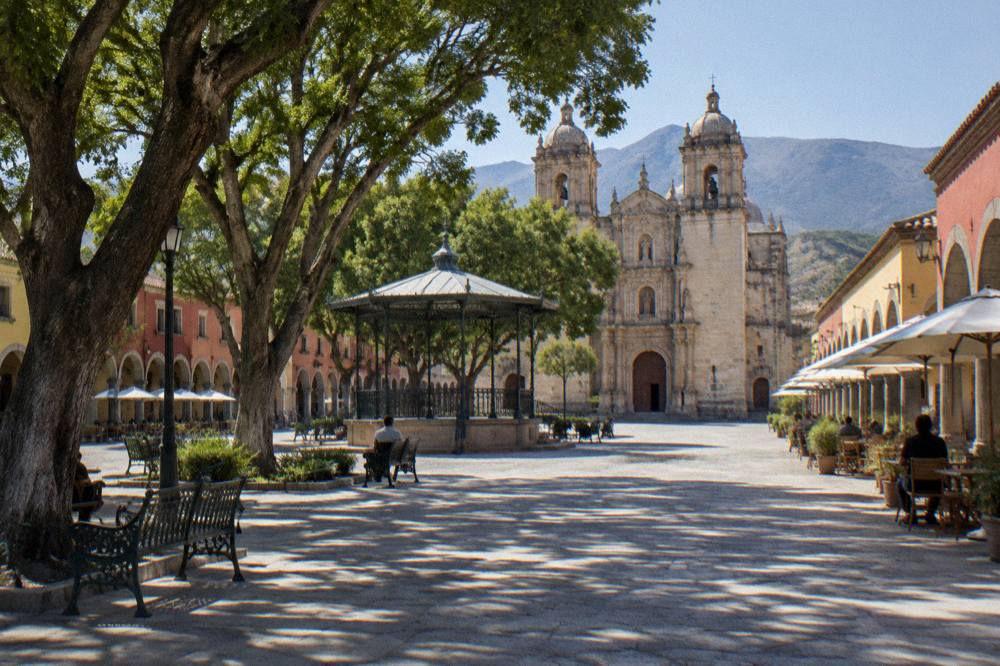
The free days hold up on their own because the centre is a UNESCO-listed urban fabric you walk through rather than a set of ticket gates. The paid layer, the INAH sites and the valley, adds the archaeology and the landscape. Families can run the same split; the Oaxaca with kids guide shows how the free core carries a family day, and first-time visitors get the fuller orientation.
Common Questions About Free Things To Do In Oaxaca
What Is Genuinely Free In Oaxaca City?
The plazas and pedestrian streets including the Zócalo and the Andador Macedonio Alcalá, the open church interiors such as Santo Domingo de Guzmán and the Basílica de la Soledad, the mural lanes of Jalatlaco and Xochimilco, the Cerro del Fortín hill, the Guelaguetza's free Palcos C and D on performance days, and the free guided tours of the Jardín Etnobotánico at the listed weekday and Saturday hours.
Are The Free Walking Tours In Oaxaca Really Free?
The free walks on this site's tour list, including the GuruWalk walk Free Walking Tour Oaxaca by locals, cost nothing to join: they are pay-what-you-want, and you tip the guide at the end. There is no set price, and this page prints none.
Is Monte Albán Free?
No. Monte Albán is an INAH Category I site charging 105 MXN for Mexican nationals and 210 MXN for foreign visitors, open Monday to Sunday 08:00 to 17:00 with last access at 16:00. The free layer of the city is the historic centre, the churches and the murals, not the archaeological zones.
Is The Jardín Etnobotánico Free?
Yes, the guided visits are free. They run Monday to Friday at 10:30, 11:00, 11:30, 12:00 and 17:00, and Saturday between 10:30 and 12:00, with large and school groups asked to reserve two weeks ahead.
What Free Things Can You Do In Oaxaca At Night?
The evening free layer is the Zócalo and the surrounding streets, the comparsas and street programme around Día de Muertos between the traditional dates of 31 October and 2 November, and the processions of Guelaguetza month in July. The site's guide to Oaxaca at night covers the fuller picture.
Can You Visit Oaxaca Churches For Free?
Yes. The walk-in interiors of the Oaxaca Cathedral, Santo Domingo de Guzmán and the Basílica de la Soledad charge no admission, and the neighbourhood churches of Jalatlaco and Xochimilco face public streets. The paid item at Santo Domingo is the Museo de las Culturas de Oaxaca beside the church, which opens Tuesday to Saturday only.
The free layer of Oaxaca City is wide enough that a visitor can spend three days in it without buying a single ticket, and the paid layer, from the 210 MXN foreign rate at Monte Albán to the valley loops beyond Mitla and Hierve el Agua, becomes a deliberate choice rather than a default.