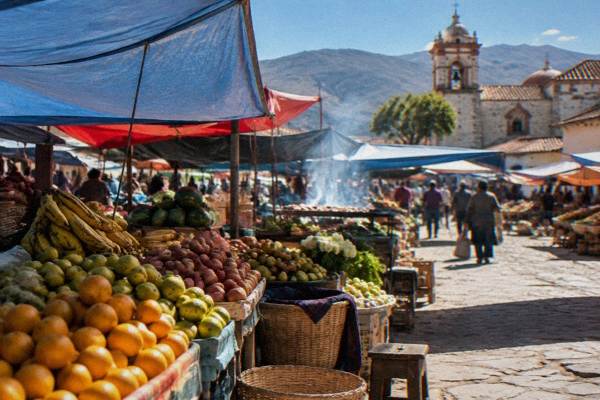
The Market And Bus Station District South Of The Centre In Oaxaca
South of Oaxaca City's Zócalo the grid loosens into a working district of markets, supply streets and long-distance bus connections, the layer of the city where the Valles Centrales come in to trade.
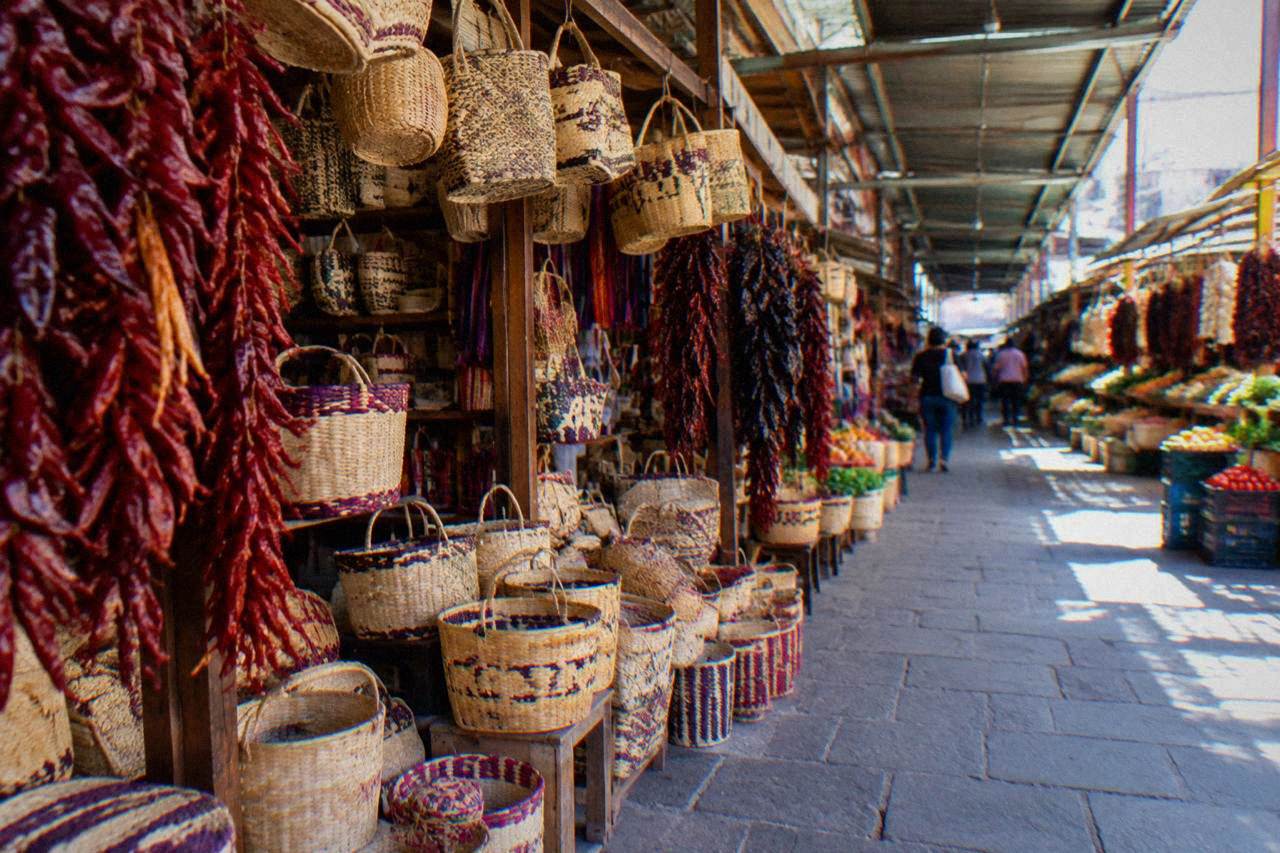
The district south of Oaxaca City's centre holds the Mercado Benito Juárez and Mercado 20 de Noviembre markets near the Zócalo, the vast Mercado de Abastos wholesale zone further out, and the ADO bus terminal connections that link the city to the valleys, the coast and Mexico City.
Oaxaca City (Oaxaca de Juárez) is the capital of the state of Oaxaca in Mexico, an inland highland city in the Valles Centrales at about 1,550 m, and the district immediately south of its historic centre is where the city does its shopping. The state government's own account of the capital's markets describes them as places that guard the identity and traditions of Oaxaca, and that character is clearest here, in the blocks that run from the edge of the historic centre toward the wholesale zone of Abastos and the bus connections beyond it. This guide covers what sits in that southern belt, how the markets and transport hubs fit together, and how to fold the district into a wider trip around things to do in Oaxaca.
What Sits South Of The Centre In Oaxaca City?
The southern district of Oaxaca City runs from the blocks just below the Zócalo through the permanent markets around Mercado Benito Juárez and Mercado 20 de Noviembre, then out to the Mercado de Abastos wholesale zone, with the city's long-distance bus connections on its eastern side. The state government counts the municipality's population at 270,955 residents (Censo 2020), and a large share of the region's trade moves through this belt.
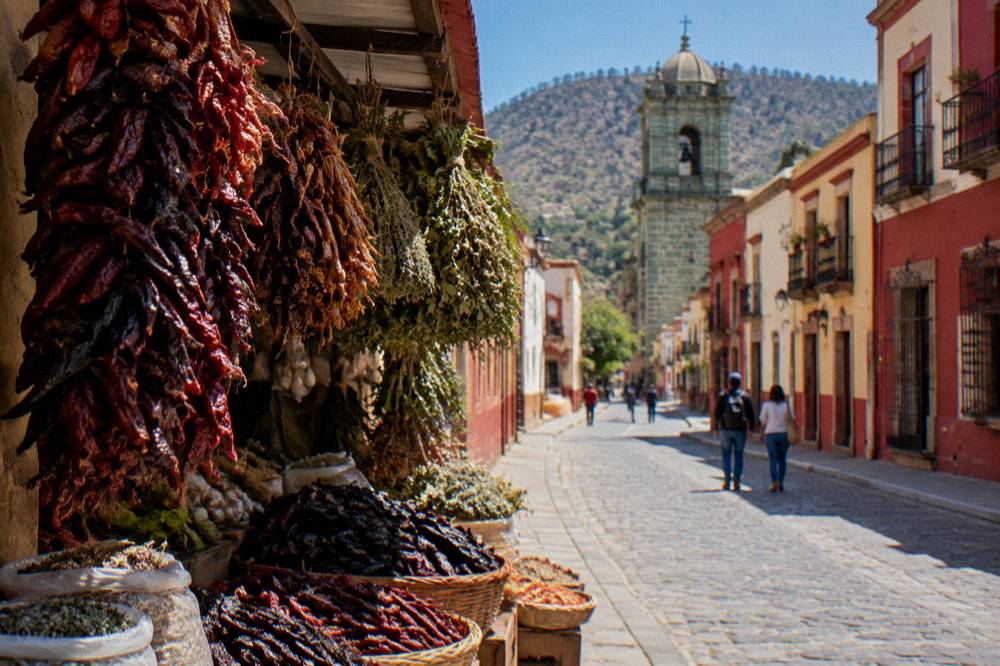
It is a working quarter more than a sightseeing one. The state government's release on the capital's markets notes that Mercado 20 de Noviembre was founded in 1893 and keeps tianguis, or open stall, elements on Saturdays, and that Mercado de Abastos has served the capital and nearby towns as a wholesale market since 1978. Those two facts frame the district: one end feeds the historic centre's kitchens and visitors, the other feeds the whole valley. Between them sits a stretch of supply streets where the goods themselves, the baskets, the chillies in bulk, the dried herbs, the cooking equipment, are the trade.
The layout rewards walking downhill from the Zócalo. The streets tighten, the tourist signage thins, and the produce, baskets, chapulines and household goods take over. The gradient is gentle, because the whole city sits on the valley floor, but the character change is sharp: within four or five blocks the restaurant menus give way to comedor signs and stalls selling single ingredients in quantities sized for families, not plates. Visitors who want the full sweep of Oaxaca's neighbourhoods can compare this belt with the quieter residential quarters in the guide to Oaxaca neighbourhoods, or with Jalatlaco and Xochimilco on the centre's other flanks.
Which Markets Make Up The Southern Oaxaca District?
Three market anchors define the district: Mercado Benito Juárez, the historic covered market nearest the Zócalo, described by Mexican press coverage as inaugurated in 1894 and formerly named for Porfirio Díaz; Mercado 20 de Noviembre, founded in 1893 per the state government and known as a food market; and Mercado de Abastos, the wholesale zone serving the capital and surrounding towns since 1978. Together they stack from tourist-facing to fully commercial as you move south.
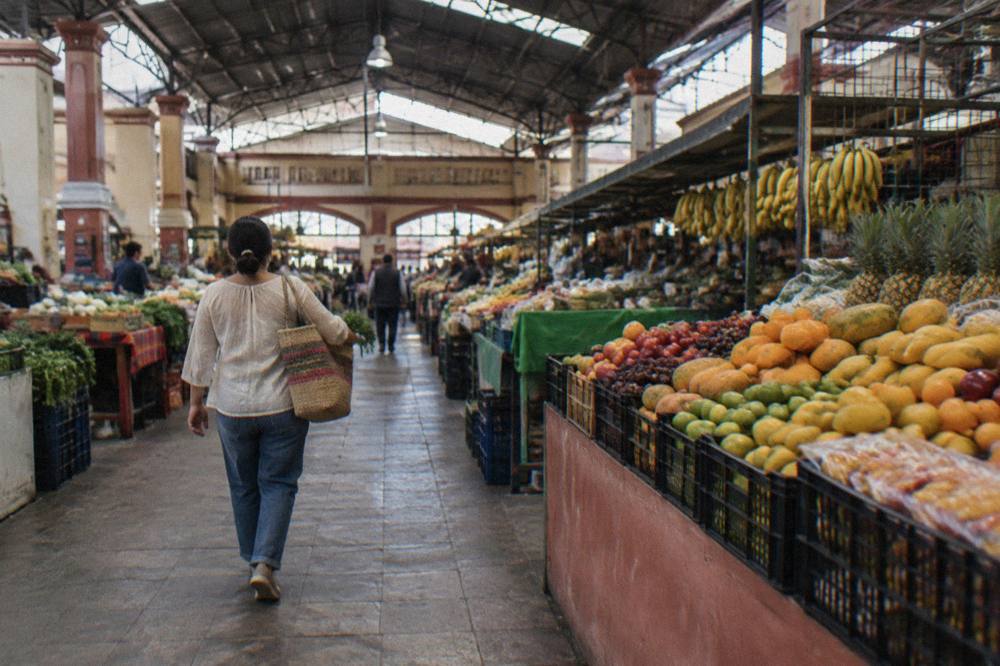
Each has a distinct job. Benito Juárez sits closest to the centre and mixes produce, juices, crafts and household stalls. 20 de Noviembre is the food market, the place for tlayudas, meats, moles and market comedor dining. Abastos is on a different scale entirely, a wholesale city where valley farmers and city retailers trade, and where the Saturday volume is the district's weekly peak.
| Market | Character | What The Record Says |
|---|---|---|
| Mercado Benito Juárez | Historic covered market nearest the Zócalo | Press coverage describes it as inaugurated in 1894, formerly named for Porfirio Díaz |
| Mercado 20 de Noviembre | Food market with comedores | Founded 1893, with tianguis elements on Saturdays, per the state government |
| Mercado de Abastos | Wholesale market zone | Serving the capital and nearby towns since 1978, per the state government |
Published opening hours for these markets are not set out on official state pages, so plan around daylight and the rhythm of trade rather than a posted schedule. A market walk with a guide solves the orientation problem, and a market-led cooking class goes one step further by turning the stalls into a shopping list. The vegetarian cooking class with a local market tour does exactly that, and its own listing carries the current price and dates: Check availability.
The district also feeds directly into the valley's rotating market culture. The great weekly markets of the Valles Centrales, at Tlacolula, Ocotlán, Etla and Zaachila, sit outside the city, and many travellers use a first visit to the city markets as a primer before heading out. The guides to the Tlacolula market day trip, Ocotlán and its Friday market and Zaachila cover each of those, and the answer to what Tlacolula market is known for explains how a valley tianguis differs from the city's permanent halls.
How Do You Reach The Southern Markets And The ADO Terminal In Oaxaca?
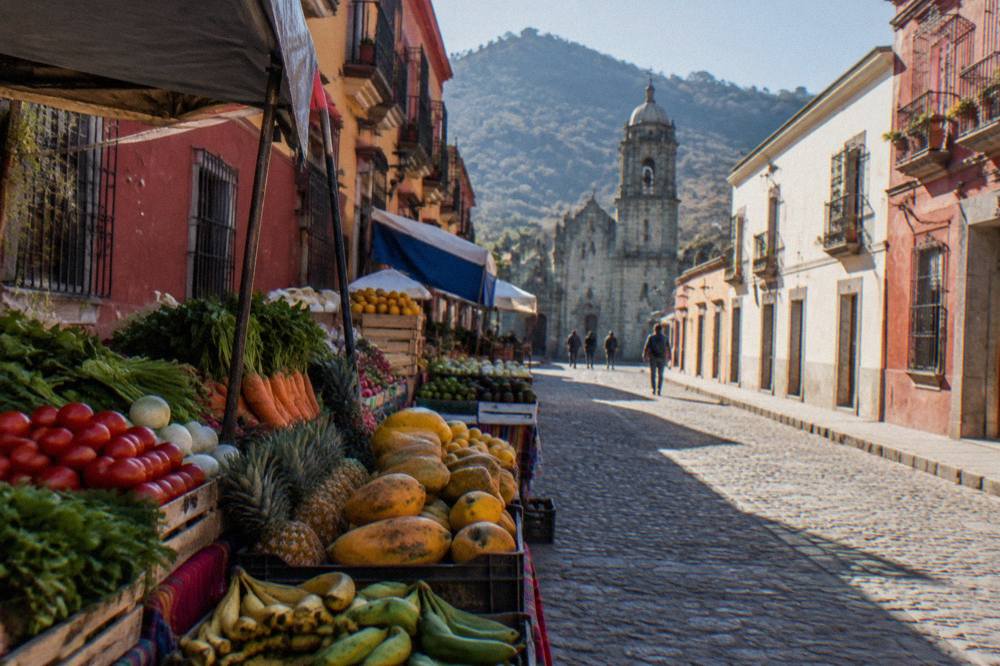
The southern district is walkable from the Zócalo in Oaxaca City for its nearest markets, while the ADO first-class terminal sits on the district's busier edge and is the operator's hub for Mexico City, the coast and Puebla, with fares and schedules set by the operator and sold through its official site, ado.com.mx. There is no bike-share in Oaxaca, and no ride-hailing pickup at the airport.
Distances inside the district are short. From the Zócalo the covered markets are a few blocks' walk, and Abastos is further out along the southern axis, where taxis and colectivos run. The colectivo ranks that serve the valley towns sit on the district's edges, and their fares and frequencies are set by the operators rather than published officially.
For long-distance buses, the ADO guide and the comparison of flying versus taking the bus to Oaxaca cover the decisions. Fares and journey times belong to the operator and change with service class, so check ado.com.mx rather than any secondhand figure. Travellers arriving from the capital can also read the full route guide for Mexico City to Oaxaca, the answer to how long the bus from Mexico City to Oaxaca takes, and the return-route notes in the Oaxaca to Mexico City guide.
| Connection | Role In The District | Where The Detail Lives |
|---|---|---|
| ADO first-class terminal | Long-distance buses to Mexico City, Puebla, the coast | ado.com.mx, the operator's official site |
| Colectivo ranks | Shared vans toward valley towns | Fares and times set by operators, not published officially |
| City taxis | Meterless, fare agreed before boarding | Ask at your hotel for current zone rates |
| On foot | Zócalo to Benito Juárez and 20 de Noviembre | A few blocks downhill from the Plaza de la Constitución |
What Should You Eat In The Markets South Of Oaxaca's Zócalo?
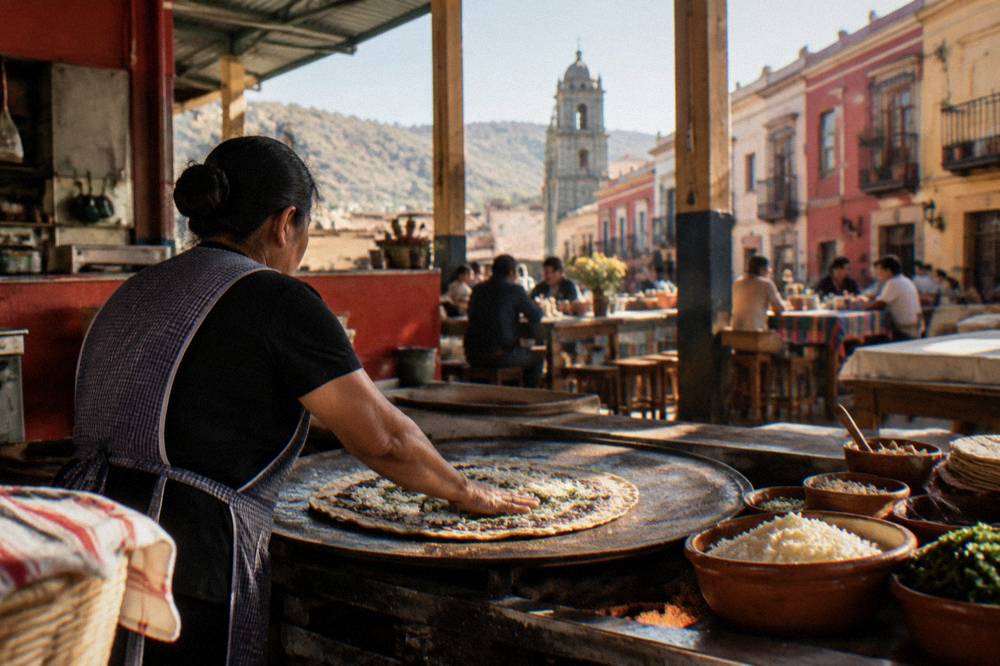
The southern markets of Oaxaca City are the place to eat tlayuda, the large toasted tortilla loaded with beans, quesillo and meat, along with the region's moles, tejate, a cold maize and cacao drink, chapulines, toasted grasshoppers, and fresh quesillo cheese, all named here as dishes with no price attached, since no official price list exists for market food. The comedores of Mercado 20 de Noviembre are the district's kitchen.
Order at the stall, watch the comal, and eat where the locals eat. The state's food culture pages treat these markets as the guardians of the city's culinary identity rather than as tourist attractions, and the difference shows in the cooking: portions are sized for hunger rather than photography, and the menu is whatever the valley harvested that week. The site's wider food coverage goes deeper on what to eat in Oaxaca and on market-led eating through Oaxaca cooking classes, several of which shop these exact stalls before cooking.
| Dish Or Drink | What It Is | Where To Look |
|---|---|---|
| Tlayuda | Large crisp tortilla with beans, quesillo, meat | Comedores of Mercado 20 de Noviembre |
| Mole | Sauce family served over chicken or rice | Market food stalls and comedores |
| Tejate | Cold maize and cacao drink | Drink stalls in the covered markets |
| Chapulines | Toasted grasshoppers, seasoned | Basket and dry-goods stalls |
| Quesillo | String cheese of the Valles Centrales | Cheese stalls in Benito Juárez and Abastos |
Two bookable walks turn the district's food into a guided experience. A food and markets tour with traditional tastings works the stalls with a guide who orders for the group, and an immersion tour of the Oaxaca markets with all gastronomy included builds a full eating progression across the market circuit.
Which Day Trips Leave From The Southern Edge Of Oaxaca City?
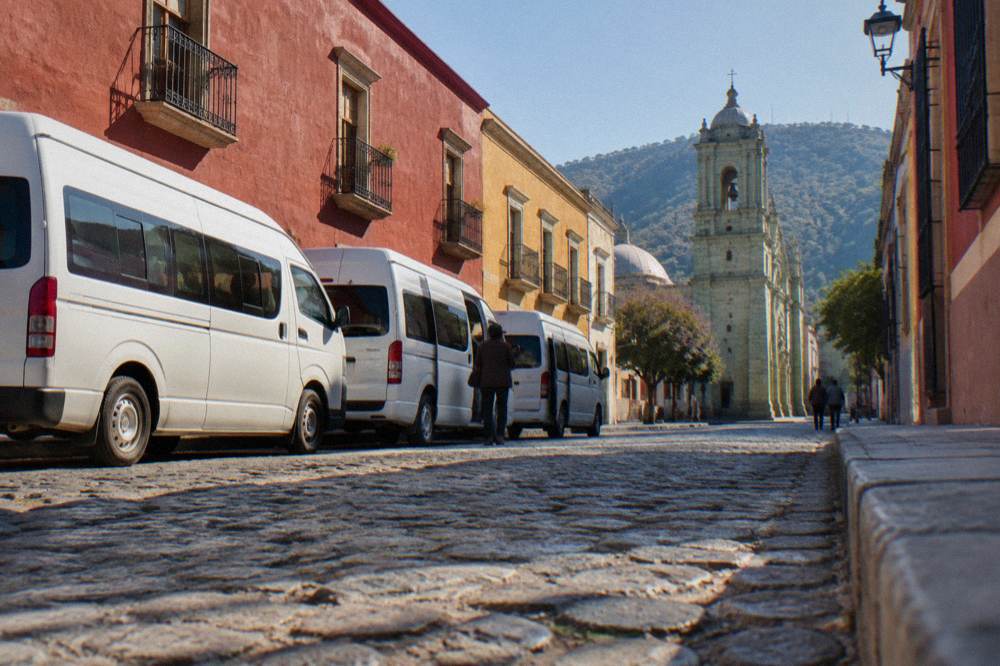
The southern district is the launch pad for the whole Valles Centrales: computed drive times from the Zócalo run about 15 minutes to Monte Albán, about 25 minutes to Tlacolula, about 37 minutes to Mitla and Ocotlán, and about 57 minutes to Hierve el Agua, all free-flow estimates on OSM roads that real traffic and mountain gradients make slower. Colectivos toward the valley towns depart from ranks on the district's edges.
That geometry is why the district matters to a trip plan. The archaeological zones, the craft villages and the petrified waterfalls all sit east or west of a corridor that begins at these southern streets. The INAH fee structure applies at the ruins themselves: Category I sites, Monte Albán, Mitla and Yagul, charge 105 MXN for Mexican nationals and 210 MXN for foreign visitors, while Category III sites, Dainzú, Lambityeco and Zaachila, charge 80 and 145 MXN, per the INAH pages for each zone. Note the day-specific openings too: Zaachila opens Thursday to Sunday only, 10:00 to 16:00, per its INAH page.
| Destination From The Zócalo | About How Far By Road | Guide On This Site |
|---|---|---|
| Monte Albán | 8.7 km, about 15 min | Monte Albán |
| Santa María del Tule | 10.2 km, about 11 min | El Tule tree guide |
| Teotitlán del Valle | 29.2 km, about 26 min | Teotitlán del Valle |
| Tlacolula | 31.2 km, about 25 min | Tlacolula market day trip |
| Mitla | 44.6 km, about 37 min | Mitla |
| Hierve el Agua | 67.1 km, about 57 min | Hierve el Agua |
The coast is a different order of distance: Puerto Escondido is about 165 minutes from the city on the new highway, and the site carries dedicated guides for Oaxaca to Puerto Escondido, Huatulco and Puebla for travellers extending beyond the valleys. The answer to how long the bus from Puerto Escondido to Oaxaca City takes covers that route's operator-set schedules.
What Is The Weather Like Around The Southern Markets Of Oaxaca?
Oaxaca City has a dry season from November to April and a rainy season from May to October, with June averaging 188.3 mm of rain against January's 2.4 mm, per the SMN station 20079 climate normals for 1991 to 2020, so market walks in the dry months need sun protection at about 1,550 m of altitude, while rainy-season visits should plan around afternoon showers.
The full monthly picture from the station normals shows how sharply the year splits. Rain days climb from 1.4 in January to 21.4 in September, and the mean daily high moves from 28.9 C in January to 34.9 C in April before easing back through the wet months. The covered market halls make this district one of the few parts of a Oaxaca day that carries on unchanged whatever the sky does; only the walk between halls changes. None of this closes the markets; it only changes what you carry.
| Month | Mean High C | Mean Low C | Rain Mm | Rain Days |
|---|---|---|---|---|
| Jan | 28.9 | 10.3 | 2.4 | 1.4 |
| Feb | 31.1 | 11.6 | 4.6 | 1.1 |
| Mar | 33.3 | 13.6 | 17.6 | 4.1 |
| Apr | 34.9 | 15.8 | 47.3 | 7.6 |
| May | 33.8 | 16.7 | 97.9 | 13.7 |
| Jun | 30.9 | 16.7 | 188.3 | 19.9 |
| Jul | 30.1 | 15.9 | 118.6 | 20.4 |
| Aug | 30.0 | 15.9 | 131.8 | 20.5 |
| Sep | 29.1 | 16.1 | 163.6 | 21.4 |
| Oct | 29.3 | 14.5 | 63.1 | 12.0 |
| Nov | 29.0 | 12.3 | 9.1 | 3.5 |
| Dec | 28.9 | 11.0 | 9.0 | 2.4 |
Mornings are the reliable window in the wet half of the year, because the station normals show the rain concentrated in the June to September peak. The site's month-by-month breakdown in the Oaxaca weather by month guide and the broader best time to visit Oaxaca analysis carry the planning detail.
How Does The Southern District Fit Into A First Oaxaca Visit?
For a first visit to Oaxaca City, the southern market belt belongs on day one or day two: it sits within walking distance of the Zócalo, it feeds you the region's core dishes at market prices, and it doubles as the transport orientation for every valley day trip that follows, which is why the site's one-day and multi-day itineraries route travellers through these streets early rather than late.
A single day in the city can pair a morning in Benito Juárez and 20 de Noviembre with the historic centre's churches and the Santo Domingo complex, and the Oaxaca in one day itinerary does exactly that. Longer stays spread the district across several mornings and reserve the afternoons for Monte Albán, the craft villages or Hierve el Agua, following the sequence in the two-day to one-week guides. The Mercado Benito Juárez attraction page on this site also covers that hall stall by stall for anyone planning a slower pass.
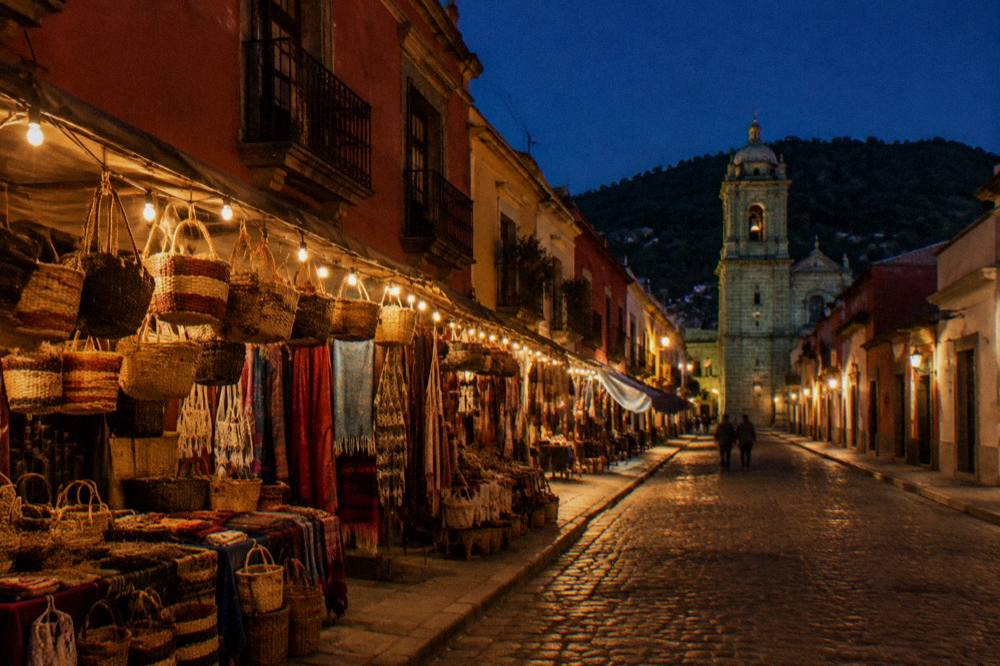
Two practical notes close the planning. First, carry cash in pesos: market stalls trade in cash, and the bookable experiences around the district, from cooking classes to guided food walks, are the only parts of the district that take cards. Second, the district rewards the same courtesy the state's craft-village guidance asks for anywhere in the Valles Centrales: ask before photographing stalls and vendors, since these are working businesses, not sets.
For travellers weighing the southern belt against other bases, the where to stay in Oaxaca guide compares the neighbourhoods, and the Reforma area guide covers the greener residential quarter just west of the market district.
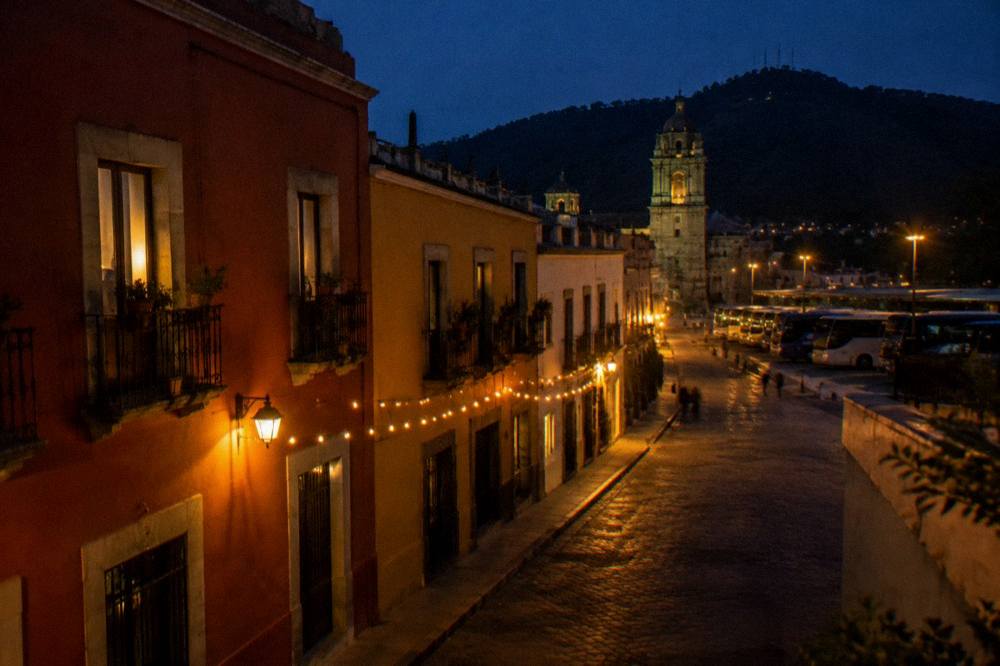
Common Questions About The Market District South Of The Centre In Oaxaca
Is The Market District South Of The Centre Safe To Walk In Oaxaca City?
The market belt is a busy working district a few blocks from the Zócalo, and the US advisory for Oaxaca state stands at Level 2, exercise increased caution. Normal city caution applies: keep valuables out of sight and use the same street sense as in any large market district.
How Far Is Mercado De Abastos From The Zócalo In Oaxaca?
Abastos sits well south of the covered markets, beyond comfortable walking range for most visitors, and city taxis make the run.
Can You Visit The Southern Markets And Monte Albán On The Same Day From Oaxaca City?
Yes. Monte Albán is about 15 minutes by road from the Zócalo per the computed drive times on OSM roads, so a morning in the ruins and an afternoon in the markets, or the reverse, is a standard pairing covered in the site's one-day itinerary.
Do The Oaxaca Markets Have Fixed Opening Hours?
No official published hours for Mercado 20 de Noviembre, Mercado Benito Juárez or Abastos appear on state government pages, so plan around daylight and the working rhythm of trade rather than a posted schedule.
Where Do The Buses To Mexico City And The Coast Leave From In Oaxaca?
Long-distance ADO services operate from the city's terminal on the district's busier side, with destinations including Mexico City, Puebla, Puerto Escondido and Huatulco. Fares, timetables and service classes are set by the operator and sold through its official site, ado.com.mx.
The southern belt is the layer of Oaxaca City where the valleys come to trade, and a morning spent in its markets explains more about the region than any viewpoint: this is the supply chain behind the mole, the quesillo and the tlayuda served everywhere else in the city, and it starts working before the historic centre wakes up. Pair it with a market-led cooking class or a guided food walk, and the district becomes the most useful single morning in a first Oaxaca itinerary, with Oaxaca Travel Guide covering every street beyond it.