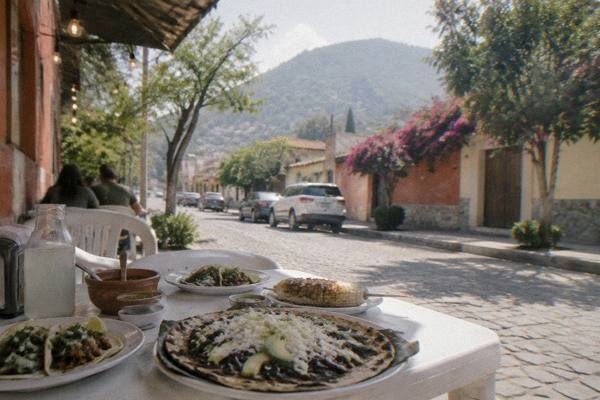
Best Restaurants In Oaxaca: Market Counters To Tasting Menus
Oaxaca City, the inland highland capital of the state of Oaxaca in Mexico, eats at every altitude of effort: a tlayuda at a market counter, a plate of mole in a family dining room, a multi-course tasting menu a short walk from the Santo Domingo de Guzmán church.
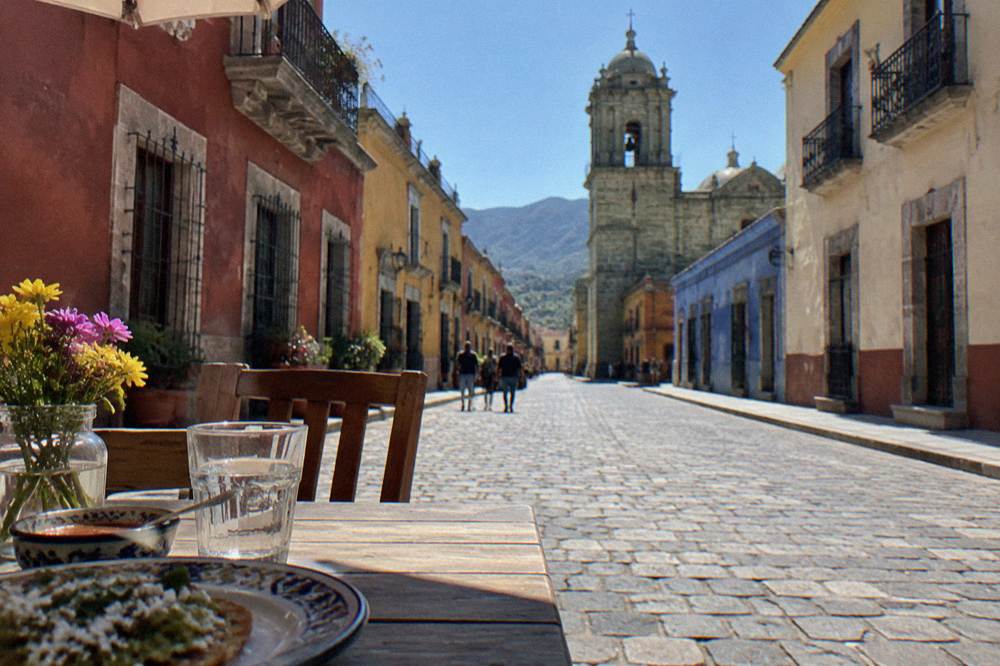
Eating well in Oaxaca City runs from the market counters of the Centro Histórico to set tasting menus. The dishes to know are mole, tlayuda, tejate, chapulines and quesillo; the places to find them are the markets, the neighbourhood comedores and the small restaurants around the Andador Macedonio Alcalá.
Oaxaca City, the capital of the state of Oaxaca in Mexico, sits inland in the Valles Centrales at about 1,550 m, and its food culture is the reason many travellers book the flight at all. The city's restaurant scene is not one scene. It is several layers stacked on top of each other: the market counters where a tlayuda is assembled in front of you, the neighbourhood dining rooms serving mole by the plate, the rooftop tables near the Andador Macedonio Alcalá, and the small set-menu kitchens where a meal becomes a long, structured event. This guide walks through those layers in order, names the dishes that define them, and points to the market towns and day trips that carry the same food culture out into the valley.
What And Where Should You Eat In Oaxaca City?
The short answer for Oaxaca City is to eat across three layers: counters and comedores inside the markets of the Centro Histórico, small restaurants serving the classic moles and tlayudas, and set tasting menus concentrated around the historic core. The dishes that anchor all three are mole, tlayuda, tejate, chapulines and quesillo, and every one of them can be traced back to a market stall before it reaches a menu.
The city's eating geography is compact. The Centro Histórico holds the main market buildings and the highest concentration of restaurants; the barrios of Jalatlaco and Xochimilco hold smaller kitchens and street corners; and the valley towns hold the weekly markets where many of the same dishes are cooked for local families rather than visitors. A useful framing: the restaurants of the centre interpret what the markets of the valley produce. If you only eat in restaurants you get half the picture. If you only eat in markets you get the other half. The full experience of the destination, and a broader list of things to do in Oaxaca, runs through both.
Practically, plan for a mix. One market morning, one long restaurant meal, one evening of street food, and at least one class or tasting that explains what is on the plate. How much time you need overall is its own question, covered in detail in how many days you need for Oaxaca.
Which Dishes Define Oaxacan Cooking?
Five names cover most of a first visit to Oaxaca: mole, the complex sauce family served over meat or rice; tlayuda, the large crisp tortilla loaded with beans, quesillo and meat; tejate, a cold maize and cacao drink; chapulines, toasted grasshoppers eaten as a snack or garnish; and quesillo, the stretched string cheese that melts onto almost everything. Learning these five names does more for a restaurant visit than any list of addresses.
Each dish appears at every layer of the city's food culture, from the cheapest counter to the longest tasting menu, which is why they matter more than any single venue. A market cook and a set-menu chef are working with the same vocabulary. The difference is pacing, setting and price, not ingredients.
| Dish | What It Is | Where You Meet It First |
|---|---|---|
| Mole | A sauce family served over meat or rice, many variants across the state | Market comedores and restaurant menus alike |
| Tlayuda | A large crisp tortilla with beans, quesillo and meat | Evening street stalls and market counters |
| Tejate | A cold maize and cacao drink, served from bowls | Market drink stands |
| Chapulines | Toasted grasshoppers, snack or garnish | Market baskets and restaurant garnishes |
| Quesillo | Stretched string cheese, melted onto tlayudas and more | Every market and most menus |
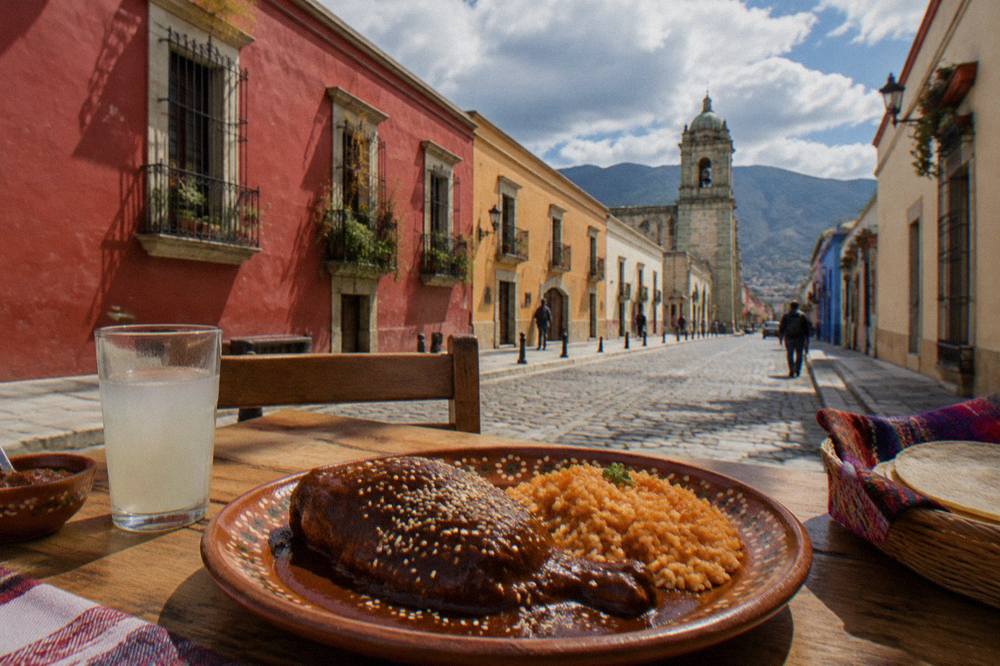
The mole family deserves a note of its own. It is not one dish but several, and restaurants in the city typically list the variants they cook by name. The dedicated guide to Oaxacan mole breaks the family down; the tlayuda gets the same treatment in its own tlayudas in Oaxaca page. Neither dish is a museum piece: both are everyday food cooked in ordinary kitchens, which is exactly why they survive on menus from the cheapest to the most elaborate.
Where Do Locals Eat: The Market Counters Of Oaxaca City?
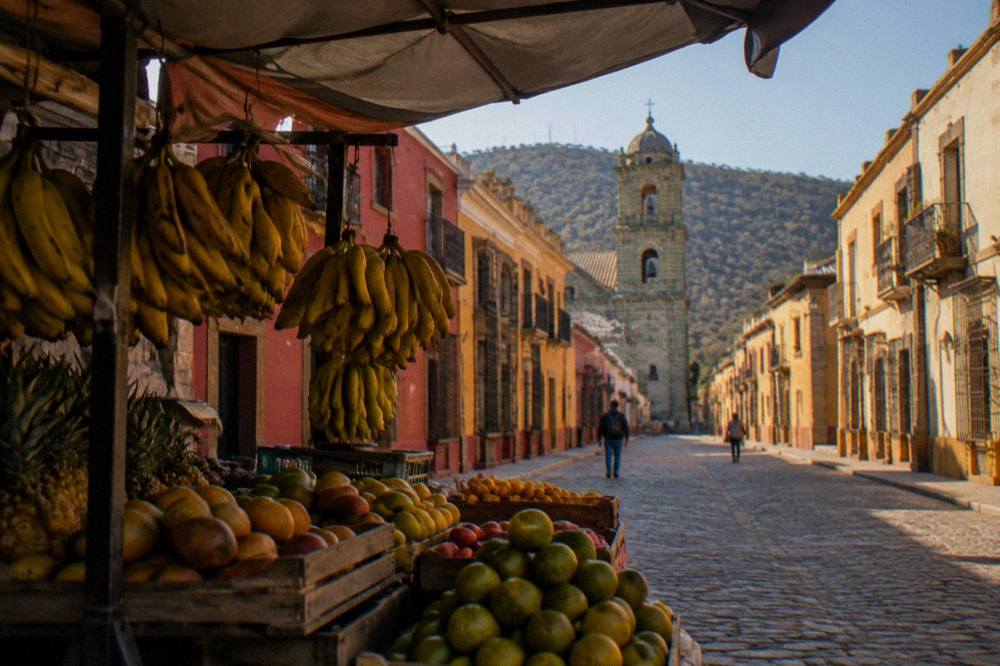
The market counters of Oaxaca City are the baseline of the whole food culture, and the two central buildings to know are Mercado 20 de Noviembre and Mercado Benito Juárez, a short walk from the Zócalo. Inside them, cooks work open counters with menus that change through the day, and the rule of thumb that serves travellers best is to order what the counter is already busy cooking.
Mercado 20 de Noviembre is the food market of the pair, the place where hot food dominates and the smoke of the grill halls is part of the architecture. Mercado Benito Juárez, next to it, is the broader market: produce, bread, chocolate, herbs and the drink stands where tejate is ladled from ceramic bowls. The markets sit in the block south of the Zócalo, in the area covered by the guide to the markets south of central Oaxaca, and each has its own dedicated page: Mercado 20 de Noviembre and Mercado Benito Juárez.
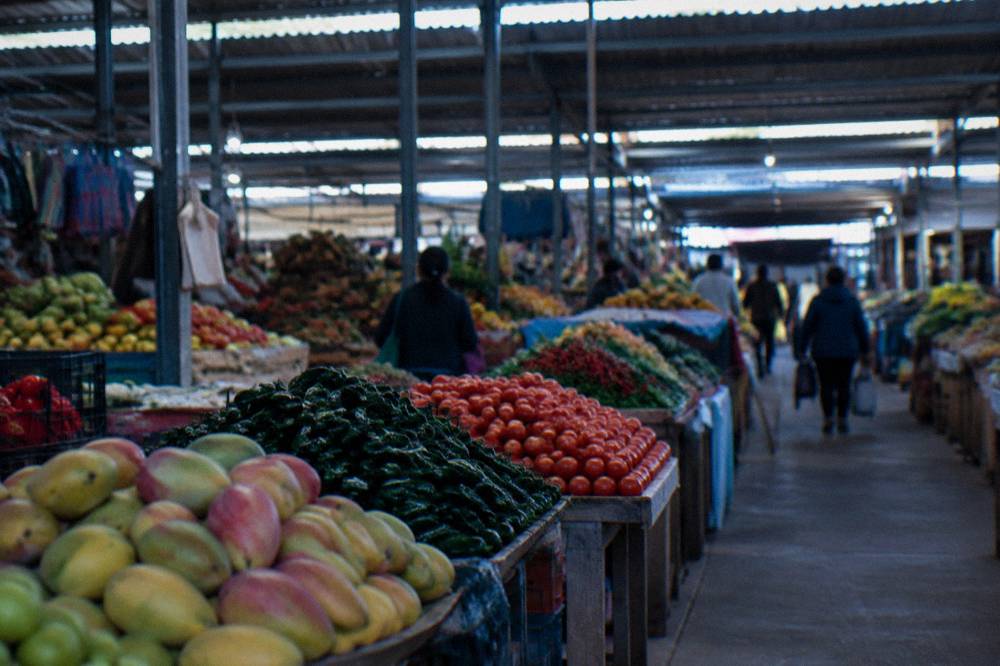
Eating at a counter is straightforward. You take a stool, you order from the cook in front of you, and you pay when you finish. The dishes are the ones from the table above, priced in pesos and paid in cash. What the counters offer that restaurants cannot is the cooking itself happening at arm's length: the tlayuda assembled, the mole ladled, the tejate worked by hand. For travellers who want that experience with a guide translating and steering, a market walk is one of the most booked food products in the city.
A guided market walk also solves the first-timer's problem in a market: not what to eat, but which counter. The tour list above includes a market-and-tastings walk in the city and a vegetarian cooking class that begins with a market shopping trip, both of which put you inside the market with someone who can read the stalls.
What Does A Tasting Menu In Oaxaca City Look Like?
A tasting menu in Oaxaca City is a structured, multi-course interpretation of the region's cooking, built on the same dishes the markets serve by the plate: a mole course, a masa course, a quesillo or meat course, and a dessert that often leans on chocolate or fresh cheese. The format lives mostly in the small set-menu restaurants of the Centro Histórico and the boutiques near it, and it is the layer of the scene where the city's cooks compose rather than serve.
The tasting-menu layer is where Oaxaca's restaurant culture meets its market culture head on. The ingredients are bought in the same buildings described above; the difference is that a chef sequences them, portions them and paces them across an evening. For visitors with limited time, one long structured meal plus several market meals is a common pattern, and it maps neatly onto a short itinerary such as Oaxaca in one day, which slots meals into a walkable day.
What a tasting menu cannot do is replace the market. The sauce on the third course began as a purchase in a market hall. Travellers who take a cooking class learn that chain directly, and Oaxaca has one of the densest selections of classes of any city in Mexico, all catalogued in the guide to cooking classes in Oaxaca.
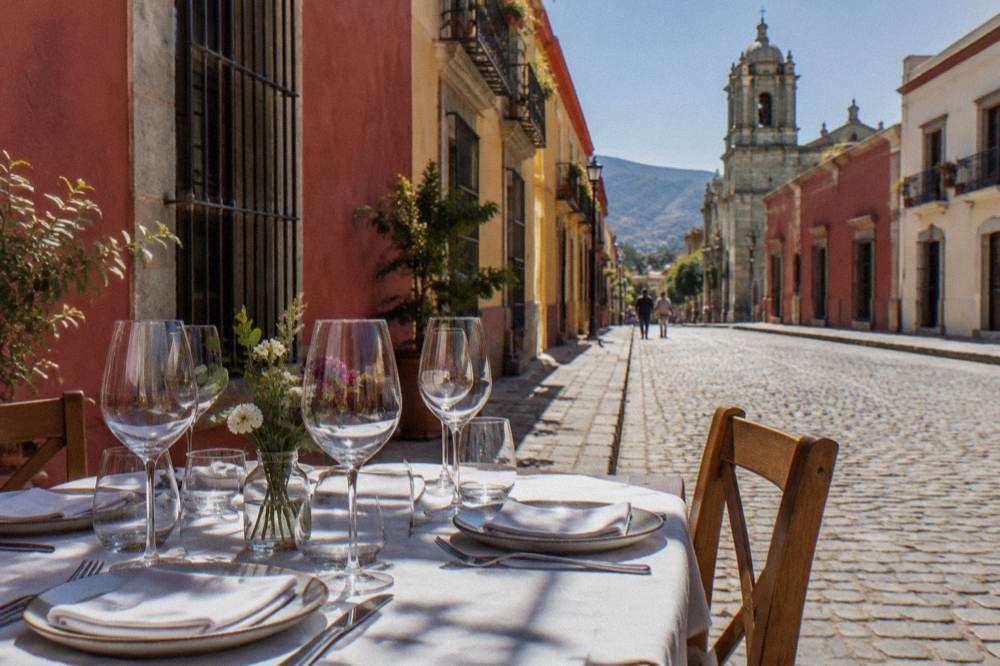
Budget-wise, the three layers are not equally priced, and the honest way to plan is to decide how many meals belong to each layer before arrival. The full cost picture, including what a food-focused trip does to a daily budget, is laid out in the Oaxaca travel costs and budget guide.
Which Cooking Classes Teach Oaxacan Restaurant Food?
A cooking class in Oaxaca City is the closest a traveller gets to the kitchen side of the restaurant scene, and the strongest formats start in a market, buy the day's ingredients, and finish with a full meal cooked from scratch. Classes in the city cover the classic repertoire, mole above all, and they run from short sessions to half-day programmes with a market component built in.
The class list in the city is deep. The traditional formats teach the mole family and masa work; the vegetarian formats adapt the same market repertoire without meat. What they share is the market start, which is why a class doubles as a guided market visit with a purpose. The two products below are representative: a vegetarian class with a market tour, and a traditional class built on family recipes. Other pages covering the same trip are gathered on Oaxaca Travel Guide.
| Format | What It Covers | Typical Start |
|---|---|---|
| Market walk with tastings | Guided stalls, dish tastings, market orientation | City centre market |
| Vegetarian cooking class | Market shopping, then a meat-free Oaxacan menu | Market, then kitchen |
| Traditional cooking class | Mole and masa repertoire, full meal | Market, then kitchen |
| Mezcal tasting or pairing | Distillery visit or guided pairing flight | City centre or valley distillery |
| Street food evening walk | Evening stalls and neighbourhood kitchens | City centre meeting point |
A class also answers the question every good restaurant meal in Oaxaca raises: how was this made? The answer, in the case of mole, is a long process that a class unpacks step by step, and in the case of masa, a daily routine that begins before the market stalls are fully lit.
How Do Mezcal And Mole Pairings Work In Oaxaca?
Mezcal in Oaxaca is not only a drink beside the meal but increasingly a pairing served with it, and the city's mezcal culture runs from tasting rooms in the Centro Histórico to family distilleries in the valley. A guided pairing matches mezcal expressions with mole courses, and a distillery visit shows the production end, from agave field to still, before the glass ever reaches a restaurant table.
The pairing format is the newest layer of the city's food scene and the one most tied to guided products, because it needs a guide's palate and vocabulary to work. The tour list includes pairing sessions led by certified sommeliers in the city and distillery tours with behind-the-scenes access in the valley. The related tour for this page is one of those: a sustainable mezcal sightseeing tour at an award-winning family distillery, which connects the agricultural end of mezcal to the tasting end. Details and booking for it sit on the operator's booking page: Check availability.
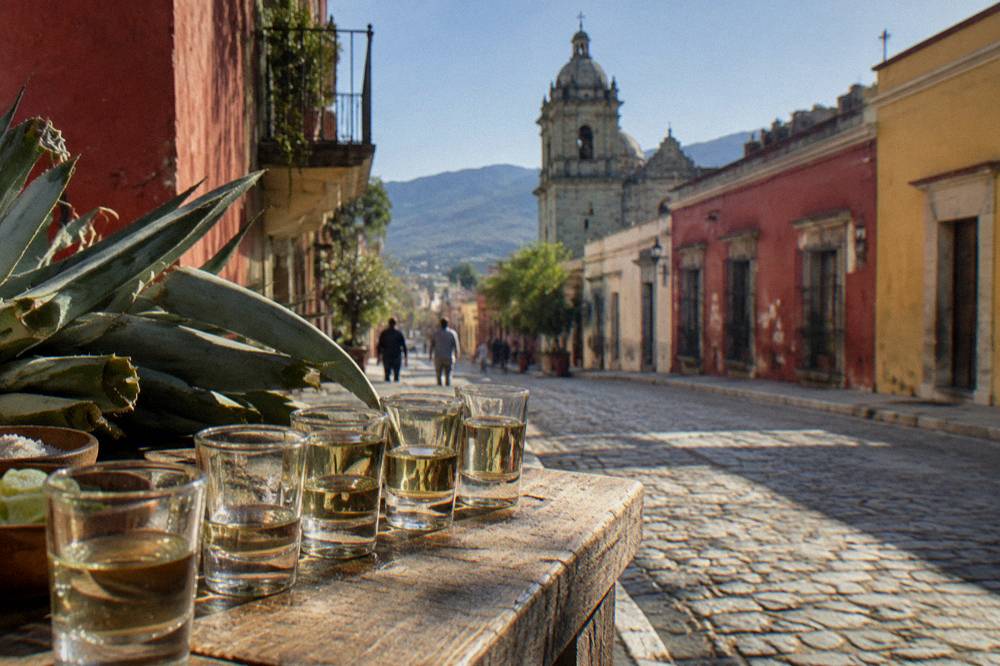
For context on the drink itself, the guide to mezcal in Oaxaca and the mezcal route through Santiago Matatlán cover the territory in depth. What a pairing adds to a restaurant trip is structure: instead of one glass with dinner, a sequence of glasses against a sequence of courses, each chosen to match a sauce's sweetness, smoke or heat.
How Do Market Day Trips From Oaxaca Feed The City?
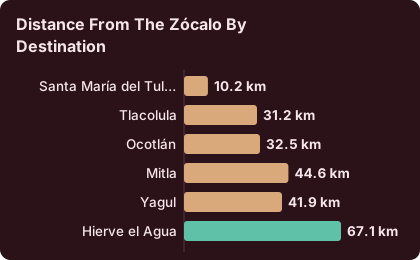
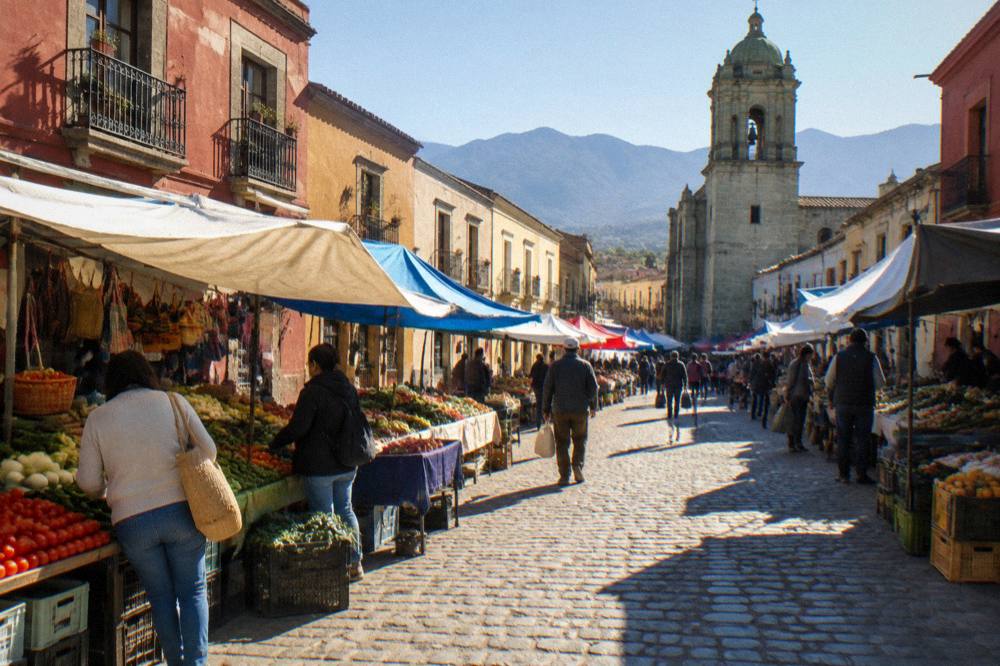
The weekly markets of the valley towns are the supply chain and the ancestor of the city's food scene, and each of the main ones sits within an hour of the Zócalo: Tlacolula about 25 minutes away by road, Ocotlán about 37, Mitla about 37 and Zaachila to the south-west, with Hierve el Agua about 57 minutes beyond. Eating in the city makes more sense once you have walked one of these markets on its market day.
The drive times below are derived from mapping the routes from the Zócalo on free-flowing roads, so treat them as floors, not promises: valley traffic and mountain roads make real journeys slower, and every figure should be read as "about".
| Destination | Distance From The Zócalo | About Drive Time |
|---|---|---|
| Santa María del Tule | 10.2 km | 11 minutes |
| Tlacolula | 31.2 km | 25 minutes |
| Ocotlán | 32.5 km | 37 minutes |
| Mitla | 44.6 km | 37 minutes |
| Yagul | 41.9 km | 38 minutes |
| Hierve el Agua | 67.1 km | 57 minutes |
Each market town pairs naturally with a meal plan. Tlacolula's Sunday market is the one most written about, and the dedicated pages on the Tlacolula Sunday market and what Tlacolula market is known for cover it in full. Ocotlán's Friday market and its crafts scene have their own Ocotlán and Friday market guide, and Zaachila, whose archaeological zone opens Thursday to Sunday only, is covered in the Zaachila and Thursday market page. The archaeological sites of Mitla and Yagul sit inside the same valley loop, and the INAH category that covers them, Category I at 105 pesos for nationals and 210 for foreigners, is detailed in the Monte Albán guide.
What Should Vegetarians Know About Eating In Oaxaca?
Vegetarians eat well in Oaxaca, because the cuisine's foundation is maize, beans, cheese and vegetables, and the meat-free layer of the repertoire, quesillo, tlayudas sin carne, vegetable moles and the whole tejate tradition, is not an adaptation but a native part of the menu. The one caution is broths and renderings, since some sauces are built on meat stock, so the phrase to learn is the one that tells a cook you do not eat meat.
The city backs this up with dedicated infrastructure. There is a full vegetarian and vegan food in Oaxaca guide on this site, and the tour list includes a vegetarian cooking class that shops the market and cooks a meat-free Oaxacan menu from what it finds. Between the two, a vegetarian traveller can plan every meal of a stay.
The class format matters here more than elsewhere, because the market gives a vegetarian cook the same raw materials a restaurant kitchen uses. Learning which stalls sell which herbs, cheeses and vegetables turns every subsequent restaurant visit into something you can read rather than guess at.
When Is The Best Time To Eat Your Way Through Oaxaca?
The eating calendar in Oaxaca follows the rain: the dry season from November to April brings the lowest rainfall figures of the year, with January at 2.4 mm and December at 9.0 mm on the 1991 to 2020 station normals, while the rainy season from May to October brings June's 188.3 mm and September's 163.6 mm, usually in afternoon spells. For purely practical eating, the dry months suit market walking and evening street food; the rainy months suit long indoor meals and cooking classes.
The full monthly picture, with every figure, sits in the Oaxaca weather by month guide and the best time to visit Oaxaca page. The temperature range is narrow for a city at about 1,550 m: mean daily highs run from 30.0 C in August to 34.9 C in April, and mean nightly lows from 10.3 C in January to 16.7 C in June.
| Month | Mean High C | Mean Low C | Rain Mm | Rainy Days |
|---|---|---|---|---|
| January | 28.9 | 10.3 | 2.4 | 1.4 |
| March | 33.3 | 13.6 | 17.6 | 4.1 |
| June | 30.9 | 16.7 | 188.3 | 19.9 |
| September | 29.1 | 16.1 | 163.6 | 21.4 |
| November | 29.0 | 12.3 | 9.1 | 3.5 |
The festival calendar overlays the weather one. July is Guelaguetza month, when the city fills and restaurants with it; the Lunes del Cerro pattern is two Mondays in July at the Auditorio Guelaguetza on the Cerro del Fortín, and the 2026 edition ran 20 and 27 July. Late October and early November bring Día de Muertos, whose traditional dates centre on 31 October to 2 November. Neither period is quiet, and both reward booking tables and classes well ahead. The festival detail lives in the Oaxaca events and festivals guide.
How Do You Build A Food-First Itinerary For Oaxaca City?
A food-first plan for Oaxaca City assigns each day one anchor meal and one supporting activity: a market morning with counter breakfast, a valley day trip on a market day, one long tasting-menu evening, one cooking class, and mezcal either as a pairing in the city or a distillery visit in the valley. On a four or five day stay that sequence fits with room to spare, and the itinerary guides on this site already slot the meals into each day.
The itineraries run from Oaxaca in 2 days through Oaxaca in 5 days to Oaxaca in a week, and each balances the table against the ruins, the churches and the craft villages. The single-day version, Oaxaca in one day, is the stress test: it shows how little of the food scene you can cover in a day and why the multi-day versions exist.
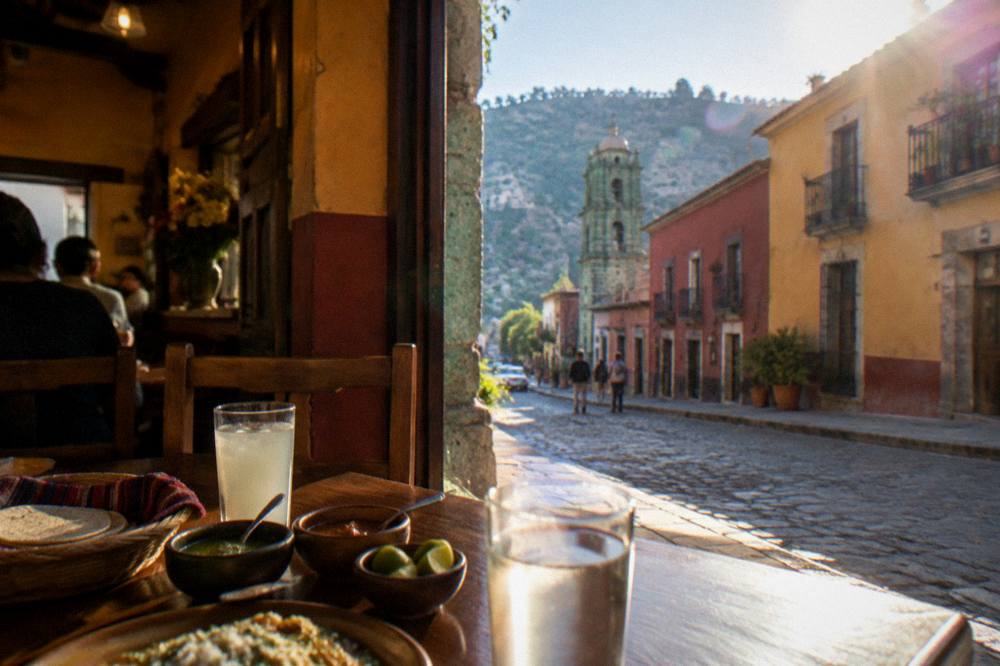
Two practical notes close the plan. Where you stay shapes how you eat, since the Centro Histórico puts the markets and the set-menu restaurants within a walk while the outer barrios trade that for quieter evenings; the where to stay in Oaxaca and best hotels in Oaxaca guides cover the trade-offs. And getting around is easy on foot in the centre, harder in the valley, which is what the getting around Oaxaca guide and the day-trip tours in the tour list are for. However you structure the days, eat across the layers: counter, comedor and tasting menu each tell a different part of the same story, and the city's food culture only reads complete when you have sat at all three.
Common Questions About Restaurants In Oaxaca
Are The Best Restaurants In Oaxaca In The Centro Histórico?
The Centro Histórico has the densest concentration of restaurants and both central market buildings, but the barrios of Jalatlaco and Xochimilco and the valley market towns carry the same food culture with fewer visitors. A mix of centre and barrios covers the scene better than the centre alone.
What Should A First-Time Visitor Eat In Oaxaca?
Start with the five names that define the cuisine: mole, tlayuda, tejate, chapulines and quesillo. Every one of them appears at market counters and restaurant menus alike, so you can try each at whichever layer of the scene you are sitting in that day.
Is Street Food In Oaxaca Safe To Eat?
Street food is a structural part of eating in Oaxaca City, and the standard advice applies: eat where the turnover is fast and the cooking happens in front of you. The city's evening street food walks, several of which are in the tour list, put a guide between you and the stalls on a first visit.
Do You Need To Book Restaurants In Oaxaca In Advance?
In festival periods, July for Guelaguetza and late October to early November for Día de Muertos, the city fills with visitors and booking ahead is the safe course. Outside those windows, market counters need no booking at all and set-menu restaurants vary, so check with each kitchen directly.
Can Vegetarians Eat Well In Oaxaca?
Yes. Maize, beans, quesillo and vegetables are the foundation of the cuisine, and a vegetarian cooking class in the city teaches the meat-free repertoire directly from the market. The caution is stock in sauces, so tell the cook you do not eat meat.
How Many Days Do You Need To Eat Through Oaxaca?
A food-first stay wants at least four days: one for the central markets, one for a valley market day trip, one for a cooking class and one for a long tasting-menu evening. The itinerary guides on this site stretch that pattern from two days to a full week.