What Is The Best Month To Go To Oaxaca?
Month-by-month weather, rain and festival data for Oaxaca City, from official climate normals, so you can pick your own best month to visit.
Oaxaca City, the inland highland capital of the state of Oaxaca in Mexico, splits its year into two clear halves: a dry season from November to April and a rainy season from May to October. That single fact does more to shape a visit than any other, because the city has no sea, no beach and no winter snow, and its climate swings between near-rainless winter months and a summer that averages well over 100 mm of rain per month. The question of which month suits you is really a question about rain tolerance, heat and the festival calendar, and the official numbers answer it well.
The figures below come from the SMN climate station 20079 in Oaxaca, at 1,594 m, using the 1991 to 2020 normals. Nothing here is a modelled guess, and nothing here is a tourism board's opinion: it is measured rainfall, measured temperature and the standing pattern of the city's festivals.
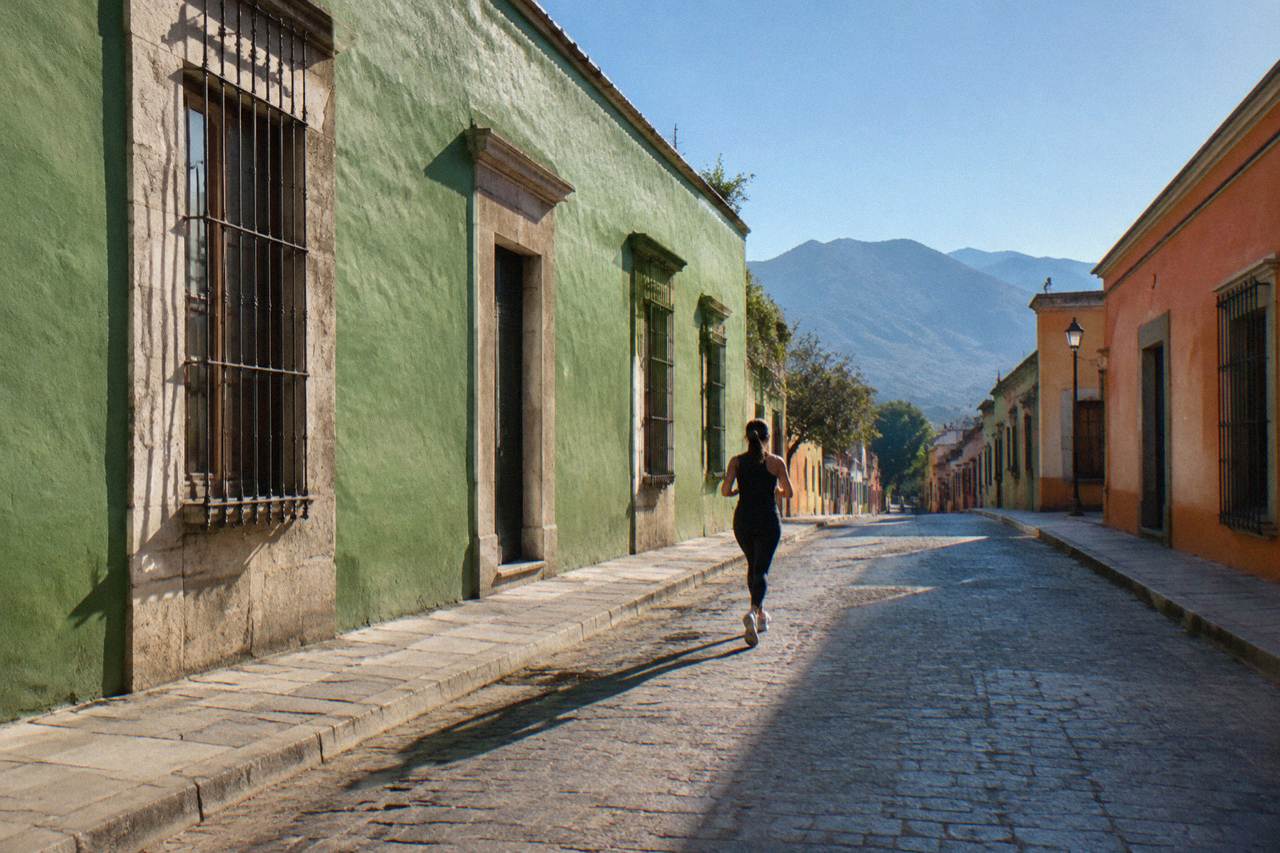
No official source ranks the months of Oaxaca City: what the data shows is a dry season from November to April with 2.4 to 47.3 mm of rain per month, and a rainy season from May to October peaking between June and September. April posts the highest mean daily maximum at 34.9 C, while December and January have the lowest mean minimums at 11.0 and 10.3 C. Festivals, not weather, decide the rest.
The practical reading is straightforward. If dry ground and clear mornings matter, the November to April window fits, and the Oaxaca weather month by month guide unpacks each month in detail. If lower prices or a greener valley matter more, the May to October rainy season delivers dramatic afternoon rain against a backdrop of monthly averages that still sit near 30 C for daytime highs.
What the weather table cannot do is pick your month for you, because the two anchors of the high-season calendar, Guelaguetza in July and Día de Muertos centered on 31 October to 2 November, fall outside the drier stretch of the year. Plenty of travellers choose rain and festivals over dry air and quiet streets, and the climate data says that choice costs less comfort than you might expect.
How Does The Oaxaca Year Split Into Seasons?
Oaxaca City has a dry season from November to April and a rainy season from May to October, with rain peaking between June and September. November through March average under 20 mm of rain each, while June averages 188.3 mm, September 163.6 mm and August 131.8 mm. Annual rainfall totals 853.3 mm, and the city sees no snow at any point in the year.
The dry half of the year is genuinely dry. January averages 2.4 mm, February 4.6 mm, November 9.1 mm and December 9.0 mm, numbers that barely register against the summer. The rainy season ramps up through May at 97.9 mm, holds above 100 mm from June to September, then falls back to 63.1 mm in October. Temperatures stay warm across the whole year: mean daily maximums run from 28.9 C in the winter months to 34.9 C in April, and mean minimums never drop below 10.3 C.
| Month | Mean High C | Mean Low C | Rain mm |
|---|---|---|---|
| Jan | 28.9 | 10.3 | 2.4 |
| Feb | 31.1 | 11.6 | 4.6 |
| Mar | 33.3 | 13.6 | 17.6 |
| Apr | 34.9 | 15.8 | 47.3 |
| May | 33.8 | 16.7 | 97.9 |
| Jun | 30.9 | 16.7 | 188.3 |
| Jul | 30.1 | 15.9 | 118.6 |
| Aug | 30.0 | 15.9 | 131.8 |
| Sep | 29.1 | 16.1 | 163.6 |
| Oct | 29.3 | 14.5 | 63.1 |
| Nov | 29.0 | 12.3 | 9.1 |
| Dec | 28.9 | 11.0 | 9.0 |
Days with rain tell the same story from another angle: January averages 1.4 days with rain and February 1.1, against 19.9 in June, 20.4 in July, 20.5 in August and 21.4 in September. A winter visit can reasonably expect weeks without rain; a summer visit should plan around it without fearing it.
Whatever month you pick, a guided walk is one of the most weather-flexible ways to see the center. The Check availability link goes to the operator's booking page for the Historic Center walking tour, which covers the same streets in every season.
When Does It Rain In Oaxaca City?
Rain in Oaxaca City concentrates between June and September, with June averaging 188.3 mm across 19.9 days, September 163.6 mm across 21.4 days and August 131.8 mm across 20.5 days. May opens the rainy season at 97.9 mm, October closes it at 63.1 mm, and November through March each average under 20 mm.
The rainy season in Oaxaca is not a washout. Mean daily maximums in June, July, August and September sit between 29.1 and 30.9 C, and mean minimums between 15.9 and 16.7 C, so the rain arrives into warm air rather than cold. The pattern the normals describe is a summer that trades a portion of each day for green countryside, against a winter that is dry, warm by day and cool at night, with December averaging an 11.0 C mean minimum and January 10.3 C.
Two practical notes follow from the data. First, April bridges the seasons awkwardly: it averages 47.3 mm of rain while also posting the year's highest mean daily maximum at 34.9 C, a combination of building rain and building heat. Second, October drops to 63.1 mm while keeping a 29.3 C mean high, which places it on the shoulder of the rainy season rather than inside the June to September peak.
Which Oaxaca Festivals Fill The Calendar?
Guelaguetza fills two Mondays in July, Día de Muertos centers on 31 October to 2 November, and Noche de Rábanos traditionally falls on 23 December, giving Oaxaca City three calendar anchors that shape travel more than the weather does. The 2026 Guelaguetza ran on 20 and 27 July with paid seats at 1,632 and 1,321 MXN plus free sections.
The standing pattern is what you can plan on. Guelaguetza, the Lunes del Cerro celebrations, takes place on two Mondays in July at the Auditorio Guelaguetza on the Cerro del Fortín, with performances at 10:00 and 17:00. In 2026 tickets went on sale through the official ticketing channel from mid-May, limited to two per account, and the two paid sections sold out quickly. The 2027 dates have not been announced, so treat July as the pattern rather than the promise. The Oaxaca events and festivals guide carries the fuller calendar.
Día de Muertos is the year's other peak. The traditional dates are 31 October to 2 November, with cemetery visits concentrated on 1 and 2 November and neighbourhood celebrations in places like Jalatlaco and Xoxocotlán. The 2025 state programme ran 25 October to 4 November with more than 140 activities; the 2026 programme has not been announced, so plan against the traditional dates only. Noche de Rábanos holds to 23 December as its traditional date, with the 128th edition held in December 2025 and no 2026 details published. The wider set of guides lives on Oaxaca Travel Guide.
| Festival | Standing Dates | 2026 Status |
|---|---|---|
| Guelaguetza (Lunes del Cerro) | Two Mondays in July | Ran 20 and 27 July; 2027 not announced |
| Feria del Mezcal | Held during Guelaguetza month | Reported 17 to 28 July, treat as unconfirmed |
| Día de Muertos | 31 October to 2 November | 2026 programme not announced |
| Noche de Rábanos | 23 December | 2026 edition not announced |
What Do Oaxaca Temperatures Do Month By Month?
Mean daily maximums in Oaxaca City range from 28.9 C in January, November and December to 34.9 C in April, while mean daily minimums range from 10.3 C in January to 16.7 C in May and June. The swing within any single day regularly exceeds 15 C in the dry months, which is why layers matter more here than heavy warmth.
The shape of the year is a plateau rather than a curve. From November through January the mean high holds at 28.9 to 29.0 C while the mean low sits at 10.3 to 12.3 C, producing cool nights and warm afternoons. February and March climb to 31.1 and 33.3 C, April reaches 34.9 C, and then the rainy season pulls daytime highs back into the 29 to 31 C band from June through October while lifting nighttime lows into the mid-teens.
For packing, the numbers suggest light clothing for the day, something warm for the evening in the November to April window, and rain gear from June to September. The altitude of about 1,550 m means the sun is strong even when the thermometer reads mild, and the temperature drops quickly after sunset in the dry months.
How Do You Choose Your Month Against Rain, Heat And Festivals?
Weigh three factors in order: rain, dates and heat. The November to April window averages 2.4 to 47.3 mm of rain per month against June's 188.3 mm; the fixed festival dates in July, late October to early November and late December override dry weather for many travellers; and April's 34.9 C mean high makes it warmer by day than any rainy-season month.
A workable shortcut is to match your priority to the data. For dry ground, January and February average 2.4 and 4.6 mm of rain. For festivals, July carries Guelaguetza and late October into early November carries Día de Muertos, both inside or beside the rainy season, with July averaging 118.6 mm and October 63.1 mm. For cooler nights, December and January average 11.0 and 10.3 C mean minimums. For everything else, the plateau of 29 to 31 C daytime highs from June through October means the rainy season is warm rather than cold.
If you land in the wet half of the year, the valley day trips still run and Hierve el Agua, Mitla, the Tule tree and a mezcal stop combine into a single loop that spends real time at the falls, a useful way to spend a day whatever the sky does. If your month is dry, the same loop pairs well with morning walks through the historic center, where the walking tours cover the Zócalo, Santo Domingo and the Andador Macedonio Alcalá.
The depth of your stay matters too: the how many days in Oaxaca is enough answer suggests a framework for balancing the city, the archaeological sites and the craft villages, and the festival calendar may stretch or shrink that plan depending on your month.
Common Questions About The Best Month To Visit Oaxaca
What Is The Best Month To Go To Oaxaca?
There is no official ranking of months for Oaxaca City. The data gives a dry season from November to April with 2.4 to 47.3 mm of rain per month, and a rainy season from May to October peaking between June and September. Festivals, above all Guelaguetza in July and Día de Muertos centered on 31 October to 2 November, shift many travel plans toward the wetter half of the year.
When Is The Rainy Season In Oaxaca?
The rainy season runs from May to October, with June averaging 188.3 mm, August 131.8 mm and September 163.6 mm of rain. Rain falls on roughly 20 days per month in the June to September peak. November through March each average under 20 mm.
Is Oaxaca Hot In April?
April posts the highest mean daily maximum of the year at 34.9 C, alongside 47.3 mm of rain as the rainy season builds. May follows at 33.8 C. Nights stay mild, with an April mean minimum of 15.8 C.
Are Oaxaca Winters Cold?
No snow falls in Oaxaca City at about 1,550 m. December and January have the lowest mean minimums of the year at 11.0 and 10.3 C, while mean daytime maximums hold at 28.9 C. Days are warm and nights are cool enough for a jacket.
When Is Guelaguetza Held?
Guelaguetza takes place on two Mondays in July at the Auditorio Guelaguetza on the Cerro del Fortín, with performances at 10:00 and 17:00. The 2026 edition ran on 20 and 27 July with paid seats at 1,632 and 1,321 MXN and free sections C and D; the 2027 dates have not been announced.
Does Rain Ruin A Summer Visit To Oaxaca?
Mean daily maximums stay between 29.1 and 30.9 C from June through September, so the rainy season is warm. Rain falls on about 20 days per month in the peak, which means planning flexible mornings and indoor options such as the Museo de las Culturas de Oaxaca, open Tuesday to Saturday only.
However you weigh rain against festivals, the underlying numbers are stable: a dry, warm-by-day half of the year and a wet, green half, both friendly to the same city. Pick the month whose trade you prefer, pack for the mean minimums rather than the maximums, and the rest of the calendar will take care of itself.