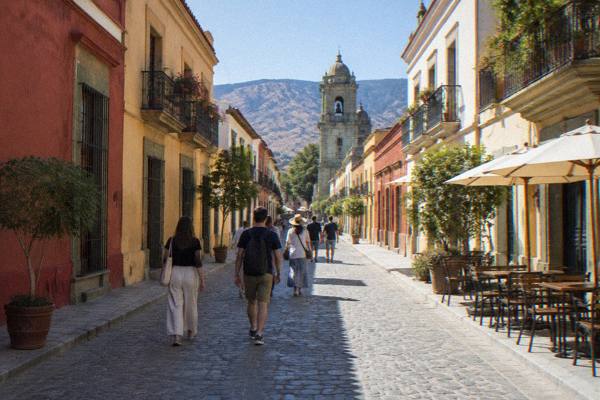
Oaxaca Events And Festivals By Month
This guide sets out what follows a standing pattern and what has not been announced.
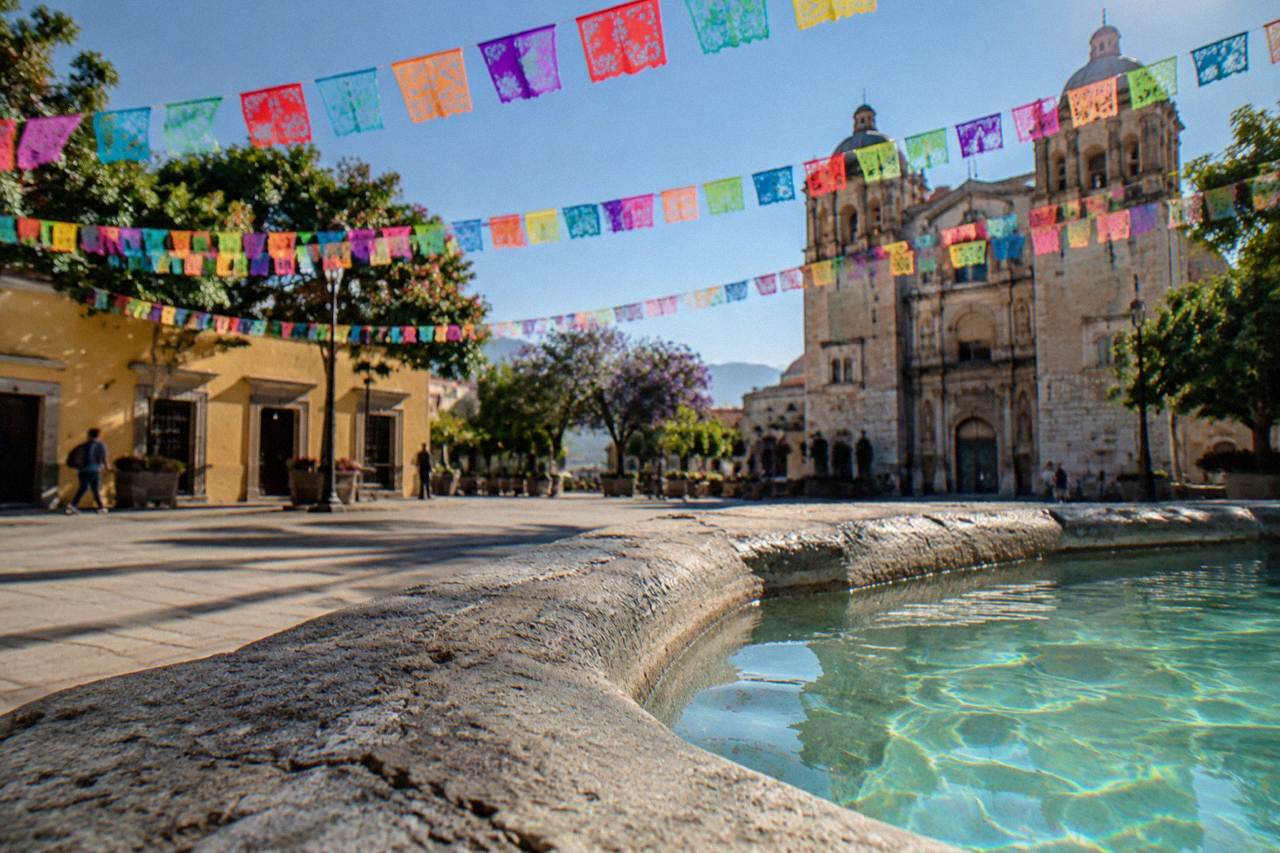
Guelaguetza fills two Mondays in July at the Auditorio Guelaguetza on the Cerro del Fortín; Día de Muertos centres on 31 October to 2 November; Noche de Rábanos falls on 23 December. The 2026 Guelaguetza edition ran 20 and 27 July with Palco A at 1,632 MXN and Palco B at 1,321 MXN, while Palcos C and D were free.
Oaxaca City, the inland highland capital of the state of Oaxaca in Mexico, runs one of the densest festival calendars of any city its size: 1,324,332 tourist arrivals were counted across 2025, and the two great peaks of the year, July's Guelaguetza and the Día de Muertos season at the turn of November, drive much of that demand. State government releases and station climate normals underlie the dates and figures below, and everything not yet announced is treated as a standing pattern rather than a promise.
What Are The Main Oaxaca Festivals And When Do They Happen?
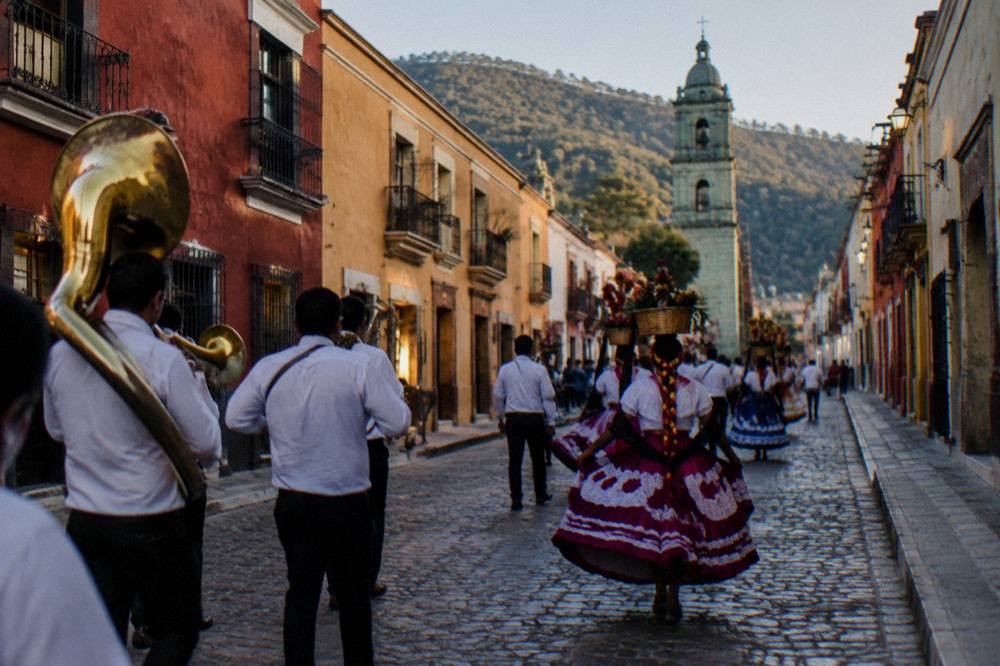
Oaxaca City's festival year has three anchors: Guelaguetza, with performances on two Mondays in July at the Auditorio Guelaguetza on the Cerro del Fortín; Día de Muertos, whose traditional dates centre on 31 October to 2 November; and Noche de Rábanos, held each 23 December in the city centre. Around them sit the Feria del Mezcal in July, valley market days through the week, and free events such as calendas and convites during Guelaguetza month.
The 2026 Guelaguetza edition ran on 20 and 27 July, with performances at 10:00 and 17:00 on each day, and the paid sections sold out quickly through the official ticketing channel. The 2026 Feria del Mezcal ran 17 to 28 July at the Centro Cultural y de Convenciones de Oaxaca in Santa Lucía del Camino, with about 80 MXN entry, so confirm them before planning. For Día de Muertos, the 2025 programme ran 25 October to 4 November with more than 140 activities, and the 2026 programme has not been announced: only the traditional 31 October to 2 November core is certain. Noche de Rábanos keeps its fixed traditional date, 23 December; the 128th edition was held in December 2025 and no 2026 details had been published.
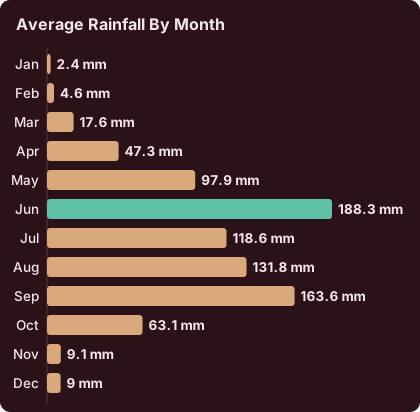
Rain shapes the calendar as much as tradition does. The SMN station normals show the dry season running November to April, with January at just 2.4 mm of rain, and the rainy season from May to October, with June averaging 188.3 mm. Festival planning in July and the Día de Muertos window therefore sits inside the rainy season, and the weather-by-month breakdown carries the full table.
| Festival | Traditional or 2026 date | Venue | Status of next edition |
|---|---|---|---|
| Calendas de las Culturas | 18 and 25 July 2026 | From Fuente de las Ocho Regiones, about 18:00 | Part of July Guelaguetza month |
| Convites | 1, 10 and 11 July 2026 | From Cruz de Piedra, about 18:00 | Part of July Guelaguetza month |
| Guelaguetza (Lunes del Cerro and Octava) | 20 and 27 July 2026, 10:00 and 17:00 | Auditorio Guelaguetza, Cerro del Fortín | 2027 dates not announced |
| Feria del Mezcal | Reported 17 to 28 July 2026, 11:00 to 22:00 | CCCO, Santa Lucía del Camino | Reported, confirm on the official page |
| Día de Muertos | Traditional core 31 October to 2 November | City-wide, Xoxocotlán, Jalatlaco, Atzompa | 2026 programme not announced |
| Noche de Rábanos | 23 December each year | Zócalo area | 2026 details not announced |
When Is Guelaguetza In Oaxaca And How Do Tickets Work?
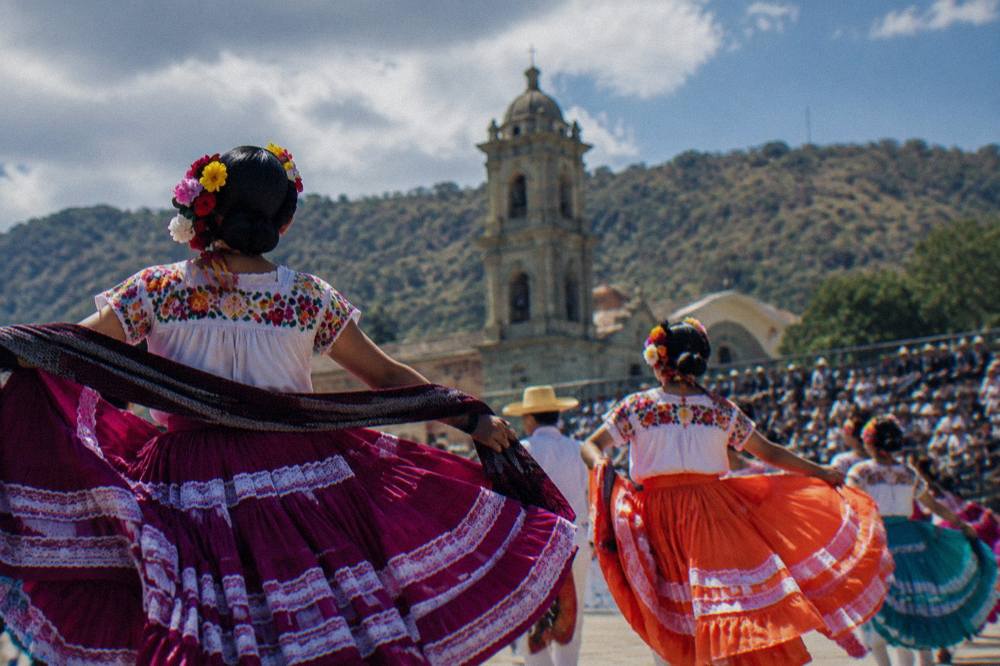
Guelaguetza takes place on two Mondays in July, the Lunes del Cerro and the Octava, at the Auditorio Guelaguetza on the Cerro del Fortín, with performances at 10:00 and 17:00 on each day. In the 2026 edition, Palco A cost 1,632 MXN and Palco B 1,321 MXN plus service fees, Palcos C and D were free, and tickets were sold exclusively through Superboletos with a limit of two per account.
The state releases describe a resale-prevention scheme for 2026: pre-sale opened 15 May and regular sales 1 June, and the A and B sections sold out fast. The free C and D sections are allocated by arrival order, which is why the release framing matters for anyone planning a 2027 trip: the pattern of two ticketed sections plus two free ones is the standing format, but no 2027 dates or prices had been announced. July is branded "Julio, mes de the Guelaguetza" in the state programme, with 140-plus activities across the month, including the Calendas de las Culturas on 18 and 25 July from the Fuente de las Ocho Regiones at about 18:00, and convites on 1, 10 and 11 July from Cruz de Piedra, also at about 18:00.
July weather is a planning factor. The station normals give July a mean maximum of 30.1 C, a mean minimum of 15.9 C and 118.6 mm of rain, with rain on an average of 20.4 days in the month. Morning sessions at 10:00 sit under stronger sun than the 17:00 sessions, and the city's altitude of about 1,550 m sharpens midday exposure. The best time to visit guide unpacks the trade-offs without ranking months, which the sources decline to do.
| Guelaguetza 2026 item | Figure (2026 edition) | Notes |
|---|---|---|
| Dates | 20 and 27 July 2026 | Two Mondays, Lunes del Cerro and Octava |
| Session times | 10:00 and 17:00 | Two performances each day |
| Palco A | 1,632 MXN plus fees | Sold out rapidly |
| Palco B | 1,321 MXN plus fees | Sold out rapidly |
| Palcos C and D | Free | Allocated by arrival order |
| Sales channel | Superboletos only | Two-ticket limit per account |
July is also the busiest month for valley excursions, and a guided walk or a valley loop is a practical way to fill the days between the Monday performances.
What Happens During Día De Muertos In Oaxaca?
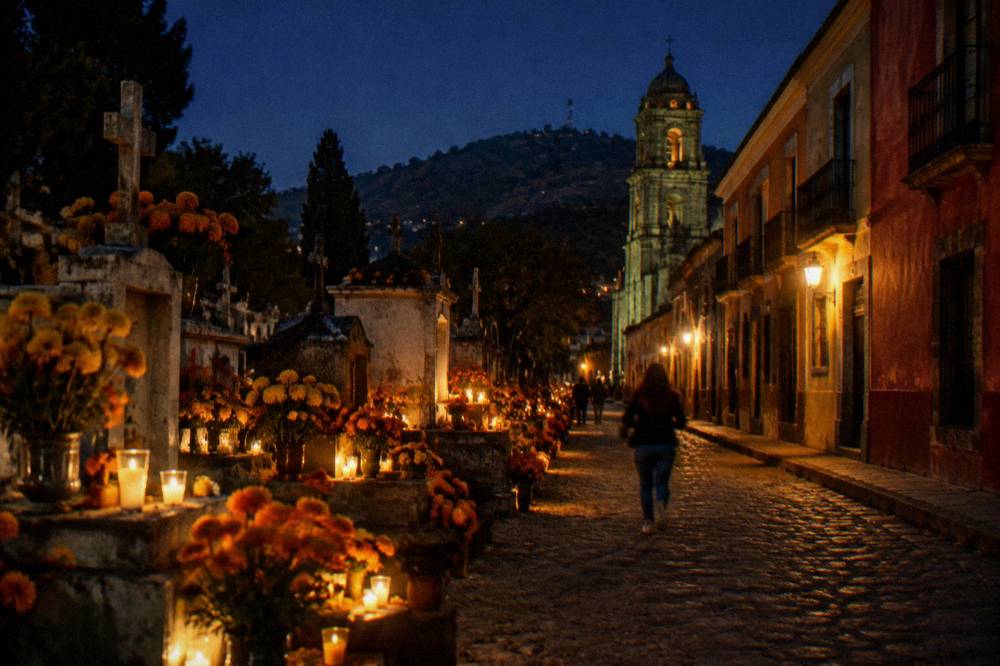
Día de Muertos in Oaxaca City centres on the traditional dates of 31 October to 2 November, when cemeteries including Xoxocotlán open at night, comparsas process through neighbourhoods such as Jalatlaco, and communities like Atzompa follow their own regional customs. The 2025 state programme ran 25 October to 4 November with more than 140 activities, but the 2026 programme has not been announced, so no 2026 date range can be given.
For 2026, the fifth state artisan contest for Día de Muertos ran with entries from 24 September to 9 October 2026, and the state planned temporary ornamental installations in the Zócalo, mounted 25 to 28 October and removed after 6 November, covering accesses at Trujano and Flores Magón, Bustamante and Guerrero, plus the kiosco and the Palacio de Gobierno facade. Those decorations do not involve street closures. The broader pattern from the 2025 edition, comparsas and verbena around 30 and 31 October and night-time cemetery openings especially on 1 and 2 November, is the standing shape of the festival, with Xoxocotlán cemetery visits and harvest traditions, and tapetes and decorated facades in Jalatlaco.
Late October and early November sit at the tail of the rainy season. October averages 63.1 mm of rain across 12.0 days, November 9.1 mm across 3.5 days, so the festival window straddles a real transition. Mean maxima are 29.3 C in October and 29.0 C in November. Anyone weighing the month choice can check the dedicated month answer alongside the answer on June rainfall, which names June at 188.3 mm.
When Is Noche De Rábanos In Oaxaca?
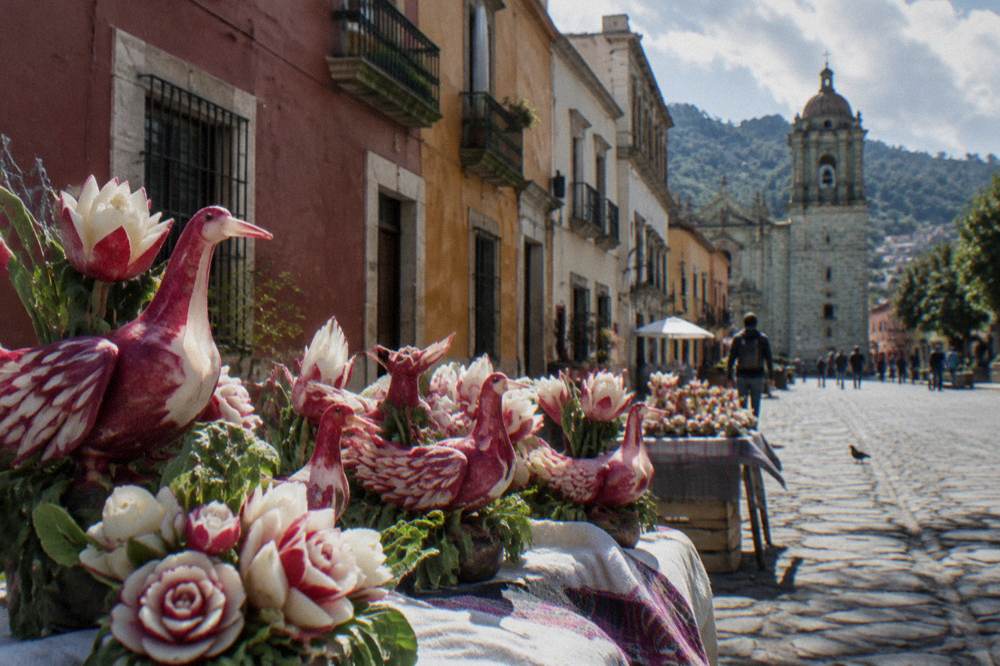
Noche de Rábanos is held each 23 December in Oaxaca City, a fixed traditional date in the Zócalo area. The 128th edition took place in December 2025, with the radish harvest on 20 and 22 December ahead of it, but the 2026 edition has not been announced, and no 2026 ticket details or programme had been published, so only the standing 23 December date is certain.
The state release for the 128th edition is the most recent primary document, and it confirms the tradition's anchor date rather than a shifting schedule. December in Oaxaca City is dry: the normals give 9.0 mm of rain across 2.4 days, a mean maximum of 28.9 C and a mean minimum of 11.0 C, the coolest nights of the year alongside January's 10.3 C. Evening attendance at an outdoor December event calls for a layer, nothing more. No Posadas or Navidad programme details for 2026 had been announced either, so the December calendar beyond 23 December is a standing pattern only.
What Do The Oaxaca Climate Normals Say Month By Month?
The SMN station 20079 normals for Oaxaca, covering 1991 to 2020, show mean maxima from 28.9 C in January to 34.9 C in April, mean minima from 10.3 C in January to 16.7 C in June, and monthly rainfall from 2.4 mm in January to 188.3 mm in June, totalling 853.3 mm across the year. The dry season runs November to April and the rainy season May to October, with the rain concentrated from June to September.
These figures matter for festival planning more than any crowd folklore: Guelaguetza in July averages 118.6 mm of rain and rain on 20.4 days, while the Día de Muertos window dries out fast between October's 63.1 mm and November's 9.1 mm. April, at 34.9 C mean maximum, is the month with the highest mean daily high, and December and January hold the lowest mean minima. There is no winter snow at this altitude, and the city sits inland in the Valles Centrales with no sea nearby. More of these guides are collected on Oaxaca Travel Guide.
| Month | Mean max C | Mean min C | Rain mm | Days with rain |
|---|---|---|---|---|
| Jan | 28.9 | 10.3 | 2.4 | 1.4 |
| Feb | 31.1 | 11.6 | 4.6 | 1.1 |
| Mar | 33.3 | 13.6 | 17.6 | 4.1 |
| Apr | 34.9 | 15.8 | 47.3 | 7.6 |
| May | 33.8 | 16.7 | 97.9 | 13.7 |
| Jun | 30.9 | 16.7 | 188.3 | 19.9 |
| Jul | 30.1 | 15.9 | 118.6 | 20.4 |
| Aug | 30.0 | 15.9 | 131.8 | 20.5 |
| Sep | 29.1 | 16.1 | 163.6 | 21.4 |
| Oct | 29.3 | 14.5 | 63.1 | 12.0 |
| Nov | 29.0 | 12.3 | 9.1 | 3.5 |
| Dec | 28.9 | 11.0 | 9.0 | 2.4 |
Which Weekly Market Days Fill The Oaxaca Valleys?
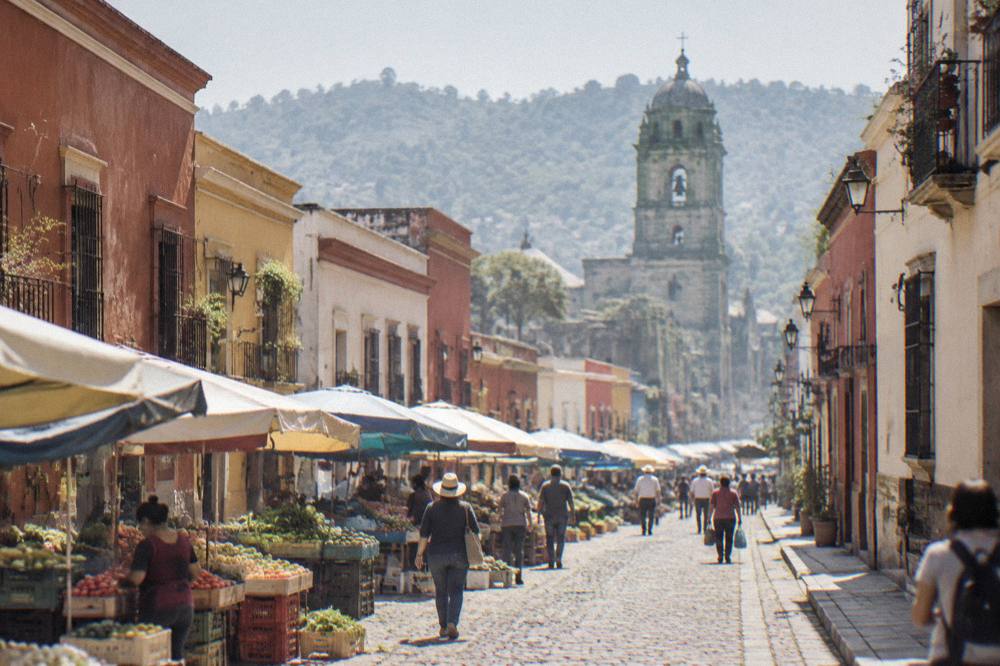
The valley towns around Oaxaca City hold their weekly tianguis on fixed days, and these market days function as rolling weekly festivals: Tlacolula on Sunday, Etla on Wednesday, Zaachila on Thursday and Ocotlán on Friday. The state sources confirm the pattern exists but publish no 2026 opening hours for any of these markets, so travellers should treat the day, not a timetable, as the planning anchor.
The state government's own market pages describe the network as part of the region's identity, with Mercado 20 de Noviembre in the city founded in 1893 and its Saturday tianguis elements, but they give no current hours. The same applies to Mercado Benito Juárez, inaugurated in 1894, and the wholesale Mercado de Abastos, dating from 1978. What the available material does give, precisely, is the archaeological site schedule that frames a market-day circuit: Zaachila's INAH zone opens Thursday to Sunday 10:00 to 16:00 only, at 80 MXN for nationals and 145 MXN for foreigners, so a Thursday trip pairs the Zaachila market with the site.
A crafts-route day trip through San Martín Tilcajete, Jalieza and Ocotlán is one way to link the weekly rhythm with workshops, and the site's featured crafts route tour covers exactly those three towns. It is described by what it covers, never by a typed duration or score. Check availability on the operator's booking page.
| Valley destination | Drive time from the Zócalo (derived) | Weekly market day | Site note |
|---|---|---|---|
| Tlacolula | About 25 minutes | Sunday | Tlacolula Sunday market, hours not published |
| Ocotlán | About 37 minutes | Friday | Ocotlán Friday market, hours not published |
| Zaachila | Within the valleys | Thursday | INAH zone open Thu to Sun 10:00 to 16:00, 80/145 MXN |
| Etla | Within the valleys | Wednesday | Etla Wednesday market, hours not published |
| Teotitlán del Valle | About 26 minutes | Not given | Workshops generally operate Tue to Sun, many closed Mondays |
| Mitla | About 37 minutes | Not given | INAH site daily 08:00 to 17:00, 105/210 MXN |
How Busy Are The Oaxaca Sites During Festival Season?
Sectur's 2025 figures show Monte Albán received 416,675 visitors against Mitla's 104,428, Yagul's 10,185, Lambityeco's 5,545 and Zaachila's 4,229, and the city logged 1,324,332 tourist arrivals across the year with hotel occupancy of 51.73 percent and an average stay of 2.00 nights. Of those arrivals, 1,111,799 were national and 212,533 foreign, a split of 83.95 percent national to 16.05 percent foreign.
These are annual totals rather than month-by-month curves, so they say nothing about which week is busier, and no crowd prediction should be built on them. What they do establish is the scale difference between sites: Monte Albán draws roughly four times Mitla's count and orders of magnitude more than the smaller zones. For festival-season planning, that argues for pairing the headline sites with the craft towns and weekly markets covered above, and for treating arrival logistics early, since flights to Oaxaca and the Oaxaca airport guide cover the routes into the valley.
| Site or measure | 2025 figure | Source basis |
|---|---|---|
| Monte Albán visitors | 416,675 (342,962 national, 73,713 foreign) | Sectur indicators PDF |
| Mitla visitors | 104,428 | Sectur indicators PDF |
| Yagul visitors | 10,185 | Sectur indicators PDF |
| Lambityeco visitors | 5,545 | Sectur indicators PDF |
| Zaachila visitors | 4,229 | Sectur indicators PDF |
| City tourist arrivals | 1,324,332 | Sectur indicators PDF |
| Hotel occupancy | 51.73 percent | Sectur indicators PDF |
| Average stay | 2.00 nights | Sectur indicators PDF |
What Practical Rules Apply To Oaxaca Festival Visits?
Oaxaca operates on UTC-6 all year with no daylight saving since the 2022 law, the state lodging tax is 3 percent on hotel-type stays and 5 percent for intermediaries, and the city sits at about 1,550 m altitude. The US State Department lists Oaxaca state at Level 2, exercise increased caution, with no restrictions for its staff to Oaxaca City or Monte Albán, while the UK and Canadian advisories do not name Oaxaca among their warning areas.
Two standing risks deserve a line in any festival plan. First, road blockades by teachers' unions are a recurring feature in Oaxaca and have in the past disrupted highway and airport access; they are sporadic and usually resolved within hours or days, and no specific future one can be dated. Second, the festival weeks compress demand into a small city centre: the average stay of 2.00 nights and 51.73 percent annual occupancy give a baseline, but no source publishes high-season date ranges, so booking early for the Guelaguetza Mondays and the Día de Muertos core is the safe default. The where to stay guide and the getting around guide carry the neighbourhood and transport detail, and how many days in Oaxaca helps size the trip.
| Practical item | Rule or figure |
|---|---|
| Timezone | UTC-6 all year, no daylight saving |
| Lodging tax | 3 percent hotel-type stays, 5 percent intermediaries |
| Altitude | About 1,550 m |
| US advisory | Oaxaca state Level 2, exercise increased caution |
| UK advisory | Oaxaca not named on the main warning page |
| Canada advisory | High degree of caution overall, Oaxaca not named as avoid |
| Blockades | Standing sporadic risk to road and airport access |
How Do You Plan A Festival Trip Around The Oaxaca Calendar?
Anchor the trip to one fixed date, hold the rest of the itinerary loosely, and book transport and rooms first: the Guelaguetza Mondays in July, the 31 October to 2 November Día de Muertos core and the 23 December Noche de Rábanos are the fixed points, everything else in the calendar is either a past edition or an unannounced programme. Rainfall follows the same logic, with the dry season from November to April and rain from June to September.
Between the anchor events, the texture of a Oaxaca trip is constant: INAH sites open daily except Zaachila's Thursday-to-Sunday window and the Museo de las Culturas' Tuesday-to-Saturday week, the Jardín Etnobotánico runs free guided tours Monday to Friday at 10:30, 11:00, 11:30, 12:00 and 17:00 and Saturday from 10:30 to 12:00, and the valley towns keep their weekly market days. Arriving from Mexico City, the Mexico City to Oaxaca guide and the ADO bus guide cover the two main approaches. Whatever the month, a first afternoon on foot in the historic centre sets the geography, and a valley day trip fills the space between festival days.
Common Questions About Oaxaca Events And Festivals
When Is Guelaguetza In Oaxaca?
Guelaguetza takes place on two Mondays in July at the Auditorio Guelaguetza on the Cerro del Fortín, with performances at 10:00 and 17:00. The 2026 edition ran on 20 and 27 July; 2027 dates had not been announced.
When Is Día De Muertos In Oaxaca?
The traditional dates are 31 October to 2 November, with cemeteries open at night and comparsas in the city's neighbourhoods. The 2025 programme ran 25 October to 4 November with more than 140 activities; no 2026 programme had been announced.
When Is Noche De Rábanos In Oaxaca?
Noche de Rábanos falls on 23 December each year in the city centre. The 128th edition was held in December 2025; 2026 details had not been announced.
What Is The Rainiest Month In Oaxaca?
June, averaging 188.3 mm of rain across 19.9 days, per the SMN station 20079 normals for 1991 to 2020.
How Much Do Guelaguetza Tickets Cost?
In the 2026 edition, Palco A cost 1,632 MXN and Palco B 1,321 MXN plus fees, and Palcos C and D were free, sold only through Superboletos with a two-ticket limit per account. Future editions had not been announced.
Does It Rain During Guelaguetza In July?
July averages 118.6 mm of rain with rain on 20.4 days, per the station normals, so rain is part of the month's pattern even though it rarely lasts all day.