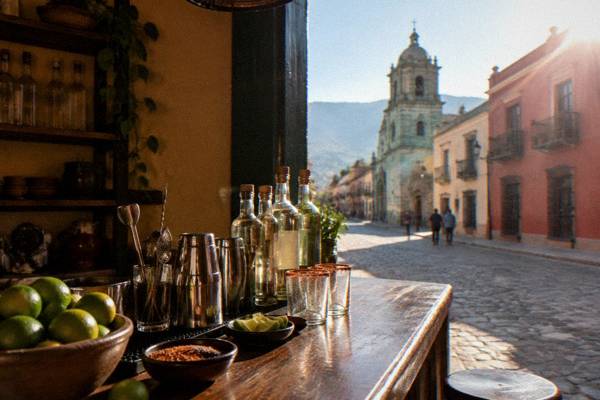
Oaxaca Nightlife: Rooftops, Clubs And Live Music
Oaxaca City after dark runs on mezcal, live bands and rooftop terraces above the historic centre. This guide maps the nightlife by neighbourhood, lists the festivals that fill the calendar, and pairs the evening with tours that start when the sun goes down.
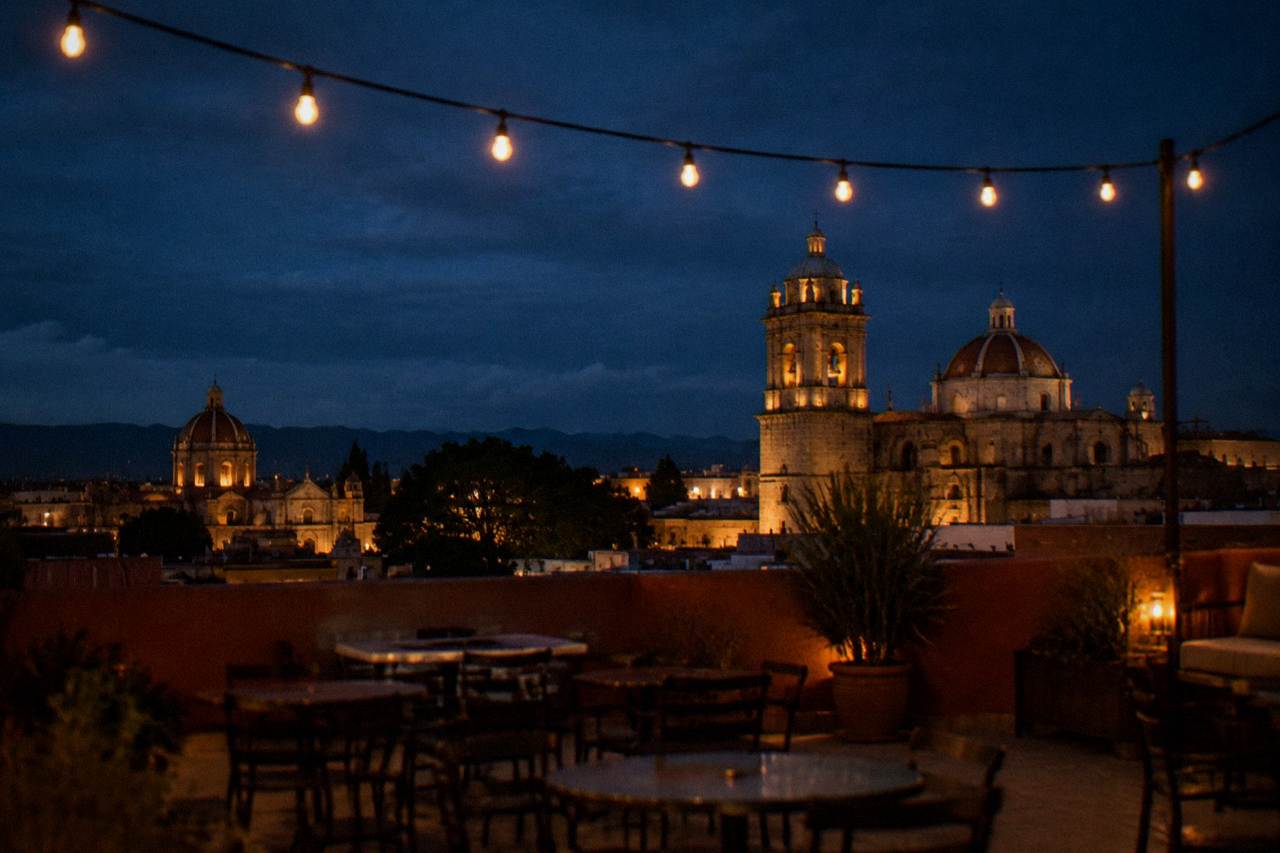
Nightlife in Oaxaca City centres on the historic centre and the neighbouring barrios of Jalatlaco and Xochimilco: rooftop bars around the Zócalo and Andador Macedonio Alcalá, live music venues, mezcal tasting rooms and evening food tours. There are no beaches and no sea; this is an inland highland city at about 1,550 m, so evenings cool to an average low of about 10 to 17 C depending on the month.
Evening in Oaxaca City settles early and slowly. The sun drops behind the Valles Centrales, the air cools fast at about 1,550 m of altitude, and the historic centre shifts from daytime market rhythm to rooftop tables, mezcal tasting rooms and live music spilling out of bars in Jalatlaco and Xochimilco.
What Is Nightlife In Oaxaca City Really Like?
Nightlife in Oaxaca City is concentrated, walkable and built around the historic centre rather than a dedicated entertainment district: rooftop terraces near the Zócalo and the Andador Macedonio Alcalá, mezcal tasting rooms, live music in smaller venues, and street life in the neighbouring barrios of Jalatlaco and Xochimilco. The city is inland, at about 1,550 m, with no sea and no promenade, and evenings cool quickly once the sun sets.
The shape of the evening follows the geography. The UNESCO World Heritage property is the "Historic Centre of Oaxaca and Archaeological Site of Monte Albán", property 415, and the historic centre itself is compact enough that a night out rarely needs more than walking shoes. The Zócalo (Plaza de la Constitución) and the Andador Macedonio Alcalá anchor one end of the evening; Jalatlaco and Xochimilco, the barrios that ring the centre, hold much of the street art and the smaller music venues, as covered in the site's Oaxaca At Night itinerary.
What the city does not have matters just as much for planning. There is no beach, no port, no harbour and no river cruise; the Pacific coast at Puerto Escondido is a far extension at about 165 minutes of driving on the new highway from the Zócalo, not a night out. Anyone building a trip around evening hours should also know that the INAH archaeological sites close to visitors in the late afternoon: Monte Albán's last access is 16:00, so the ruins belong to the day and the rooftops to the night.
The evening calendar also has fixed high points. July belongs to the Guelaguetza, with the Lunes del Cerro performances on two Mondays at the Auditorio Guelaguetza on the Cerro del Fortín, and late October into early November belongs to Día de Muertos, which traditionally centres on 31 October to 2 November. Both fill the streets after dark, and both are covered in detail further down.
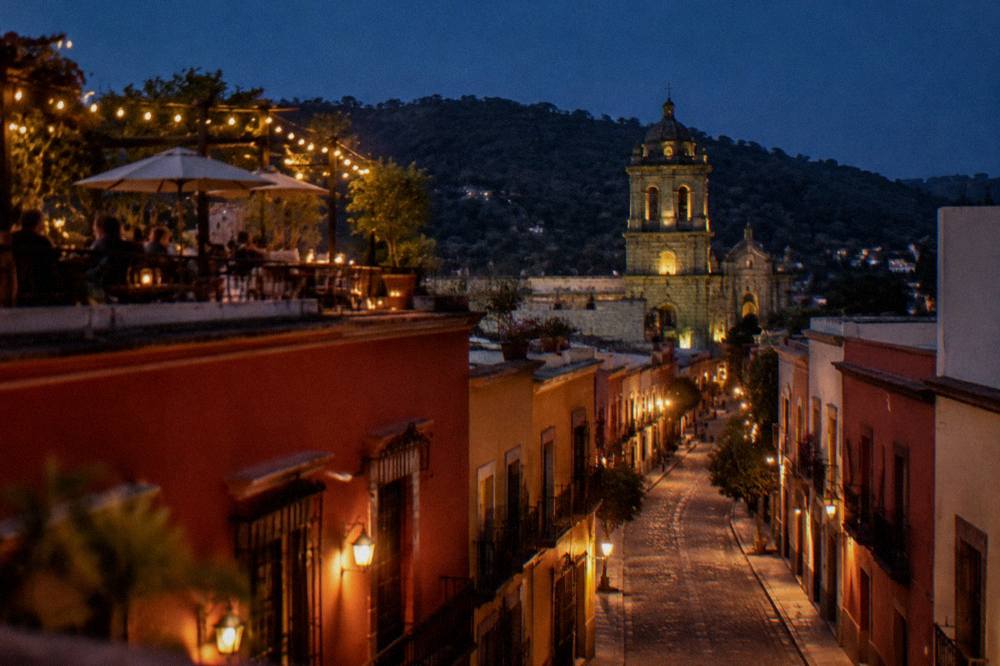
Where Are The Rooftop Bars In Oaxaca City?
The rooftop bars cluster in and around the historic centre, above the Zócalo, the Andador Macedonio Alcalá and the streets running off them, where hotel and restaurant terraces look out over the domes of the city's churches; a second, smaller concentration sits in Jalatlaco, the barrio whose walls carry much of the city's street art. Rooftop season runs longest in the dry months of November to April, when the SMN station normals show monthly rain of 2.4 to 47.3 mm.
The logic of the terrace is vertical: the historic centre is dense and low, so a rooftop a few storeys up clears the roofline and opens a view over the domes. Many of the terraces belong to hotels in the centre, which is one reason the guide to where to stay in Oaxaca doubles as an informal map of the best-placed rooftops: a stay in the centro puts the evening's first and last drink within a walk of the room.
Timing matters at altitude. The SMN station 20079 normals for 1991-2020 put the average daily low at 10.3 C in January and 11.0 C in December against 16.7 C in June and July, so a dry-season rooftop evening needs a layer even when the afternoon was warm. Rain is the other factor: June averages 188.3 mm and September 163.6 mm, and evening showers in those months are part of the pattern, while November through February average under 10 mm each.
| Month | Average low C | Average rain mm | Rooftop planning read |
|---|---|---|---|
| Jan | 10.3 | 2.4 | Dry, cold after sunset, bring a layer |
| Feb | 11.6 | 4.6 | Dry, cool evenings |
| Mar | 13.6 | 17.6 | Dry, milder nights |
| Apr | 15.8 | 47.3 | Warm evenings, some rain days |
| May | 16.7 | 97.9 | Rainy season begins |
| Jun | 16.7 | 188.3 | Frequent rain, 19.9 rain days on average |
| Jul | 15.9 | 118.6 | Guelaguetza month, festival nights outdoors |
| Aug | 15.9 | 131.8 | Rainy, warm |
| Sep | 16.1 | 163.6 | Rainy, 21.4 rain days on average |
| Oct | 14.5 | 63.1 | Día de Muertos build-up |
| Nov | 12.3 | 9.1 | Dry, festival season |
| Dec | 11.0 | 9.0 | Dry, cool, Noche de Rábanos on 23 Dec |
The figures are SMN station normals, 1991-2020, and the rain-day counts are averages from the same table, not a forecast for any given evening. A fuller month-by-month breakdown sits in the Oaxaca weather by month guide.
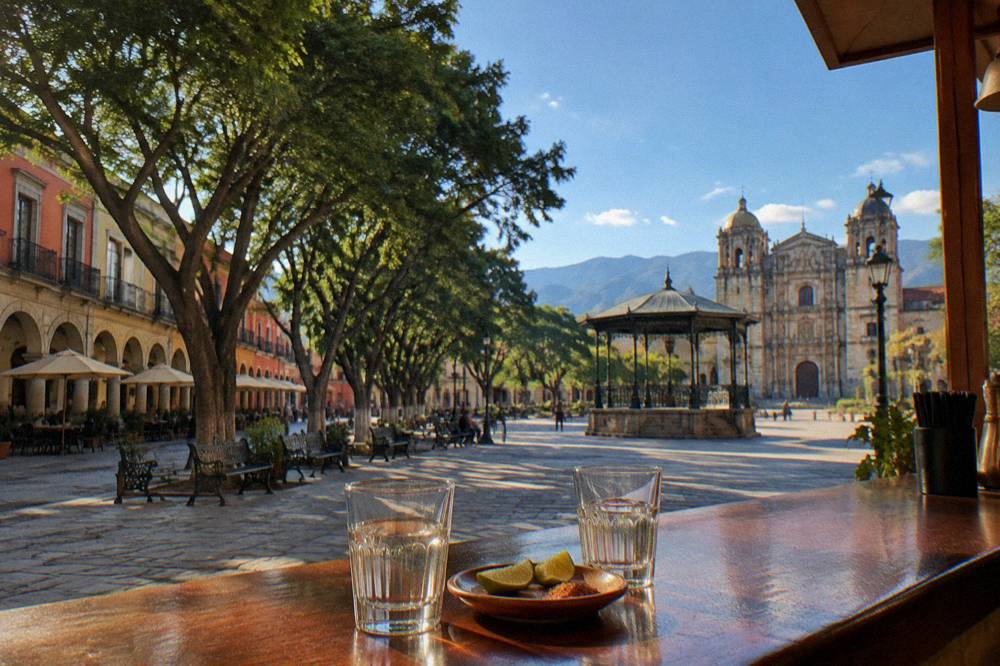
Where Is The Live Music In Oaxaca City?
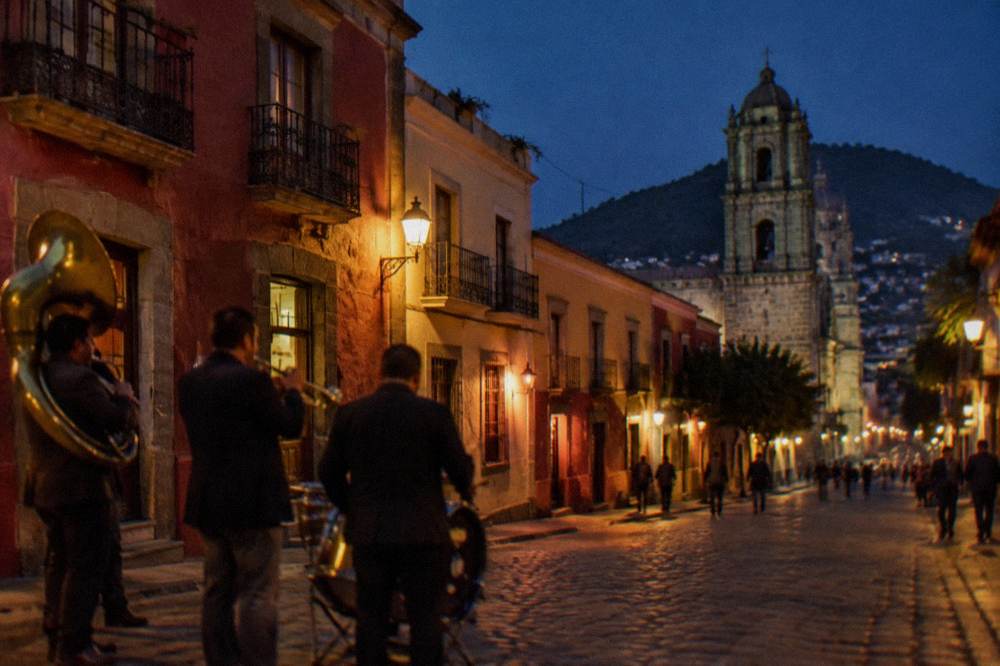
Live music in Oaxaca City is spread across the historic centre and the barrios of Jalatlaco and Xochimilco rather than one venue row: bands play in bars along and around the Andador Macedonio Alcalá, in the smaller rooms of Jalatlaco, and in the plazas when the festival calendar takes over, with the Guelaguetza's Calendas on 18 and 25 July and its Convites on 1, 10 and 11 July 2026 putting live processions in the streets from about 18:00.
The festival record is the most precisely documented part of the music calendar. The official programme for the Guelaguetza 2026 edition listed the Calendas de las Culturas on 18 and 25 July, setting off at about 18:00 from the Fuente de las Ocho Regiones, and the Convites on 1, 10 and 11 July at about 18:00 from the Cruz de Piedra. Those are evening street events by design, free to watch, and part of the "Julio, mes de la Guelaguetza" programme that carried more than 140 activities. The 2026 dates are given as a reference for the standing pattern; the 2027 edition has not been announced.
Outside July, the standing pattern is neighbourhood-based. Jalatlaco's evening identity is tied to its murals and its art workshops, and the tour list of the city's tours reflects it: there are free walks focused on Jalatlaco's street art, tip-based at the end, which run in the evenings in some cases and cost nothing to join. The free things to do in Oaxaca page collects the daytime half of that list; at night the same walls are the backdrop.
Día de Muertos is the other great live-music window. The traditional dates centre on 31 October to 2 November, when comparsas move through the streets and the panteones, the cemeteries, stay open at night, above all on 1 and 2 November. The 2026 programme has not been announced, so only the standing pattern can be stated; the 2025 edition ran 25 October to 4 November with more than 140 activities, and that edition is the reference, not a promise for 2026.
What About Clubs And Dancing In Oaxaca City?
Dancing in Oaxaca City happens in a small number of dance floors in and just outside the historic centre, with the larger nights clustered on weekends and around the festival calendar, and the street itself doubles as the dance floor during Guelaguetza in July and Día de Muertos around 31 October to 2 November, when comparsas and calendas fill the evening with processional music rather than DJ sets.
The Feria del Mezcal, in its 2026 edition on 17 to 28 July at the Centro Cultural y de Convenciones de Oaxaca in Santa Lucía del Camino with about 80 MXN entry and hours to 22:00, is the clearest example: an evening fair with hundreds of stands rather than a dance floor. Everything else covered here is indexed on Oaxaca Travel Guide.
For visitors who want the late-night hours, the practical anchors are transport and safety. Ride-hailing apps serve the city but not the airport, and city taxis work on agreed fares rather than meters; the details are in the guide to taxis, Uber and DiDi in Oaxaca. A late night in Jalatlaco or Xochimilco ends more easily with a car arranged than with a long walk back through empty streets.
Couples planning an evening should read the nightlife together with the Oaxaca for couples itinerary, which sequences rooftops, dinners and walks in an order that works for two.
| Evening event | Standing dates | 2026 reference | Where |
|---|---|---|---|
| Guelaguetza Lunes del Cerro | Two Mondays in July | 20 and 27 July, shows at 10:00 and 17:00 | Auditorio Guelaguetza, Cerro del Fortín |
| Guelaguetza Calendas | Around the two Mondays | 18 and 25 July, from about 18:00 | From Fuente de las Ocho Regiones |
| Guelaguetza Convites | Early and mid July | 1, 10 and 11 July, from about 18:00 | From Cruz de Piedra |
| Feria del Mezcal | July, Guelaguetza month | Reported 17 to 28 July, 11:00 to 22:00 | CCCO, Santa Lucía del Camino |
| Día de Muertos | Traditionally 31 Oct to 2 Nov | 2026 programme not announced | City-wide, panteones open at night |
| Noche de Rábanos | 23 December tradition | 2026 edition not announced | Zócalo area |
The Guelaguetza seat prices for the 2026 edition, Palco A at 1,632 MXN and Palco B at 1,321 MXN with Palcos C and D free, are published figures for that past edition and a reference for what the event costs, not a quote for 2027, which has not been announced.
How Does Mezcal Fit Into A Night Out In Oaxaca City?
Mezcal is the spine of the Oaxaca City evening: tasting rooms in the historic centre pour by the glass, pairing sessions match mezcal against the city's moles, and distillery tours run into the late afternoon, with Santiago Matatlán, the town the state's own communications call the world capital of mezcal, sitting about 37 minutes' drive from the Zócalo. The spirit belongs to the night here the way wine closes a dinner elsewhere.
The bookable evening options cover three depths. A pairing session led by a certified sommelier matches seven pours against mole, and the pairing philosophy is the theme of the mezcal in Oaxaca guide. A behind-the-scenes distillery tour takes the evening further out, into the countryside of the Valles Centrales. And a mixology workshop builds cocktails on organic mezcal, which turns the tasting into making.
| Mezcal evening format | What it covers | Where it is based |
|---|---|---|
| Mezcal and mole pairing | Guided pairing of mezcal with mole, sommelier-led | Oaxaca City |
| Mezcal and mole by a certified sommelier | Sommelier-led tasting session | Oaxaca City |
| Mixology workshop with organic mezcal | Cocktail building on organic mezcal | Oaxaca City |
| Mezcal tour with behind-the-scenes access | Distillery visit with access beyond the tasting bar | Oaxaca City |
| Countryside agave fields and mezcal | Agave fields plus distillery stops | Central Valleys |
| Sustainable mezcal distillery tour | Family distillery visit | Oaxaca City |
For a first evening, the pairing format is the most direct bridge between dinner and night: it starts from the table and ends at the glass. Check availability on the operator's booking page, which also carries the current price and the meeting details.
What Do You Eat Late In Oaxaca City?
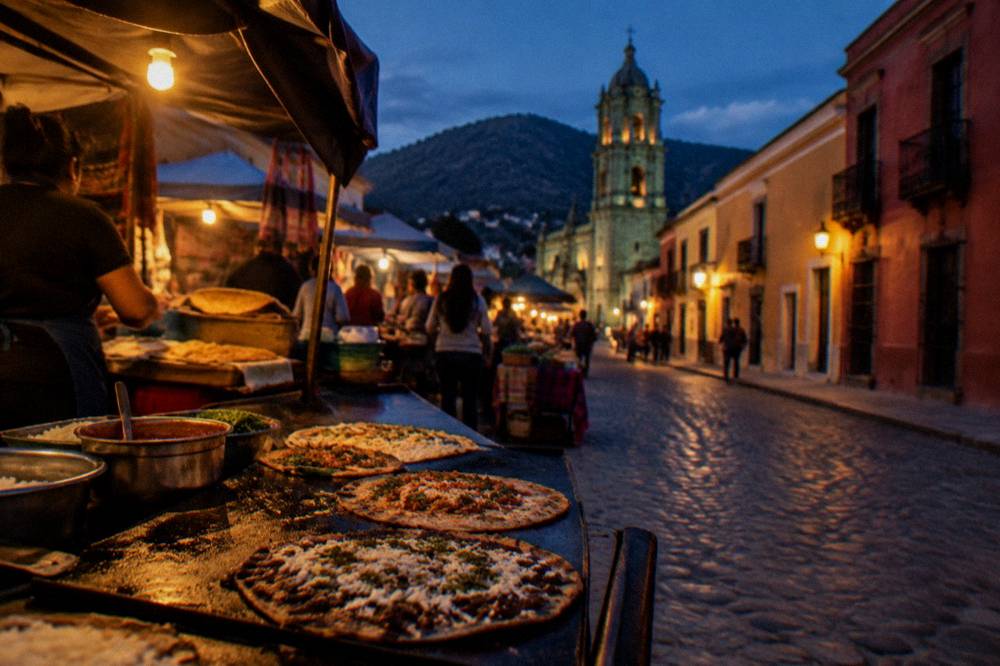
Late food in Oaxaca City means the street and the markets before they close: tlayudas, the large toasted tortillas the city is known for, quesillo, chapulines, and the moles that anchor restaurant menus, with evening food tours running tastings through the centre and the barrios after dark. What no source sets is a closing hour for the markets, so the practical answer is to eat early by local standards or book an evening tour that has its stops arranged.
The evening street food format is well served by bookable tours, including an evening street food walk with more than fourteen tastings and a free tip-based street food walk through Jalatlaco, which costs nothing up front and is paid at the end as guests choose. The street food in Oaxaca roundup and the guide to what to eat in Oaxaca carry the daytime half of the eating picture, including tlayudas and mole.
For travellers who want the kitchen rather than the counter, cooking classes end in the early evening and make a natural prelude to a rooftop: a traditional Oaxacan class, a vegetarian class with a market visit and a mole-focused private class all finish with the meal the group has cooked. The best restaurants in Oaxaca guide picks up where the classes end.
Is It Safe To Go Out At Night In Oaxaca City?
The advisory record for Oaxaca City is comparatively calm: the UK FCDO advises against all but essential travel to parts of Mexico and does not name Oaxaca on its main page, Canada advises a high degree of caution in Mexico overall without listing Oaxaca among its avoid-travel areas, and the US State Department lists Oaxaca state at Level 2, exercise increased caution, with no restrictions on its staff for Oaxaca City, Monte Albán, Puerto Escondido or Huatulco.
The standing caveat is road disruption. Teachers' union blockades are a recurring risk in Oaxaca and can cut road and airport access for hours at a time, and news reports from October 2026 described exactly that pattern on Federal Highway 190 and city points before the roads were cleared. The practical read for a night out: keep the evening plan inside walking distance of where you are staying when reports of blockades are current, and check your government's advisory page before travelling. The site's is Oaxaca safe guide works through the full picture.
The city's own evening rhythm helps. The historic centre is compact and walkable, the is-oaxaca-walkable question has a short answer in the affirmative for the centro, and the barrios are close enough to each other that a night out can stay within a couple of kilometres. Commonsense rules travel well here as anywhere: keep the phone pocketed on crowded streets during festivals, agree taxi fares before getting in, and move in groups after midnight.
| Advisory source | Standing wording for Oaxaca | Practical read for a night out |
|---|---|---|
| UK FCDO | Advises against all but essential travel to parts of Mexico; Oaxaca not named on the main page | No specific Oaxaca restriction on the page |
| Canada | Exercise a high degree of caution in Mexico, with regional advisories | Oaxaca not listed as an avoid-travel area |
| US State Department | Oaxaca state Level 2, exercise increased caution | No staff restrictions for Oaxaca City, Monte Albán, Puerto Escondido, Huatulco; Isthmus region restricted |
| Local standing risk | Road blockades can disrupt road and airport access | Keep evening plans walkable when blockades are reported |
Which Neighbourhoods Are Best For A Night Out In Oaxaca City?
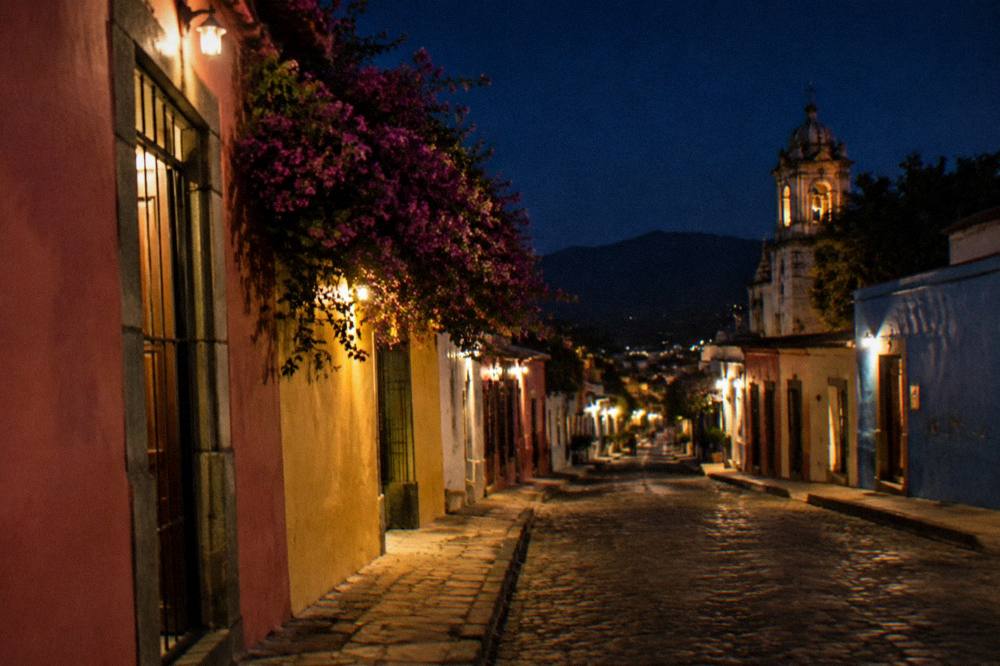
Four areas carry the Oaxaca City evening: the historic centre around the Zócalo and the Andador Macedonio Alcalá for rooftops and restaurants, Jalatlaco for murals and smaller bars, Xochimilco for a quieter local pace, and the Paseo Juárez el Llano park edge for a calmer walk, with the whole set connected by walks of minutes rather than taxi rides. The choice is really between the centre's density and the barrios' character.
The centre is where the UNESCO-listed fabric and the evening economy overlap: the cathedral and the Zócalo at one end, the Andador running up toward Santo Domingo de Guzmán at the other, and the rooftop terraces stacked above. Santo Domingo's own evening note is a lighting one rather than a nightlife one, and the Museo de las Culturas de Oaxaca inside the former convent keeps short hours, Tuesday to Saturday only, 10:00 to 16:00, so it belongs firmly to the day plan.
Jalatlaco and Xochimilco hold the street-level evening. The murals that make Jalatlaco a walking destination by day stay lit and walkable by night, and the free tip-based walks that cover the barrio's art include evening departures. The site's guides to Jalatlaco and the neighbourhoods overview map which streets carry which mood.
| Area | Evening character | What anchors it |
|---|---|---|
| Zócalo and Andador Macedonio Alcalá | Rooftops, restaurants, busiest after dark | Plaza de la Constitución, the pedestrian andador |
| Jalatlaco | Murals, small bars, art workshops | Street art walls, neighbourhood walks |
| Xochimilco | Quieter, local pace | Barrio streets, free walking tours |
| Paseo Juárez el Llano | Calm evening walk | Park edge west of the centre |
| Santa Lucía del Camino | Fair evenings in July only | CCCO, Feria del Mezcal site |
Staying inside this radius is the single biggest upgrade to a night out; the where to stay in Oaxaca and boutique hotels guides sort the options by exactly this geometry.
When Should You Plan A Trip Around Nightlife In Oaxaca City?
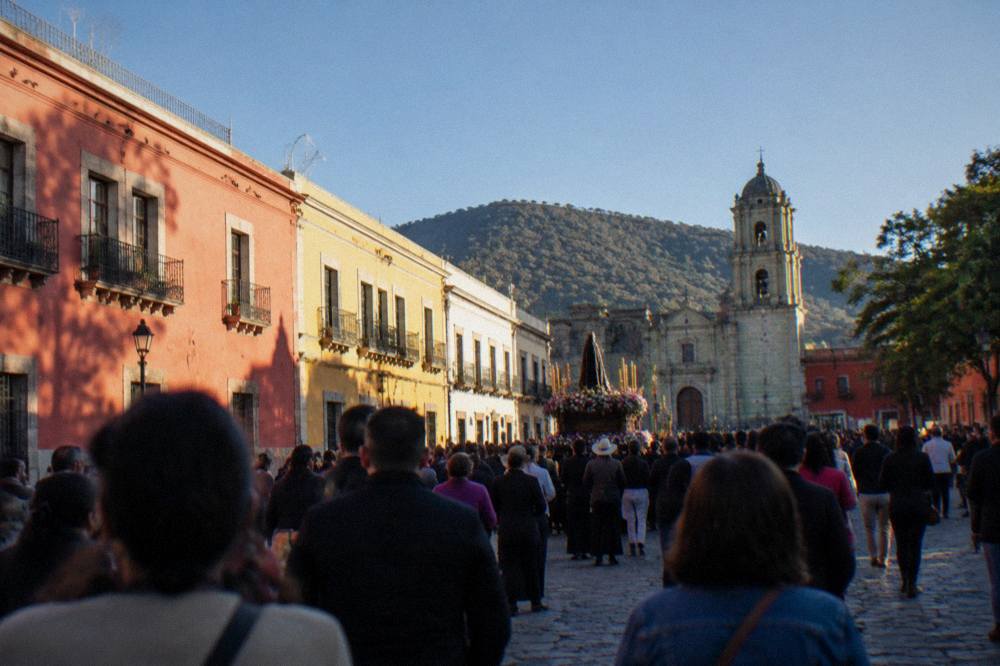
July and late October into early November are the two windows when Oaxaca City's evenings become the main event: July for the Guelaguetza, with two Mondays of performances on the Cerro del Fortín and calendas and convites filling the streets from about 18:00, and the Día de Muertos stretch, traditionally 31 October to 2 November, when comparsas and open cemeteries take over the night. Both fall partly in the rainy season, so a plan needs rain cover.
The trade-off is documented in the SMN normals. July averages 118.6 mm of rain and 20.4 rain days, September 163.6 mm and 21.4 days, but June more than either at 188.3 mm. November, the month after Día de Muertos, drops to 9.1 mm, and the whole November to April dry stretch runs at under 50 mm a month. Rain in the rainy season falls heavily and briefly more often than all evening, which is why the festival calendar runs anyway; the calendas of July step off at about 18:00 regardless of the monthly total.
Ticket economics matter in July. For the 2026 Guelaguetza edition, Palco A seats went for 1,632 MXN and Palco B for 1,321 MXN plus fees, with Palcos C and D free by arrival, all sold through the official ticketing channel with a limit of two tickets per account to counter resale, and the paid sections sold out quickly. Those are reference figures for a past edition; 2027 has not been announced. The site's best time to visit Oaxaca guide weighs the same months for the whole trip, and how many days in Oaxaca sizes the stay around them.
The short average stay is the quiet planning fact in that list: two nights is the norm, so a festival week compresses many two-night visits into the same streets. Booking rooms and evening experiences together, well ahead, is the response the numbers point to.
Common Questions About Nightlife In Oaxaca City
Is Nightlife In Oaxaca City Good?
Oaxaca City's nightlife is genuinely strong if what you want is live music, mezcal, rooftop terraces and street festivals: the Guelaguetza fills July evenings with calendas and convites, Día de Muertos fills late October and early November with comparsas, and the historic centre, Jalatlaco and Xochimilco carry the ordinary weekends. It is not a club-first city, and the evening economy leans on bars, tasting rooms and food rather than large dance floors.
What Time Does Nightlife Start In Oaxaca City?
Early by big-city standards. Festival processions such as the Guelaguetza calendas and convites set off at about 18:00, dinner tables fill from around 20:00, and bars carry the late hours. The SMN climate normals matter here: average evening lows run from about 10.3 C in January to 16.7 C in June, so the terrace hours are comfortable from early evening in every month.
Can You Bar Hop In Oaxaca City Without A Car?
Yes, and that is the intended mode. The historic centre, Jalatlaco and Xochimilco sit within walking distance of each other, and the city scores well on walkability for the centro. Ride-hailing apps serve the city for the longer legs, though not the airport, and city taxis work on fares agreed before the ride.
Is It Safe To Walk Around Oaxaca City At Night?
The advisory record is favourable: the UK FCDO does not name Oaxaca among the parts of Mexico it advises against, Canada lists no avoid-travel area for Oaxaca, and the US State Department lists the state at Level 2, exercise increased caution, with no restrictions on staff in Oaxaca City. The standing caveat is blockade-related road disruption, so keep late-night plans close to where you are staying when blockades are being reported.
When Is The Best Month For Nightlife In Oaxaca City?
July for the Guelaguetza and its surrounding mezcal fair, and late October into early November for Día de Muertos, are the two standout windows; the Noche de Rábanos tradition on 23 December is the third. July averages 118.6 mm of rain and November 9.1 mm, so pack for the season you choose. The site's best time to visit guide weighs all twelve months.
Do You Need To Book Evening Tours In Oaxaca City In Advance?
For festival periods, yes: the city logged 1,324,332 arrivals in 2025 against an average stay of 2.00 nights, which puts pressure on rooms and popular evening experiences in July and around Día de Muertos. Each operator's booking page carries the current price, duration and availability, and the cancellation terms are shown there before you commit.
A final planning note ties the whole evening together: the rooftop, the band and the mezcal glass in Oaxaca City sit minutes apart on foot, and the months that fill the streets with processions are the months that fill the hotels, so book the night before you book the day.