Colonia Reforma: The Quieter Residential Zone North Of The Centre
Colonia Reforma is the quieter residential zone north of Oaxaca City's historic centre, an inland highland city in the Valles Centrales of Mexico at about 1,550 m, and this guide covers where it sits, what is within reach and how to plan around it.
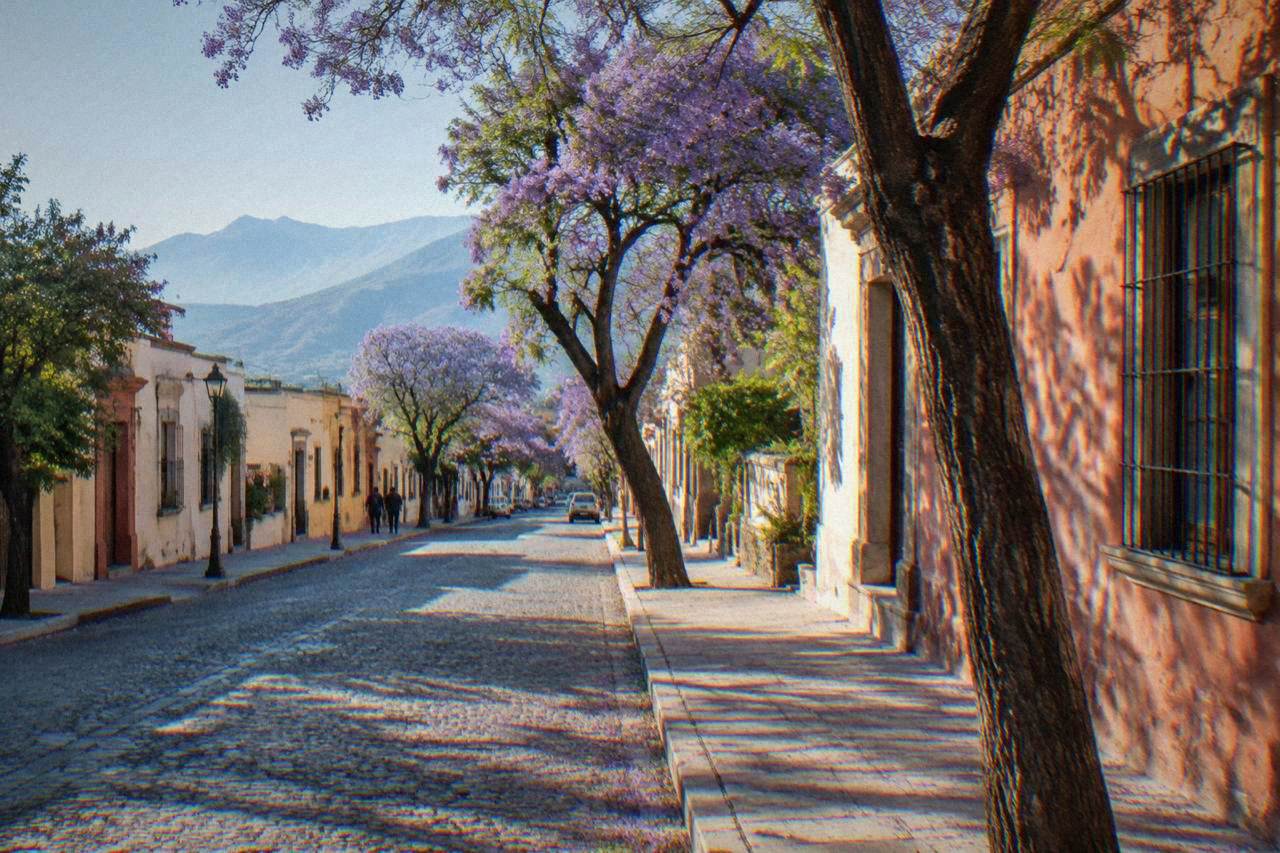
Colonia Reforma lies north of Oaxaca City's Centro Histórico and works as a quieter base: the Zócalo, Monte Albán and the valley's archaeological sites all sit within easy reach, with walking, food and craft tours departing from the centre.
Oaxaca City, the capital of the state of Oaxaca in Mexico, is an inland highland city in the Valles Centrales at about 1,550 m, and Colonia Reforma is the quieter residential zone north of its historic centre. The city recorded 1,324,332 tourist arrivals across 2025, with an average stay of 2.00 nights, and the great majority of those visitors bed down in the Centro Histórico, the UNESCO-listed core that pairs with Monte Albán as property 415, "Historic Centre of Oaxaca and Archaeological Site of Monte Albán". Reforma offers a different trade: fewer sights at the door, more of an ordinary city rhythm, and the whole valley still within reach. This guide from the Oaxaca Travel Guide desk sets out what that trade involves, using only what primary sources state.
What And Where Is Colonia Reforma In Oaxaca?
Colonia Reforma is a residential neighbourhood north of Oaxaca City's Centro Histórico, in an inland highland city at about 1,550 m in the Valles Centrales, and it sits within the same municipality of Oaxaca de Juárez, which counted 270,955 residents at the 2020 census. It is not one of the city's sightseeing districts. The Zócalo, the Andador Macedonio Alcalá, Santo Domingo de Guzmán and the main markets all sit to its south in the centre, and Reforma's role in a trip is as a place to stay and sleep rather than a place to sightsee. The municipality it belongs to is the state capital, and the state itself counted 4,132,148 residents at the same census.
The practical difference between Reforma and the centre is density of attractions. The Centro Histórico carries the UNESCO inscription and holds the cathedral, the Basílica de la Soledad, the Museo de las Culturas de Oaxaca inside the Santo Domingo complex, the Jardín Etnobotánico and the market buildings, while the surrounding barrios, Jalatlaco and Xochimilco among them, hold their own character. Reforma, by contrast, is described in this site's own area roundup as the quieter residential option: fewer tourists at the door, ordinary commerce, and a short ride into everything the centre offers. For travelers weighing where to sleep, the where to stay in Oaxaca guide compares the centre, Jalatlaco, Xochimilco and Reforma in detail.
One planning note matters more than any other. Oaxaca City is on UTC-6 all year: Mexico abolished seasonal clock changes through the law published in the official gazette on 28 October 2022, so there is no daylight saving shift to track when booking tours or transport from Reforma. The state also levies a 3 percent lodging tax on hotel-type stays, rising to 5 percent when the booking runs through an intermediary platform, under decree 884 published 10 December 2025, so a Reforma hotel bill already carries that line.
How Far Is Colonia Reforma From The Zócalo And The Main Sights Of Oaxaca?
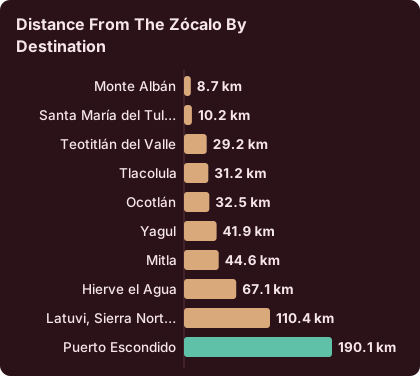
Colonia Reforma sits north of the centre, and the distances that matter are measured from the Zócalo, the city's central square: Monte Albán is about 15 minutes by road, Mitla about 37, Hierve el Agua about 57, and the Pacific coast at Puerto Escondido about 165 minutes on the new highway, all free-flow estimates that real traffic and mountain roads make slower. These figures are computed route times, not schedules, and every one should be read as "about". Within the city itself, the centre's sights, the Zócalo, Santo Domingo and the two main market buildings, all sit south of Reforma and cluster within the walkable historic core described in the Centro Histórico guide.
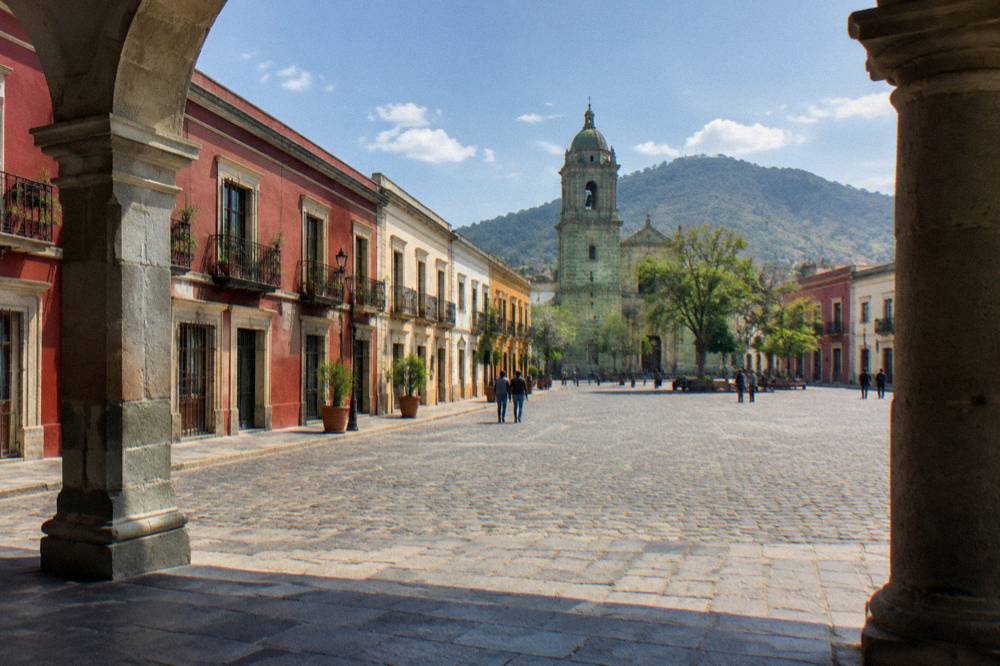
The table below lists the drive times from the Zócalo to the places a Reforma visitor reaches most often. Use them for planning shape, not for booking precision.
| Destination | Distance from the Zócalo | Free-flow drive time |
|---|---|---|
| Monte Albán | 8.7 km | about 15 min |
| Santa María del Tule | 10.2 km | about 11 min |
| Teotitlán del Valle | 29.2 km | about 26 min |
| Tlacolula | 31.2 km | about 25 min |
| Ocotlán | 32.5 km | about 37 min |
| Yagul | 41.9 km | about 38 min |
| Mitla | 44.6 km | about 37 min |
| Hierve el Agua | 67.1 km | about 57 min |
| Latuvi, Sierra Norte | 110.4 km | about 142 min |
| Puerto Escondido | 190.1 km | about 165 min |
Two corrections to common assumptions come straight from the official INAH pages. Atzompa, the closest archaeological zone to the city on the western side, closes at 16:00 with last access at 15:00, earlier than Monte Albán and Mitla, which both run to 17:00. And Zaachila, the site paired with a Thursday market tradition in the valley's south, opens Thursday to Sunday only, 10:00 to 16:00, so a Thursday or Friday plan is the one that works. The INAH fees and hours are worth keeping in one place:
| INAH site | Hours | Last access | Fee, nationals | Fee, foreign visitors |
|---|---|---|---|---|
| Monte Albán | Mon to Sun 08:00-17:00 | 16:00 | 105 MXN | 210 MXN |
| Mitla | Mon to Sun 08:00-17:00 | 16:30 | 105 MXN | 210 MXN |
| Yagul | Mon to Sun 08:00-17:00 | 16:00 | 105 MXN | 210 MXN |
| Dainzú | Mon to Sun 08:00-17:00 | 16:30 | 80 MXN | 145 MXN |
| Lambityeco | Mon to Sun 08:00-17:00 | 16:30 | 80 MXN | 145 MXN |
| Zaachila | Thu to Sun 10:00-16:00 | 16:00 | 80 MXN | 145 MXN |
| Atzompa | Mon to Sun 08:00-16:00 | 15:00 | not on the INAH page | not on the INAH page |
| Museo de las Culturas de Oaxaca | Tue to Sat 10:00-16:00 | 16:00 | 105 MXN | 210 MXN |
What Can You Do Near Colonia Reforma In Oaxaca?
The sights nearest a Reforma base are the centre's big three, the Zócalo and its cathedral, the Santo Domingo complex with the Museo de las Culturas de Oaxaca and the Jardín Etnobotánico, and the market pair of Benito Juárez and 20 de Noviembre, all a short ride or a longer walk south, while the archaeological zones ring the city beyond. None of these sits inside Reforma itself. The museum inside Santo Domingo opens Tuesday to Saturday only, 10:00 to 16:00, at 105 MXN for nationals and 210 MXN for foreign visitors, so a Monday or Sunday visit finds it closed and the church façade is the option. The Jardín Etnobotánico next door runs free guided tours Monday to Friday at 10:30, 11:00, 11:30, 12:00 and 17:00, and Saturday from 10:30 to 12:00, with large and school groups asked to book two weeks ahead.
A day built around the centre pairs naturally with a guide. Food tours work the same way: the Oaxaca food tour collection walks the markets and kitchens of the centre, and the state's own pages describe Mercado 20 de Noviembre as a key food market founded in 1893 with tianguis stalls on Saturdays. Beyond the city, the Monte Albán and Mitla pages carry the site-by-site detail, and the Hierve el Agua page covers the petrified falls run by local communities rather than INAH.
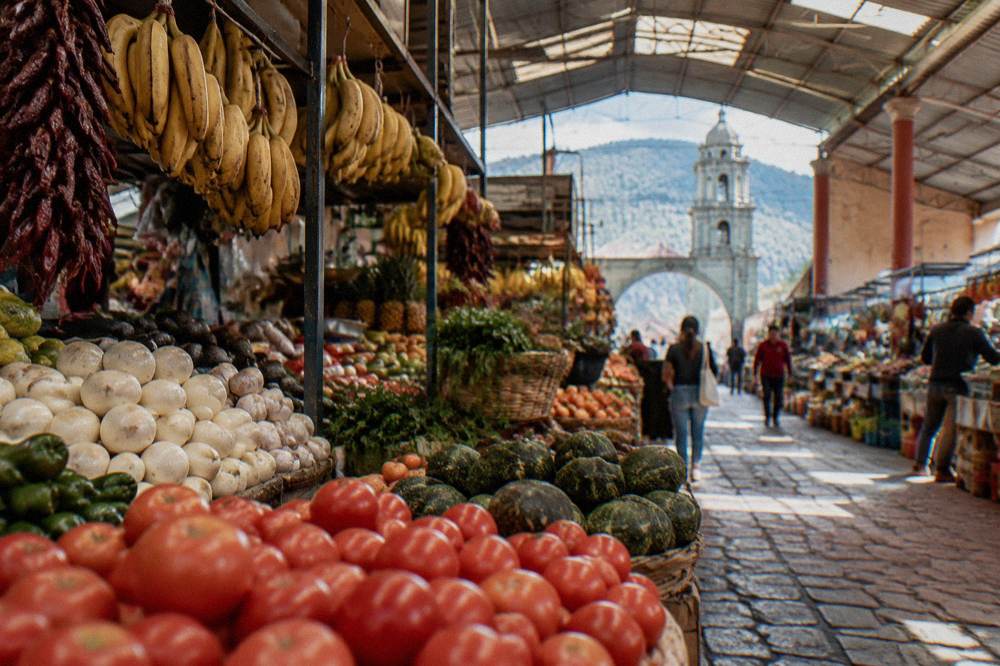
Markets deserve a planning note. The state's official pages confirm the roles of the great market buildings, Benito Juárez as the historic central market inaugurated in 1894 and 20 de Noviembre as the food market, but they do not publish opening hours, and the same goes for the valley's regional market days in Tlacolula, Ocotlán, Etla and Zaachila. Treat any market plan as a morning-to-midday plan and confirm locally. The two central buildings sit within the walkable core, which is what makes a Reforma stay workable: the quiet is residential, and the noise, smoke and commerce of the markets are one short ride away rather than outside the window.
Where Does Colonia Reforma Fit Among Oaxaca's Neighbourhoods?
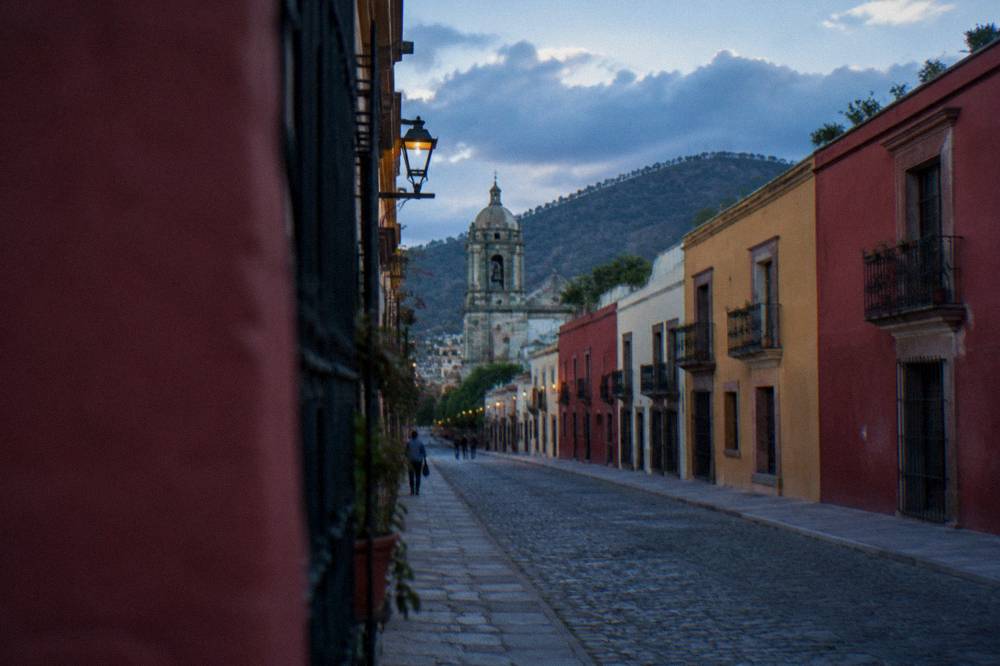
Oaxaca City's visitor geography runs from the Centro Histórico, the UNESCO-listed core around the Zócalo, out through the barrios of Jalatlaco and Xochimilco that ring it, and on to residential zones like Colonia Reforma to the north and Santa Lucía del Camino and Xoxocotlán beyond, with Reforma the pick when quiet matters more than a sight at the door. The full Oaxaca neighbourhoods guide maps all of them. Jalatlaco and Xochimilco keep colonial-era street plans immediately beside the centre, covered in their own Jalatlaco and Xochimilco pages, while the areas south of the centre carry the market weight, described in the south-of-centro roundup. Reforma trades all of that for calm, and the trade is real: nothing in the neighbourhood is on the UNESCO citation, and everything on it is a ride away.
The comparison that matters is with Santa Lucía del Camino and Xoxocotlán, the zone toward the airport. That area is covered in its own guide and sits closer to Xoxocotlán International, which ASUR operates with normal hours of 06:00 to 20:00, while Reforma sits on the northern side of the city facing the road toward the Sierra Norte. Neither is a sightseeing district, and both price themselves as residential alternatives to the centre. The deciding factors are direction of travel: Reforma for the Pueblos Mancomunados and the northern valley, the airport side for early departures.
What Is The Weather Like In Colonia Reforma, Oaxaca?
Colonia Reforma shares Oaxaca City's highland climate: the dry season runs November to April, the rainy season May to October with its peak from June to September, and the SMN station normals for 1991 to 2020 show June averaging 188.3 mm of rain against 2.4 mm in January, with April's average daily high at 34.9 C and January's average nightly low at 10.3 C. There is no winter cold to plan around and no snow at this altitude, but the spread between a 34.9 C April afternoon and a 10.3 C January night is wide enough that a Reforma stay in different months needs different packing. The altitude, about 1,550 m, is the reason for both the strong daytime sun and the cool nights.
The full month-by-month normals, from the SMN station 20079 record for 1991 to 2020:
| Month | Average daily high C | Average nightly low C | Average rain mm |
|---|---|---|---|
| Jan | 28.9 | 10.3 | 2.4 |
| Feb | 31.1 | 11.6 | 4.6 |
| Mar | 33.3 | 13.6 | 17.6 |
| Apr | 34.9 | 15.8 | 47.3 |
| May | 33.8 | 16.7 | 97.9 |
| Jun | 30.9 | 16.7 | 188.3 |
| Jul | 30.1 | 15.9 | 118.6 |
| Aug | 30.0 | 15.9 | 131.8 |
| Sep | 29.1 | 16.1 | 163.6 |
| Oct | 29.3 | 14.5 | 63.1 |
| Nov | 29.0 | 12.3 | 9.1 |
| Dec | 28.9 | 11.0 | 9.0 |
Rain in the wet months falls mostly in afternoon and evening bursts rather than all day, which is why the city has a dedicated guide to Oaxaca in the rain. The station also counts rain days: 21.4 in September against 1.4 in January, on an annual 128. For festival planning, the two anchors are Guelaguetza, which follows the standing pattern of two Mondays in July at the Auditorio Guelaguetza on the Cerro del Fortín, and Día de Muertos, whose traditional core dates are 31 October to 2 November. The 2027 Guelaguetza dates and the 2026 Día de Muertos programme have not been announced, so plan against the pattern, not against a published calendar.
How Do You Get Around Oaxaca From Colonia Reforma?
Getting around from Colonia Reforma means taxis and ride-hailing in the city, walking once you reach the Centro Histórico, colectivos and tour transport for the valley, and no bike-share of any kind, because no bike-share scheme exists in Oaxaca. The centre itself is compact enough that the is Oaxaca walkable question answers yes for the historic core, and the museum-and-market cluster that draws visitors sits inside it. For the archaeological zones, tour transport is the simplest route from a northern base: the Monte Albán tour options all include the ride, and the Hierve el Agua tour picks cover the roughly 57-minute road out to the falls, a drive best not improvised in a rental on mountain roads.
The airport question has a clean answer for direction. From Reforma the ride crosses the city southward. Bus travelers should note that ADO runs the Mexico City services through its official site, with the routes and booking handled there; the site's own getting around Oaxaca guide covers the fuller picture, and the ADO bus Oaxaca page the long-distance detail.
A standing risk worth planning around is road blockades. Teachers' union protests have periodically closed Federal Highway 190 exits, airport access and city points, including sporadic 24-hour actions reported in October 2026, and they can disrupt road and airport access without warning. The practical hedge from Reforma is schedule slack: leave earlier than the free-flow estimate on any travel day, and check road conditions the same morning rather than the night before.
Is Colonia Reforma In Oaxaca Safe?
The advisory picture for Oaxaca is the calmest reading on the board: the UK FCDO advises against all but essential travel only to parts of Mexico and does not name Oaxaca on its main page, Canada advises a high degree of caution for Mexico overall without listing Oaxaca among its avoid areas, and the US State Department lists Oaxaca state at Level 2, Exercise Increased Caution, with no travel restrictions for US government staff to Oaxaca City or Monte Albán. The US restrictions that do exist apply to the Isthmus region, far southeast of the city, not to the Valles Centrales where Reforma sits. The full analysis, including the October 2026 blockade reporting, sits in the Oaxaca safety guide.
None of that licensing is a reason for carelessness, and the ordinary rules of a Mexican state capital apply: the same precautions the site's Oaxaca travel tips guide lists for the whole city. What the advisory record does establish is that Reforma's residential quiet is not a quiet born of warning levels. It is ordinary city calm, and the neighbourhood's planning questions are logistical, how far the centre is, how early the roads move, not security questions.
Which Tours Work Well From Colonia Reforma In Oaxaca?
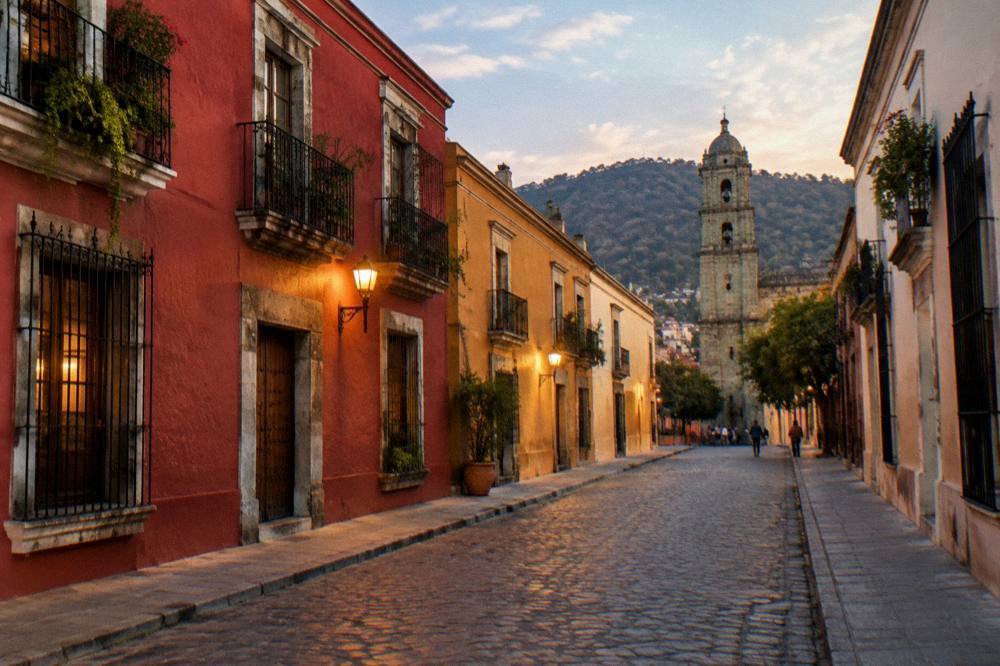
A cooking class suits Reforma particularly well: it is weatherproof, sits indoors through the afternoon rain months, and the market component covers the 20 de Noviembre and Benito Juárez buildings in one guided pass.
The craft routes deserve one more word. The Teotitlán del Valle guide covers the weaving village about 26 minutes from the Zócalo, and the San Martín Tilcajete alebrijes and San Bartolo Coyotepec black pottery guides cover the other two legs of the classic southern craft loop. For a longer day, the Yagul and Dainzú pairing adds two smaller INAH sites on the Tlacolula side, at the Category III fee of 80 MXN for nationals and 145 MXN for foreign visitors rather than the 105 and 210 of Monte Albán and Mitla.
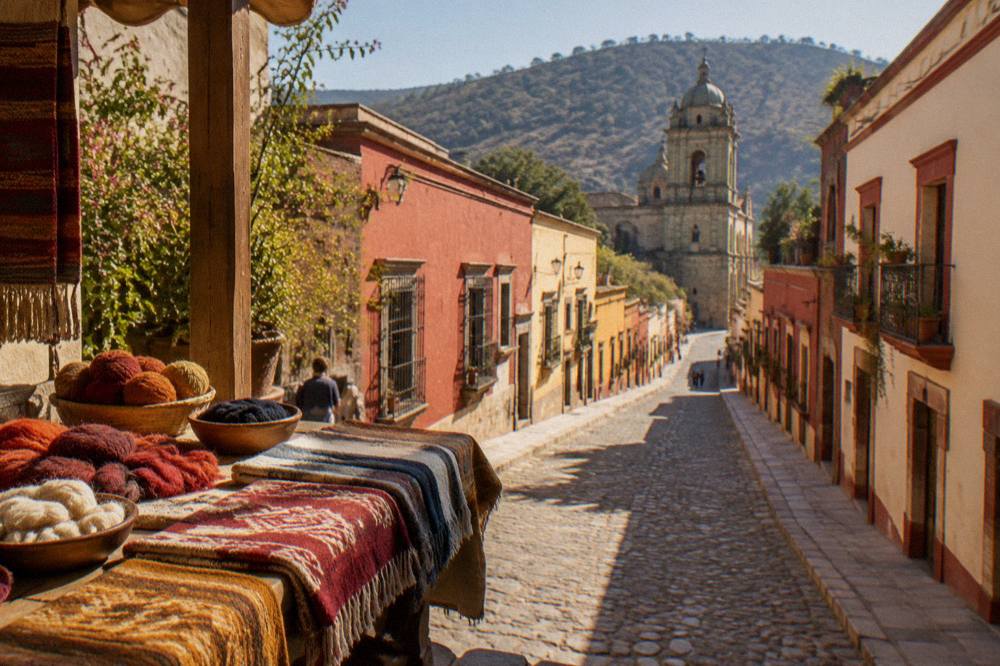
The mezcal question gets its own page, and the mezcal tour Oaxaca picks cover distillery visits out toward Santiago Matatlán, which the state's pages call the world capital of mezcal. Those run as half-day and full-day options with transport included, and they depart from the centre like everything else, which is the recurring theme of touring from Reforma: the base is quiet, the logistics run south, and the valley opens from there.
Common Questions About Colonia Reforma In Oaxaca
Is Colonia Reforma Walkable?
The Centro Histórico is the walkable part of Oaxaca City, and Colonia Reforma sits north of it, so the neighbourhood itself is a residential stroll rather than a sightseeing walk. A short taxi or ride-hail ride reaches the pedestrian core around the Zócalo and the Andador Macedonio Alcalá.
How Far Is Colonia Reforma From Monte Albán?
Monte Albán is about a 15-minute drive from the Zócalo on free-flow roads, and Reforma sits north of the centre, so add the cross-city leg on top. Tours include transport and depart from central meeting points.
Is Colonia Reforma A Good Place To Stay In Oaxaca?
It works as a quieter, more residential base than the Centro Histórico or the barrios of Jalatlaco and Xochimilco, with all the main sights a short ride south. The trade is straightforward: calm at the door, transport for everything else.
Does It Rain A Lot In Oaxaca City?
The rainy season runs May to October, with June averaging 188.3 mm of rain over about 20 rain days, and the dry season November to April, with January averaging just 2.4 mm. The figures are SMN station normals for 1991 to 2020.
What Is The Best Way To See The Centre From Colonia Reforma?
A guided walking tour of the historic centre covers the Zócalo, Santo Domingo and the key streets in one pass, departing from central meeting points. Check live availability on the operator's booking page before locking a morning.
Are The Archaeological Sites Open Every Day From Oaxaca?
Monte Albán, Mitla, Yagul, Dainzú, Lambityeco and Atzompa open Monday to Sunday, with Atzompa closing earlier at 16:00 and last access at 15:00. Zaachila opens Thursday to Sunday only, 10:00 to 16:00.
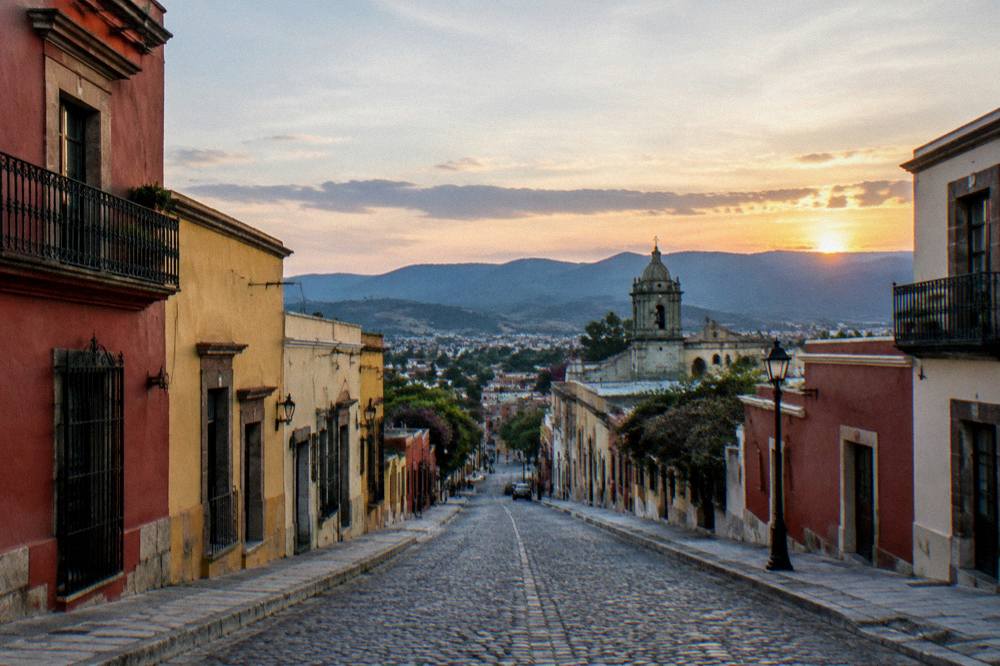
A Reforma base asks one thing of its traveler: treat the center as a destination you set out for each morning, with the walk, the meal and the ruin all waiting a short ride south. Plan against the SMN normals for the month, keep slack in the schedule for the valley's roads, and the quietest corner of Oaxaca City pays its way as a base for everything the Valles Centrales hold.