Oaxaca Cheese (Quesillo): What It Is And Where To Buy It In Oaxaca
Quesillo is the cheese that runs through Oaxacan cooking, and Oaxaca City is where to hunt it: the central markets, the valley towns tied to it, and the cooking classes that turn a purchase into a meal.
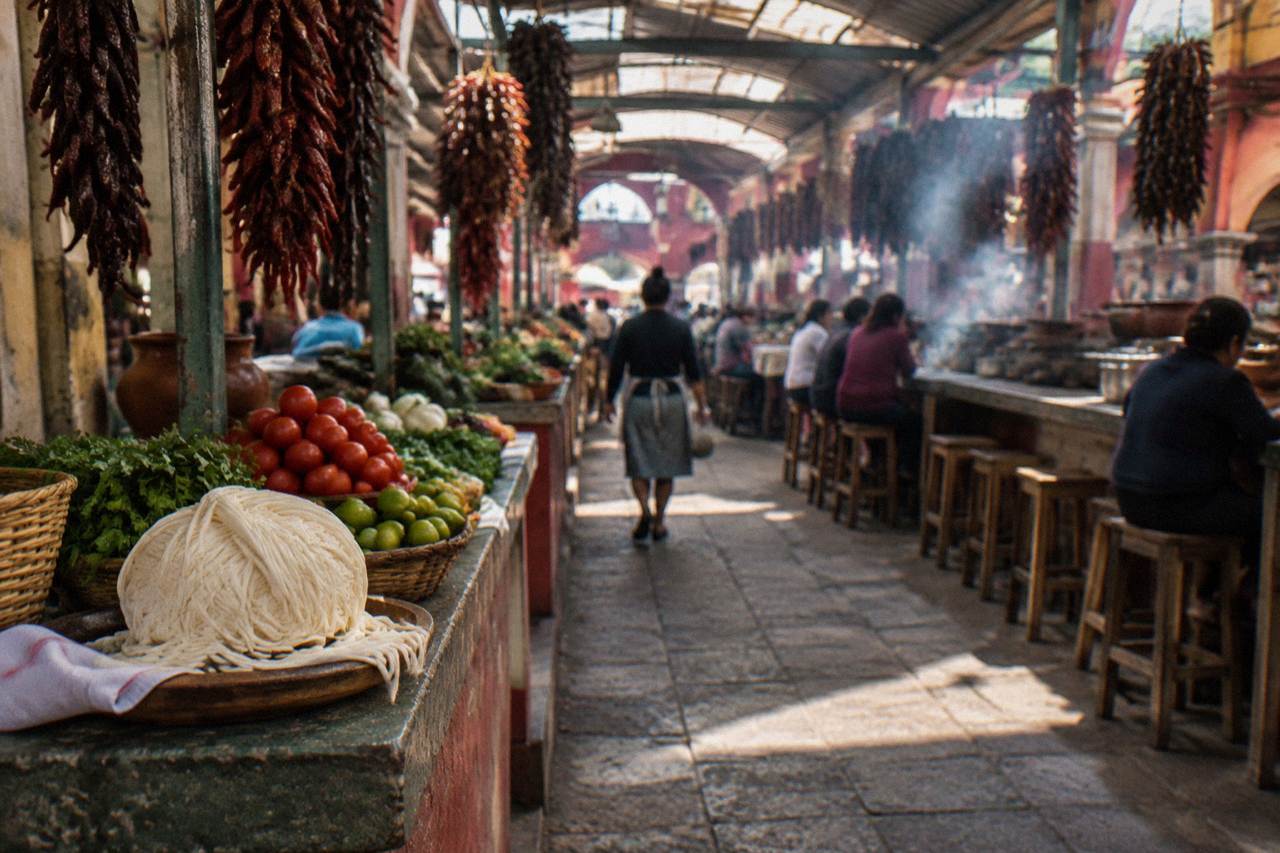
Quesillo is the string cheese of Oaxacan cooking, sold in balls or skeins at the central markets of Oaxaca City, above all Mercado 20 de Noviembre and Mercado Benito Juárez near the Zócalo, and it stars in the city's cooking classes, where a market visit and a mole session often share one morning.
Quesillo is the cheese of Oaxacan cooking, and Oaxaca City, the inland highland capital of the state of Oaxaca in Mexico, is the place to buy it, taste it and learn to cook with it. The city sits in the Valles Centrales at about 1,550 m, far from any coast, and its food identity runs through markets, moles and tlayudas, with quesillo appearing across all three. Quesillo is the essential cheese here, the city's markets and food shops anchor a quesillo hunt, cooking classes turn the cheese into a meal, and the calendar shapes the shopping. The site's wider food coverage, starting with what to eat in Oaxaca, carries the dishes this cheese travels with, and Oaxaca Travel Guide covers the whole destination.
What Is Quesillo, The Cheese Of Oaxaca?
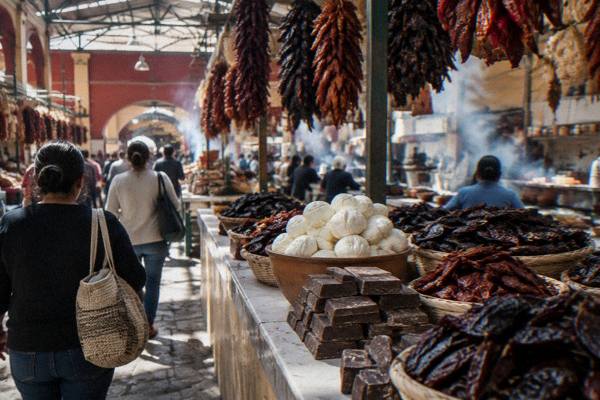
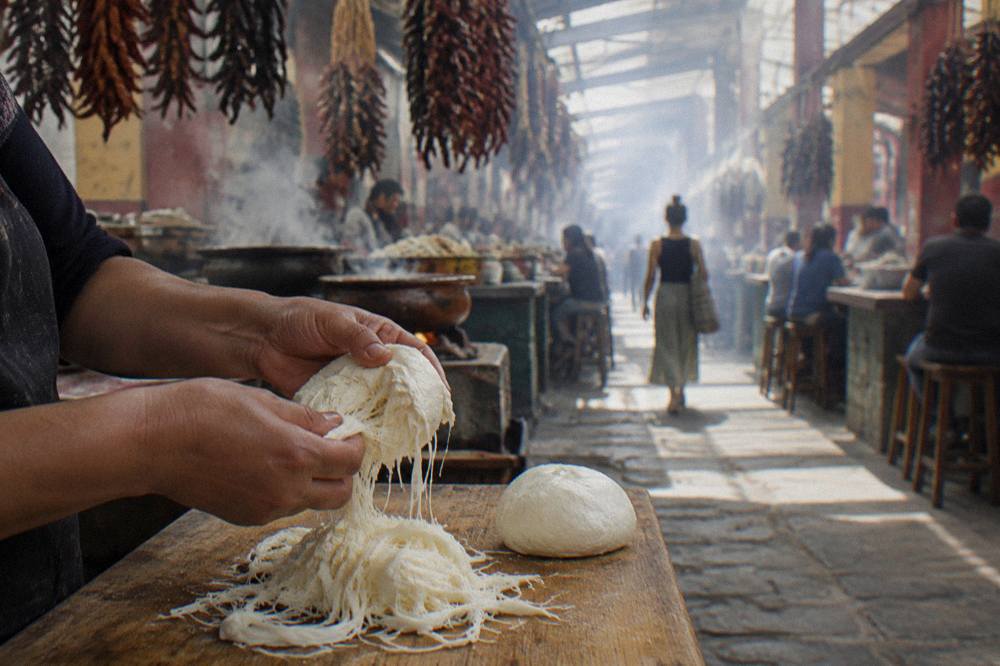
Quesillo is the stretched-curd string cheese of Oaxacan cooking, sold wound into balls or skeins rather than pressed into blocks, and it is the cheese the city's food culture reaches for when a tlayuda, a quesadilla or a layer of mole needs something that pulls and melts. The name belongs to Oaxaca; the dishes it lands in are the city's everyday ones.
The spelling matters on menus and market signs alike. Quesillo is the word used across Oaxaca, and this site's food pages use it consistently, from the guide to tlayudas in Oaxaca to the guide to Oaxacan mole. Dishes are named here as dishes, without prices or rankings, because this destination carries no record of dish prices, and a cheese sold by weight at a market stall changes with the stall and the day.
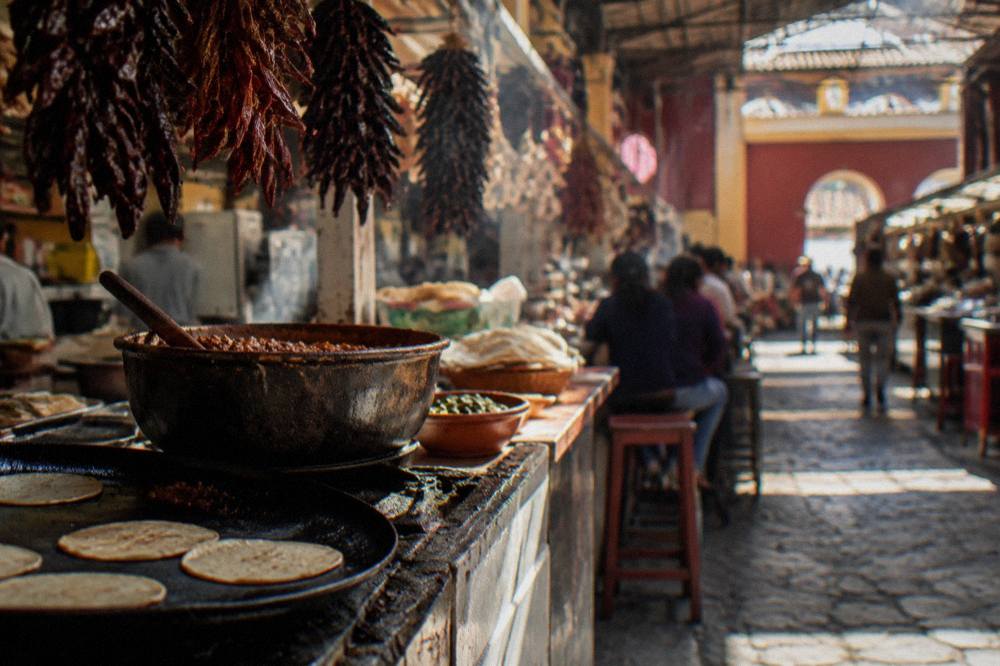
What the cheese does in the kitchen is easier to state than what it costs. It melts, it pulls into strings, and it sits at the centre of the city's casual eating alongside chapulines, tejate and the moles that anchor celebration meals. Cooking classes in Oaxaca City build whole menus around exactly this spread, which is why a class is one of the most reliable ways to taste quesillo in context rather than in isolation. The page on Oaxacan cooking classes compares the formats.
The cheese also travels with a place name. The tour list for this site carries a quesillo and papermaking outing that runs to San Agustín Etla, a Central Valleys town whose name is attached to the cheese on the operator's own listing, and the valley towns around the city each carry their own food and craft identity. Etla's weekly market day belongs to the gap list: no confirmed market days exist for Etla or its neighbours, so this page states none.
Where To Buy Quesillo In Oaxaca City?
The central markets within walking distance of the Zócalo are the default answer: Mercado 20 de Noviembre and Mercado Benito Juárez sit south of the plaza in the Centro Histórico, and their food stalls and cheese vendors are where the city buys quesillo for home kitchens and restaurant kitchens alike. Everything else in the centre is a short walk from these two.
Mercado 20 de Noviembre is the food market of the pair, the one the Mercado 20 de Noviembre guide covers in depth, and its role as a key food market is confirmed on the state government's own pages, which note the market's tianguis elements on Saturdays. Mercado Benito Juárez, covered in the Mercado Benito Juárez guide, is the historic central market beside it, described in contemporary reporting as a market with more than a century of history drawing visitors for its food. Neither market posts its daily opening hours on the official sources this site relies on, so plan a daytime visit and check the stall in person.
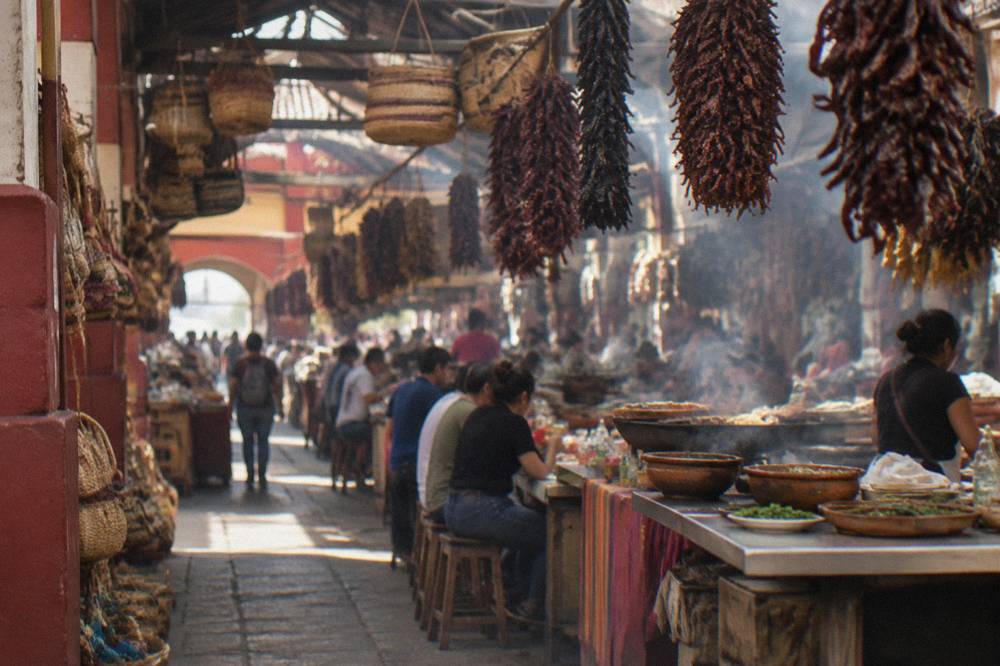
The neighbourhood around the markets does the rest of the work. The Zócalo itself, the Andador Macedonio Alcalá and the streets of Jalatlaco and Xochimilco are all within a walkable radius, and the page on where to stay in Oaxaca maps the districts so a cheese run never needs a car. The city's walkability is one of its practical strengths, covered in detail on the getting-around pages, and a market-to-kitchen circuit on foot is the natural shape of a quesillo day.
Buying at a market stall is a cash-first activity in practice, and the practicalities have their own page: money, ATMs and cash in Oaxaca. The one rule this site can state with certainty is the lodging tax, a 3 percent state tax on hotel-type stays, 5 percent when an intermediary platform is involved, which affects the accommodation side of the trip rather than the cheese. Quesillo prices at stalls are not on record here, so ask at the counter.
Which Food Experiences In Oaxaca Center On Quesillo?
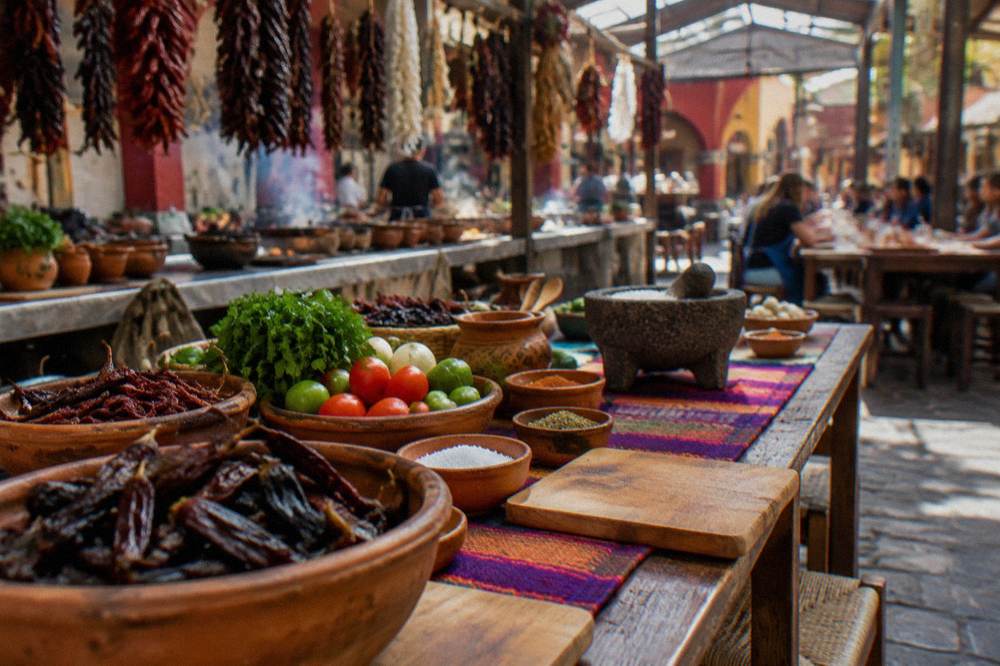
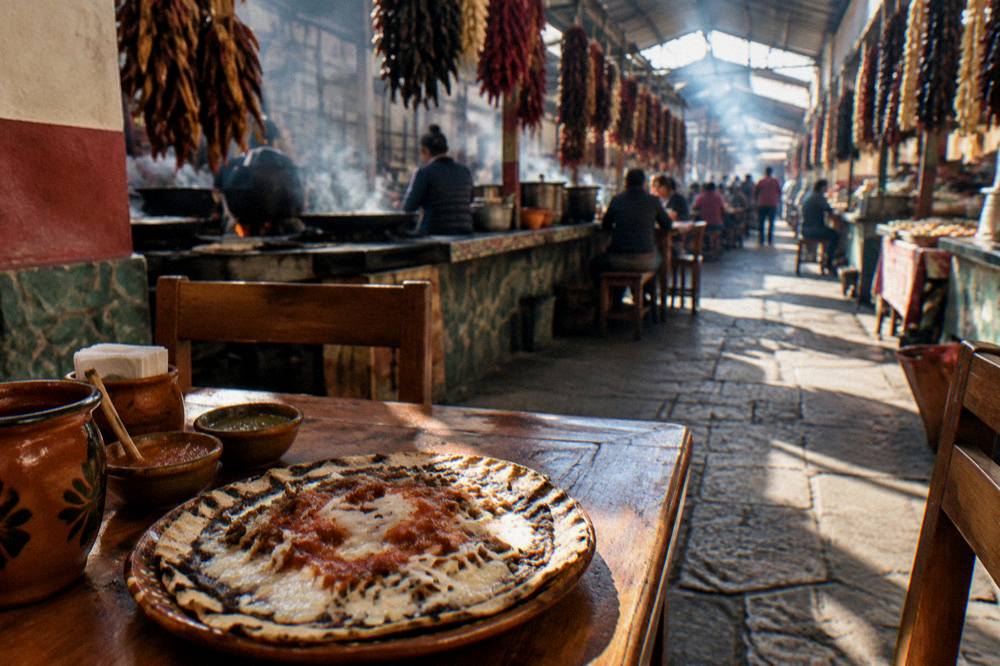
Cooking classes are the main quesillo-centred experience in Oaxaca City: several classes begin with a market visit to buy ingredients, cheese included, and then build a full Oaxacan menu around the purchase. A class converts a market morning into a seated meal, and it is the format where the cheese is explained, handled and eaten in one session.
The featured class on this page is a traditional Oaxacan cooking class whose listing centers on making an Oaxacan mole, a dish family whose guide sits at Oaxacan mole. The class pairs with a market shop in several formats across the city, and the vegetarian option with its own market tour is a second pick. Anyone who books a class should come hungry, because the menu built in the session is eaten at the end of it.
Between the two, the cacao and chocolate experience rounds out the market-food cluster. Chocolate, covered here, shares shelf space with quesillo in the city's food imagination, and a small-group chocolate session followed by a market cheese purchase is a realistic single afternoon. The street food in Oaxaca page tracks where the casual formats live.
A second solo pick for a different angle on the same cluster:
And a third, for the sweet side of the same market world:
Can You Buy Quesillo On A Day Trip From Oaxaca?
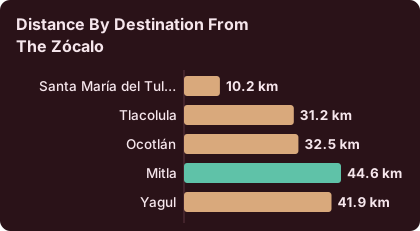
Yes, and the strongest quesillo-adjacent day trip runs to San Agustín Etla in the Central Valleys, where a tour pairs a quesillo stop with a papermaking workshop; the other valley food destinations, Tlacolula, Ocotlán and the towns along the Mitla road, are all within about 37 minutes' drive of the Zócalo on free-flowing roads. The cheese travels well, so a valley loop can end with a purchase.
The drive times below are derived from route data on OSM roads and are free-flow figures; real traffic and mountain roads are slower, so treat each as "about" and round up. The getting around Oaxaca page covers the transport options, and the colectivo network reaches the valley towns, though no fares are stated here.
| Destination from the Zócalo | Distance | Free-flow drive time |
|---|---|---|
| Santa María del Tule | 10.2 km | about 11 minutes |
| Tlacolula | 31.2 km | about 25 minutes |
| Ocotlán | 32.5 km | about 37 minutes |
| Mitla | 44.6 km | about 37 minutes |
| Yagul | 41.9 km | about 38 minutes |
Etla sits in the same valley system, and its craft-and-cheese tour is the one product in the tour list that names quesillo outright. Beyond it, the Tlacolula Sunday market guide and the Ocotlán and Friday market guide describe the two great valley market traditions, and the weekly market days themselves are best left to those pages' own sourcing rather than restated here.
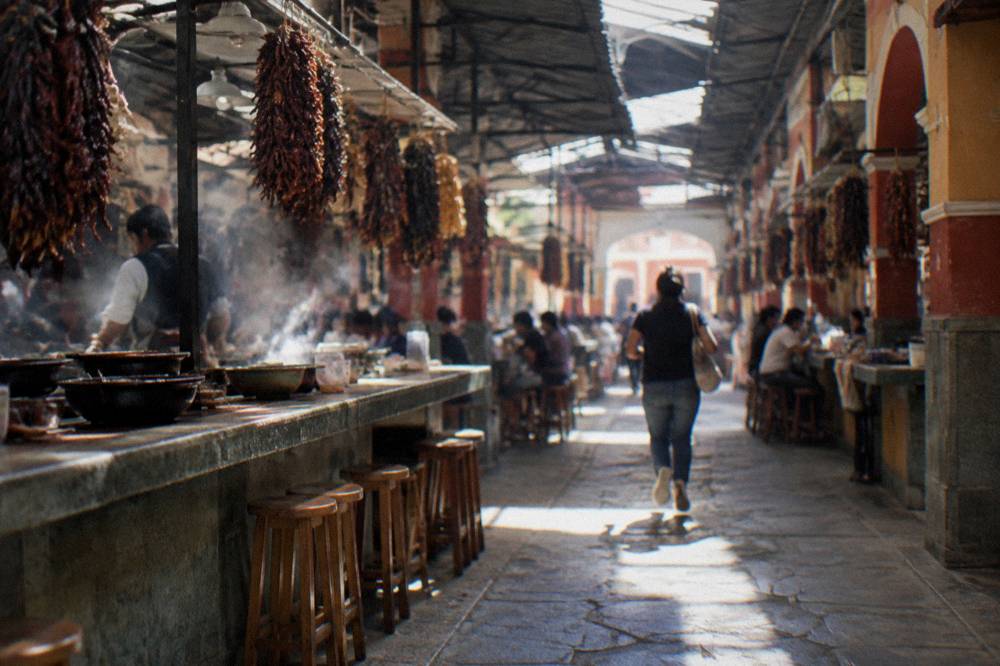
A valley day trip can be self-directed or guided, and the site's day-trip pages cover the standard loops, including the Hierve el Agua day trip and the Mitla and Tlacolula day trip. A cheese-focused traveller simply weights the stops differently: markets first, ruins second, and the tasting rooms of the mezcal route in Santiago Matatlán last. Pairings of cheese and mezcal have their own product in the picks band at the end of this page.
How Does The Oaxaca Calendar Shape A Quesillo Shopping Trip?
The dry season, November to April, is the calendar's practical frame: rain averages under 20 mm a month from November to March against a June peak of 188.3 mm, and market walking in the Centro Histórico is a fair-weather activity. The rainy season, May to October, still leaves mornings workable, with rain concentrated in the June to September peak.
These figures are the SMN station normals for Oaxaca, 1991 to 2020, the only climate source this site prints. They describe averages, not forecasts, and they say nothing about which month is "best"; that ranking is deliberately absent because no official source publishes one. The best time to visit Oaxaca page and the month-by-month Oaxaca weather by month guide carry the full picture.
| Month | Average high C | Average low C | Average rain mm |
|---|---|---|---|
| January | 28.9 | 10.3 | 2.4 |
| February | 31.1 | 11.6 | 4.6 |
| March | 33.3 | 13.6 | 17.6 |
| April | 34.9 | 15.8 | 47.3 |
| May | 33.8 | 16.7 | 97.9 |
| June | 30.9 | 16.7 | 188.3 |
| July | 30.1 | 15.9 | 118.6 |
| August | 30.0 | 15.9 | 131.8 |
| September | 29.1 | 16.1 | 163.6 |
| October | 29.3 | 14.5 | 63.1 |
| November | 29.0 | 12.3 | 9.1 |
| December | 28.9 | 11.0 | 9.0 |
Two calendar anchors matter for crowds rather than weather. The Guelaguetza takes over the city across two July Mondays each year, the Lunes del Cerro, at the Auditorio Guelaguetza on the Cerro del Fortín, and the 2026 edition ran 20 and 27 July with paid sections at 1,632 and 1,321 MXN and free sections C and D, a useful reference for what a July visit involves. Día de Muertos centres on the traditional 31 October to 2 November dates, and the city's programme for any given year is announced late, so check before planning a late-autumn cheese trip around it. The Día de Muertos in Oaxaca guide carries the standing pattern.
What Else Should A Quesillo Day In Oaxaca Include?
A realistic structure is market first, class or meal second, and one anchored sight third: buy the cheese near the Zócalo in the morning, cook or eat it at midday, and spend the afternoon at the Santo Domingo complex or on a guided walk of the Centro Histórico, whose UNESCO listing covers the Historic Centre of Oaxaca and the Archaeological Site of Monte Albán as one property.
The anchor sights each have a guide: Santo Domingo Church, the Museo de las Culturas de Oaxaca inside the same complex, open Tuesday to Saturday only, and the Jardín Etnobotánico, whose free guided tours run Monday to Friday at 10:30, 11:00, 11:30, 12:00 and 17:00 and Saturday from 10:30 to 12:00, with large groups booking two weeks ahead.
| Stop | Detail for planning |
|---|---|
| Jardín Etnobotánico | Free guided tours Mon to Fri 10:30, 11:00, 11:30, 12:00, 17:00; Sat 10:30 to 12:00 |
| Museo de las Culturas de Oaxaca | Open Tuesday to Saturday, 10:00 to 16:00 |
| Mercado 20 de Noviembre | Key food market near the Zócalo; tianguis elements on Saturdays |
| Monte Albán | Open daily 08:00 to 17:00, last access 16:00; about 15 minutes' drive |
For a longer stay, the itinerary pages scale the same skeleton: Oaxaca in one day, Oaxaca in 2 days, up to Oaxaca in a week. A cheese thread runs through all of them, because every version of an Oaxaca itinerary passes through the markets sooner or later, and the Oaxaca travel costs and budget page frames the spending.
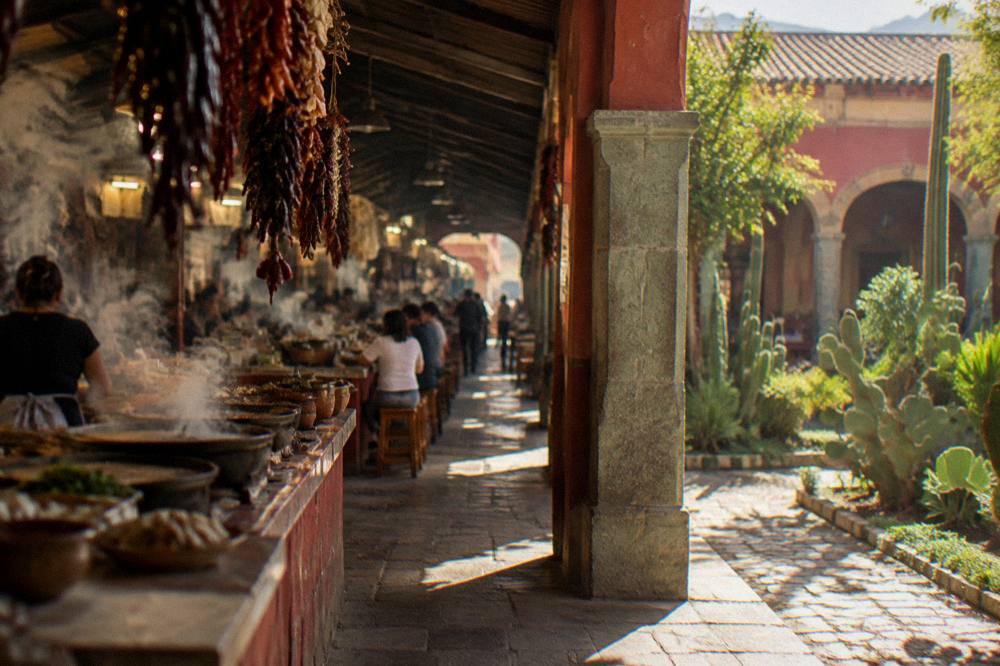
The evening belongs to the city's food-and-drink formats. The mezcal and mole pairing sessions, one of which sits in the picks band below, put cheese-adjacent flavours in a guided tasting structure, and the mezcal in Oaxaca page covers the spirit itself. If the day's shopping went well, the cheese is already in the kitchen, waiting for a tlayuda of your own assembly; the best restaurants in Oaxaca guide handles the nights when it is not.
Is Quesillo The Same Cheese Everywhere In Oaxaca?
Across the city's markets, classes and valley towns, quesillo is the consistent name and the consistent product in Oaxacan cooking, but no grade, age or regional variant table attaches to it, so the honest answer is that differences exist at the stall level and are settled by tasting and asking, not by a published classification. The cheese's constants are its name, its place in the cuisine and its availability near the Zócalo.
What a buyer can control is the format of the encounter. A market stall sells the cheese as a product; a cooking class buys it as an ingredient and then teaches what it does under heat; a valley tour ties it to a town and a workshop.
One caution travels with any shopping plan. Where a figure is missing, the answer is a question asked in person, and the Oaxaca travel tips page collects the habits that make those conversations easy. For transport specifics, the taxis, Uber and DiDi in Oaxaca page is the dedicated guide.
Finally, the question of what to carry home. Quesillo is a fresh cheese, and there is no word here on travel durability or customs rules, so the what to pack for Oaxaca page and the guide on what is worth bringing back from Oaxaca cover the suitcase logic while the cheese stays a local pleasure, eaten where it was bought.
Common Questions About Oaxaca Cheese (Quesillo)
What Is Quesillo In Oaxaca?
Quesillo is the string cheese of Oaxacan cooking, sold wound into balls or skeins and used across the city's tlayudas, quesadillas and moles. It is the cheese named on this site's food pages and in its cooking-class listings.
Where Can I Buy Quesillo In Oaxaca City?
The central markets near the Zócalo are the default: Mercado 20 de Noviembre, the key food market, and Mercado Benito Juárez beside it. Both are a short walk from the plaza, and the surrounding Centro Histórico needs no car.
Can I Cook With Quesillo In Oaxaca?
Yes. Several cooking classes begin with a market visit to buy ingredients and then build a full Oaxacan menu around them, including the featured traditional class whose listing centers on an Oaxacan mole. Check availability through the tour blocks on this page.
Is Quesillo Sold Outside Oaxaca City?
Valley towns carry the same food world, and a tour to San Agustín Etla names a quesillo stop outright, pairing it with a papermaking workshop. Tlacolula and Ocotlán are each about a 25 to 37 minute drive from the Zócalo on free-flowing roads.
When Is The Best Time To Shop The Oaxaca Markets?
The dry season, November to April, averages under 20 mm of rain a month from November to March, against a June average of 188.3 mm, per the SMN station normals. Mornings work year-round, and rainy-season rain concentrates in the June to September peak.
A quesillo day in Oaxaca City ends the way most good days here do: with a full table, a walk home through the Centro Histórico, and a cheese bought that morning already gone.