Oaxaca Photography: Light, Colour And Where To Stand
Oaxaca City sits inland in the Valles Centrales of Mexico at about 1,550 m, and its photography is a matter of altitude light, painted walls and a valley of ruins an easy drive away. This guide covers where to stand and what the sources say about hours, fees and the seasons.
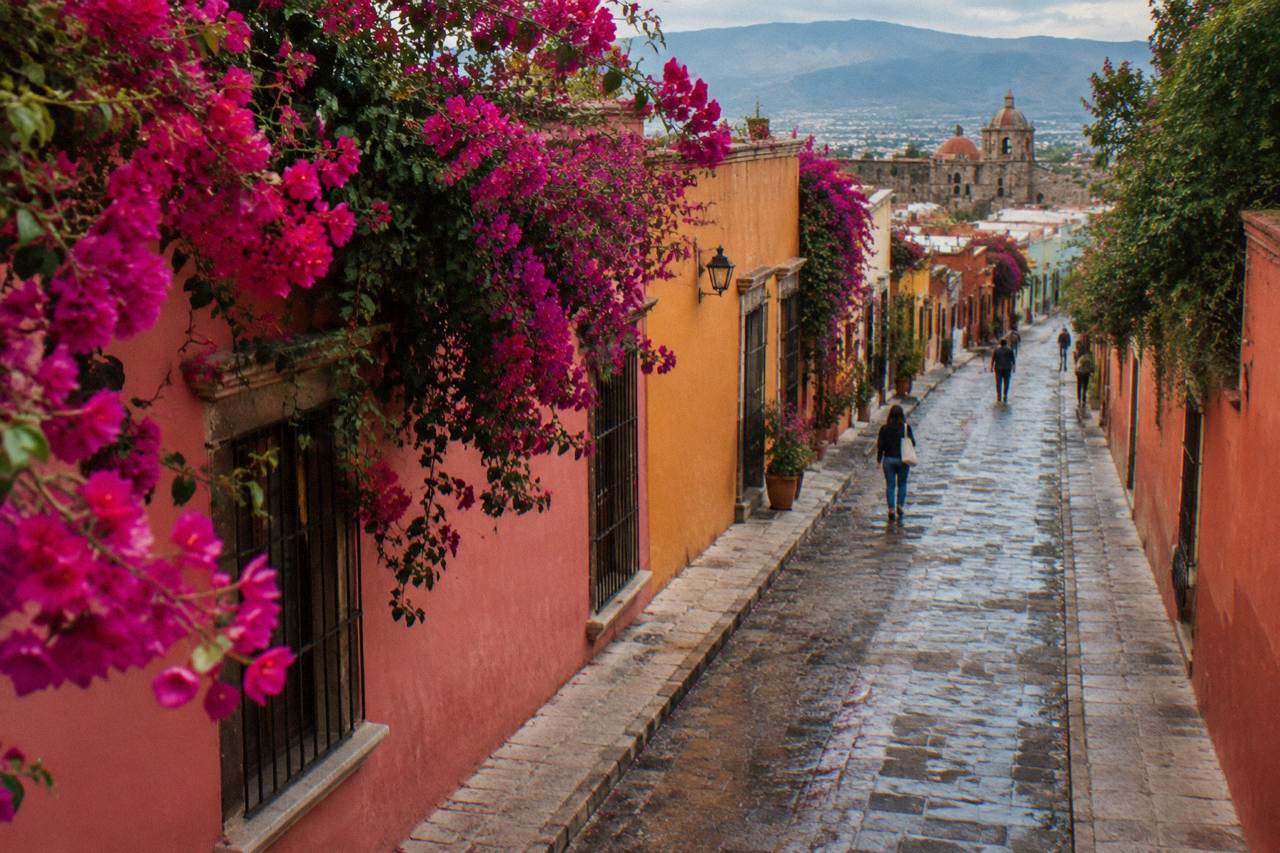
The strongest Oaxaca City pictures come from the Zócalo and the Andador Macedonio Alcalá in early morning or late afternoon, the barrios of Jalatlaco and Xochimilco for painted walls, Monte Albán about 15 minutes away for open-valley light, and the markets for colour and movement. Dry season runs November to April; the rainy months bring June 188.3 mm of rain but dramatic skies.
Oaxaca City, the capital of the state of Oaxaca in Mexico, is an inland highland city in the Valles Centrales at about 1,550 m, and nearly everything a photographer wants here follows from those three facts: dry-season light that swings hard between morning and late afternoon, walls painted in saturated colour, and a valley of archaeological zones within an hour's drive of the Zócalo. The city's historic core and Monte Albán together form the UNESCO World Heritage property "Historic Centre of Oaxaca and Archaeological Site of Monte Albán", property 415, and Oaxaca de Juárez was founded in 1529 as Antequera. That pairing, a walkable colonial centre plus a hilltop zone about 15 minutes away by road, is the backbone of almost every strong Oaxaca portfolio.
Where Are The Best Photography Spots In Oaxaca City?
The core set is the Zócalo with its trees and quiosco, the Andador Macedonio Alcalá running from the cathedral to Santo Domingo de Guzmán, the barrios of Jalatlaco and Xochimilco for painted facades and murals, the Cerro del Fortín for a raised view over the city, and the two central markets for colour and movement. Each one answers to a different kind of light, so the order you shoot them in matters more than the list itself.
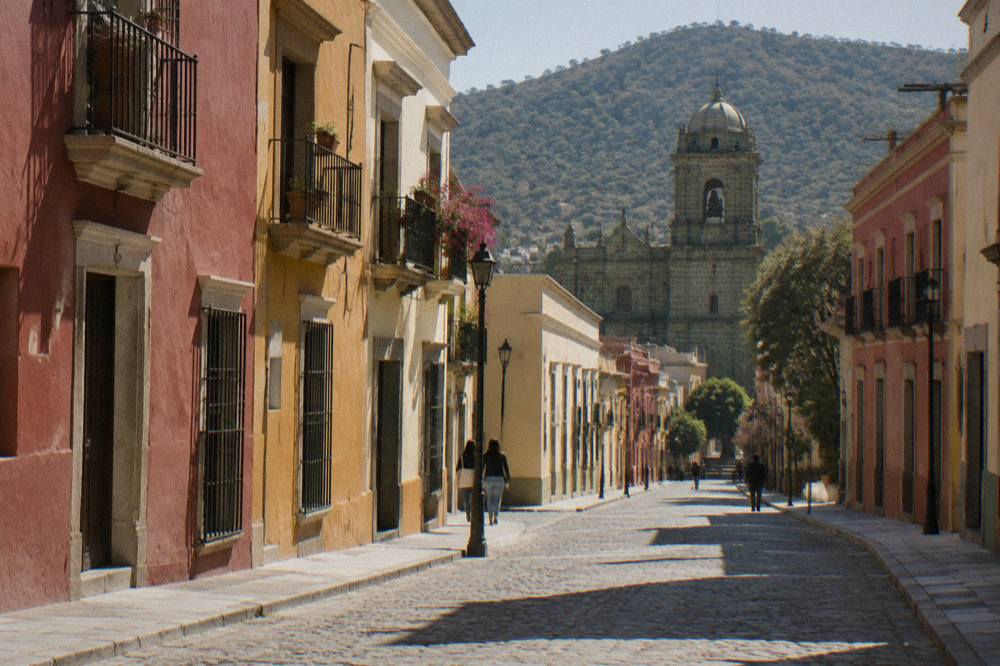
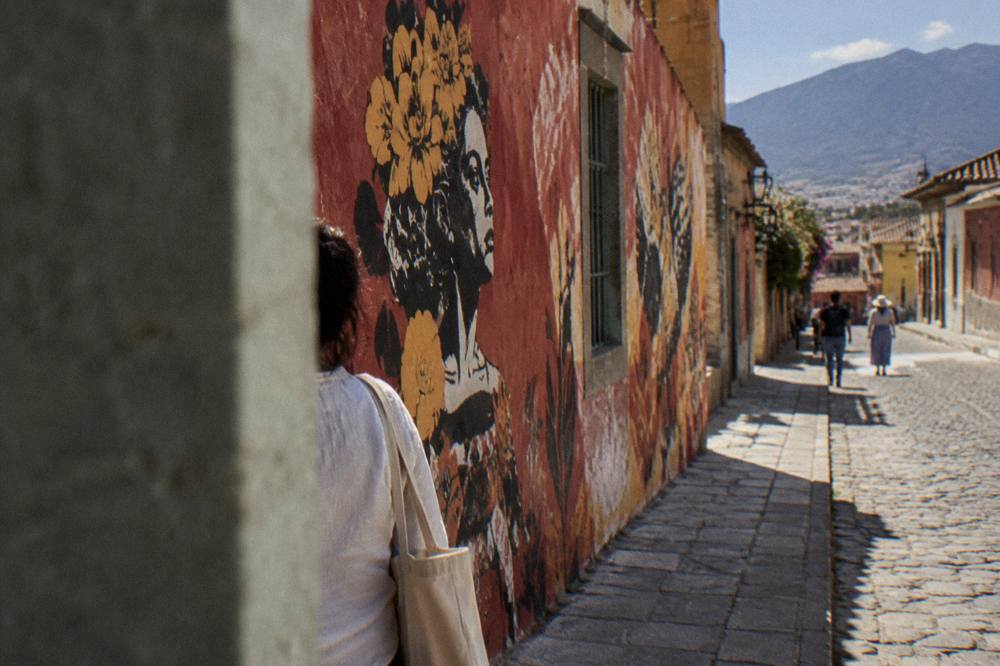
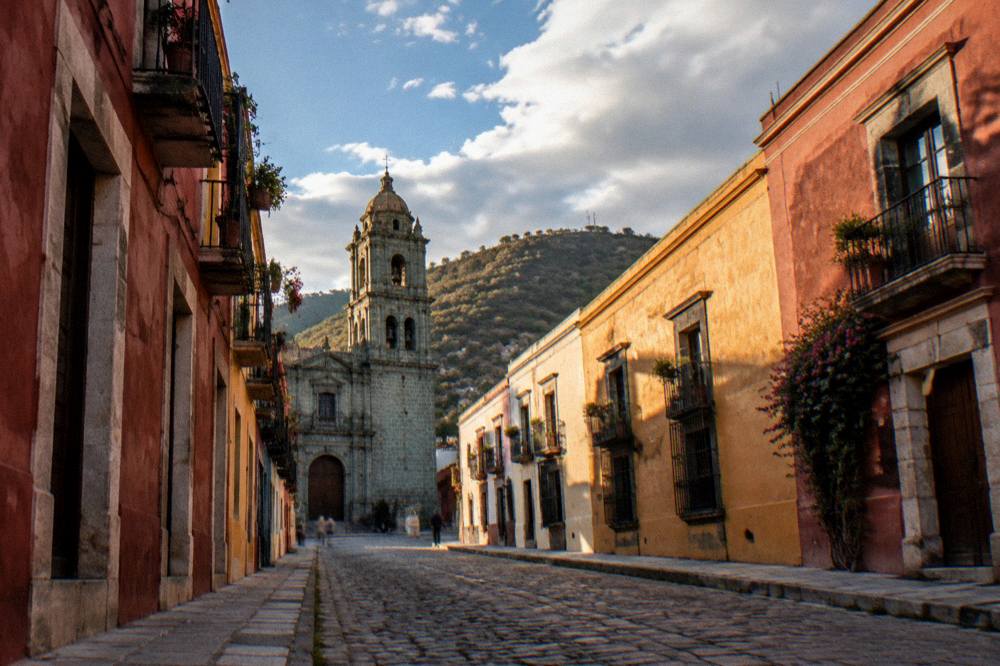
Start in the centre and work outward. The Andador Macedonio Alcalá is the pedestrian spine that links the cathedral precinct to Santo Domingo, and it is the single most productive stretch of street in the city for a camera: buildings close in on both sides, colour repeats, and the light falls as a shaft rather than a flood. The Zócalo, formally the Plaza de la Constitución, gives the opposite problem, an open square with shade under trees, which suits midday work better than the narrow streets do. Jalatlaco and Xochimilco, two barrios within walking distance of the centre, trade monuments for wall colour and mural work, and they are where the street art and mural side of the city rewards a slower pace.
Two practical notes come straight from the official pages. The Museo de las Culturas de Oaxaca at Santo Domingo is open Tuesday to Saturday only, 10:00 to 16:00, with entry at 105 MXN for Mexican nationals and 210 MXN for foreign visitors, so a Monday or Sunday interior shot of that museum is not available. And the Jardín Etnobotánico, whose planting makes one of the most graphic backdrops in the centre, runs free guided tours Monday to Friday at 10:30, 11:00, 11:30, 12:00 and 17:00, and Saturday from 10:30 to 12:00, with large and school groups booking two weeks ahead: the garden is visited on the tour, which shapes how and when you can photograph it.
What Light Does Oaxaca Get Through The Day?
At about 1,550 m with a dry season from November to April, Oaxaca City gets hard, directional light for much of the day, mornings that average 10.3 C in January and 16.7 C in June, and mean daily highs that run from 28.9 C in January to 34.9 C in April. The SMN station normals for 1991 to 2020 show the pattern: the early and late hours carry the colour, and midday flattens the streets.
The altitude does two things a photographer should plan around. It keeps the air clear, which pushes contrast up, and it drops the temperature fast after sunset, so a morning shoot that starts cool ends warm within a couple of hours. January's mean daily low is 10.3 C and its mean daily high 28.9 C, a swing of nearly 19 degrees in a single day; April, with a mean high of 34.9 C, is the month when midday work in the open becomes the weakest part of the day on pure comfort grounds as much as optical ones.
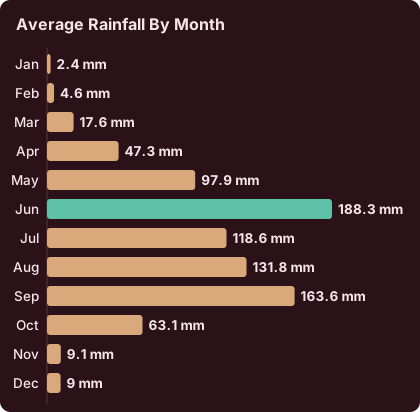
The monthly figures below come from the SMN station 20079 normals, 1991 to 2020, and they are the honest basis for choosing when in the year to shoot: rain volume more than temperature decides how much of a day is usable.
| Month | Mean high C | Mean low C | Rain mm | Rain days |
|---|---|---|---|---|
| Jan | 28.9 | 10.3 | 2.4 | 1.4 |
| Feb | 31.1 | 11.6 | 4.6 | 1.1 |
| Mar | 33.3 | 13.6 | 17.6 | 4.1 |
| Apr | 34.9 | 15.8 | 47.3 | 7.6 |
| May | 33.8 | 16.7 | 97.9 | 13.7 |
| Jun | 30.9 | 16.7 | 188.3 | 19.9 |
| Jul | 30.1 | 15.9 | 118.6 | 20.4 |
| Aug | 30.0 | 15.9 | 131.8 | 20.5 |
| Sep | 29.1 | 16.1 | 163.6 | 21.4 |
| Oct | 29.3 | 14.5 | 63.1 | 12.0 |
| Nov | 29.0 | 12.3 | 9.1 | 3.5 |
| Dec | 28.9 | 11.0 | 9.0 | 2.4 |
June averages 188.3 mm of rain across 19.9 rain days, and September 163.6 mm across 21.4 days; November through March each average under 20 mm. None of that makes the rainy season a bad time to photograph, it makes it a different time: the weather-by-month detail and the rainy-season picture are covered in their own guides, and the storm-light months suit photographers who work fast between downpours.
A guided walk is one way to compress the scouting work, since a local guide moves you between the photogenic stretches rather than leaving you to find them on a map. The Oaxaca Walking Tour covers culture and food through the centre, and its live details sit on the operator's booking page: Check availability.
Which Oaxaca Viewpoints Frame The Whole City?
The Cerro del Fortín, the hill that carries the Auditorio Guelaguetza above the west side of the city, is the named raised viewpoint for a cityscape frame, and the Guelaguetza auditorium on its summit is the structure the hill is known for. No viewpoint height, opening hours or access fee for the Cerro del Fortín is on record, so plan the practical side on arrival rather than on a printed figure.
What the sources do say about the hill is event-shaped. The Guelaguetza, the state's annual July festival, holds its Lunes del Cerro performances at the Auditorio Guelaguetza on the Cerro del Fortín; the 2026 edition ran 20 and 27 July at 10:00 and 17:00, with Palco A at 1,632 MXN, Palco B at 1,321 MXN plus fees, and Palcos C and D free, sold through Superboletos with a two-ticket limit per account. During those two Mondays the hill and its approaches are a festival site rather than a quiet overlook. The rest of the year the hill is simply the city's named high ground, and the Cerro del Fortín guide collects what is verifiable about it.
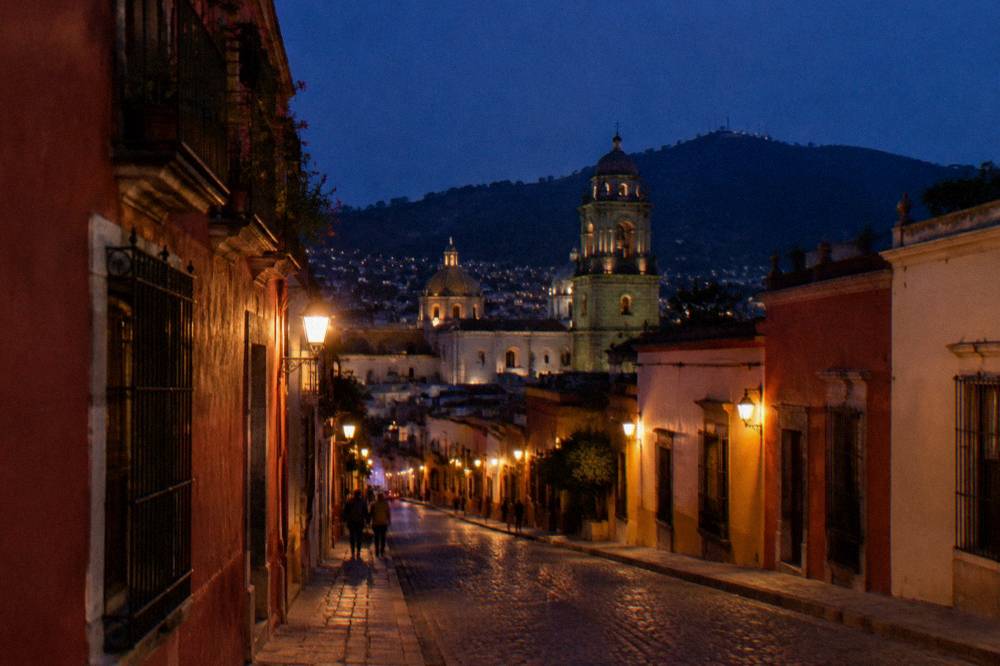
Two honest cautions for viewpoint planning. First, photography from rooftops and terraces in the centre usually means a drink or a meal, and hotel and restaurant prices vary widely, so treat any rooftop figure you see elsewhere as unconfirmed. Second, the state lodging tax is 3 percent on hotel-type stays, 5 percent where an intermediary platform is involved, which is a small but real line on any bill that includes a rooftop-view room.
How Do You Photograph The Zócalo And The Andador Macedonio Alcalá?
The Zócalo, formally the Plaza de la Constitución, is an open, tree-shaded square that tolerates midday light, while the Andador Macedonio Alcalá is a narrow pedestrian street that wants the shaft of light you get early or late; shooting the pair as a single morning route, cathedral and Zócalo first, then north up the Andador as the sun angles in, uses each space at its natural hour.
The Zócalo's quiosco and tree cover give dappled, low-contrast conditions through the middle of the day, which is precisely when the Andador is at its most contrasty, so the two compensate for each other. The stretch ends at Santo Domingo de Guzmán, and the Museo de las Culturas inside the former convent is a Tuesday-to-Saturday building, 10:00 to 16:00, entry 105 MXN nationals and 210 MXN foreigners per the INAH page: time an interior visit inside those windows and keep the exterior for any day.
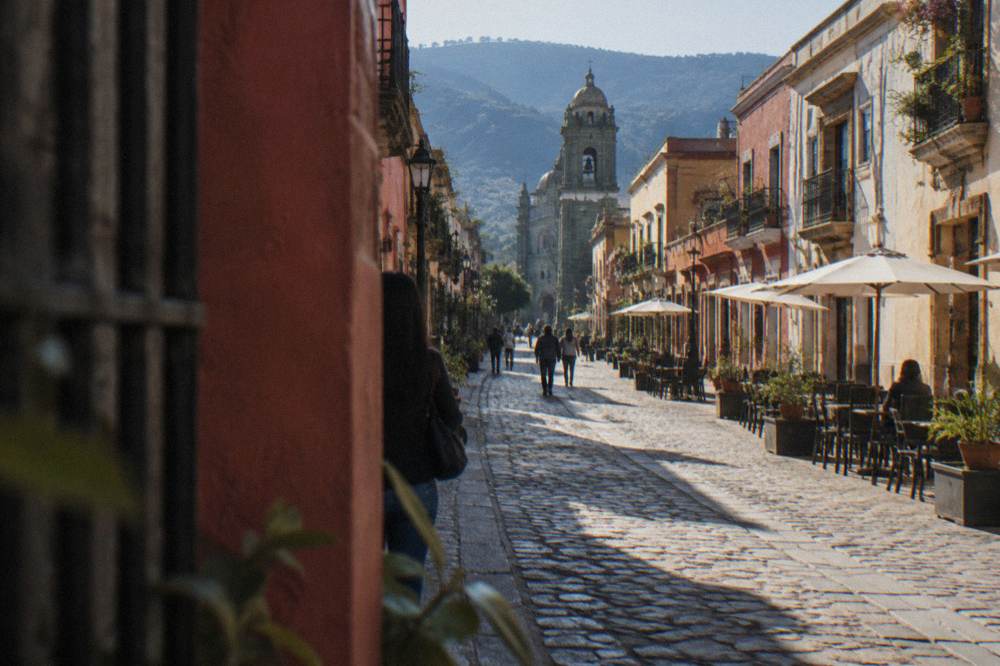
A framing note that comes from the events calendar rather than from optics: temporary Day of the Dead decorations on the Zócalo were scheduled for mounting 25 to 28 October and dismantling after 6 November in the 2026 city documents, which changes what the square's accesses and the Palacio de Gobierno facade look like across that fortnight. The festival's core dates are the traditional 31 October to 2 November. The published programme of 140-plus activities running 25 October to 4 November is the 2025 edition, and the 2026 programme has not been announced, so treat that calendar as a pattern, not a promise.
How Do You Shoot Monte Albán And The Valley Sites?
Monte Albán is a Category I INAH zone open Monday to Sunday 08:00 to 17:00 with last access at 16:00, entry 105 MXN for nationals and 210 MXN for foreign visitors, and it sits about 15 minutes by road from the Zócalo, so the first and last admission hours are the realistic low-light windows. Mitla, about 37 minutes away, keeps the same 08:00 to 17:00 hours with last access 16:30 at the same Category I fee.
The Gran Plaza at Monte Albán is an open elevated field of stone, which means full sun from mid-morning to mid-afternoon and long geometry at the edges of the day. Last access at 16:00 makes the closing hour the practical golden-hour slot: arrive late rather than early if warm light is the goal, and use the 08:00 opening for clean, cool, graphic frames instead. Monte Albán drew 416,675 visitors in 2025 against Mitla's 104,428, Yagul's 10,185, Lambityeco's 5,545 and Zaachila's 4,229, which is the only crowd-related statement the data supports: the raw visitor counts, not an inference about any particular month. Other pages covering the same trip are gathered on Oaxaca Travel Guide.
| Site | Hours | Last access | Fee MXN national / foreign | Drive from Zócalo |
|---|---|---|---|---|
| Monte Albán | Mon to Sun 08:00 to 17:00 | 16:00 | 105 / 210 | about 15 min |
| Mitla | Mon to Sun 08:00 to 17:00 | 16:30 | 105 / 210 | about 37 min |
| Yagul | Mon to Sun 08:00 to 17:00 | 16:00 | 105 / 210 | about 38 min |
| Dainzú | Mon to Sun 08:00 to 17:00 | 16:30 | 80 / 145 | not measured |
| Lambityeco | Mon to Sun 08:00 to 17:00 | 16:30 | 80 / 145 | not measured |
| Zaachila | Thu to Sun 10:00 to 16:00 | 16:00 | 80 / 145 | not measured |
| Atzompa | Mon to Sun 08:00 to 16:00 | 15:00 | not on the INAH page | not measured |
Drive times are derived from road-network routing in free-flow conditions; real traffic and mountain roads are slower, and every figure above is rounded up and prefixed with "about". Two scheduling traps repeat across the set: Zaachila opens Thursday to Sunday only, 10:00 to 16:00, and Atzompa closes at 16:00 with last access at 15:00, an hour earlier than Monte Albán. The INAH pages also list a 730 MXN rate for visits outside normal hours at several zones, a figure that exists on the pages and is the only after-hours mechanism the sources name.
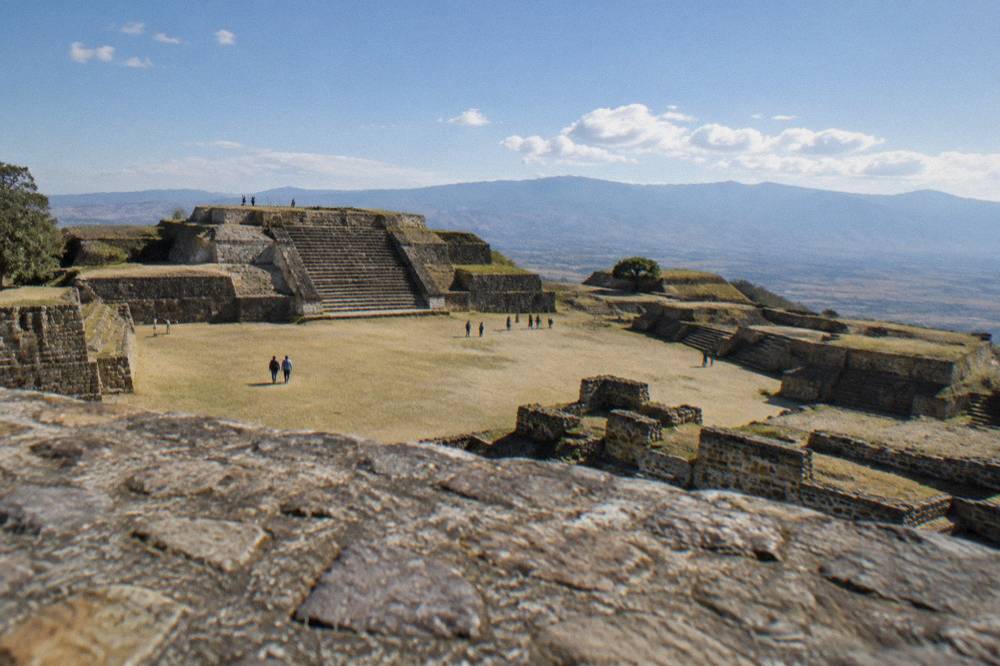
For photographers who want the ruins with a guide rather than self-driven, the Monte Albán half-day tour covers the zone from the city, and the full Monte Albán guide holds the site detail. A practical layer for any ruins-to-market day is in getting around Oaxaca.
What Markets And Food Make The Strongest Oaxaca Pictures?
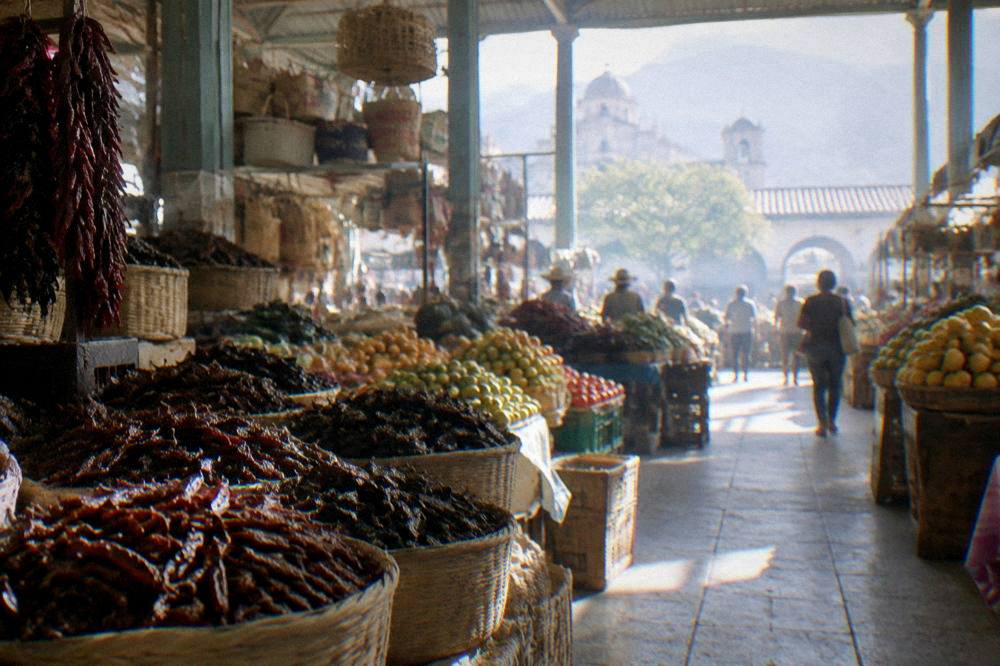
Mercado 20 de Noviembre and Mercado Benito Juárez, the two central markets a short walk from the Zócalo, are the city's densest colour-and-movement subjects, with the state's own pages noting 20 de Noviembre's role as a key food market with tianguis elements on Saturdays. The available records set no opening hours for any Oaxaca market, so shoot them as daytime subjects and let the stalls, not a timetable, define the session.
Market photography in Oaxaca is chili piles, quesillo stretched into loops, chocolate, bread and the smoke of the meat aisles, and the central pair sits close enough to the Andador to fold into a single morning. Further out, Mercado de Abastos has served the capital and nearby towns since 1978 as the wholesale heavyweight. Beyond the city, the valley's weekly tianguis are the strongest single-day market subjects in the region, and their day-of-week pattern is stable: Tlacolula on Sunday, Ocotlán on Friday, Etla on Wednesday, Zaachila on Thursday.
| Market | Character | Hours |
|---|---|---|
| Mercado 20 de Noviembre | Central food market, tianguis elements Saturdays | none published in the sources |
| Mercado Benito Juárez | Historic central market near the Zócalo | none published in the sources |
| Mercado de Abastos | Large wholesale market since 1978 | none published in the sources |
| Tlacolula | Weekly Sunday tianguis in the valley | none published in the sources |
| Ocotlán | Weekly Friday tianguis | none published in the sources |
| Zaachila | Weekly Thursday tianguis | none published in the sources |
The Tlacolula Sunday market guide pairs naturally with a Mitla or Hierve el Agua day, since Tlacolula is about 25 minutes from the city and Mitla about 37.
What Colour Do Oaxaca's Neighbourhoods Give A Camera?
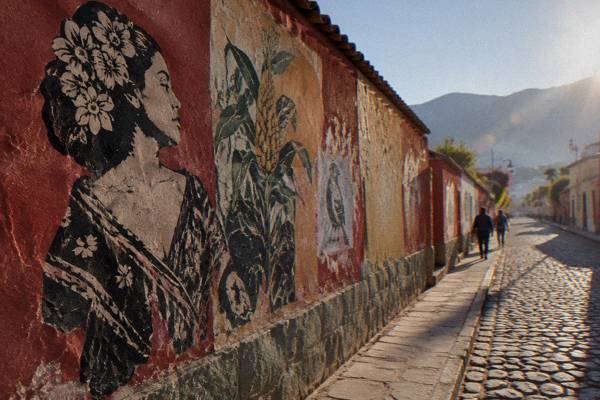
Jalatlaco and Xochimilco, the two barrios flanking the historic centre, are the city's wall-colour and mural districts, with Jalatlaco's street art dense enough to carry its own dedicated tours in the tour list, and Reforma holding its own stretch of the city's painted fabric. The centre itself, dense around the Andador, trades that scatter for monumental stone and green shade.
The neighbourhoods divide cleanly by subject. The Centro Histórico gives facades, domes and the cathedral; Jalatlaco gives murals and saturated cobbled streets; Xochimilco gives the aqueduct-side stretch and its own mural work. The site's tour list includes both paid street-art walks and free tip-based walks in Jalatlaco, which says something about how shootable that barrio is: it supports multiple guided products on the same subject. For planning where to sleep near the best of it, the where to stay in Oaxaca guide breaks the city down by neighbourhood.
Which Season And Month Photograph Best In Oaxaca?
By the SMN normals, November through March are the low-rain months, each averaging under 20 mm, with November at 9.1 mm and December at 9.0 mm; June carries 188.3 mm across 19.9 rain days and September 163.6 mm across 21.4. Dry-season months give reliable daily light, while the June-to-September peak brings heavy rain and the skies that come with it.
The year splits into two photographic regimes. November to April is the dry season, when a full day of shooting is the norm and April's 34.9 C mean high makes the middle of the day the weakest block. May to October is the rainy season, peaking June to September, when the rain arrives in volume, 853.3 mm falls across the year in total, and the between-shower light can be the most dramatic the city offers. Neither regime is a ranking; the table in the light section above carries the monthly numbers, and the best time to visit guide works the same data for trip planning.
Event seasons are their own draw, with one standing caution: the 2026 editions of Día de Muertos and Noche de Rábanos had not been announced in any official source, so only the standing pattern can be printed. Día de Muertos centres on the traditional 31 October to 2 November dates, and Noche de Rábanos keeps its 23 December tradition, with the 128th edition the last one published.
What Should A Photography Day In Oaxaca Actually Look Like?
A workable shape is the Zócalo and cathedral early, the Andador and Santo Domingo as the light angles, Jalatlaco or Xochimilco in the afternoon colour, and on a second day Monte Albán timed against its 16:00 last access, paired with Mitla or a valley market, with the whole plan set to UTC-6, since Mexico abolished daylight saving in 2022 and Oaxaca's clock never shifts.
The fixed hours do the scheduling for you. Monte Albán's 08:00 opening and 16:00 last access bracket the ruins day; the Museo de las Culturas's Tuesday-to-Saturday, 10:00-to-16:00 window brackets any interior work at Santo Domingo; the Jardín Etnobotánico's free guided tours at 10:30, 11:00, 11:30, 12:00 and 17:00 on weekdays, and 10:30 to 12:00 on Saturday, bracket the garden. Since the city logged 1,324,332 arrivals in 2025 with an average stay of 2.00 nights, a photography visit that runs longer than that average is already ahead of the typical trip, and the how many days in Oaxaca guide sets out the trade-offs.
Common Questions About Photography In Oaxaca
Can You Photograph Inside The Archaeological Sites?
The INAH pages for Monte Albán, Mitla, Yagul, Dainzú, Lambityeco and Zaachila list hours and entry fees but no separate camera or tripod fee, so nothing on those official pages restricts ordinary photography. Any drone or tripod rule you read elsewhere is not in the official pages and should be confirmed on site.
What Time Of Day Is Best For Photos In Oaxaca City?
Early morning and late afternoon, by the structure of the light: the SMN normals show mean daily highs of 28.9 C in January rising to 34.9 C in April, with hard midday sun at about 1,550 m of altitude. Narrow streets like the Andador Macedonio Alcalá want angled light; the open Zócalo tolerates midday.
Is Monte Albán Good For Sunrise Or Sunset Photos?
Neither extreme is available on the published schedule: the INAH page lists Monday to Sunday 08:00 to 17:00 with last access at 16:00. The realistic warm-light windows are the 08:00 opening and the final admission hour before 16:00.
Which Neighbourhood Is Most Photogenic In Oaxaca?
By subject: Jalatlaco and Xochimilco for painted walls and murals, the Centro Histórico for monumental stone and the Andador Macedonio Alcalá, and the market district for colour and movement. The city supports multiple dedicated street-art tours in Jalatlaco, which is the clearest signal of how shootable it is.
Does Rain Ruin Photography In Oaxaca?
No, and the numbers say so: June averages 188.3 mm of rain but the mean high is still 30.9 C, and November through March average under 20 mm each. Rainy-season work runs between showers; dry-season work assumes full clear days.
Do You Need A Guide To Photograph Oaxaca?
You do not, but a short guided walk compresses the scouting, and the tour list carries several walking and street-art options.
Oaxaca rewards photographers who plan around fixed numbers rather than moods: the 16:00 last access at Monte Albán, the Tuesday-to-Saturday museum, the weekday tour hours of the Jardín Etnobotánico, and a clock locked at UTC-6 all year. Shoot the open squares at midday, the narrow streets at the edges of the day, the barrios for colour whenever the sky cooperates, and the valley sites against their published closing times, and the city does the rest.