Oaxaca Vs Puebla: Food, Crafts And Distance
This page compares the two on food, crafts and distance, using figures from official sources.
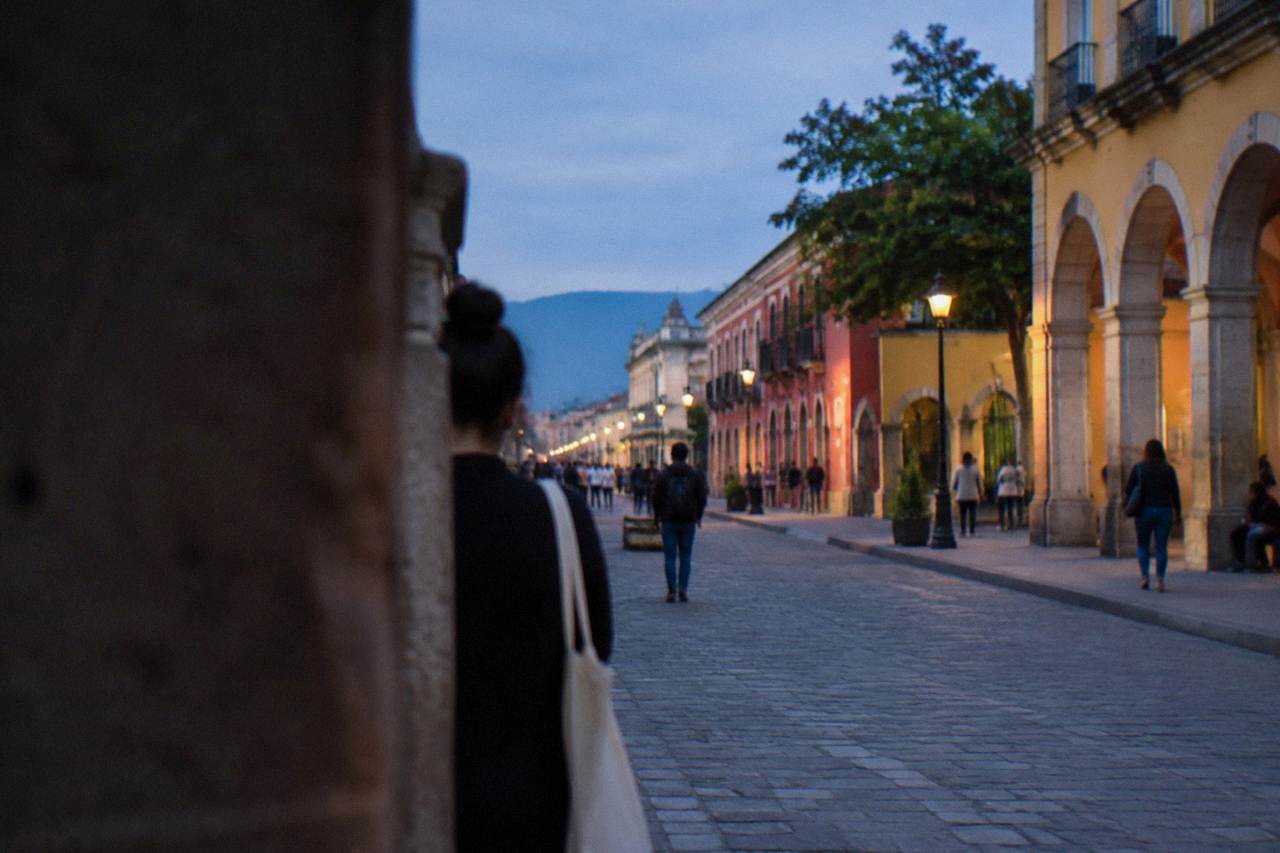
Oaxaca City (Oaxaca de Juárez) is the state capital of Oaxaca at about 1,550 m in the Valles Centrales, known for its markets, mezcal, mole, Monte Albán and craft villages. Puebla is a different city reached by a long road trip, not a day trip. On food and crafts the comparison favours Oaxaca on the record here: seven moles, tlayudas, mezcal and valley craft villages within an hour of the Zócalo.
Oaxaca City (Oaxaca de Juárez) is the capital of the state of Oaxaca, an inland highland city in the Valles Centrales at about 1,550 m, with a Censo 2020 municipal population of 270,955. Puebla is a separate, much larger city east of Mexico City, and the two are often named in the same breath by travellers building a central and southern Mexico route.
What Sets Oaxaca Apart From Puebla?
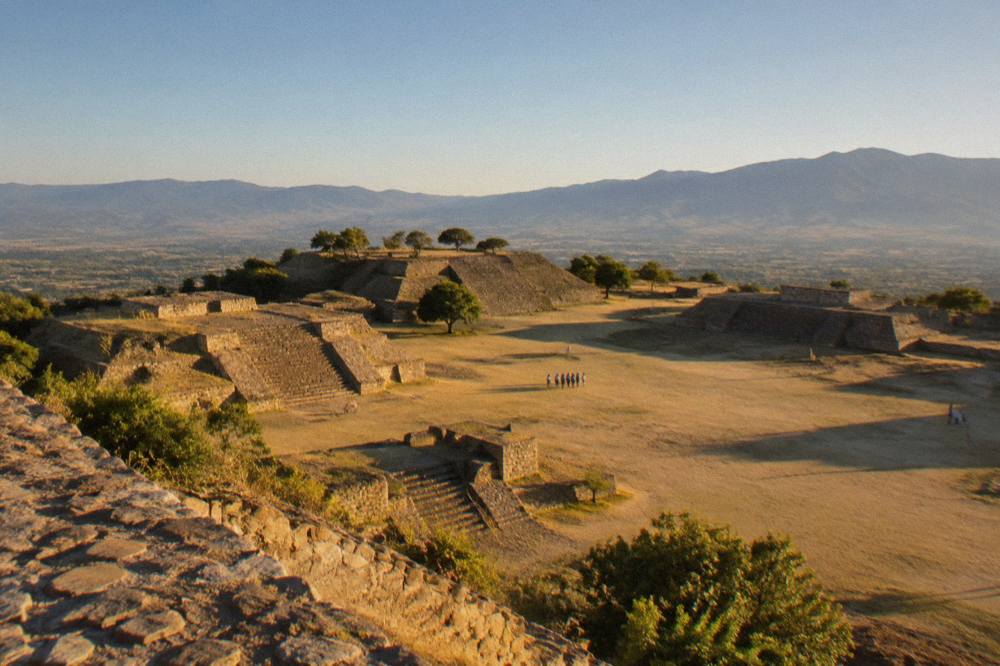
Oaxaca City is a highland valley capital of 270,955 people (Censo 2020, municipality of Oaxaca de Juárez) whose historic centre and the archaeological site of Monte Albán together form UNESCO World Heritage property 415, the "Historic Centre of Oaxaca and Archaeological Site of Monte Albán". The city sits at about 1,550 m in the Valles Centrales, recorded 1,324,332 tourist arrivals in 2025, and functions as a base for a ring of craft villages and INAH archaeological zones within about an hour by road.
Puebla answers to a different scale and a different record. What the record does establish is the shape of the Oaxaca side: a compact, walkable capital whose 2025 arrivals split 83.95 percent national and 16.05 percent foreign, with an average stay of 2.00 nights and hotel occupancy of 51.73 percent, according to the Sectur Oaxaca indicators report. Monte Albán alone drew 416,675 visitors in 2025, more than Mitla, Yagul, Lambityeco and Zaachila combined.
The city was founded in 1529 as Antequera, and the UNESCO inscription covers both the centre and Monte Albán as one property. For a first-time orientation, the first-time visitor guide to Oaxaca is not on this page's approved link list, so start instead with the practical pages: how many days to spend in Oaxaca and the where to stay in Oaxaca guide both carry the local detail this comparison assumes.
| Oaxaca fact | Figure | Source tier |
|---|---|---|
| Municipal population (Censo 2020) | 270,955 | V |
| State population (Censo 2020) | 4,132,148 | V |
| Tourist arrivals, city, 2025 | 1,324,332 | V |
| Average stay, 2025 | 2.00 nights | V |
| Altitude | about 1,550 m | V |
| Timezone | UTC-6 all year | R |
The lodging tax is a practical detail Puebla-bound budgeters should copy into any Oaxaca costing: the state lodging tax is 3 percent on hotel-type stays, 5 percent for intermediaries and platforms, under decree 884 published 10 December 2025. The Oaxaca travel costs and budget guide works through what that means in practice.
Oaxaca Vs Puebla For Food: What Does The Record Show?
Oaxaca's food identity rests on traditions that can be stated plainly: mole as a named family of sauces, tlayuda as a named large toasted tortilla dish, quesillo as the local pulled cheese, tejate and chocolate as traditional drinks, chapulines as a market staple, and mezcal as the region's protected spirit distilled around Santiago Matatlán. No restaurant, dish price or market hours are given here, and no cross-city food ranking exists, so this section compares traditions, not scores.
Oaxaca's food reputation rests on its markets and its valley supply chain. The dishes named above are what the record names, and the what to eat in Oaxaca guide and the street food in Oaxaca guide cover each one in detail. Mezcal deserves its own note: Santiago Matatlán is repeatedly described in state government pages as the "Capital Mundial del Mezcal", and the state runs a Feria del Mezcal each July as part of Guelaguetza month, reported at the Centro Cultural y de Convenciones de Oaxaca in Santa Lucía del Camino with about 80 MXN entry for the 2026 edition.
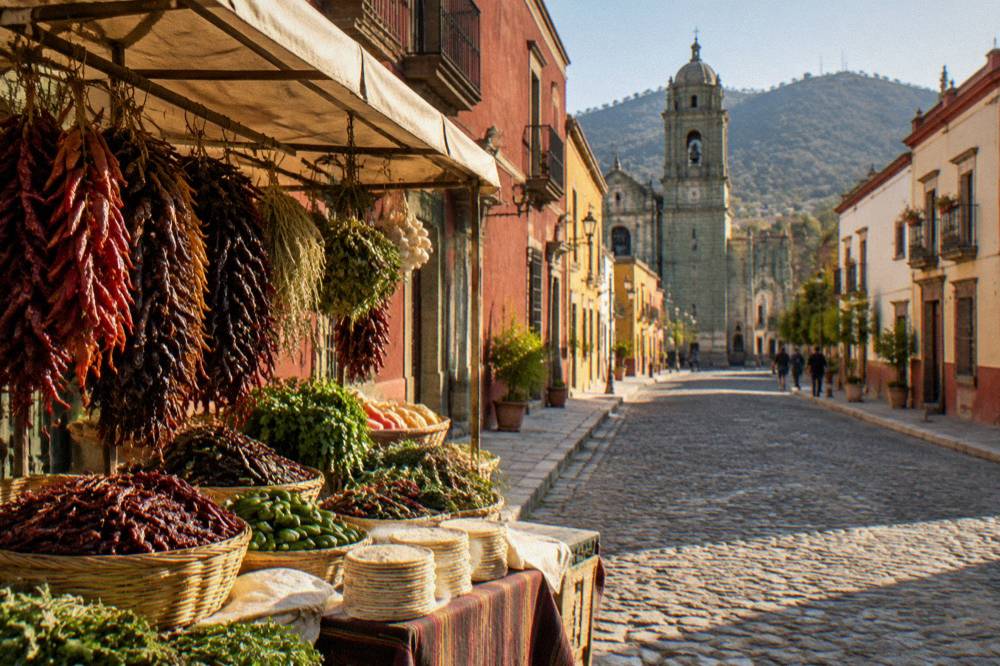
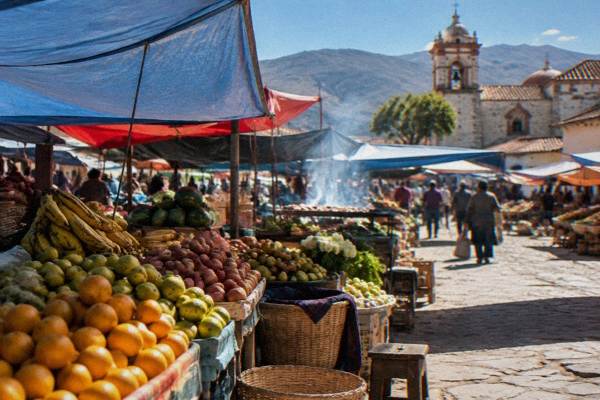
The market layer is where the two cities genuinely diverge in kind, not just in quality. Oaxaca's food scene is threaded through Mercado 20 de Noviembre, Mercado Benito Juárez, the Abastos wholesale market and a rotating weekly circuit of valley tianguis, with the Oaxaca markets and shopping guide mapping them. Vegetarian and vegan eating is well served too, per the vegetarian and vegan food in Oaxaca guide, which pairs with a market-visit cooking class.
The fastest way to test the food side of this comparison on the ground is a guided tasting walk.
Oaxaca Vs Puebla For Crafts: Which City Has The Valley Network?
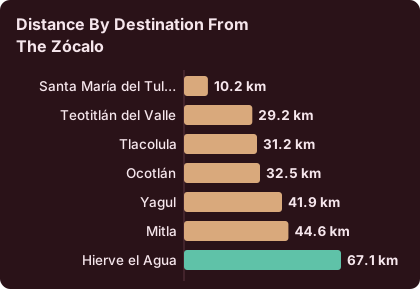
Oaxaca's craft identity is geographic as much as it is artisanal: a ring of specialist villages sits within about an hour of the Zócalo, including Teotitlán del Valle for woven textiles about 26 minutes away, San Bartolo Coyotepec for barro negro black pottery, San Martín Tilcajete for alebrijes, Atzompa for pottery, and Ocotlán about 37 minutes away with its own Friday traditions.
The drive times below are free-flow road times measured from the Zócalo, and are stated as "about": real traffic and mountain roads are slower. What they show is the structural advantage the Valles Centrales give Oaxaca as a craft base: five distinct craft traditions inside a one-hour radius, each in its own village, each reachable by tour, colectivo or private car. More of these guides are collected on Oaxaca Travel Guide.
| Destination from the Zócalo | Distance | Free-flow time |
|---|---|---|
| Santa María del Tule | 10.2 km | about 11 min |
| Teotitlán del Valle | 29.2 km | about 26 min |
| Tlacolula | 31.2 km | about 25 min |
| Ocotlán | 32.5 km | about 37 min |
| Yagul | 41.9 km | about 38 min |
| Mitla | 44.6 km | about 37 min |
| Hierve el Agua | 67.1 km | about 57 min |
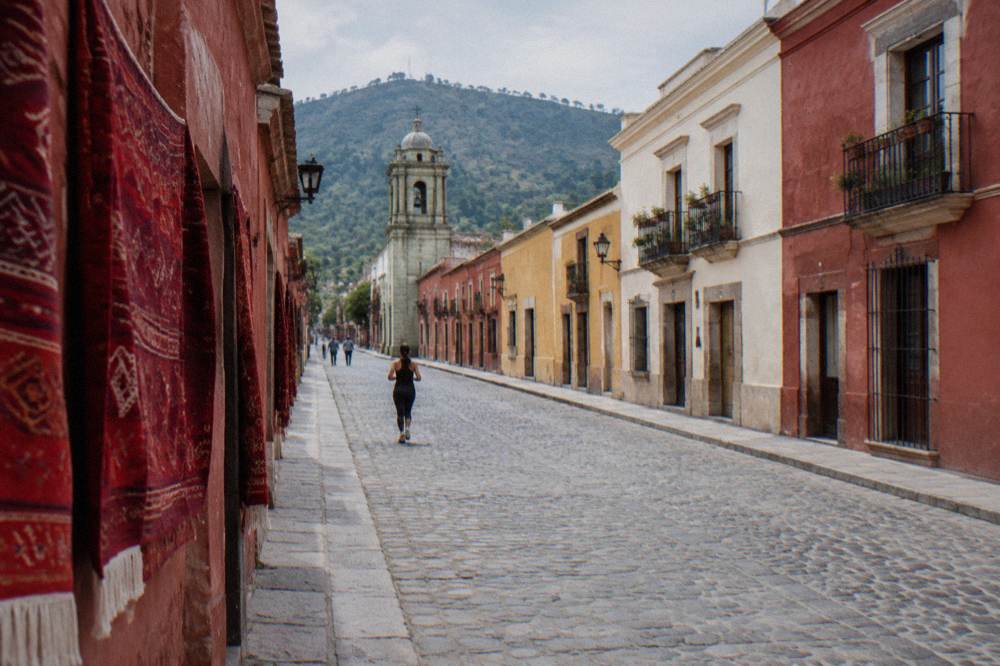
Weaving in Teotitlán del Valle is the best documented of these in the site's research: family workshops and cooperatives generally operate Tuesday to Sunday with many closed Monday, and mornings are recommended for natural-light demonstrations, per 2026-updated guidance. Standard etiquette applies: ask before photographs, and expect cash to be preferred. No 2026 closures or disruptions were found for the weaving cooperatives.
Alebrijes, the painted carved figures of San Martín Tilcajete, and barro negro, the black pottery of San Bartolo Coyotepec, round out the southern valley loop, and both can be bundled with Monte Albán on a single day tour. The things to do in Oaxaca root page indexes the full set of craft, food and archaeology options with live prices.
How Far Is Puebla From Oaxaca And How Do You Travel Between Them?
Puebla is a far extension of an Oaxaca trip, not a local excursion: this site's classification treats Puebla, like the Pacific coast, as a long road leg to be planned as its own journey, and no Oaxaca-to-Puebla distance or drive time is given here. What can be said is the transport spine around Oaxaca: ADO operates the main bus services from its Oaxaca terminal, and the Mexico City route is the standard connection point for reaching Puebla by land.
The practical answer for itinerary builders is that Puebla and Oaxaca sit on opposite sides of Mexico City, and travellers can route through the capital. The Oaxaca to Puebla day-trip and route guide and the answer page how close is Puebla to Oaxaca carry the route detail, and the ADO bus guide for Oaxaca and the Mexico City to Oaxaca guide cover the land connections.
Puebla belongs in the same planning category: a separate journey, not a valley loop.
Which City Has The Bigger Archaeological Draw Around It?
Around Oaxaca the record counts seven INAH archaeological zones plus the Santo Domingo museum: Monte Albán drew 416,675 visitors in 2025, Mitla 104,428, Yagul 10,185, Lambityeco 5,545 and Zaachila 4,229, all from the Sectur Oaxaca indicators report, and all charge fixed MXN entry by INAH category. Puebla's archaeological offering is outside this guide, so the comparison here is the Oaxaca record stated plainly, and it is a deep one: five sites with published 2025 visitor counts inside about 40 minutes of the Zócalo.
The INAH fee structure is the practical core of an archaeology day. Category I sites, Monte Albán, Mitla and Yagul, charge 105 MXN for Mexican nationals and 210 MXN for foreign visitors. Category III sites, Dainzú, Lambityeco and Zaachila, charge 80 and 145 MXN. Hours differ by site and Zaachila opens Thursday to Sunday only, 10:00 to 16:00, so a tight loop needs to respect the calendar.
| INAH site | Category | Fee nationals | Fee foreigners | Hours | Last access |
|---|---|---|---|---|---|
| Monte Albán | I | 105 MXN | 210 MXN | Mon to Sun 08:00 to 17:00 | 16:00 |
| Mitla | I | 105 MXN | 210 MXN | Mon to Sun 08:00 to 17:00 | 16:30 |
| Yagul | I | 105 MXN | 210 MXN | Mon to Sun 08:00 to 17:00 | 16:00 |
| Dainzú | III | 80 MXN | 145 MXN | Mon to Sun 08:00 to 17:00 | 16:30 |
| Lambityeco | III | 80 MXN | 145 MXN | Mon to Sun 08:00 to 17:00 | 16:30 |
| Zaachila | III | 80 MXN | 145 MXN | Thu to Sun 10:00 to 16:00 | |
| Atzompa | Mon to Sun 08:00 to 16:00 | 15:00 |
Monte Albán is about 15 minutes from the Zócalo by road, the shortest archaeology drive in the set, and its 2025 visitor count of 416,675 makes it the single most visited site in the state's published table. The Museo de las Culturas de Oaxaca at Santo Domingo holds a separate 2025 draw and opens Tuesday to Saturday only, 10:00 to 16:00, at the same 105/210 MXN band. A guided half day at the ruins remains the standard first move, and a walking orientation of the centre pairs naturally with it.
Oaxaca Vs Puebla For Weather And Festival Dates?
Oaxaca's climate, per the SMN station 20079 normals for 1991 to 2020, runs a dry season from November to April with January at 2.4 mm of rain and a rainy season from May to October peaking in June at 188.3 mm, with April posting a 34.9 C average daily high and January a 10.3 C average nightly low.
Puebla's climate is outside this guide, so no cross-city weather comparison is made, but Oaxaca's festival calendar is fully documented: Guelaguetza on two July Mondays, Día de Muertos centred on 31 October to 2 November, and Noche de Rábanos on 23 December.
The Guelaguetza is the anchor event: the 2026 edition, the Lunes del Cerro and the Octava, ran 20 and 27 July at the Auditorio Guelaguetza on the Cerro del Fortín, with performances at 10:00 and 17:00, Palco A tickets at 1,632 MXN and Palco B at 1,321 MXN, and Palcos C and D free, sold through the official ticketing channel with a two-ticket limit per account. The 2027 dates are not announced. The Feria del Mezcal ran alongside it in July at the CCCO in Santa Lucía del Camino.
| Month | Avg high C | Avg low C | Rain mm |
|---|---|---|---|
| Jan | 28.9 | 10.3 | 2.4 |
| Feb | 31.1 | 11.6 | 4.6 |
| Mar | 33.3 | 13.6 | 17.6 |
| Apr | 34.9 | 15.8 | 47.3 |
| May | 33.8 | 16.7 | 97.9 |
| Jun | 30.9 | 16.7 | 188.3 |
| Jul | 30.1 | 15.9 | 118.6 |
| Aug | 30.0 | 15.9 | 131.8 |
| Sep | 29.1 | 16.1 | 163.6 |
| Oct | 29.3 | 14.5 | 63.1 |
| Nov | 29.0 | 12.3 | 9.1 |
| Dec | 28.9 | 11.0 | 9.0 |
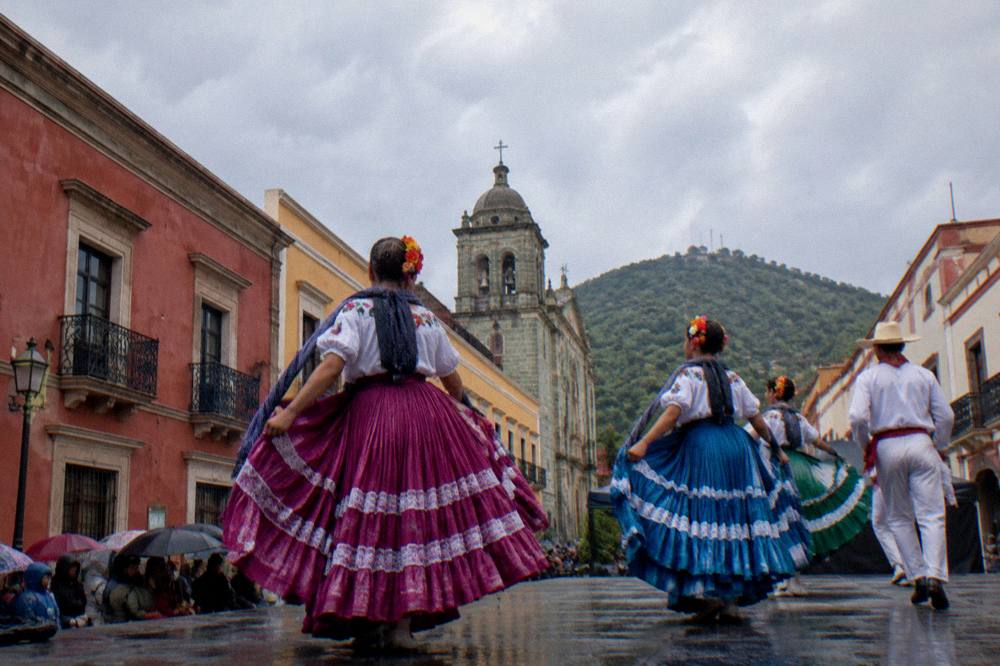
Día de Muertos centres on the traditional dates of 31 October to 2 November, with cemetery visits at Xoxocotlán and neighbourhood celebrations in Jalatlaco. The 2026 programme is not announced, and no 2026 dates for Noche de Rábanos are published either; the tradition is 23 December, and the last confirmed edition was the 128th, in 2025. Anyone planning around these dates should read the best time to visit Oaxaca guide and the Oaxaca weather by month guide before locking flights.
Which City Fits Your Trip Better?
Oaxaca fits a trip built around food, crafts and archaeology inside one compact highland radius: seven moles and a market circuit in the city, five craft villages and seven INAH zones within about an hour, and a festival calendar anchored by Guelaguetza in July.
Puebla fits a different trip, one routed through Mexico City, and this guide carries no Puebla figures to set against Oaxaca's, so the honest comparison is not a verdict but a routing decision: valley base first, or central-Mexico loop with Puebla as a stop.
Two practical asymmetries matter. First, Oaxaca's craft and archaeology network is radial: everything in this article's drive-time table departs from one Zócalo, so a single base serves the whole set. Second, Oaxaca's visitor infrastructure is measured and public: 1,324,332 arrivals in 2025, 51.73 percent occupancy, a 3 percent lodging tax, and site-by-site visitor counts, which makes planning concrete in a way a vaguer comparison cannot.
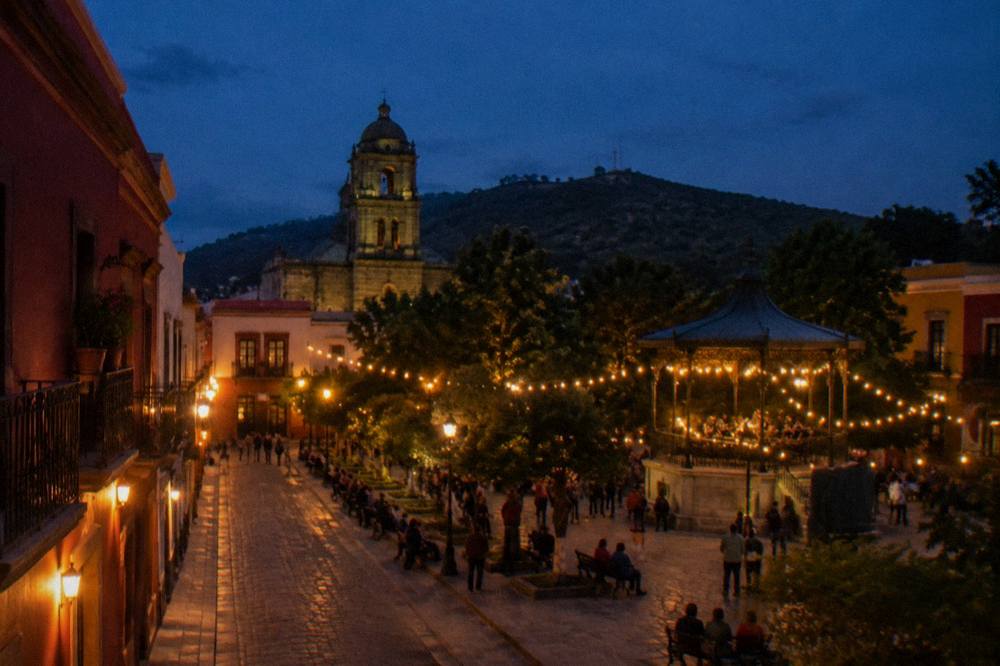
For travellers who choose the Oaxaca side, the sequencing advice is simple. Day one for the centre and a walking orientation; a Monte Albán half day; one full valley day for Mitla, Tule, Hierve el Agua or the craft villages; and a food or mezcal evening in between. The Oaxaca itinerary planning guide and the Oaxaca safety guide fill in the order and the advisory context, and the Oaxaca airport guide and flights to Oaxaca guide cover arrivals, with the getting around Oaxaca guide and the taxis, Uber and DiDi in Oaxaca guide covering movement once you land.
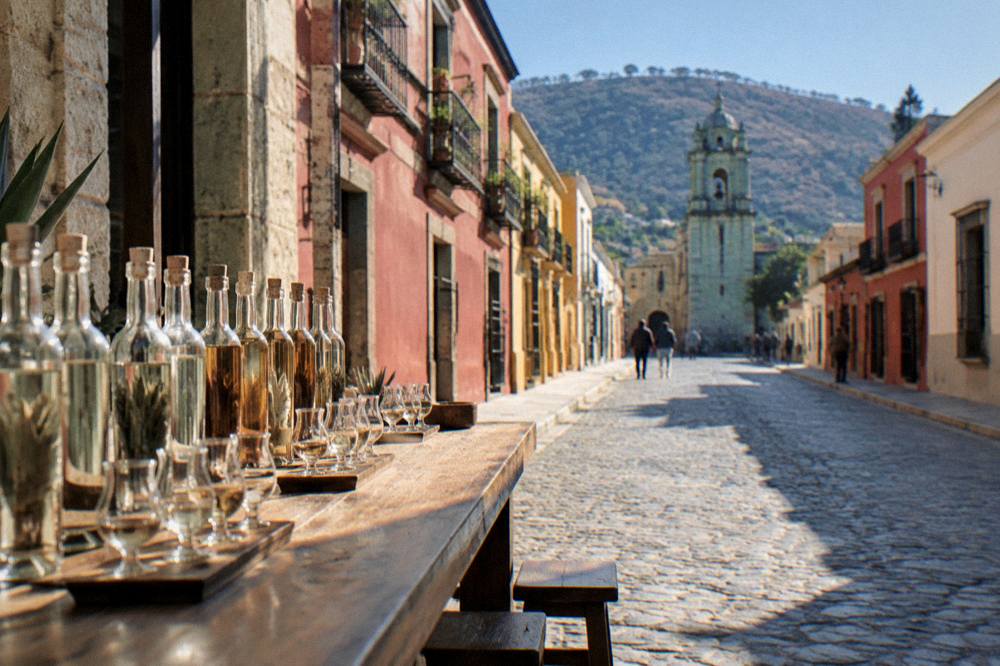
Mezcal is the one craft product that doubles as an evening activity, and a distillery-access tour connects the valley agriculture to the glass. For the food side, a tasting walk through the markets remains the featured pick, with the tour's live price and rating on its own page.
Common Questions About Oaxaca Vs Puebla
Is Oaxaca Or Puebla Better For Food?
On the Oaxaca side, the what to eat in Oaxaca guide covers every named dish.
How Close Is Puebla To Oaxaca?
Puebla is a far extension of an Oaxaca trip, not a local day trip, and travellers commonly route through Mexico City. The route detail, including connection options, is on the how close is Puebla to Oaxaca answer page.
Can You Visit Puebla As A Day Trip From Oaxaca?
No. This site classifies Puebla with the Pacific coast as a long extension requiring its own journey, and the Oaxaca to Puebla route guide treats it as a separate leg, not a valley loop.
What Crafts Is Oaxaca Known For?
Woven textiles in Teotitlán del Valle about 26 minutes from the Zócalo, black pottery in San Bartolo Coyotepec, alebrijes in San Martín Tilcajete, pottery in Atzompa, and the craft and market circuit of Ocotlán about 37 minutes away.
Does Oaxaca Have Better Weather Than Puebla?
Oaxaca's own figures, from the SMN station normals 1991 to 2020, show a dry season from November to April and a rainy season from May to October, with June averaging 188.3 mm of rain and January 2.4 mm.
How Many Days Do You Need In Oaxaca If Choosing It Over Puebla?
City arrivals in 2025 averaged a stay of 2.00 nights, but the valley network rewards longer: the how many days in Oaxaca guide sequences the centre, Monte Albán and the valley craft loop.
The comparison, stated strictly on the record, comes down to this: Oaxaca is a compact highland base with a measured, published visitor economy and a craft-and-archaeology radius of about an hour, while Puebla is a separate destination on a different side of Mexico City, and the two sit together on one itinerary only as a deliberate two-leg trip.