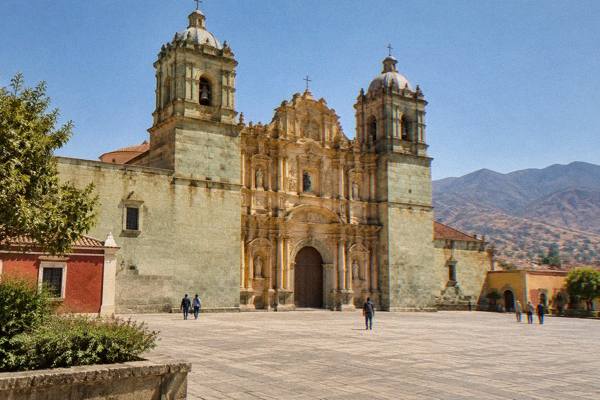
Oaxaca Hidden Gems: Beyond The Zócalo
Oaxaca City keeps its headline sights around the Zócalo and the Andador Macedonio Alcalá, but the hours, fees and drive times in this guide point to the corners further out: small museums, Category III archaeological zones and valley villages that sit a bus ride from the centre.
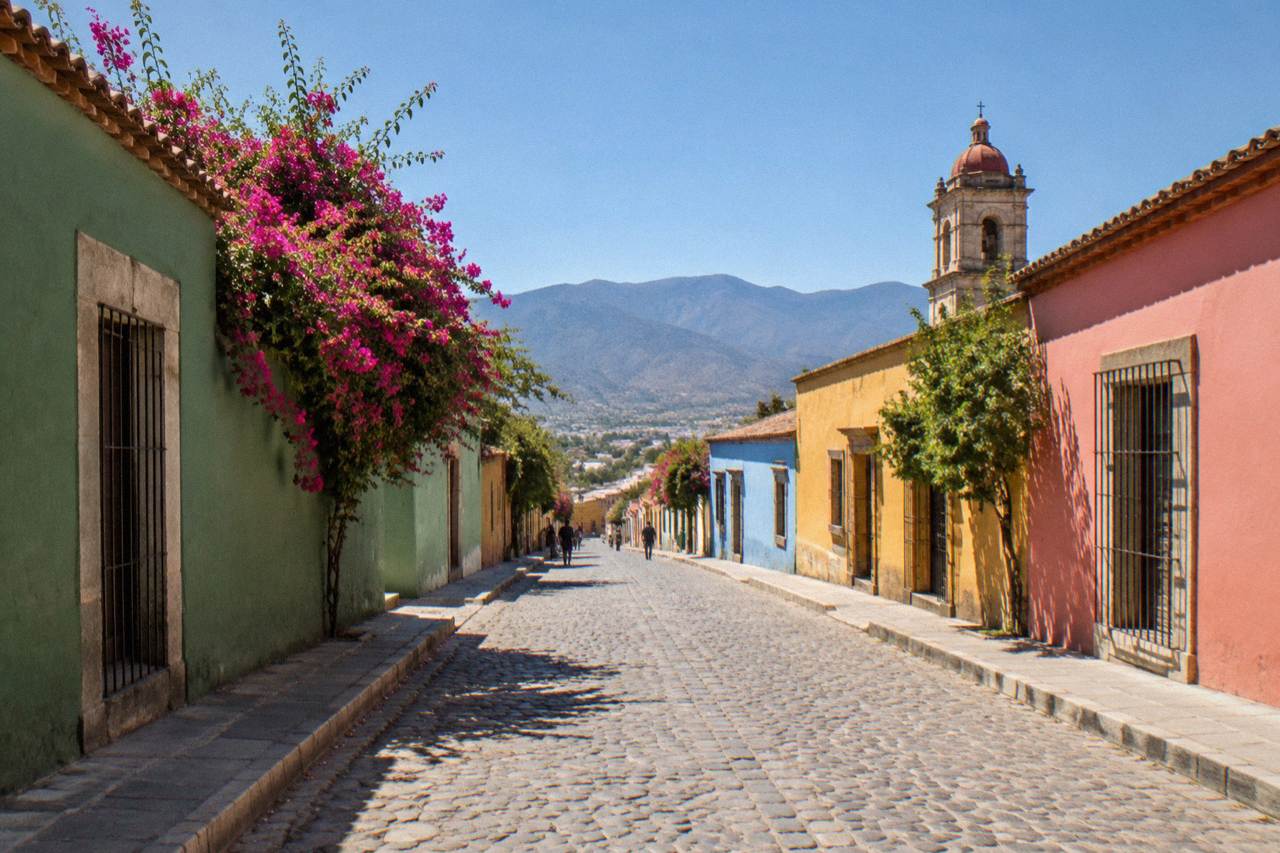
The quietest corners of Oaxaca are the Category III INAH sites such as Zaachila and Lambityeco, the Museo de las Culturas de Oaxaca on its Tuesday to Saturday schedule, the free Jardín Etnobotánico tours, and the valley craft villages of Atzompa and Teotitlán del Valle.
Oaxaca City, the capital of the state of Oaxaca in Mexico, concentrates its visitors on about ten blocks: the Zócalo, the Andador Macedonio Alcalá and Santo Domingo de Guzmán. The municipal registry counted 270,955 residents at the 2020 census, and the city logged 1,324,332 tourist arrivals across 2025, nearly all of them funnelled into that same historic core. The rest of the Valles Centrales sits within an hour's drive, and much of it is measured, ticketed and open on schedules that the crowded guides skip. The quieter corners come with hours, fees and drive times that the primary sources actually state.
What Are The Best Hidden Gems In Oaxaca?
The strongest hidden gems around Oaxaca are the Category III archaeological zones of Zaachila, Dainzú and Lambityeco, the Museo de las Culturas de Oaxaca with its Tuesday to Saturday schedule, the free guided tours of the Jardín Etnobotánico, and the villages of Atzompa and Teotitlán del Valle in the adjoining valleys. Each one has a stated INAH or state-government schedule.
The 2025 visitor counts from the state tourism indicators show the gap plainly. Monte Albán received 416,675 visitors that year and Mitla 104,428. Zaachila received 4,229, Lambityeco 5,545 and Yagul 10,185. The sites are managed by the same institute, charge lower fees, and sit in the same valleys, yet the numbers differ by an order of magnitude. A "hidden gem" here is not a marketing label; it is a site with a published schedule and a four-digit annual visitor count.
The INAH fee structure splits the zones into categories, which is the single most useful planning fact on this page:
| INAH category | Sites | Fee, Mexican nationals | Fee, foreign visitors |
|---|---|---|---|
| Category I | Monte Albán, Mitla, Yagul | 105 MXN | 210 MXN |
| Category III | Dainzú, Lambityeco, Zaachila | 80 MXN | 145 MXN |
| Museum | Museo de las Culturas de Oaxaca | 105 MXN | 210 MXN |
| Atzompa | Hours published, no fee printed on the INAH page | check on arrival | check on arrival |
Visits outside normal INAH hours can be arranged at the listed zones for 730 MXN, a figure printed on the Yagul, Lambityeco, Atzompa and Museo de las Culturas pages. For planning around the classic circuit first, the site's own Oaxaca in one day itinerary covers the centre; the gems below assume you have already seen it.
Which Oaxaca Neighbourhoods Sit Just Beyond The Zócalo?
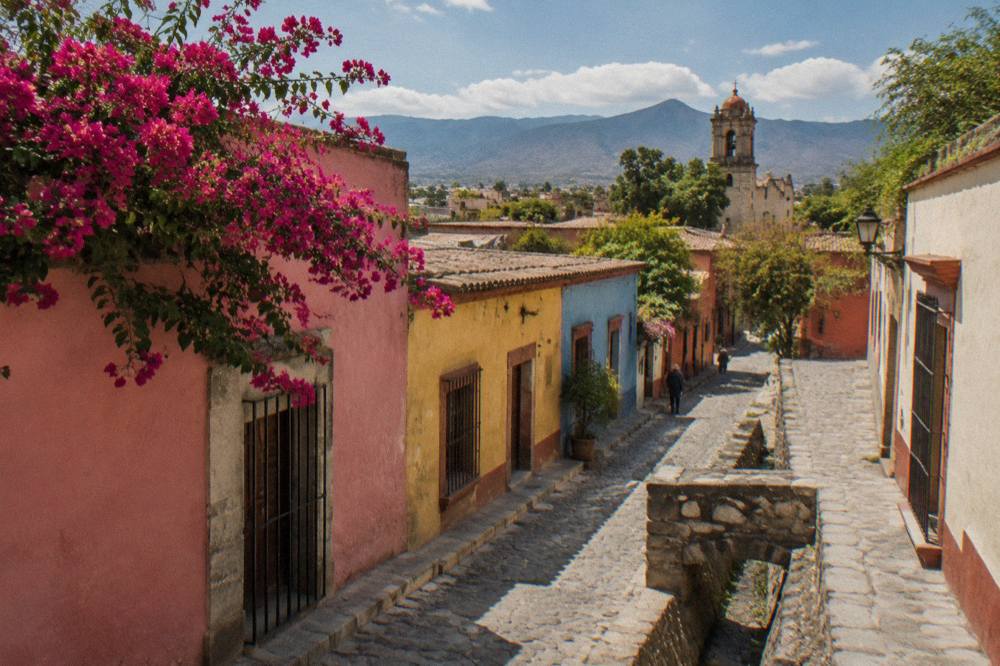
Jalatlaco and Xochimilco are the two historic barrios of Oaxaca that sit outside the main visitor corridor, both a short walk from the Zócalo, and the city's designated historic core, listed by UNESCO as part of the "Historic Centre of Oaxaca and Archaeological Site of Monte Albán", extends well beyond the Andador Macedonio Alcalá that carries the crowds between the cathedral and Santo Domingo de Guzmán.
The Zócalo and the Andador Macedonio Alcalá form one continuous spine, and nearly every walking route in the city uses it. Step off that spine by a few blocks in either direction and the street pattern changes: narrower lanes, fewer tour groups, the same painted walls. The centro histórico guide maps the full protected area, which is far larger than the two streets most itineraries mention.
A useful frame for a first visit is the site's first time in Oaxaca guide, which separates the mandatory sights from the optional ones. The barrios belong in the second list. For travellers moving slowly, Oaxaca in 3 days or Oaxaca in 5 days leave room for them; a one-day plan does not.
Which Oaxaca Museums And Gardens Sit Off The Main Path?
The Museo de las Culturas de Oaxaca inside Santo Domingo is open Tuesday to Saturday, 10:00 to 16:00, and charges 105 MXN for nationals and 210 MXN for foreigners; the Jardín Etnobotánico next door runs free guided tours Monday to Friday at 10:30, 11:00, 11:30, 12:00 and 17:00 and Saturday between 10:30 and 12:00, with large and school groups required to book two weeks ahead.
The museum's day schedule is the detail that catches weekend planners: it is closed Sunday and Monday, the two days a short trip most often leaves free. The garden's tour times come from a state government release, and the tours are free, which makes the Jardín Etnobotánico one of the few zero-cost timed activities in the centre. The site's dedicated Jardín Etnobotánico and Museo de las Culturas de Oaxaca pages carry the full detail.
| Site | Days open | Hours | Fee (MXN) |
|---|---|---|---|
| Museo de las Culturas de Oaxaca | Tuesday to Saturday | 10:00 to 16:00 | 105 national / 210 foreign |
| Jardín Etnobotánico guided tours | Monday to Saturday | Mon-Fri 10:30, 11:00, 11:30, 12:00, 17:00; Sat 10:30 to 12:00 | Free |
| Zaachila | Thursday to Sunday | 10:00 to 16:00 | 80 / 145 |
| Atzompa | Monday to Sunday | 08:00 to 16:00, last access 15:00 | not printed on the INAH page |
Two further museums fill the same role on different days. The Museo de Arte Prehispánico de México Rufino Tamayo reopened in August 2025 after more than three years closed for state restoration, so listings built before that reopening describe a shuttered building. The Museo Textil de Oaxaca and MACO round out the set; their hours are on their own listings and change, so confirm before a dedicated trip.
Which Archaeological Sites Near Oaxaca See The Fewest Visitors?
Zaachila, Lambityeco and Dainzú are the least-visited INAH zones near Oaxaca City, with 2025 counts of 4,229, 5,545 and 10,185 visitors respectively, against 416,675 at Monte Albán; all three are Category III sites charging 80 MXN for nationals and 145 MXN for foreigners, and Zaachila opens only Thursday to Sunday, 10:00 to 16:00.
The full comparison, with the schedules exactly as the INAH pages state them:
| Site | 2025 visitors | Hours | Last access | Fee (MXN) |
|---|---|---|---|---|
| Monte Albán | 416,675 | Mon-Sun 08:00-17:00 | 16:00 | 105 / 210 |
| Mitla | 104,428 | Mon-Sun 08:00-17:00 | 16:30 | 105 / 210 |
| Yagul | 10,185 | Mon-Sun 08:00-17:00 | 16:00 | 105 / 210 |
| Lambityeco | 5,545 | Mon-Sun 08:00-17:00 | 16:30 | 80 / 145 |
| Zaachila | 4,229 | Thu-Sun 10:00-16:00 | not stated | 80 / 145 |
| Dainzú | not in the 2025 table | Mon-Sun 08:00-17:00 | 16:30 | 80 / 145 |
Two traps repeat across travel copy and are corrected by the INAH pages themselves. Zaachila is not open daily: Thursday to Sunday only, and from 10:00, two hours later than every other zone. Atzompa closes at 16:00 with last access at 15:00, an hour earlier than Monte Albán, so a plan that treats them as interchangeable arrives too late. The site's Yagul and Dainzú guide and Zaachila and the Thursday market guide cover both zones in depth.
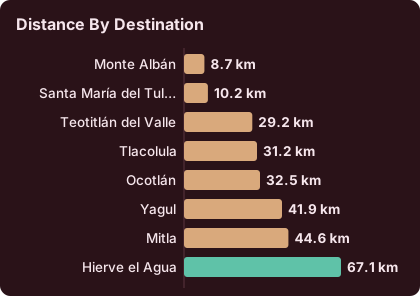
The drive times below are computed free-flow road times from the Zócalo; real traffic and mountain roads make them slower, so read every figure as "about" and round up.
| Destination | Distance | Drive time |
|---|---|---|
| Monte Albán | 8.7 km | about 15 min |
| Santa María del Tule | 10.2 km | about 11 min |
| Teotitlán del Valle | 29.2 km | about 26 min |
| Tlacolula | 31.2 km | about 25 min |
| Ocotlán | 32.5 km | about 37 min |
| Yagul | 41.9 km | about 38 min |
| Mitla | 44.6 km | about 37 min |
| Hierve el Agua | 67.1 km | about 57 min |
Which Craft Villages Around Oaxaca Reward A Slow Half Day?
Atzompa, Teotitlán del Valle, San Martín Tilcajete, San Bartolo Coyotepec and Ocotlán are the five craft villages around Oaxaca City, each listed in the site's village guides, with Teotitlán del Valle about 26 minutes out by road and Ocotlán about 37, and the valley road stringing Tule, Teotitlán, Tlacolula and Mitla into one drivable line.
Atzompa doubles as both a craft village and an archaeological zone, which makes it the most efficient hidden stop on this page: one drive, two visits, and the site's Atzompa guide covers the combination. Teotitlán del Valle, about 26 minutes out, is covered in the Teotitlán del Valle guide; weaving workshops there generally operate Tuesday to Sunday, with many closed Monday, and morning visits suit natural-light demonstrations. San Martín Tilcajete and San Bartolo Coyotepec have their own pages, as does Ocotlán and its Friday market.
The pairing logic is simple. Monte Albán sits west of the city; the craft corridor runs east. A day that combines Atzompa with Monte Albán uses one road; a day that runs Tule, Teotitlán and Mitla uses another. Trying to do both directions in one day means four hours of driving on valley roads, and the drive-time table above shows why. The Monte Albán tour roundup covers guided options west; valley day trips east are the related tour's territory. More of these guides are collected on Oaxaca Travel Guide.
For craft-focused travellers, Oaxaca in a week has the schedule room for all five villages. A shorter trip should pick one direction and stay on it.
How Do You Visit Hierve El Agua From Oaxaca Without Rushing?
Hierve el Agua sits about 57 minutes' drive from Oaxaca City, 67.1 km east, at the end of the valley road beyond Mitla, and it pairs naturally with Tule, Teotitlán del Valle and Mitla in a single loop; the site is run by local communities rather than INAH, so its fee and opening hours come from the community's own arrangements and are not part of the INAH fee table that governs the archaeological zones.
That last point matters for planning. Every INAH figure on this page is printed on a government page. Hierve el Agua is not, and any specific fee or hours you read in a general article were not drawn from one. The road takes about 57 minutes free-flow from the Zócalo, longer in real traffic, on mountain roads after Mitla. Independent travellers coming from Mexico City usually fold Hierve el Agua into a valley day rather than a dedicated run.
The related tour on this page covers the petrified waterfalls and the pools in a small-group format from the city, which removes the two hard parts of an independent visit: the mountain road after Mitla and the return drive at the end of a long day. Check availability on the operator's booking page. The site's full Hierve el Agua guide and the Hierve el Agua day trip itinerary carry the complete planning detail, and the Hierve el Agua tour roundup compares guided options.
When Should You Explore Oaxaca To Miss The Peak Hours?
The dry season in Oaxaca runs November to April and the rainy season May to October with its peak from June to September, and the hours themselves do the crowd-filtering: the Jardín Etnobotánico's weekday tour slots, the Museo de las Culturas' Tuesday to Saturday window and Zaachila's Thursday to Sunday opening each concentrate visitors into narrow bands, so the days and hours on the INAH and state pages shape a quiet visit more than the month does.
The rainfall table explains the seasonal logic without any ranking language. June averages 188.3 mm of rain and September 163.6 mm; November averages 9.1 mm and January 2.4 mm. April's average daily high is 34.9 C and January's average nightly low is 10.3 C. All figures are SMN station normals for 1991 to 2020.
| Month | Avg high C | Avg low C | Rain mm | Days with rain |
|---|---|---|---|---|
| January | 28.9 | 10.3 | 2.4 | 1.4 |
| April | 34.9 | 15.8 | 47.3 | 7.6 |
| June | 30.9 | 16.7 | 188.3 | 19.9 |
| September | 29.1 | 16.1 | 163.6 | 21.4 |
| November | 29.0 | 12.3 | 9.1 | 3.5 |
Festival timing cuts the other way. The Guelaguetza fills the city on two Mondays in July: the 2026 edition ran 20 and 27 July with two performances each day at the Auditorio Guelaguetza, and the 2027 dates are not announced. Día de Muertos centres on the traditional dates of 31 October to 2 November; the 2026 city programme had not been announced, so treat any printed 2026 schedule with caution. Rainy-season planning has its own page: Oaxaca in the rain, and month-by-month detail sits in the Oaxaca weather by month guide.
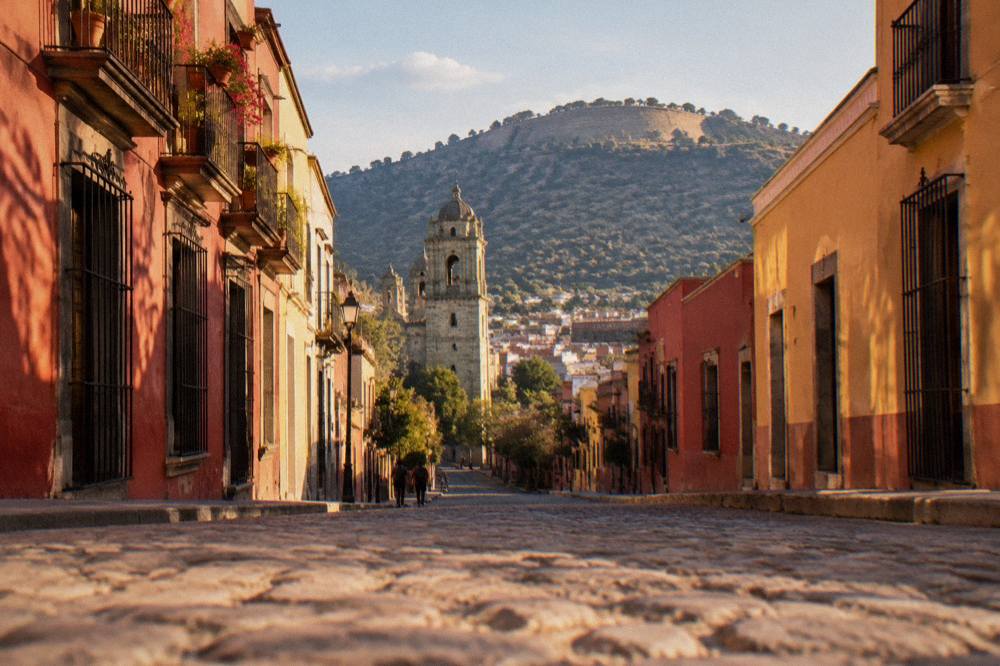
How Do You Plan A Hidden-Gems Itinerary For Oaxaca?
A workable hidden-gems plan for Oaxaca uses three days: day one for the centre's quiet layer, the Museo de las Culturas on a Tuesday to Saturday and a Jardín Etnobotánico tour slot; day two west to Atzompa and Monte Albán on one road; day three east along the craft corridor to Tule, Teotitlán del Valle and either Yagul or Hierve el Agua, with Zaachila slotted only Thursday to Sunday.
A sample frame, built only from the schedules and drive times:
| Day | Direction | Stops | Anchor schedule |
|---|---|---|---|
| 1 | Centre | Museo de las Culturas, Jardín Etnobotánico, Jalatlaco | Museum Tue-Sat 10:00-16:00; garden tours Mon-Fri 10:30-12:00 and 17:00, Sat 10:30-12:00 |
| 2 | West | Atzompa, Monte Albán | Atzompa 08:00-16:00 (last access 15:00); Monte Albán 08:00-17:00 (last access 16:00) |
| 3 | East | Tule, Teotitlán del Valle, Yagul or Hierve el Agua | Drive times about 11, 26, 38 and 57 minutes respectively |
| Optional | South | Zaachila (Thu-Sun only), Ocotlán | Zaachila 10:00-16:00 Thu-Sun; Ocotlán about 37 minutes |
Adjust the frame to trip length. The site's Oaxaca in 2 days and Oaxaca in 4 days plans cover the shorter and longer versions, Oaxaca with kids adapts the same logic for families, and the root things to do in Oaxaca page indexes every option. For the eating layer, the Oaxaca food tour roundup covers market and tasting walks, and the Mercado Benito Juárez guide maps the historic market beside the Zócalo, described by official pages as inaugurated in 1894.
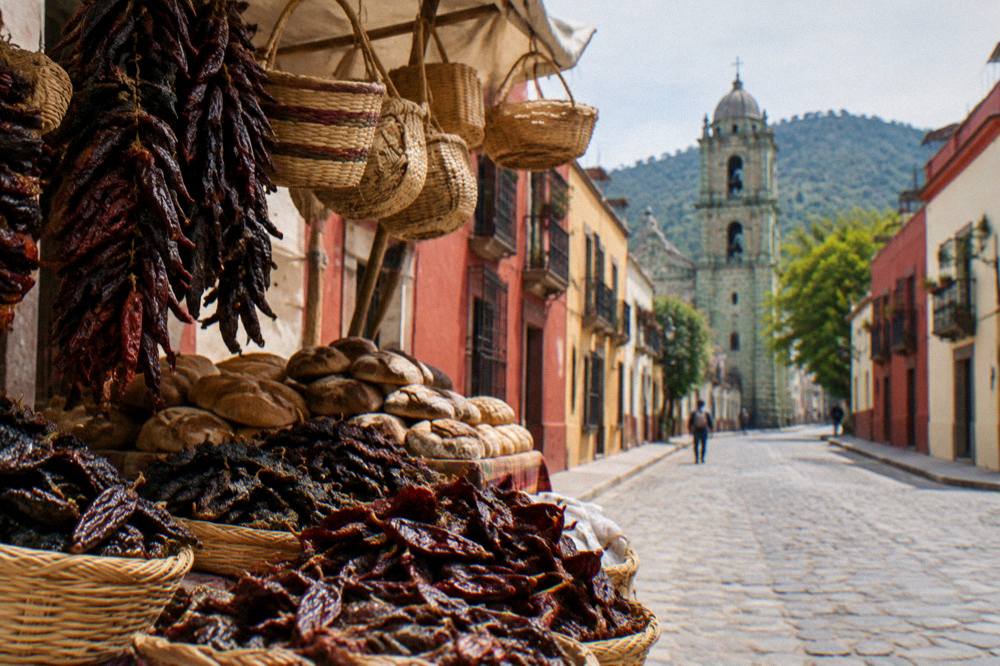
Two closing cautions come straight from the primary sources. The US State Department lists Oaxaca state at Level 2, exercise increased caution, with no travel restrictions for US government staff to Oaxaca City or Monte Albán but restrictions in the Isthmus region; the UK FCDO does not name Oaxaca among the areas it advises against. Road blockades by teachers' unions are a standing, sporadic risk that can close highways and airport access for hours at a time, so keep schedule slack on transfer days. With those two allowances made, the quiet side of Oaxaca is not hidden at all: it is scheduled, ticketed and, on the evidence of the 2025 visitor counts, nearly empty.
Common Questions About Hidden Gems In Oaxaca
What Are The Hidden Gems In Oaxaca?
The least-visited sights are the Category III INAH zones: Zaachila, Lambityeco and Dainzú, which recorded 4,229, 5,545 and 10,185 visitors respectively in 2025 against 416,675 at Monte Albán. In the city, the Museo de las Culturas de Oaxaca and the Jardín Etnobotánico tours carry published schedules on state and INAH pages.
Is Zaachila Open Every Day?
No. The INAH page lists Zaachila as open Thursday to Sunday only, 10:00 to 16:00, with entry at 80 MXN for Mexican nationals and 145 MXN for foreign visitors.
Is Atzompa Free?
The INAH page for Atzompa publishes hours, Monday to Sunday 08:00 to 16:00 with last access at 15:00, but no entry fee is printed on that page. Confirm the current fee on arrival.
How Far Is Hierve El Agua From Oaxaca City?
About 57 minutes of free-flow driving, 67.1 km east of the Zócalo, beyond Mitla on mountain roads. Real traffic and road conditions make the trip longer.
When Is The Museo De Las Culturas De Oaxaca Open?
Tuesday to Saturday, 10:00 to 16:00, per the INAH listing. It is closed Sunday and Monday, which matters for weekend-based itineraries.
Can You Visit Oaxaca's Quiet Sights Without A Car?
Partly. The museums, the Jardín Etnobotánico and the barrios are walkable from the centre, and guided valley tours cover the eastern sites. The western and southern zones pair best with a vehicle or a tour; the site's getting-around pages cover the options.