Is Oaxaca LGBTQ Friendly?
A plain, sourced look at how LGBTQ visitors experience Oaxaca City: the legal backdrop, the neighbourhoods, the practical realities and what the advisory pages actually say.
Oaxaca City (Oaxaca de Juárez) is the capital of the state of Oaxaca in Mexico, an inland highland city in the Valles Centrales at about 1,550 m, and it has built a reputation as one of the country's most comfortable destinations for LGBTQ travellers. That reputation rests on ordinary, checkable things: a compact walkable centre, a visible queer community in the city's cultural life, national law that treats same-sex marriage and anti-discrimination as settled matters, and the same low-key street life every visitor encounters. Nothing here is a promise of hassle-free travel anywhere, but the pieces that can be checked, from legislation to advisory wording to the city's own character, point in a positive direction.
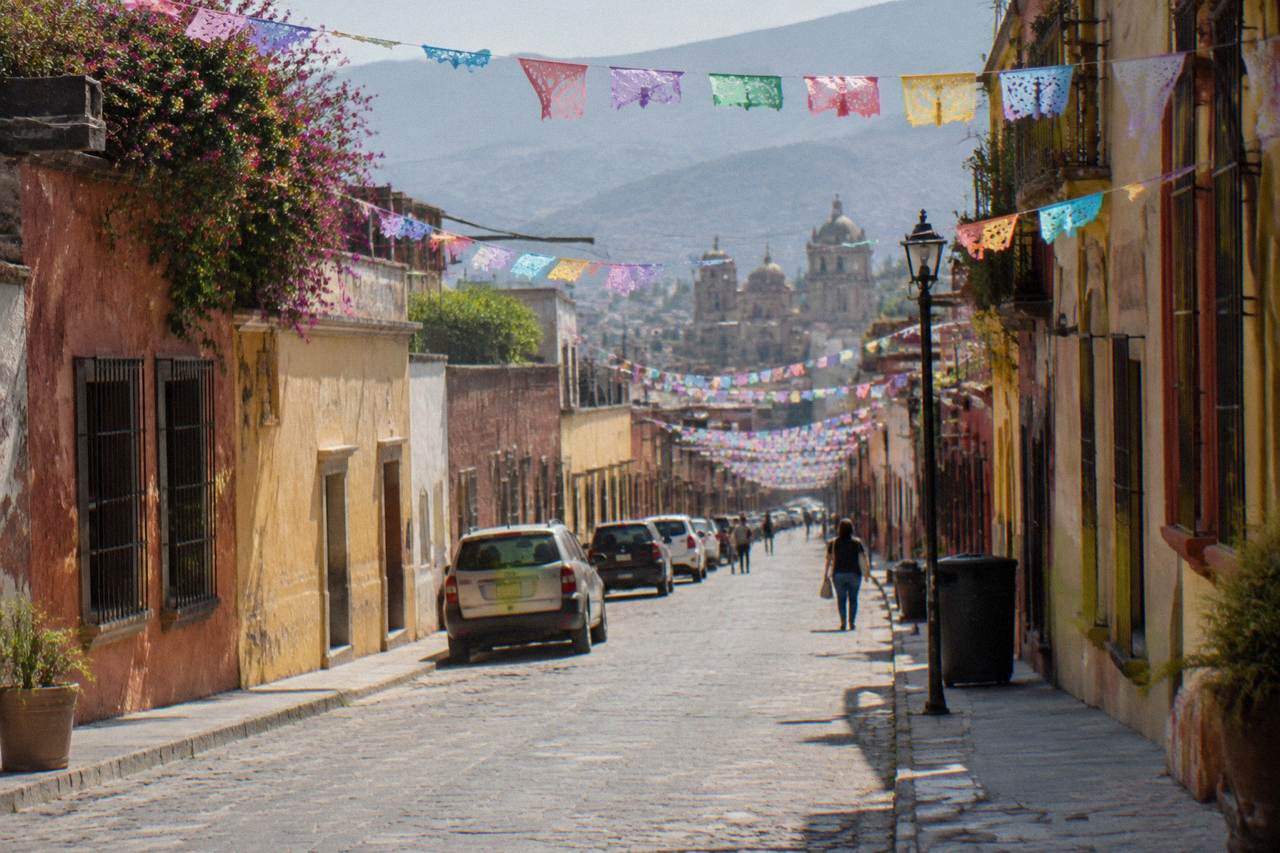
Yes, in the everyday sense that matters to travellers: Oaxaca City is widely described as welcoming to LGBTQ visitors, same-sex marriage is legal in the state, and Mexico's federal anti-discrimination framework protects visitors and residents alike. The city centre is compact and walkable, queer couples appear in ordinary public life, and the concerns that do exist are the general ones covered in the same advisory pages every visitor should read.
The qualified answer is that Oaxaca City combines a socially open urban culture with the realities of any mid-sized Mexican city. Mexico legalised same-sex marriage nationwide in 2022, and Oaxaca state performs same-sex marriages under that framework. The federal anti-discrimination law prohibits discrimination based on sexual preference and gender identity. Those are legal facts a traveller can rely on if something goes wrong, and they set a different baseline than in destinations where no such protection exists.
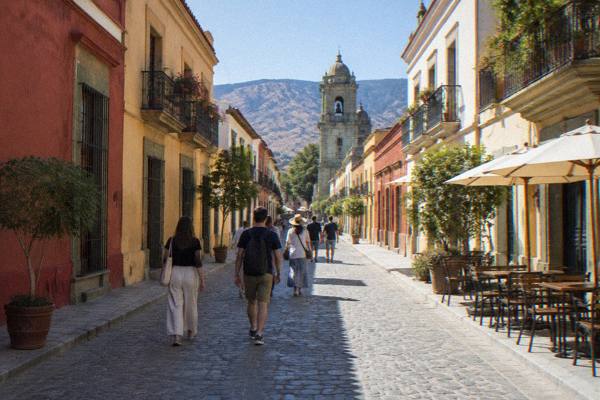
Beyond the law, the city's character does the work. The historic centre, a UNESCO World Heritage property listed as "Historic Centre of Oaxaca and Archaeological Site of Monte Albán", is a dense grid of pedestrian-scale streets where evenings are spent publicly, at outdoor tables and on the Zócalo, the Plaza de la Constitución. Queer visitors are part of that street life rather than separate from it. For a first orientation, a historic centre walking tour through the Andador Macedonio Alcalá and the surrounding neighbourhoods gives the layout of the city in a couple of hours.
What Is The Legal Situation For LGBTQ Visitors In Oaxaca?
Same-sex marriage has been legal across Mexico since 2022, and Oaxaca state performs same-sex marriages under that national framework. Federal law prohibits discrimination on the basis of sexual preference and gender identity, and hate-crime sentencing enhancements exist in the federal penal code. In practice this means an LGBTQ traveller in Oaxaca City has formal legal protection that is written down and citable, not a courtesy extended at someone's discretion.
Mexico moved to full nationwide marriage equality in 2022, when the last states were required to comply with a Supreme Court jurisprudence declaring same-sex marriage bans unconstitutional. Oaxaca's own congress approved marriage equality ahead of that national mandate. The federal Ley Federal para Prevenir y Eliminar la Discriminación names sexual preference and gender identity among protected characteristics, applying to services, employment and public spaces.
Two practical notes follow from this. First, legal protection and everyday atmosphere are different things, and the atmosphere question is answered by the city itself, in the section below. Second, for travellers who marry or have civil partnerships elsewhere: Mexican law recognises same-sex marriages performed in Mexico, and consular questions about foreign unions are handled case by case, so a specific legal question deserves a specific legal answer rather than a travel article's generalisation. The Oaxaca Travel Guide covers the city's practicalities, from safety wording to neighbourhoods, in its destination guides.
Which Parts Of Oaxaca City Feel Most Comfortable?
The historic centre, Jalatlaco and Xochimilco are the areas where LGBTQ visitors most often stay and go out, because they are walkable, busy into the evening and dense with cafes, mezcal bars and rooftop venues. The Centro Histórico around the Zócalo and the Andador Macedonio Alcalá is the default base; Jalatlaco, a short walk east, is known for its murals and quieter street life; Xochimilco sits just north of Santo Domingo de Guzmán.
None of these is a "gay district" in the sense of a dedicated zone, and Oaxaca City does not really have one. Its queer life is mixed into the city's general nightlife: mezcal rooms, rooftop bars and courtyard venues across the centre and in the Reforma and Jalatlaco areas. That integration is itself a signal about how ordinary public same-sex affection and queer social life are here compared with destinations where queer venues cluster because the surrounding streets are hostile.
For choosing where to stay, the same logic that applies to any visitor applies here: the Centro Histórico puts the Zócalo, the Basílica de la Soledad and the Mercado 20 de Noviembre within a short walk, while Jalatlaco and Xochimilco trade that centrality for a more residential feel. The detail is covered in full in choosing where to stay in Oaxaca.
| Neighbourhood | Character | Distance from the Zócalo |
|---|---|---|
| Centro Histórico | Hotels, markets, the Andador Macedonio Alcalá, rooftop bars | It is the centre |
| Jalatlaco | Murals, cafes, quieter evenings | A short walk east |
| Xochimilco | Residential streets beside Santo Domingo de Guzmán | Just north of the centre |
| Reforma | Restaurants and nightlife further from the core | Beyond walking distance for some |
Is Oaxaca Safe For LGBTQ Travellers?
The advisory wording that covers every visitor to Oaxaca also covers LGBTQ visitors, and none of the three main English-language advisories names Oaxaca as an area to avoid. The US State Department lists Oaxaca state at Level 2, Exercise Increased Caution, with no travel restrictions for its own staff to Oaxaca City or Monte Albán; the UK FCDO does not name Oaxaca on its main Mexico page; Canada advises a high degree of caution for Mexico overall.
Reading those three together: the UK Foreign, Commonwealth and Development Office advises against all but essential travel to parts of Mexico, and Oaxaca is not among the named areas. Canada's page for Mexico carries an overall caution level with regional advisories, and again Oaxaca is not listed as an avoid-travel area. The US State Department's state-level rating for Oaxaca, reported at Level 2, places restrictions only in the Isthmus region, far from the Valles Centrales where Oaxaca City sits.
The city-specific picture is what a visitor actually experiences. Oaxaca City is walkable by day and lively into the night; the ordinary precautions are the ones covered in walking around Oaxaca at night. One standing risk applies to everyone equally: road blockades associated with teachers' union protests can occasionally disrupt road and airport access, and checking conditions before a travel day is sensible. That is a transport risk, not a risk targeted at any group.
| Advisory source | Wording that applies to Oaxaca |
|---|---|
| UK FCDO | Advises against all but essential travel to parts of Mexico; Oaxaca not named |
| Canada | Exercise a high degree of caution in Mexico overall; Oaxaca not listed as an avoid area |
| US State Department | Oaxaca state at Level 2, Exercise Increased Caution; restrictions only in the Isthmus region |
What Is Queer Cultural Life Like In Oaxaca?
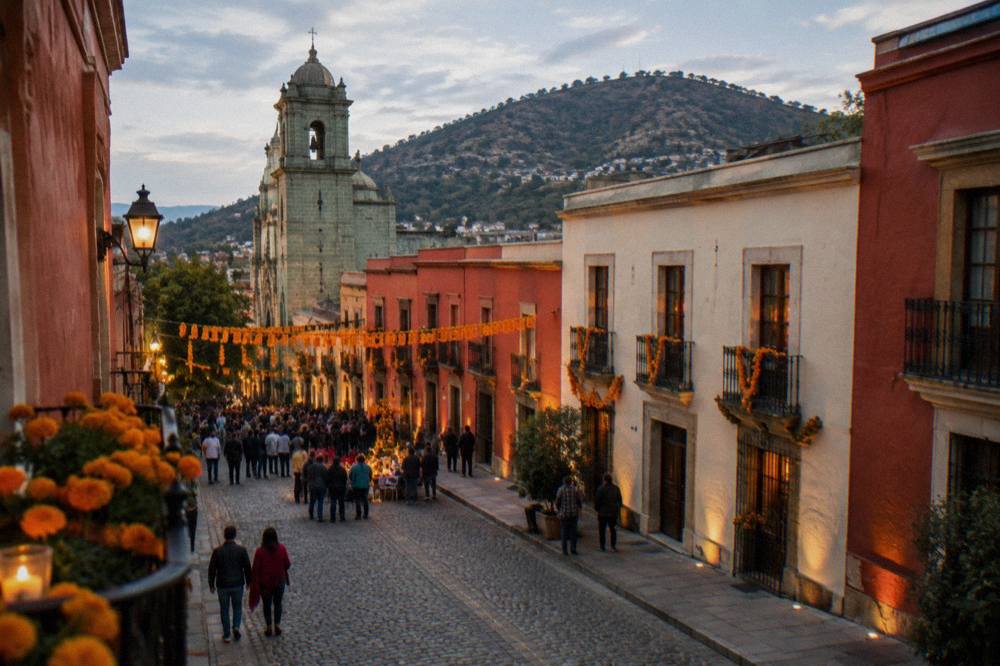
Oaxaca's queer cultural life is woven into the city's calendar rather than confined to a single venue strip: Guelaguetza in July fills the city with visitors and public celebration, Día de Muertos at the end of October and start of November brings comparsas and night-time cemetery visits that are communal, not segmented, and the city's art and printmaking scenes include queer artists in mainstream galleries and workshops.
The standing pattern is easiest to see during the big festivals. Guelaguetza runs as two Mondays in July, Lunes del Cerro, at the Auditorio Guelaguetza on the Cerro del Fortín; the 2026 edition was held on 20 and 27 July with two performances each day, and the surrounding month carries more than 140 activities across the city. An event on that scale belongs to everyone in the city at once. Día de Muertos centres on the traditional dates of 31 October to 2 November, with panteones open at night and processions through neighbourhoods like Jalatlaco and Xoxocotlán. The 2026 programme has not been announced; the dates above are the standing tradition.
Outside festival season, the city's creative economy does the rest. Oaxaca has a substantial printmaking and street art culture, and workshops and gallery visits are a common way to spend an afternoon; the IFAB and street art scene is documented in the city's own arts coverage. Queer participation in that scene is a matter of public record in the city's galleries and collectives, and visitors encounter it simply by doing what Oaxaca invites everyone to do.
What Practical Details Should LGBTQ Visitors Know Before Arriving?
Plan around the same basics as any visitor: Oaxaca City sits at about 1,550 m with a dry season from November to April and a rainy season from May to October, the timezone is UTC-6 all year with no daylight saving since 2022, and the city centre is compact enough that almost everything of interest sits within a short walk. None of these interact with sexual orientation or gender identity; they are simply the facts that shape a trip here.
The climate table is worth a look when choosing dates. Rain is heavily concentrated between June and September: June averages 188.3 mm and September 163.6 mm, against 2.4 mm in January and 9.0 mm in December, per the SMN station normals for Oaxaca. April has the highest average daily high at 34.9 C, and January the lowest average daily low at 10.3 C. The full month-by-month picture is in the best month to visit Oaxaca.
| Month | Average high C | Average low C | Average rain mm |
|---|---|---|---|
| January | 28.9 | 10.3 | 2.4 |
| April | 34.9 | 15.8 | 47.3 |
| June | 30.9 | 16.7 | 188.3 |
| September | 29.1 | 16.1 | 163.6 |
| December | 28.9 | 11.0 | 9.0 |
Money and paperwork are unchanged for LGBTQ visitors: Mexico's entry rules are the same for everyone, local costs are in pesos, and the state lodging tax is 3 percent on hotel-type stays. A practical first or last day option is the Oaxaca's Historic Center walking tour, which covers the centre's main sights with a professional local guide; Check availability on the operator's booking page.
Common Questions About Oaxaca For LGBTQ Travellers
Is Oaxaca LGBTQ Friendly?
Yes, in the everyday sense: same-sex marriage is legal, federal anti-discrimination law covers sexual preference and gender identity, and Oaxaca City is a compact, walkable destination where queer visitors are part of ordinary public life rather than separate from it.
Is Same-Sex Marriage Legal In Oaxaca?
Yes. Oaxaca's congress approved marriage equality ahead of the national mandate, and Mexico completed nationwide marriage equality in 2022 following a Supreme Court jurisprudence declaring same-sex marriage bans unconstitutional.
Are There LGBTQ Bars In Oaxaca City?
Oaxaca City does not have a single dedicated gay district. Queer social life is mixed into the city's general nightlife of mezcal bars, rooftop venues and courtyards, mostly across the Centro Histórico, Jalatlaco and Reforma.
Is Oaxaca Safe For Same-Sex Couples To Hold Hands?
The advisory pages that cover all visitors do not name Oaxaca as an area to avoid, and same-sex couples are visible in the city's ordinary street life. Standard judgement about any unfamiliar city applies after dark, as covered in the site's night safety article.
Do LGBTQ Events Take Place In Oaxaca?
Oaxaca's major public festivals, Guelaguetza in July and Día de Muertos around 31 October to 2 November, are communal events shared by the whole city, and the city's art and printmaking scenes include queer artists in mainstream venues.