Do They Have Uber In Oaxaca?
Ride-hailing apps including Uber are reported to operate in Oaxaca City, alongside street taxis and colectivos. Here is how the options compare for the Centro Histórico, Monte Albán and the valleys.
Oaxaca City (Oaxaca de Juárez), the inland highland capital of the state of Oaxaca in Mexico, is compact enough that much of a visit happens on foot, and its transport habits reflect that. Ride-hailing apps, including Uber, are reported to operate in the city, but local taxis negotiated on the street, colectivos running fixed valley routes and plain walking remain central to how the city moves. Each option is covered below, with notes on where each one makes sense and where a guided tour beats every app at its own game. For the full transport picture, see the companion guide at Oaxaca Travel Guide and the detailed rundown in Taxis, Uber and DiDi in Oaxaca.
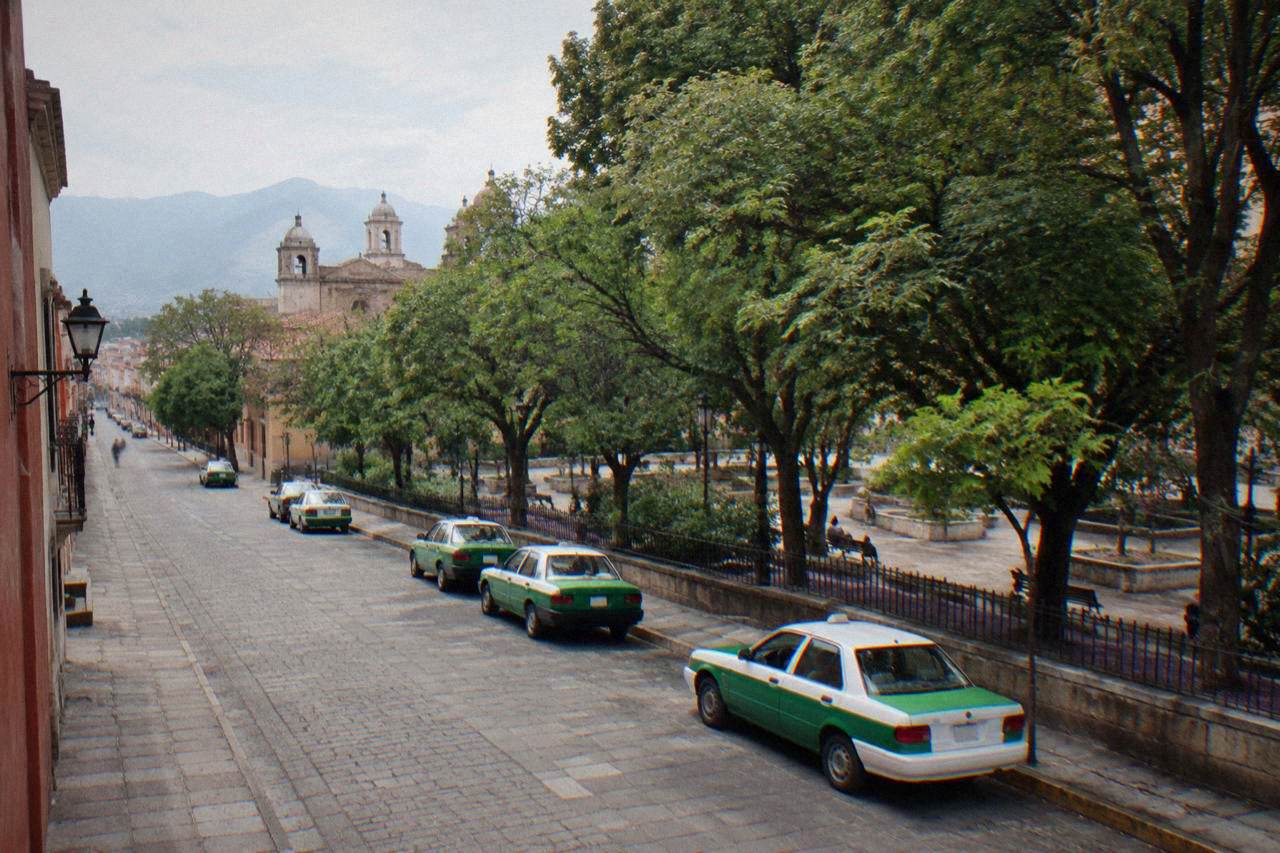
Yes, ride-hailing apps including Uber are reported to operate in Oaxaca City, alongside DiDi and other local platforms, though coverage is thinner than in Mexico City and prices can surge during festivals such as Guelaguetza and Día de Muertos. Reports also indicate the airport is served only by authorised taxis and colectivos, so plan the arrival leg separately from the app.
Those two clauses come from secondary reporting rather than an official municipal licence document, so treat them guidance and confirm in the app itself before relying on them. What is not in doubt is the shape of the city around the question. The Centro Histórico is dense and flat around the Zócalo, the Andador Macedonio Alcalá links the Zócalo to Santo Domingo de Guzmán on foot, and the whole historic core sits inside the UNESCO property "Historic Centre of Oaxaca and Archaeological Site of Monte Albán", inscribed as property 415. A visitor sleeping in the centre can walk to the cathedral, the Basílica de la Soledad, the Jardín Etnobotánico and the markets without opening any app at all.
That walkability is why the Uber question matters less here than in, say, Mexico City. The app fills specific gaps: evening rides back from dinner in Jalatlaco or Xochimilco, rainy-season downpours, and legs of a trip that are too far to walk but too short to justify a negotiated taxi. Reports note that surge pricing appears during the big festival windows, when the city's hotel occupancy and street traffic both climb.
One standing risk worth planning around: road blockades by teachers' unions are a recurring feature of Oaxaca life and can disrupt road and airport access for hours at a time. No app reroutes around a closed highway. Build slack into transfer days, and read Is Oaxaca Safe For Americans Right Now? for the advisory picture, where the US State Department lists Oaxaca state at Level 2, exercise increased caution.
How Does Uber Compare With Taxis And Colectivos In Oaxaca City?
Reported guidance describes three working options: ride-hailing apps such as Uber and DiDi in the city, street taxis that do not use meters and require a fare agreed before the ride, and colectivos, shared cars and vans on semi-fixed routes toward valley towns such as Tlacolula, Mitla and Teotitlán del Valle. Each covers a different job, and none replaces the others.
Taxis are the traditional backbone. Reports describe them as meterless, with the fare settled upfront, which makes a few words of Spanish useful. Colectivos are the budget workhorse for the valleys: they leave from city departure points when full and drop passengers along the valley roads. Fares for these are not printed on this page because no official primary source publishes them; agree the number before you get in, whether the vehicle is an app car, a taxi or a colectivo.
For the centre itself, walking is genuinely competitive. Is Oaxaca A Walkable City? covers the terrain in detail, and the short version is that the historic core rewards being on foot, from the Zócalo north to Santo Domingo and out to the neighbourhood churches. Ride-hailing earns its keep at night, in the rain (the rainy season runs May to October, with September averaging 163.6 mm of rain against January's 2.4 mm) and for reaching trailheads such as the Sierra Norte, about 142 minutes' drive from the Zócalo.
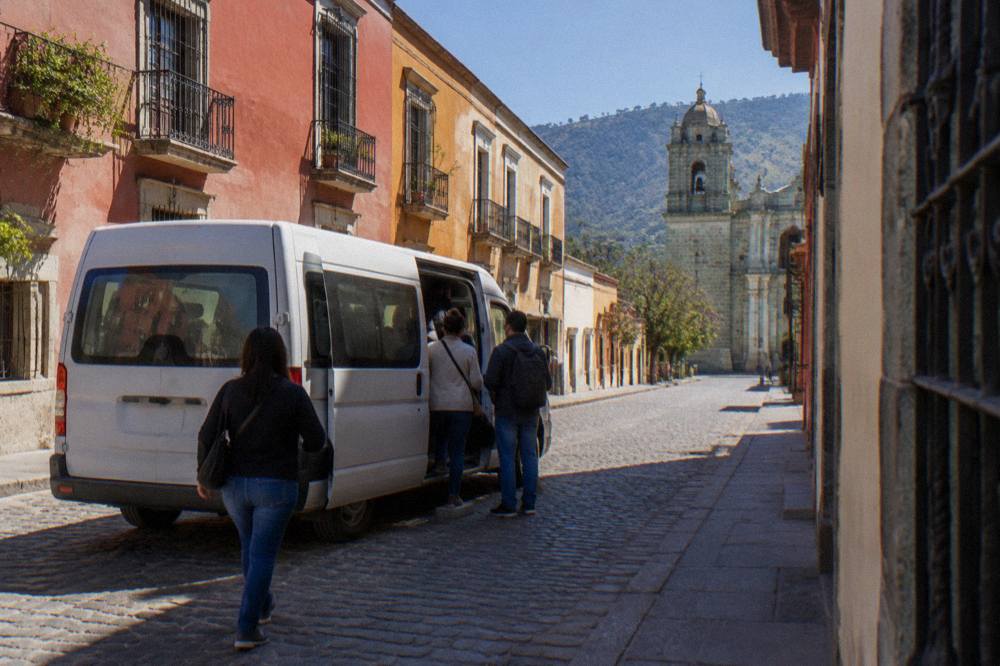
Can You Use Uber To Reach Monte Albán And The Valley Towns?
Monte Albán sits about 15 minutes' drive from the Zócalo (8.7 km by road), so an app ride can get you there, but getting back depends on signal and available drivers at the gate; valley towns such as Mitla, about 37 minutes out, and Hierve el Agua, about 57 minutes out, are usually better served by colectivos, tours or a private driver for the return leg.
The distance table below is computed from road routing (free-flow), so treat each figure as "about" and expect mountain roads and real traffic to be slower:
| Destination | Distance From The Zócalo | Free-Flow Drive Time |
|---|---|---|
| Monte Albán | 8.7 km | about 15 minutes |
| Santa María del Tule | 10.2 km | about 11 minutes |
| Teotitlán del Valle | 29.2 km | about 26 minutes |
| Tlacolula | 31.2 km | about 25 minutes |
| Ocotlán | 32.5 km | about 37 minutes |
| Mitla | 44.6 km | about 37 minutes |
| Hierve el Agua | 67.1 km | about 57 minutes |
| Latuvi (Sierra Norte) | 110.4 km | about 142 minutes |
An app car solves only half of a Monte Albán trip. The INAH page for the site lists Monday to Sunday 08:00 to 17:00, last access 16:00, with Category I entry at 105 MXN for Mexican nationals and 210 MXN for foreign visitors. Arrive by app and you still need a plan for the way down. A guided tour removes that asymmetry entirely. The Check availability link covers a guided day to Monte Albán and Cuilapan de Guerrero, two stops that pair awkwardly by app but naturally by van, and the tour page prints its own current price and rating.
The same logic applies to the far valley stops. Hierve el Agua is run by local communities rather than INAH, and its fee and hours are not published on an official page, so an organised loop that already knows the access situation is the lower-friction choice.
Should You Just Skip The Car For The City Itself?
For the Centro Histórico, yes in practice: the distances between the Zócalo, Santo Domingo de Guzmán, the Basílica de la Soledad and the markets are short, the streets are the point of the visit, and a first-timer with two or three days can cover the core sights, the food and a market morning without hiring a car at all.
A sample car-free pattern: a walking morning through the centre, an afternoon at Monte Albán by tour or colectivo, and a second day looping Tule, Mitla and Hierve el Agua on a valley day trip. The number of days shapes the choice more than the apps do, and How Many Days In Oaxaca Is Enough? breaks down what fits into each length of stay. If the answer is one day, What Not To Miss In Oaxaca ranks the stops.
Two sites reward planning regardless of how you arrive. The Museo de las Culturas de Oaxaca at Santo Domingo opens Tuesday to Saturday only, 10:00 to 16:00, so a Monday or Sunday app ride to the door finds it shut. And the Jardín Etnobotánico runs free guided tours Monday to Friday at 10:30, 11:00, 11:30, 12:00 and 17:00, and Saturdays from 10:30 to 12:00, with large groups booking two weeks ahead. Timed visits like these are where a scheduled tour beats an on-demand ride, because the ride can be summoned but the slot cannot.
What About The Airport, The Coast And Longer Trips?
For OAX, Xoxocotlán International Airport, secondary reporting describes only authorised taxis and colectivos as permitted, paid at a booth inside arrivals, so budget for that leg in cash rather than counting on an app; for the Pacific coast, Puerto Escondido is about 165 minutes' drive on the new highway, and reports describe bus service from the city as the standard alternative to driving or riding the whole way.
The airport itself is a known quantity: ASUR operates it, and the state's 2026 investment programme covers continued works under the master development plan. What the official pages do not publish is a fixed taxi tariff to the centre, so pay at the arrivals booth and keep the receipt. For the coast and other long extensions, the planning pages at Oaxaca To Puerto Escondido and Getting Around Oaxaca lay out the routes, and What Is The Best Way To Get Around Oaxaca compares every mode in one place.
The pattern to take away is simple. Use the apps inside the city when walking stops being fun. Use negotiated taxis and colectivos for the near valleys. Use tours or a private driver for the timed, far or multi-stop days, and handle the airport leg with the authorised services at the terminal. That combination covers everything from the Zócalo to Hierve el Agua without a rental car.
Common Questions About Uber In Oaxaca
Do They Have Uber In Oaxaca?
Yes, ride-hailing apps including Uber are reported to operate in Oaxaca City, alongside DiDi and local alternatives. Coverage is thinner than in Mexico City, surge pricing is reported during festivals, and the airport is described as served only by authorised taxis and colectivos.
Can You Take Uber From Oaxaca Airport?
Secondary reporting says no: the airport is served by authorised taxis and colectivos paid at a booth inside arrivals. Confirm on arrival, as rules can change and no official page publishes the current policy or tariff.
Is Uber Cheaper Than Taxis In Oaxaca?
No official source publishes taxi tariffs or app fares for Oaxaca City, so no comparison figure can be printed. Reports describe city taxis as meterless with fares agreed upfront; check the app's estimate and agree the taxi fare before choosing.
Can Uber Reach Monte Albán?
Monte Albán is about 15 minutes' drive from the Zócalo, so an app ride can cover the way up, but the return depends on driver availability at the gate. Colectivos, guided tours and private drivers are the common alternatives for the round trip.
Do You Need A Car In Oaxaca City?
No. The Centro Histórico is walkable, colectivos and tours reach the valley towns, and the coast is a long extension best handled by bus or a tour. Most itineraries of any length work without driving.
Does Uber Work During Guelaguetza And Día De Muertos?
Reports describe surge pricing and heavy demand during both festival windows. The Guelaguetza 2026 edition ran 20 and 27 July with Palco A at 1,632 MXN and Palco B at 1,321 MXN, and the 2026 Día de Muertos programme had not been announced; expect crowded streets and limited ride availability either way.
Between the apps, the negotiated taxis and the valley colectivos, Oaxaca City answers the Uber question with a shrug: yes, it is there, and yes, you will probably use it, but the city's own rhythms, two feet and a shared van will carry most of any visit.