Where Do ADO Buses Leave From In Oaxaca?
Where ADO buses leave from in Oaxaca City, what the operator's own site lists, and how to plan onward travel from the terminal to Monte Albán, Mitla and Hierve el Agua.
Oaxaca City, the inland highland capital of the state of Oaxaca in Mexico, is served by ADO, the long-distance bus operator whose official site is ado.com.mx, although this page adds no external links of its own. The short answer to the question is that ADO's first-class and premium services use the city's main bus terminal, that the operator's site is the authoritative listing for schedules, ticket classes and terminal information, and that fares and journey times are set by the operator rather than published in any verifiable primary source. The rest of this page sets out what is confirmed, what is deliberately left unsaid because no official source carries it, and how the terminal fits into a wider Oaxaca travel plan that includes valley day trips, markets and archaeological sites.
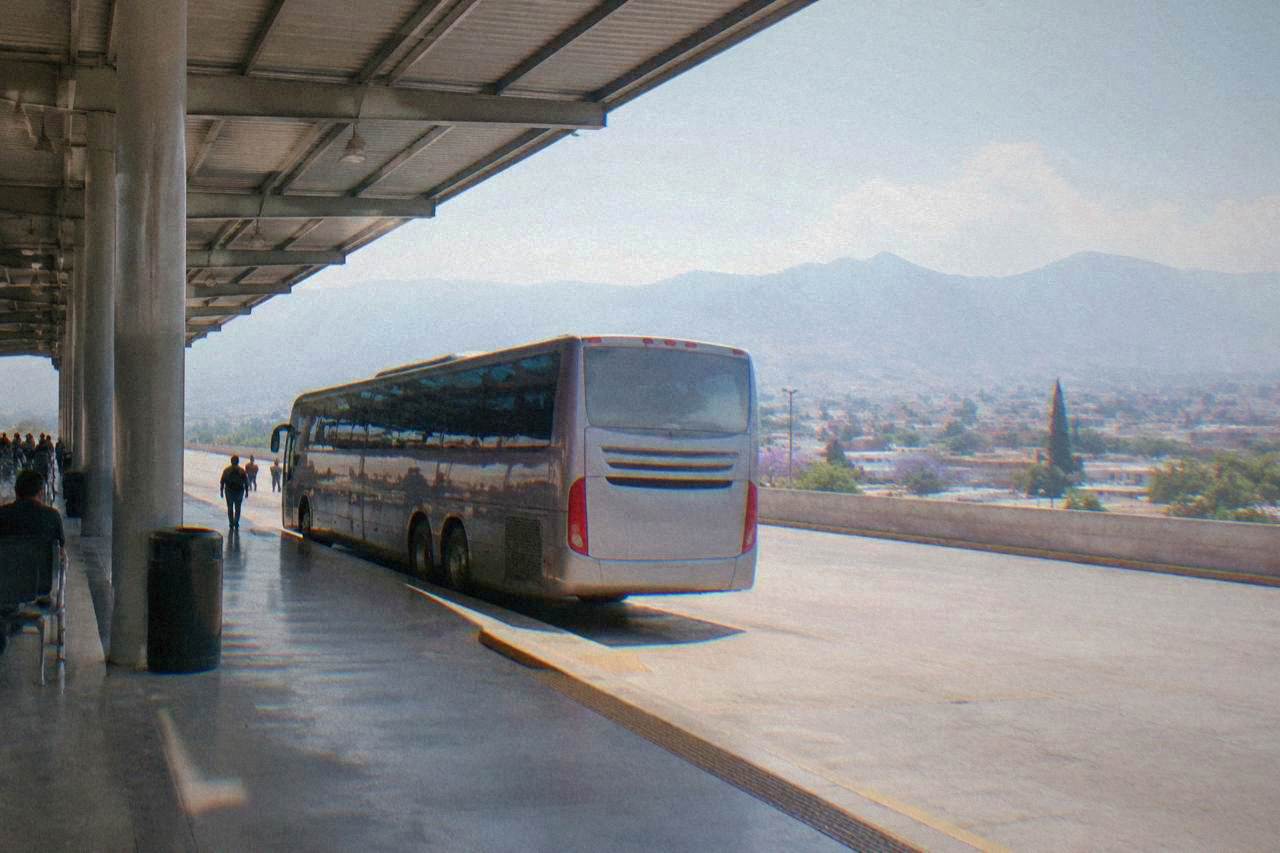
ADO buses leave from Oaxaca City's main long-distance bus terminal, the central point used by the operator's first-class and premium services to destinations such as Mexico City, Puebla, Puerto Escondido and Huatulco. The terminal's exact address and layout are not published in any primary source, so the operator's own site, ado.com.mx, is the reference that names the terminal and its facilities for each departure.
That is a deliberately narrow answer, and it is narrow for a reason. ADO operates in Oaxaca City, and ado.com.mx is the operator's official site. The responsible planning move is to read the terminal details off the operator's own listing at the moment of booking, because that is where schedules, ticket classes such as first class and Platino, and terminal information are maintained.
The practical consequence for a visitor is simple. Tickets are bought on the operator's site or at the terminal itself, and the departure information printed on the ticket names the terminal and the boarding gate. Nothing on this page should be read as a substitute for that listing, and no fare or duration figure appears here because none is licensed by a primary source. For the wider question of whether the bus beats flying, the getting from Mexico City to Oaxaca page covers the route comparison, and the how long is the bus from Mexico City to Oaxaca page handles the duration question within the same limits.
What Can Be Said About The Oaxaca ADO Terminal?
This page states that ADO is the long-distance operator serving Oaxaca City, that its official site is ado.com.mx, and that its services include first-class and premium classes on routes such as the one to Mexico City. Addresses, fares, journey times and terminal facilities are all left out here, so this page states none of them and directs the reader to the operator.
Within those limits, a few useful planning points still hold. First, Oaxaca City's airport, Xoxocotlán International, is operated by ASUR, so a traveller comparing arrival options knows that the bus and the plane are two separate systems with separate booking channels. Second, the state of Oaxaca's tourism indicators for 2025 record 1,324,332 tourist arrivals in the city of Oaxaca, of whom 212,533 were foreign visitors, which gives a sense of the scale of the arrival flows that both the terminal and the airport handle. Third, the timezone is UTC-6 all year, because Mexico abolished seasonal clock changes under a law published in October 2022, so a bus departure time printed on a ticket needs no daylight-saving adjustment in any month.
A common follow-up question is whether the terminal is walkable from the Centro Histórico. The honest answer is that no walking time or distance exists for that journey, because no source carries one. What can be said is that Oaxaca City's historic centre is compact, and the is Oaxaca a walkable city page and the best way to get around Oaxaca page cover the walkability question for the city as a whole, with the same sourcing discipline.
How Do You Get From The Terminal To The Centro Histórico?
Fares and route details for the journey between the ADO terminal and the Centro Histórico, along with taxi and colectivo fares for Oaxaca City, still await reliable sourcing. The planning approach is to agree any taxi fare before boarding, to use the operator's site for terminal information, and to treat the historic centre as the reference point for the whole city.
This is a case where what a page leaves out matters as much as what it includes. Travel advice sites publish peso figures for taxi rides from the terminal, but those numbers do not come from an official source, and the corrections file for this destination explicitly ranks them as unsourced. The same applies to colectivo fares from the city to Mitla, Tlacolula or Teotitlán del Valle: the destinations are real, the services are real, and the fares are not publishable on this site.
What a traveller can use instead is structure. The Centro Histórico, including the Zócalo and the Andador Macedonio Alcalá, is the anchor of the city, and the Oaxaca Centro Histórico guide covers it in depth. From there, the questions that matter are which onward trips need a bus, which need a tour, and which are close enough to reach on foot, and the table below sets out the drive-time picture from the Zócalo, computed on OSM roads and stated as "about" because real traffic and mountain roads run slower than free-flow models.
| Destination from the Zócalo | Distance | Free-flow drive time |
|---|---|---|
| Monte Albán | 8.7 km | about 15 minutes |
| Santa María del Tule | 10.2 km | about 11 minutes |
| Teotitlán del Valle | 29.2 km | about 26 minutes |
| Tlacolula | 31.2 km | about 25 minutes |
| Mitla | 44.6 km | about 37 minutes |
| Hierve el Agua | 67.1 km | about 57 minutes |
None of these valley destinations is served by ADO's long-distance network in the way Mexico City or Puerto Escondido are. They are reached by local transport, by tour, or by rented vehicle, and the colectivo fares for them are not recorded here. For travellers who prefer not to manage that logistics layer themselves, a booked day trip covers the loop, and the related pick for this page is the Check availability option for a Hierve el Agua half-day departure from the city.
Do You Even Need The Bus To Enjoy Oaxaca?
Most of what Oaxaca City is known for sits within or just beyond the Centro Históclo, reachable on foot, and the archaeological sites and Hierve el Agua sit in the surrounding valleys at drive times of roughly 15 to about 57 minutes from the Zócalo, so the ADO terminal matters mainly for long-distance arrivals and departures rather than for sightseeing. The bus answers the city-to-city question, and tours or local transport answer the valley question.
The city itself rewards walking. The Zócalo, the Basílica de la Soledad, the Jardín Etnobotánico with its free guided tours on weekdays at fixed hours, and the markets are all central, and the free things to do in Oaxaca guide covers that layer without any bus dependency at all. Monte Albán, the Category I INAH site open daily from 08:00 to 17:00 with last access at 16:00 and entry at 105 MXN for nationals and 210 MXN for foreign visitors, is about 15 minutes from the Zócalo by road, a distance that tours and local transport cover routinely.
The valley circuit is where planning pays off. Mitla, also Category I with the same 105/210 MXN fee structure and last access at 16:30, is about 37 minutes out. Hierve el Agua is about 57 minutes, and its entry fee and hours are set by local communities rather than INAH. A tour that strings these together solves the colectivo-and-timetable problem entirely, which is why the trio of picks on this page leans toward guided valley and city options rather than transport products.
What Should You Check Before Booking An ADO Ticket?
Before booking an ADO ticket, check the operator's own site, ado.com.mx, for the departure terminal named on your route, the ticket class, and the schedule, because fares, journey times and terminal addresses are set by the operator and appear on its own site. Also check the season you are travelling in, since Oaxaca's rainy season from May to October changes road conditions in the mountains.
The seasonal point is worth a short expansion. The SMN station normals for Oaxaca show the dry season running November to April, with January averaging just 2.4 mm of rain, and the rainy season from May to October, with June at 188.3 mm, September at 163.6 mm and August at 131.8 mm. None of that stops bus services, but it is the difference between a dry mountain highway and a wet one, and the best month to visit Oaxaca page treats the same data in more detail. April has the highest normal daily maximum at 34.9 C, and December and January the lowest normal minimums at 11.0 and 10.3 C.
There is also a safety layer worth one paragraph. The UK FCDO advises against all but essential travel to parts of Mexico and does not name Oaxaca on its main page; Canada advises a high degree of caution for Mexico overall with regional advisories; and the US State Department lists Oaxaca state at Level 2, exercise increased caution. Road blockades by teachers' unions are a standing risk in the state that can disrupt road and airport access for hours at a time. None of this is specific to ADO, but a traveller holding a long-distance bus ticket through the valleys should know that occasional road disruptions are part of the picture. The is Oaxaca safe for Americans right now page carries the fuller wording.
| What to check | Where it comes from | What this site can state |
|---|---|---|
| Departure terminal and gate | The ticket and the operator's site | That the operator's site is the authoritative listing |
| Fare and ticket class | Set by the operator | No figure, in any class |
| Journey time | Set by the operator | No figure, on any route |
| Rainy-season road conditions | SMN normals, 1991-2020 | June averages 188.3 mm of rain in Oaxaca |
| Timezone | Law published October 2022 | UTC-6 all year, no daylight saving |
Is The Bus Or The Plane The Better Way Into Oaxaca?
The choice between bus and plane into Oaxaca City comes down to route and patience, since bus fares, bus durations and a like-for-like cost comparison are all outside the licensed record for this page. The plane lands at Xoxocotlán International, operated by ASUR, and the bus arrives at the city's main terminal, and both feed into the same compact, walkable highland city at about 1,550 m of altitude.
The flight-versus-bus question has its own dedicated pages, and this one does not duplicate their work. What belongs here is the arrival-layer view. Once you are in the city, the terminal and the airport are both edge points, the Centro Histórico is the centre, and everything a visitor actually came for, the mole, the mezcal, the markets, Monte Albán and Hierve el Agua, radiates outward from that centre into valleys whose drive times are short by the standards of Mexican long-distance travel. The average stay reported for 2025 is 2.00 nights, which is enough for the centre and one valley loop, and the how many days in Oaxaca is enough page works through that arithmetic.
For travellers who arrive by bus and want the valley highlights without a rental car or a colectivo timetable, a guided half-day to Hierve el Agua is the single most direct addition to a short stay, and the operator's booking page carries the current price, schedule and cancellation terms.
Common Questions About ADO Buses In Oaxaca
Where Do ADO Buses Leave From In Oaxaca?
ADO buses leave from Oaxaca City's main long-distance bus terminal. The terminal details, schedules and ticket classes are listed on the operator's own site, ado.com.mx, which is the authoritative reference; this site publishes no terminal address for the terminal.
Can I Buy ADO Tickets Online?
Yes. The operator's official site is ado.com.mx, and that is the channel where schedules, classes and fares are maintained. Fares and journey times are set by the operator and are not republished here.
How Do I Get From The Terminal To The Zócalo?
No fare or route figure exists for that trip, and taxi and colectivo fares for Oaxaca City go unlisted, so none is printed. Agree any fare before boarding, and use the operator's terminal listing for arrival logistics.
Do ADO Buses Go To Hierve El Agua Or Monte Albán?
No. Those are valley destinations reached by local transport, tour or rental vehicle, at about 57 minutes and about 15 minutes by road from the Zócalo respectively. ADO's network answers the long-distance question, linking Oaxaca City with cities such as Mexico City and Puebla.
Does Daylight Saving Affect Bus Times In Oaxaca?
No. Mexico abolished seasonal clock changes under a law published in October 2022, and Oaxaca sits at UTC-6 all year, so a departure time printed on a ticket needs no adjustment in any month.
Planning a first visit around the terminal, the airport and the valley loop is easier with the wider context, and the Oaxaca Travel Guide homepage is the place to start, with the full things to do in Oaxaca listing and the dedicated ADO bus guide covering the operator in depth.