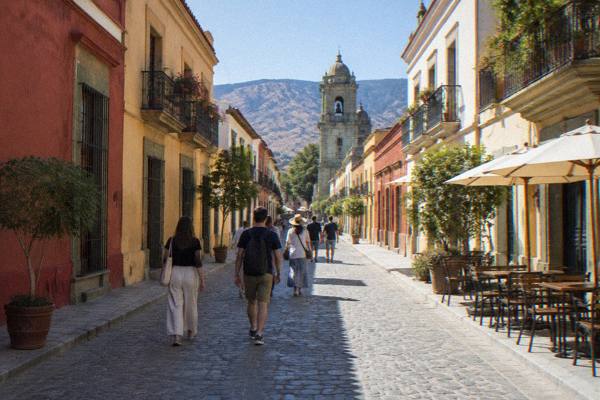
What To Wear In Oaxaca?
Packing and clothing advice for Oaxaca City: highland sun, cool nights, rainy season downpours, cobbled streets, churches and festivals, all drawn from station climate normals.
Oaxaca City (Oaxaca de Juárez), the capital of the state of Oaxaca in Mexico, is an inland highland city in the Valles Centrales at about 1,550 m, and that single fact shapes everything you should wear. The SMN station normals for the city show mean daily highs ranging from 28.9 C in January to 34.9 C in April, while mean nightly lows fall to 10.3 C in January and 11.0 C in December. The same normals show a dry season from November to April and a rainy season from May to October that peaks between June and September. Clothing that works at 14:00 rarely works at 21:00 here, so the short answer for almost every month is layers, sun protection and shoes with grip, and the long answer follows.
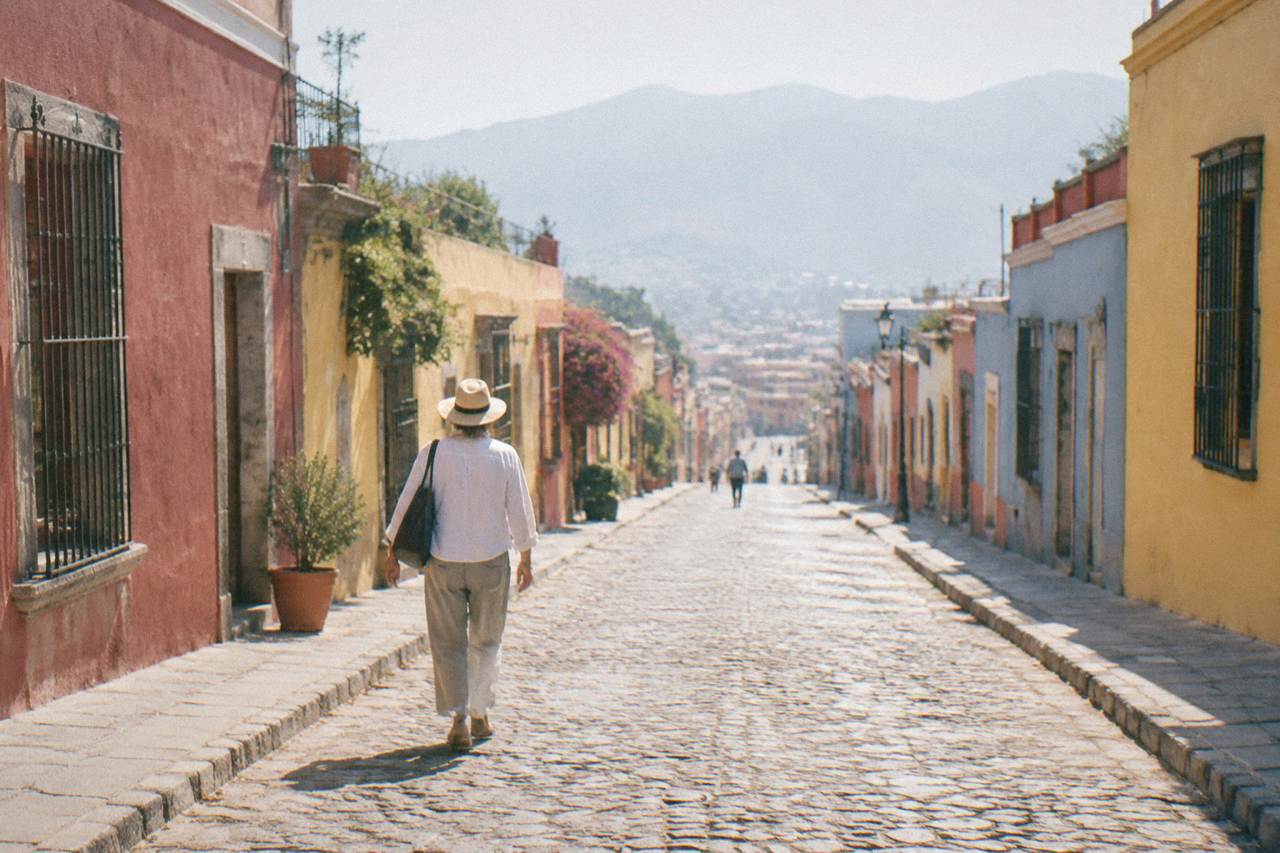
Pack for two climates in one day: a light shirt, sunglasses and a hat for highland afternoons that average between 28.9 C and 34.9 C depending on the month, plus a warm layer for nights that average between 10.3 C and 16.7 C, and a rain jacket if you travel between May and October, when monthly rainfall runs from 97.9 mm to 188.3 mm.
Those numbers come from the SMN station 20079 climate normals for 1991 to 2020, the official record for the city. Two consequences follow. First, the temperature swing within a single day is larger than the swing between seasons: a January day spans roughly 10.3 C at night to 28.9 C in the afternoon, a range of about 18 degrees. Second, the sun at about 1,550 m of altitude is strong even when the air feels mild, so covering up matters as much as cooling off. The classic local formula of a loose cotton or linen layer by day and a jacket or sweater after dark is not a style statement, it is a direct response to the numbers.
A note on season: the dry season runs November to April, with November through March all under 20 mm of monthly rain, and the rainy season runs May to October, peaking June to September. If your dates are flexible, the month-by-month question is covered in detail at the best month to visit Oaxaca, and the how many days in Oaxaca is enough question determines how many outfits you actually need. There is no winter snow in the city, at any point in the year.
Why Does Highland Sun Change What You Wear In Oaxaca?
The city sits at about 1,550 m, which means stronger solar radiation than at sea level even on mild days, so a brimmed hat, sunglasses and covered shoulders or sunscreen belong in your kit year round, because mean highs never drop below 28.9 C in any month of the normals table.
The SMN station itself sits at 1,594 m, and the Zócalo elevation is about 1,550 m, so "about 1,550 m" is the honest way to state it. What that means for clothing is simple. Ultraviolet exposure thins out less atmosphere on the way in, and afternoon heat feels sharp on exposed skin even when the thermometer reads under 30 C. Long-sleeve loose shirts, a hat with a brim, and sunglasses are the practical response, and they double as modest wear for church visits later in the day.
Nights are the counterweight. December averages a low of 10.3 C and January 10.3 and 11.0 C respectively by month, so a fleece, a knit layer or a light insulated jacket earns its suitcase space even for visitors who arrive in the dry season expecting heat. The normals table below gives the full picture, and it is worth reading before you buy anything new for the trip.
| Month | Mean High C | Mean Low C | Rain mm |
|---|---|---|---|
| Jan | 28.9 | 10.3 | 2.4 |
| Feb | 31.1 | 11.6 | 4.6 |
| Mar | 33.3 | 13.6 | 17.6 |
| Apr | 34.9 | 15.8 | 47.3 |
| May | 33.8 | 16.7 | 97.9 |
| Jun | 30.9 | 16.7 | 188.3 |
| Jul | 30.1 | 15.9 | 118.6 |
| Aug | 30.0 | 15.9 | 131.8 |
| Sep | 29.1 | 16.1 | 163.6 |
| Oct | 29.3 | 14.5 | 63.1 |
| Nov | 29.0 | 12.3 | 9.1 |
| Dec | 28.9 | 11.0 | 9.0 |
What Shoes Work On Oaxaca's Streets?
Wear closed shoes with real tread and flexible soles: the centro histórico is cobbled and uneven, sidewalks rise and drop without warning, and in the rainy season from May to October, when rain totals run from 63.1 mm in October to 188.3 mm in June, wet stone and slick paint make sandals a hazard rather than a comfort choice.
The walkability question is real, because the historic core is compact and easy to cover on foot; the details are in is Oaxaca a walkable city. What that means for footwear is that style comes second. Broken-in walking shoes, trail sneakers or anything with lugs will serve you on the Andador Macedonio Alcalá, in the Jalatlaco and Xochimilco neighbourhoods, and on the uneven ground around the Cerro del Fortín. Heels and slick-soled dress shoes fight the surface all day.
A second pair matters if rain is in your forecast window. During the June to September peak, when monthly rainfall sits at 188.3, 118.6, 131.8 and 163.6 mm respectively, a quick-drying shoe plus a dry evening pair is a better plan than one pair of canvas sneakers that stay damp. Local mototaxis and colectivos exist for longer hops, but inside the centre you walk, so budget your shoe comfort accordingly. If you want a structured first day to find your footing, the Culture, History and Traditions of Oaxaca City walk covers the historic centre with a guide, and you can Check availability on the operator's booking page.
What To Wear In Oaxaca's Rainy Season?
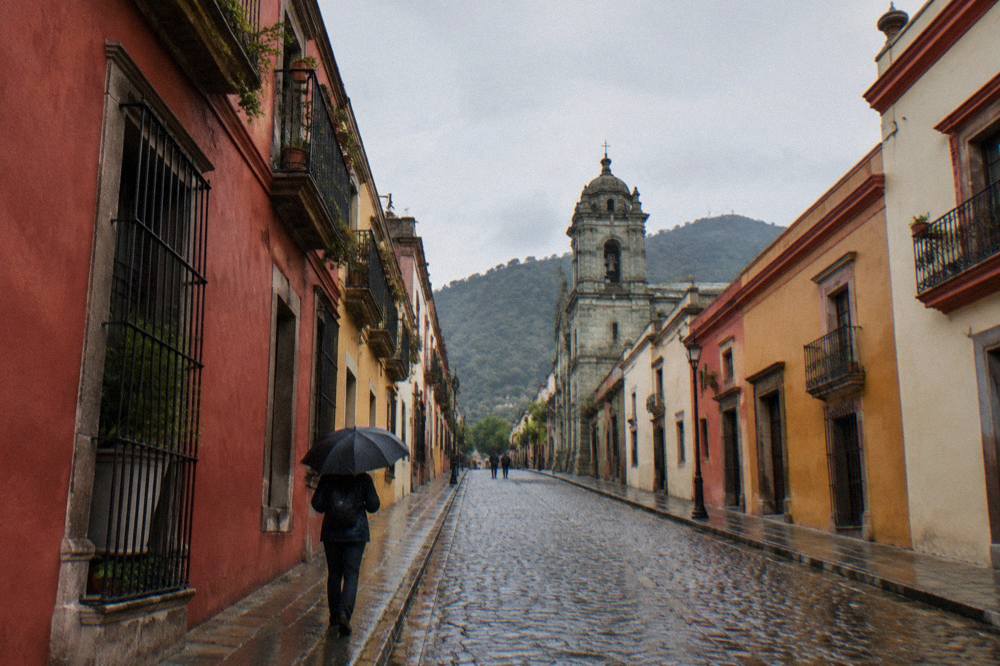
From May to October, plan around afternoon and evening rain: monthly totals in the normals run 97.9 mm in May, 188.3 mm in June, 118.6 mm in July, 131.8 mm in August, 163.6 mm in September and 63.1 mm in October, so a packable rain jacket or compact umbrella, quick-dry fabrics and a dry evening layer form the working kit.
The rainy season in the Valles Centrales is not an all-day monsoon pattern in the way coastal climates work, but the monthly totals are large, and June to September averages between roughly 20 and 21 days with rain per month in the SMN record. The practical clothing answer is to treat mornings as the reliable window for walking and photography, carry the rain layer from midday onward, and keep electronics and any leather goods in something waterproof. Quick-dry trousers beat denim in this window, and a second pair of shoes, as above, is the difference between a damp week and a comfortable one.
Humidity sits alongside warmth: rainy-season mean lows stay between 15.9 C and 16.7 C from June through September, so nights stay mild and the rain jacket you carry for the downpour is often too warm to wear twenty minutes later. A light layer you can tie around your waist is the honest solution.
| Season | Months | Rain pattern from the normals | Clothing response |
|---|---|---|---|
| Dry | November to March | Under 20 mm per month, 1.1 to 4.1 rain days | Sun protection, warm evening layer |
| Dry to wet transition | April | 47.3 mm, 7.6 rain days | Sun protection plus a packable jacket |
| Rainy | May to October | 63.1 to 188.3 mm per month, 12.0 to 21.4 rain days | Rain shell, quick-dry fabrics, spare shoes |
| Peak rain | June to September | 118.6 to 188.3 mm, 19.9 to 21.4 rain days | Full rain kit, morning activity plan |
What Should You Wear For Day Trips From Oaxaca?
Dress for two different scenes on the same day: Monte Albán is about a 15 minute drive from the Zócalo but sits on exposed high ground where sun, wind and a 210 MXN foreigner entry fee mean hat, water and closed shoes, while Hierve el Agua, about a 57 minute drive away, adds uneven walking paths on top of the same sun and, in season, rain exposure.
Both drive times are derived from mapped routes on real roads, and both should be read as free-flow minimums: mountain roads and traffic are slower. The clothing logic differs from the city because there is no shade to duck into and no taxi to flag. For Monte Albán, the INAH page lists hours of 08:00 to 17:00 with last access at 16:00, and morning visits in the dry season coincide with the strongest sun of the day, so the hat-and-covered-shoulders rule from earlier applies with force. For Hierve el Agua, the terrain underfoot argues for the grippiest shoes you own.
The same packing logic covers the Tlacolula Valley loop. Mitla is about 37 minutes from the Zócalo by road, Yagul about 38, and Tlacolula about 25, and every one of those stops mixes open-air walking with the same highland sun. If a structured valley day appeals, the choices in what not to miss in Oaxaca sketch the classics. Layers you can shed as the day warms beat a single heavy outfit every time.
What Should You Wear To Churches And Festivals In Oaxaca?
For churches, including Santo Domingo de Guzmán and the Basílica de la Soledad, cover shoulders and knees out of respect for working religious spaces, which usually means a light scarf or overshirt plus trousers or a longer skirt over your daytime kit, and for festivals, add a warm evening layer because events run outdoors after dark, when December and January average 11.0 C and 10.3 C.
The festival calendar stretches across the year and most of it happens in the open air. Guelaguetza follows a standing pattern of two Mondays in July at the Auditorio Guelaguetza on the Cerro del Fortín, with performances at 10:00 and 17:00 in the 2026 edition; the evening performance happens as the air cools from a July mean high of 30.1 C toward the mean low of 15.9 C, so spectators in shorts at 17:00 are often in jackets by 20:00. The same arithmetic applies to Día de Muertos, whose traditional dates centre on 31 October to 2 November with cemetery visits and comparsas at night, when November averages a low of 12.3 C. Noche de Rábanos keeps its traditional date of 23 December outdoors on the Zócalo, in a month averaging 11.0 C at night.
Practical additions for festival evenings: comfortable standing shoes, since viewing is on foot and public space fills early, and a layer you can stuff in a bag during the afternoon. The clothing principle across all of these events is the same one the climate table has been repeating since the top of the page, and it is the organising idea of this Oaxaca Travel Guide: dress for the afternoon, pack for the night.
Common Questions About What To Wear In Oaxaca
Do I Need A Jacket In Oaxaca?
Yes, in every month. Mean nightly lows range from 10.3 C in January to 16.7 C in June, so a warm layer for evenings is standard year round, and in December and January it is essential.
Should I Pack For Rain?
Between May and October, yes. The rainy season brings monthly totals from 63.1 mm in October to 188.3 mm in June. From November to April, monthly rainfall stays at or under 47.3 mm, and November to March all sit under 20 mm.
Are Sandals A Good Idea?
As an evening option, fine. As your walking shoe, no: the centro histórico is cobbled and uneven, and in the rainy season wet stone is slick. Closed shoes with real tread are the practical choice.
Is A Hat Necessary?
Yes. The city sits at about 1,550 m, and mean daily highs never fall below 28.9 C in any month, so sun exposure is a constant of the visit rather than a seasonal risk.
What Should I Wear To Monte Albán?
Sun protection, closed shoes and water. The site is about a 15 minute drive from the Zócalo on exposed high ground, open 08:00 to 17:00 with last access at 16:00 per the INAH page.
What About Winter Clothes?
There is no winter snow in Oaxaca City, so leave the heavy coat at home. The coolest nights fall in December and January, averaging 11.0 C and 10.3 C, which a fleece or insulated jacket handles easily.
Layers, sun cover and grippy shoes, adjusted for the month on the table above, answer the whole question, and they will carry you from a 34.9 C April afternoon at Monte Albán to a 10.3 C January night in the Zócalo without a single extra purchase beyond what you already own.