Is Oaxaca Rich Or Poor?
Is Oaxaca City rich or poor? What official figures say about the city's economy, tourism income and living costs in Oaxaca de Juárez, Mexico.
Oaxaca City, the inland highland capital of the state of Oaxaca in Mexico, is a place where two economic realities sit side by side. The state it governs is large, rural and, by most published measures of Mexican public statistics, one of the country's less wealthy states, while the city itself draws well over a million registered visitors a year and supports a dense economy of markets, craft workshops, mezcal production and tourism services. The question of whether Oaxaca is rich or poor is really two questions, one about the state and one about the city, and this page keeps them separate.
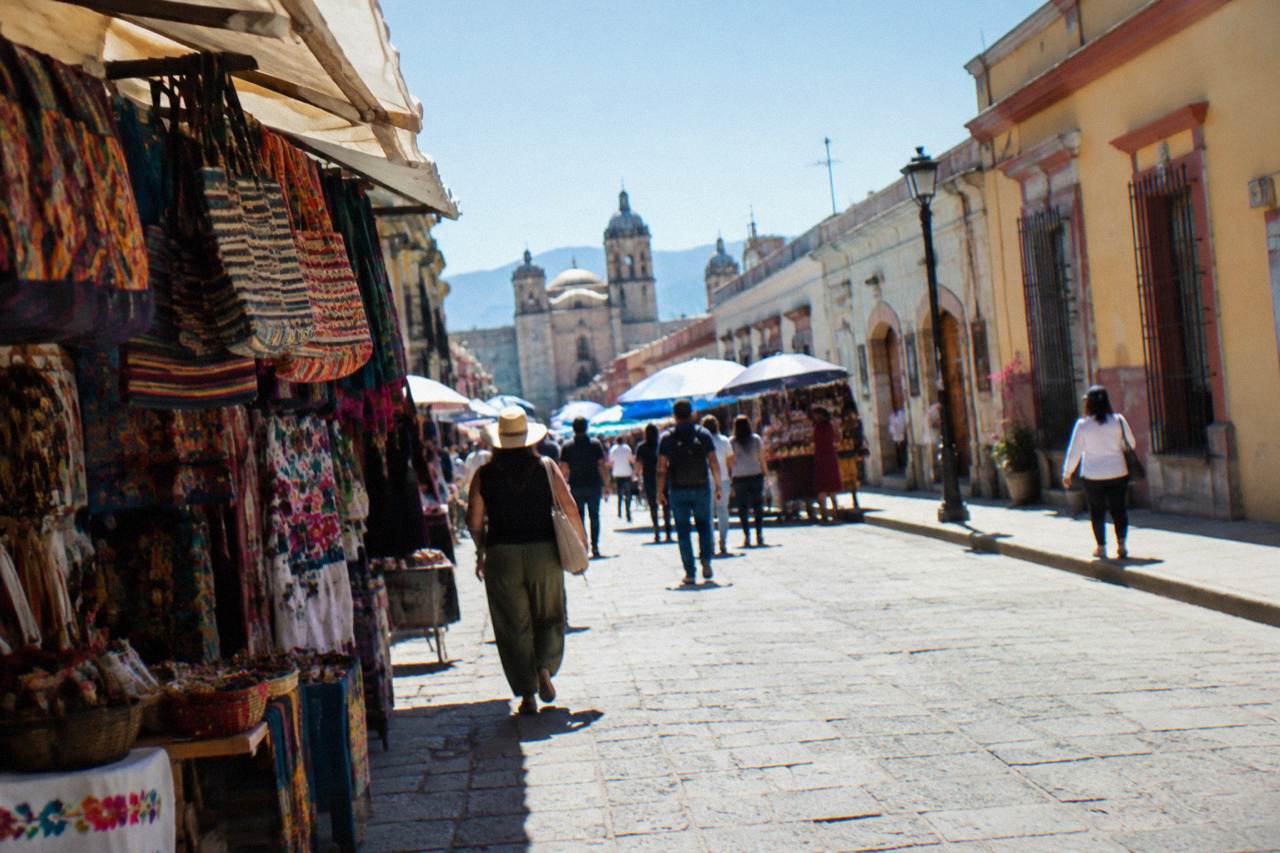
Oaxaca is both, depending on which Oaxaca you mean. Oaxaca City recorded 1,324,332 tourist arrivals in 2025 with hotel occupancy at 51.73 percent and an average stay of 2.00 nights, while the wider state, with a population of 4,132,148 at the 2020 census, is one of Mexico's poorer states by common national measures. The city's economy is powered by tourism, food, crafts and public administration, and the published arrival figures show a destination with a substantial, steady visitor economy rather than a boom-and-bust town.
The distinction matters for travellers. Prices inside the historic centre, at the archaeological sites and in the tour economy reflect a city that receives visitors continuously, while the villages of the Valles Centrales around it, where much of the craft work sold in the city is made, operate on far thinner margins. Nothing about that is unusual for a regional capital in Mexico, but it explains why a meal, a hotel night and a handwoven textile can feel like they belong to two different economies in the same afternoon.
For a broader look at what draws that visitor economy, the what Oaxaca is famous for page lists the food, mezcal and craft traditions behind the arrivals figures.
Is Oaxaca City An Expensive Place To Visit?
For international visitors Oaxaca City is generally a mid-priced destination, with INAH archaeological entry at 105 MXN for Mexican nationals and 210 MXN for foreign visitors at Category I sites, and a bookable tour economy with no fixed public tariff. Local costs are in pesos, and the state charges a 3 percent lodging tax on hotel-type stays, 5 percent when booked through an intermediary platform, under decree 884 published in December 2025.
The honest answer about day-to-day costs is that this site publishes no invented figures. That mix keeps a floor of demand under the markets, the bus routes and the festival calendar even in quiet months.
| INAH fee category | Sites | Mexican nationals | Foreign visitors |
|---|---|---|---|
| Category I | Monte Albán, Mitla, Yagul | 105 MXN | 210 MXN |
| Category III | Dainzú, Lambityeco, Zaachila | 80 MXN | 145 MXN |
The fee table is a fair snapshot of how costs scale in the region. The headline sites charge double to foreign visitors, a two-tier pricing structure that is stated openly on the INAH pages, and the smaller Category III zones cost less for everyone. For a fuller cost breakdown, see is Oaxaca expensive.
How Much Money Does Tourism Bring To Oaxaca City?
Tourism brought 1,324,332 registered arrivals to the city of Oaxaca in 2025, and the state's own Sectur indicators put hotel occupancy at 51.73 percent for the year, figures that describe a substantial but not saturated visitor economy. Monte Albán alone received 416,675 visitors in 2025, of whom 342,962 were national and 73,713 foreign, making it by far the most visited archaeological site in the Valles Centrales.
The visitor spread across the other INAH sites is much thinner, and that gap is itself an economic fact. Mitla received 104,428 visitors in 2025, Yagul 10,185, Lambityeco 5,545 and Zaachila 4,229. In practical terms, almost all archaeological tourism revenue concentrates at one hilltop site, while the smaller zones see a fraction of that traffic even though they sit on the same valley routes that tour vehicles use every day.
| INAH site | Visitors 2025 | National | Foreign |
|---|---|---|---|
| Monte Albán | 416,675 | 342,962 | 73,713 |
| Mitla | 104,428 | not itemised here | not itemised here |
| Yagul | 10,185 | not itemised here | not itemised here |
| Lambityeco | 5,545 | not itemised here | not itemised here |
| Zaachila | 4,229 | not itemised here | not itemised here |
Festival periods compress even more money into short windows. The Guelaguetza 2026 edition, held on 20 and 27 July at the Auditorio Guelaguetza on the Cerro del Fortín, sold Palco A seats at 1,632 MXN and Palco B at 1,321 MXN through Superboletos, with the C and D sections free, and the paid sections sold out quickly. An annual festival that can sell out two ticket tiers at those prices, in a state with a modest average income, is the clearest single illustration of the rich-and-poor tension in this question.
Does Craft Work Pay In The Villages Around Oaxaca City?
The craft villages of the Valles Centrales, Teotitlán del Valle, San Martín Tilcajete, San Bartolo Coyotepec and their neighbours, supply much of what the city sells to visitors, and the published record shows the workshop economy runs on visitor access rather than on any stated public subsidy or wage figure. Weaving workshops in Teotitlán del Valle generally operate Tuesday to Sunday and close many Mondays, with mornings recommended for natural-light demonstrations, and workshop etiquette reported for 2026 asks visitors to request photos first and to prefer cash.
That last detail, cash preferred, is a small window into the economics. Card infrastructure costs money and assumes bank relationships that small family workshops do not always hold, so the cash a visitor hands over at a workshop gate is often the entire gross revenue of that sale. The same craft item can pass through a city shop, a market stall or the maker's own courtyard at very different prices, and the difference is the middle layer the city economy adds. The full index of guides sits on Oaxaca Travel Guide.
How Does Oaxaca City Compare With The State Around It?
Oaxaca de Juárez, with a municipal population of 270,955 at the 2020 census, is the economic centre of a state of 4,132,148 people, and the concentration of tourism, government and services in the capital is visible in every published indicator, from arrivals to site visits. The city is inland, at about 1,550 m in the Valles Centrales, and its economy does not include a port or a beach; the Pacific coast destinations of Puerto Escondido, Mazunte and Huatulco are far extensions, about 165 minutes of driving from the city to Puerto Escondido on the new highway before mountain roads and traffic add time.
That geography matters to the wealth question. The state's tourism map is split between the highland capital and distant coastal resorts, and money that flows into the state through tourism lands disproportionately in those two poles. The villages between them, connected by colectivo routes and Sunday markets, participate in the visitor economy mainly through day tours, craft sales and food, which is why a single busy tour route, the Tlacolula valley loop through Tule, Mitla and Hierve el Agua, carries so much economic weight for the communities on it.
For how long to base yourself in the city to see both the capital and the valleys, the how many days in Oaxaca page lays out the trade-offs.
Can You See The Wealth Gap As A Visitor In Oaxaca?
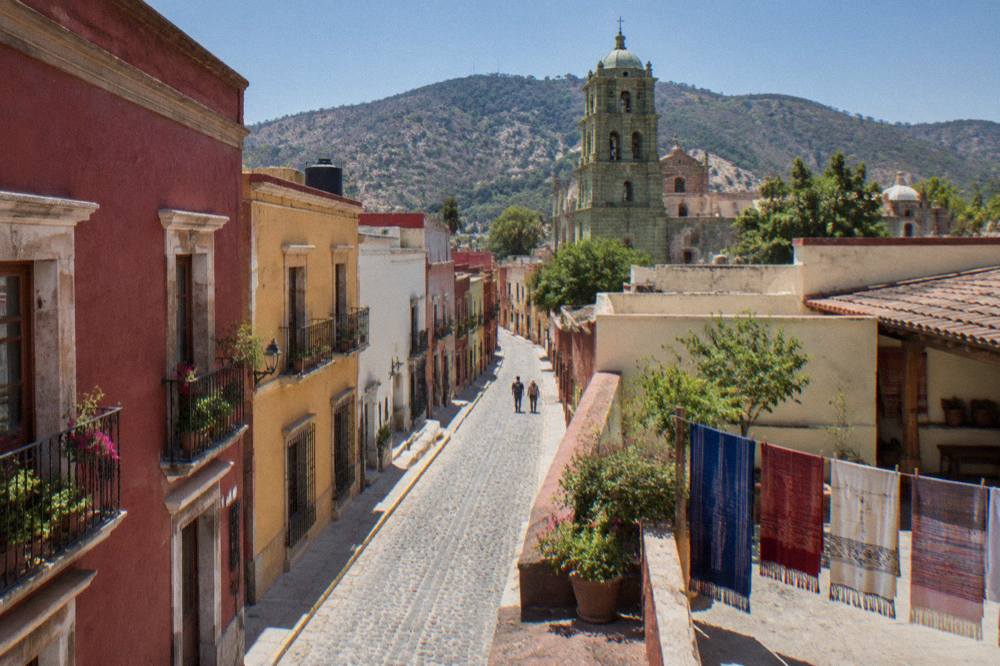
You can see it in the fee structure and the arrival numbers rather than in any single neighbourhood: foreign visitors pay double at INAH sites, the paid Guelaguetza tiers sold out at 1,321 MXN and 1,632 MXN a seat, and 83.95 percent of the city's 2025 arrivals were Mexican nationals travelling inside their own country. A visitor who walks from the Zócalo along the Andador Macedonio Alcalá to Santo Domingo de Guzmán passes through the most monetised strip of the city, and a colectivo ride out to Tlacolula or Zaachila reaches a valley economy where the same peso buys a different basket.
There is a respectful way to spend across that gap. Buying at a workshop in Teotitlán del Valle or San Martín Tilcajete puts the full sale price with the maker. Visiting the smaller INAH sites, Yagul, Lambityeco, Zaachila, spreads entry revenue beyond Monte Albán, and Zaachila's own schedule, open Thursday to Sunday 10:00 to 16:00 only, shows how locally these zones are administered. The Jardín Etnobotánico runs free guided tours Monday to Friday at 10:30, 11:00, 11:30, 12:00 and 17:00 and Saturday 10:30 to 12:00, a state-supported free resource that sits a few minutes from the most expensive restaurants in the centre.
The is Oaxaca worth visiting page covers what that mixed economy delivers for the traveller, and is Oaxaca a state or a city explains the administrative split that makes this whole question two questions.
One way to put money directly into the city's creative economy is the street art walk led by a working artist, where the guide is a practising painter; Check availability on the operator's booking page.
Common Questions About Rich And Poor In Oaxaca
Is Oaxaca Rich Or Poor?
Both, at once. Oaxaca City recorded 1,324,332 tourist arrivals in 2025 and hosts a dense tourism and craft economy, while the state of Oaxaca, population 4,132,148 at the 2020 census, is one of Mexico's less wealthy states by common national measures. The city is the rich pole of its own state.
Is Oaxaca City Expensive For Foreign Visitors?
It is a mid-priced destination. Foreign visitors pay 210 MXN at Category I INAH sites such as Monte Albán and Mitla, against 105 MXN for Mexican nationals, and the state adds a 3 percent lodging tax on hotel-type stays, 5 percent through intermediary platforms.
Does Tourist Money Spread Beyond Monte Albán?
Unevenly. Monte Albán received 416,675 visitors in 2025, while Mitla received 104,428, Yagul 10,185, Lambityeco 5,545 and Zaachila 4,229. Visiting the smaller sites spreads entry revenue across the valley communities.
Is Craft Work In The Valley Villages Paid Well?
No published wage or margin figure exists for the workshops, and this site prints none. What the record shows is structural: workshops in Teotitlán del Valle generally run Tuesday to Sunday, prefer cash, and ask visitors to request photos before taking them, all markers of small family-run operations selling directly.