What Ethnicity Are People From Oaxaca?
The population of Oaxaca City and the state of Oaxaca in numbers, the communities of the Valles Centrales, and what official sources say about who lives in and visits the city.
Oaxaca City, the capital of the state of Oaxaca in Mexico, is an inland highland city in the Valles Centrales at about 1,550 m, and the people who live in it are counted in two different ways: as the municipality of Oaxaca de Juárez, with 270,955 inhabitants at the Censo 2020, and as part of a state of 4,132,148. The question of "ethnicity" is really a question about a city and a state, about the valley communities that surround the capital, and about the regional cultures that fill the city's festival calendar each year. This page sets out what official sources actually say, in the numbers they publish and the events they announce, without guessing at anything in between.
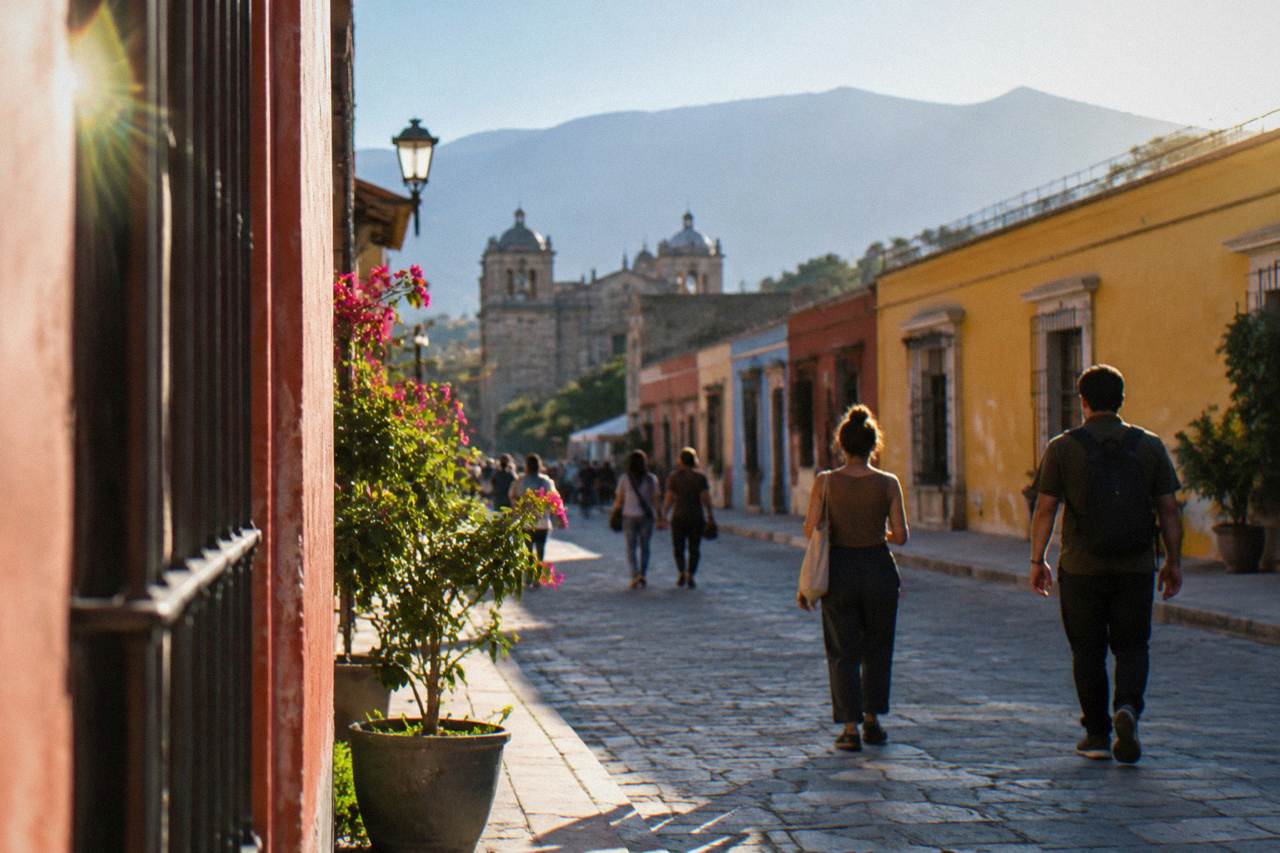
The people of Oaxaca are, in the official count, the 270,955 inhabitants of the municipality of Oaxaca de Juárez and the 4,132,148 inhabitants of the state of Oaxaca (Censo 2020). The state is home to many distinct communities across its valleys, coast and sierra, and the city itself sits in the Valles Centrales at about 1,550 m, surrounded by villages such as Teotitlán del Valle, Atzompa, Zaachila and San Martín Tilcajete.
The honest answer begins with geography rather than labels. Oaxaca is both a state and a city, and the two are very different sizes: the municipality counts fewer than a third of a million people, while the state is one of Mexico's larger by territory and holds more than four million. What unites them, on the evidence the state itself publishes, is a calendar of regional traditions. The Guelaguetza each July brings delegations from across the state's regions to the Auditorio Guelaguetza on the Cerro del Fortín, and the Día de Muertos period in late October and early November is marked in the city and in communities such as Xoxocotlán, Jalatlaco and Atzompa, each following its own regional customs, as the state's own releases describe.
None of that fits a single ethnic label, and no single one is attached here. What can be stated plainly is the population, the place names in their original spelling, and the events the state government announces year after year. For the difference between the city and the state in more depth, see Is Oaxaca A State Or A City.
| Level | Population (Censo 2020) |
|---|---|
| Municipality of Oaxaca de Juárez | 270,955 |
| State of Oaxaca | 4,132,148 |
How Many People Live In Oaxaca City?
Oaxaca City's municipality, Oaxaca de Juárez, counted 270,955 inhabitants at the 2020 census, inside a state of 4,132,148. The city is the state capital, founded in 1529 as Antequera, and its historic centre is part of the UNESCO World Heritage property "Historic Centre of Oaxaca and Archaeological Site of Monte Albán" (property 415).
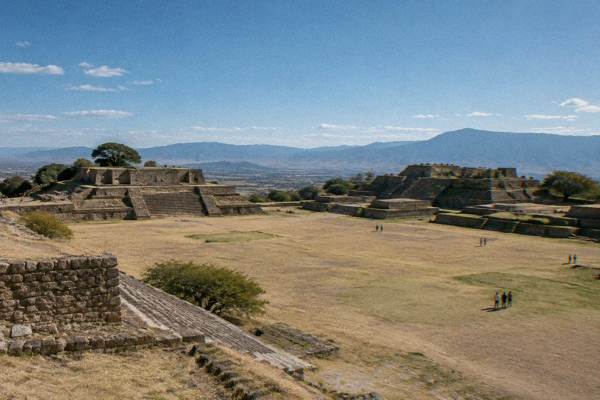
Those two figures, municipality and state, come from the Censo 2020 published by INEGI, and they are the only population numbers this site treats as settled. The city's heritage status, inscribed as property 415 on the UNESCO list, covers the historic centre together with Monte Albán, the archaeological zone about 15 minutes' drive from the Zócalo. That pairing of a living city and a pre-Hispanic site in a single inscription is itself a fair summary of how Oaxaca presents itself: a colonial-era capital sitting in a valley whose communities long predate it.
Tourism adds a second, moving population on top of the residents. Sectur Oaxaca's indicators for 2025 record 1,324,332 tourist arrivals in the city across the year, of which 1,111,799 were national visitors and 212,533 foreign, with hotel occupancy of 51.73 percent and an average stay of 2.00 nights. In other words, on any given day the city's streets carry its 270,955 residents plus a steady flow of visitors, more than four in five of them from elsewhere in Mexico.
A guided walk is a practical way to read that layered city, street by street. The Check availability link goes to the operator's booking page for the historic centre walking tour, and the same tour heads the picks below.
Which Communities Surround Oaxaca City?
The Valles Centrales around Oaxaca City hold a ring of distinct communities, among them Teotitlán del Valle, Santa María del Tule, Atzompa, Zaachila, Tlacolula, Ocotlán, San Martín Tilcajete and San Bartolo Coyotepec, plus the Pueblos Mancomunados of the Sierra Norte. Drive times from the Zócalo run from about 11 minutes to Tule to about 142 minutes to Latuvi.
Each of these places is named in the state's own materials, and several are archaeological or craft destinations in their own right. Teotitlán del Valle lies about 26 minutes from the Zócalo by road; weaving workshops and cooperatives there generally operate Tuesday to Sunday, with many closed Mondays, per current visitor guidance. Atzompa is an INAH archaeological zone open Monday to Sunday 08:00 to 16:00, with last access at 15:00, an hour earlier than the valley's bigger sites. Zaachila's INAH zone opens only Thursday to Sunday 10:00 to 16:00. The state's INAH zones charge by category: Category I sites, including Monte Albán, Mitla and Yagul, cost 105 MXN for nationals and 210 MXN for foreign visitors, while Category III sites, including Dainzú, Lambityeco and Zaachila, cost 80 and 145 MXN.
| INAH Zone | Hours | Category | 2025 Visitors |
|---|---|---|---|
| Monte Albán | Mon to Sun 08:00 to 17:00, last access 16:00 | I | 416,675 |
| Mitla | Mon to Sun 08:00 to 17:00, last access 16:30 | I | 104,428 |
| Yagul | Mon to Sun 08:00 to 17:00, last access 16:00 | I | 10,185 |
| Lambityeco | Mon to Sun 08:00 to 17:00, last access 16:30 | III | 5,545 |
| Zaachila | Thu to Sun 10:00 to 16:00 | III | 4,229 |
| Atzompa | Mon to Sun 08:00 to 16:00, last access 15:00 | not published | not published |
The visitor counts are Sectur Oaxaca's own for 2025, and they say something about where the region's own residents and its visitors actually go: Monte Albán alone drew 416,675 people, more than the city's resident population. Farther out, the Sierra Norte holds the Pueblos Mancomunados, with Latuvi about 142 minutes' drive from the Zócalo, mountain roads making real journeys slower than the free-flow figure. More on the region's craft and market towns sits in What Is Oaxaca Famous For.
How Do Oaxaca's Festivals Show Its Regional Cultures?
The state's official festival calendar is the clearest published picture of Oaxaca's regional cultures: the Guelaguetza brings delegations from across the state's regions to the Cerro del Fortín on two Mondays each July, and Día de Muertos, centred on 31 October to 2 November, is marked differently by communities such as Xoxocotlán, Jalatlaco and Atzompa.
The Guelaguetza is the headline event. The 2026 edition, already past, held its Lunes del Cerro performances on 20 and 27 July at 10:00 and 17:00 in the Auditorio Guelaguetza, with Palco A at 1,632 MXN, Palco B at 1,321 MXN plus fees, and Palcos C and D free, sold through Superboletos with a two-ticket limit per account. Those prices are a reference point only; 2027 dates are not announced. The surrounding programme, "Julio, mes de la Guelaguetza", carried more than 140 activities, including Calendas on 18 and 25 July from the Fuente de las Ocho Regiones, the fountain whose name itself counts the state's regions.
Día de Muertos follows the traditional dates of 31 October to 2 November, with cemeteries open at night around 1 and 2 November and neighbourhood celebrations in Jalatlaco and cemetery visits in Xoxocotlán. The programme of 25 October to 4 November with 140-plus activities that circulates widely is the 2025 edition; the 2026 programme had not been announced. Noche de Rábanos keeps its traditional date of 23 December, and the last published edition was the 128th, in December 2025.
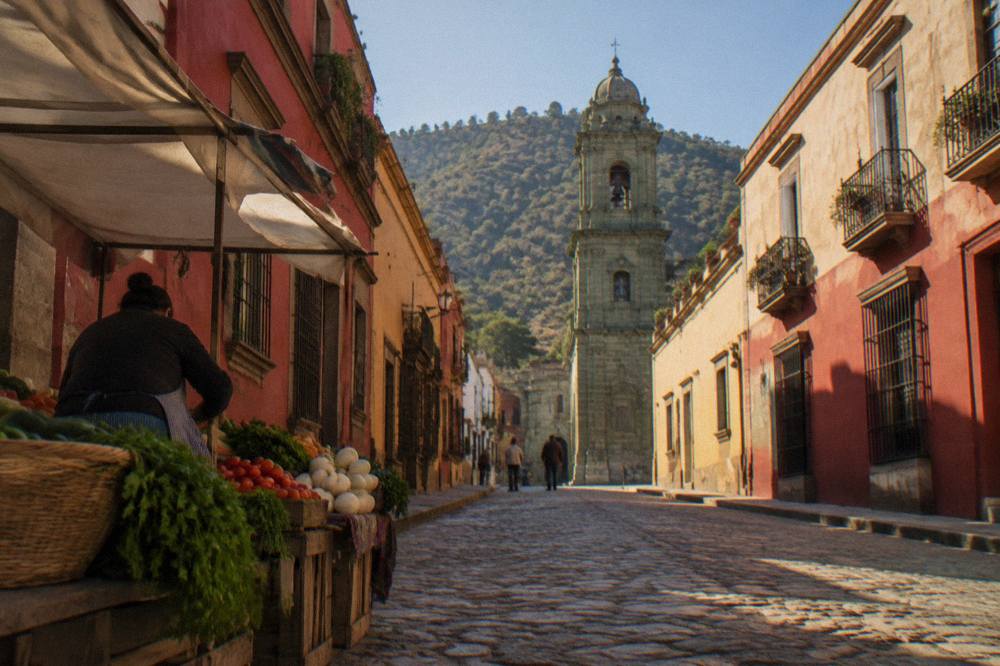
The city's markets are the everyday version of the same regional picture. Mercado 20 de Noviembre, which the state describes as a key food market founded in 1893, sits beside Mercado Benito Juárez, inaugurated in 1894, both within walking distance of the Zócalo. Around the valley, the state's releases describe regional tianguis and trueque traditions in Valles Centrales communities such as Tlacolula. Those weekly market days are a real part of valley life, and a food-focused walk through the city's own markets is one of the best-value introductions to it, as Is Oaxaca Worth Visiting lays out in more detail.
Who Visits Oaxaca City, And From Where?
Visitors to Oaxaca City in 2025 numbered 1,324,332, of whom 83.95 percent were national and 16.05 percent foreign, with an average stay of 2.00 nights and hotel occupancy of 51.73 percent. Domestic tourism dominates: the city received 1,111,799 Mexican visitors against 212,533 from abroad.
| 2025 Indicator | Figure |
|---|---|
| Total tourist arrivals, Oaxaca City | 1,324,332 |
| National arrivals | 1,111,799 |
| Foreign arrivals | 212,533 |
| Hotel occupancy | 51.73% |
| Average stay | 2.00 nights |
The same split holds at the archaeological zones. Of Monte Albán's 416,675 visitors in 2025, 342,962 were national and 73,713 foreign, a ratio close to the city's own. For travellers planning around those numbers, How Many Days In Oaxaca Is Enough covers how the 2.00-night average compares with what the valley's sites actually reward.
Common Questions About Oaxaca's People
What Ethnicity Are People From Oaxaca?
Official sources count the people of Oaxaca rather than classify them: 270,955 inhabitants in the municipality of Oaxaca de Juárez and 4,132,148 in the state at the Censo 2020. The state's own festival calendar, from the Guelaguetza's regional delegations to community Día de Muertos observances in Xoxocotlán, Atzompa and Jalatlaco, records many distinct regional cultures across its valleys, coast and sierra.
Is Oaxaca A City Or A State?
Both. Oaxaca City (Oaxaca de Juárez) is the capital of the state of Oaxaca, an inland highland city in the Valles Centrales at about 1,550 m. The municipality counts 270,955 inhabitants; the state 4,132,148.
How Many People Visit Oaxaca City Each Year?
Sectur Oaxaca recorded 1,324,332 tourist arrivals in the city in 2025, 83.95 percent of them national visitors, with an average stay of 2.00 nights.
Where Was Oaxaca City Founded?
Oaxaca de Juárez was founded in 1529 as Antequera. Its historic centre, together with the Monte Albán archaeological site, forms the UNESCO World Heritage property "Historic Centre of Oaxaca and Archaeological Site of Monte Albán", property 415.
Which Communities Surround Oaxaca City?
The Valles Centrales hold Teotitlán del Valle, Santa María del Tule, Atzompa, Zaachila, Tlacolula, Ocotlán, San Martín Tilcajete and San Bartolo Coyotepec, among others, with the Pueblos Mancomunados of the Sierra Norte farther out at about 142 minutes' drive to Latuvi.
When Does The Guelaguetza Take Place?
The standing pattern is two Mondays in July, Lunes del Cerro, at the Auditorio Guelaguetza on the Cerro del Fortín. The 2026 edition ran 20 and 27 July; 2027 dates are not announced.
The people of Oaxaca are best understood the way the state itself presents them: a capital of 270,955 residents inside a state of 4,132,148, ringed by valley communities with their own sites, crafts and festival customs, and visited each year by well over a million travellers, most of them Mexican. Read more about the city's layers at Oaxaca Travel Guide, or start with a walk through the historic centre and let the streets make the introduction.