Is English Widely Spoken In Oaxaca?
How much English you will actually encounter in Oaxaca City: where it helps, where Spanish matters, and how English-language tours bridge the gap.
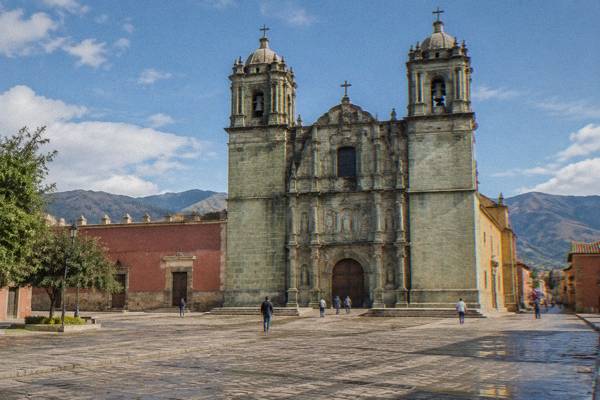
Oaxaca City (Oaxaca de Juárez) is the capital of the state of Oaxaca in Mexico, an inland highland city in the Valles Centrales at about 1,550 m, and its everyday language is Spanish. English exists in a distinct layer: tour products, hotels in the historic core, menus along the Andador Macedonio Alcalá, and the parts of the city that the 212,533 foreign visitors recorded in 2025 move through. Outside that layer, in the markets and the valley towns, Spanish is what you will hear, and a few polite words of it go a long way.
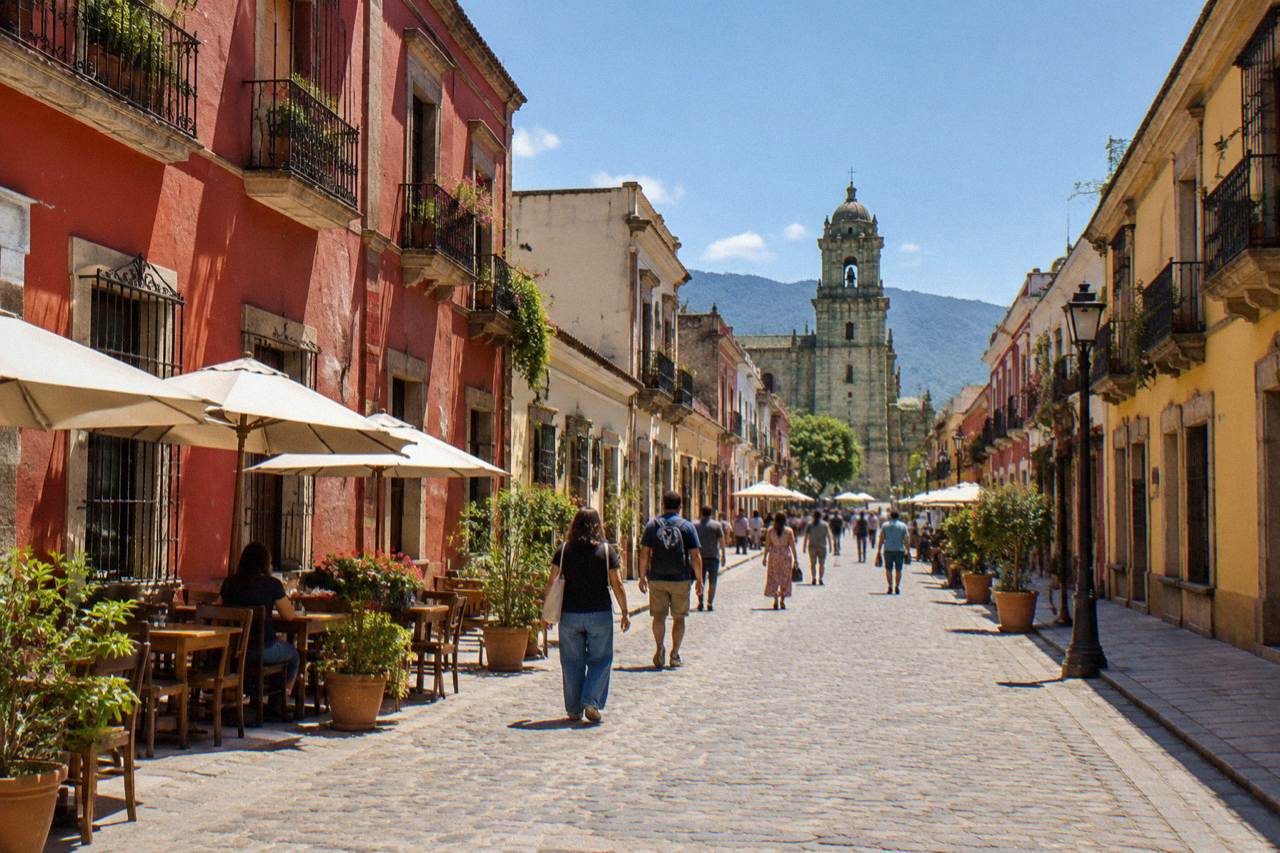
English is present but not pervasive in Oaxaca City. It is reliable in booked tourism services, including guided tours, and in hotels and restaurants around the Centro Histórico, while everyday commerce in the markets, taxis and the craft villages of the Valles Centrales runs in Spanish. The city logged 1,324,332 tourist arrivals in 2025, of which 16.05 percent were foreign, and that visitor mix is the clearest guide to where English helps.
The 2025 figures from the state tourism indicators give the shape of the city's tourism: 1,111,799 national arrivals against 212,533 foreign, with hotel occupancy at 51.73 percent and an average stay of 2.00 nights. A city whose visitors are roughly six in seven Mexican travels, speaks and signs in Spanish first. That does not make English useless, it makes English a tourist-layer service rather than a street language.
The practical reading for a visitor is simple. Inside the booked tourism economy, English-language guiding is a standard product: the tour list of tours on this site, from Monte Albán half-days to mezcal tastings, is bookable with English descriptions and English-speaking guides. On the street, in the Mercado 20 de Noviembre, or in a colectivo toward Mitla, Spanish is the working language, and nobody owes you English there.
None of this is a barrier worth restructuring a trip around. The phrasebook level of Spanish that serves any traveller in Mexico, greetings, numbers, thank you, covers the gaps, and the tours absorb the rest. A good starting point for the wider picture is the companion page on why Oaxaca is worth visiting.
Where In Oaxaca City English Helps Most
English helps most inside the booked tourism layer of Oaxaca City: guided tours, hotels in the Centro Histórico, and restaurants along the Andador Macedonio Alcalá and around the Zócalo. The 2025 arrival figures show 212,533 foreign visitors against 1,111,799 national, so services cluster English where those foreign visitors concentrate, and the historic core is that place.
Concretely, the places where an English speaker can expect to function comfortably are the tour products themselves, the hotel front desks of the centre, the touristic restaurants, and the museum ticket lines where printed information exists. The state's cultural sites operate in Spanish first: the INAH archaeological zones post their hours and fees in pesos, Monte Albán open Monday to Sunday 08:00 to 17:00 with last access at 16:00, entry 105 MXN for nationals and 210 MXN for foreigners at Category I sites.
| Situation | Language that works | What helps |
|---|---|---|
| Booked tours (Monte Albán, Hierve el Agua, tastings) | English descriptions and guiding | Book online, printed confirmation |
| Hotels in the Centro Histórico | English at reception | Booking confirmations in English |
| Restaurants on the Andador Macedonio Alcalá | English menus common | Point and ask, numbers suffice |
| Markets such as Mercado 20 de Noviembre | Spanish | Greetings, numbers, patience |
| Taxis and colectivos | Spanish | Agree the destination aloud first |
| Valley towns (Teotitlán del Valle, Tlacolula) | Spanish | A guide or driver bridges it |
The table is a planning tool, not a promise about any individual vendor. A market stall holder may speak English, a central restaurant may not: the pattern holds even when instances vary.
Do You Need Spanish At Markets And Taxis In Oaxaca?
You do not need fluent Spanish for Oaxaca City, but you need some Spanish at the markets, in taxis and in the valley towns, because those run in Spanish and no figure in the city's tourism data suggests otherwise. With 83.95 percent of 2025 arrivals being national visitors, everyday commerce has little reason to operate in English, so greetings, numbers and food words carry most of the weight.
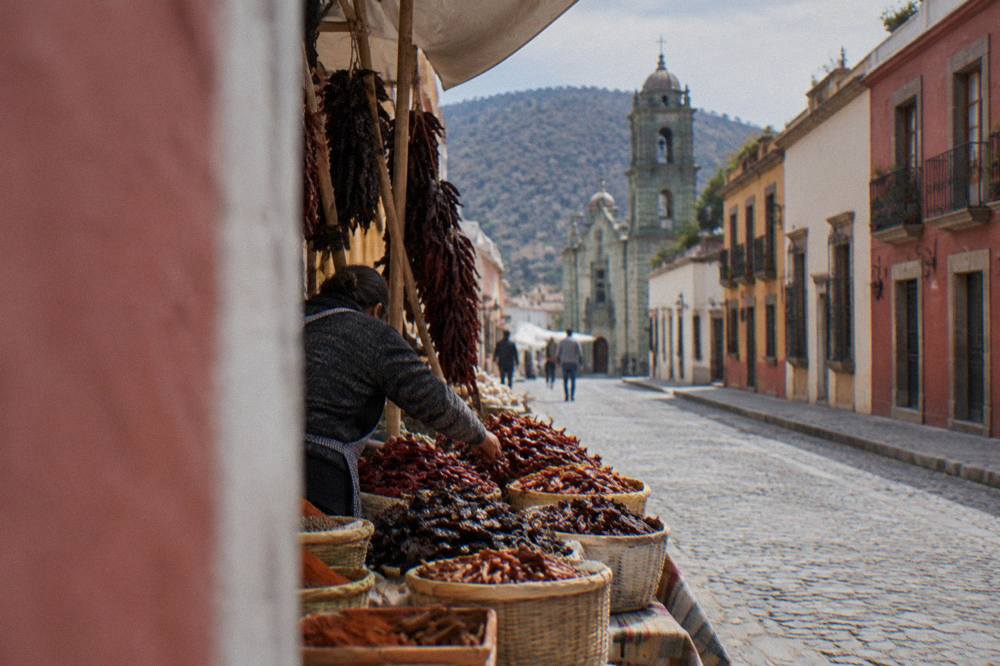
Markets are the clearest case. The Mercado 20 de Noviembre and the Benito Juárez market next to it are food and goods markets serving the city, not themed attractions, and their language is Spanish. Money does the talking at a stall: prices are quoted in pesos, holding up fingers works, and tlayuda or quesillo are words worth knowing because they name what you are buying. Market hours are not published, so check on arrival rather than planning around a schedule.
Taxis work the same way. There are no meters in regular taxis; the fare is agreed before the ride, aloud, in Spanish, and the agreed number is the number you pay. Ride-hailing apps exist in the city, which reduces the language load to typing an address, though the airport is served only by its authorised taxis and colectivos per the secondary reports in the transport research, and that handover happens in Spanish.
If the market-and-taxi layer feels daunting, tours absorb it neatly. A guided valley day trip to Hierve el Agua and Mitla handles the colectivo problem, the Spanish problem and the driving problem at once, and a city walking tour does the same for the Centro Histórico. The street art walk is run by a working artist and is bookable in English; you can Check availability on the operator's booking page.
How English-Language Tours Make Oaxaca Easier
English-language tours collapse the language barrier in Oaxaca City by putting a bilingual guide between you and the Spanish-speaking layer: they negotiate the palenque, the weaving workshop and the archaeological zone for you, and they convert a market or a mural wall from a language test into an explanation. For the 16.05 percent of 2025 arrivals who were foreign visitors, this is the standard route past the barrier.
The value shows up in the places where Spanish does real work. At Monte Albán, an English-language half-day tour pairs the ruins with an explanation you would otherwise need a Spanish-language guide or a guidebook to get, at a Category I entry of 210 MXN for foreigners. In the Tlacolula Valley, a Hierve el Agua day trip removes the colectivo connections and the local-road navigation entirely. In the city, a food or chocolate experience translates the market in both directions: you taste, the guide explains, and the vendor's Spanish stops mattering. Everything else covered here is indexed on Oaxaca Travel Guide.
One quiet advantage of the tour layer is that it reaches places with no English infrastructure at all. Zaachila's archaeological zone, for example, opens only Thursday to Sunday, 10:00 to 16:00, at 80 MXN for nationals and 145 MXN for foreigners, and it is firmly a Spanish-first destination in the valley; a guide or driver is the comfortable way in. The same logic applies to the craft villages, where workshops receive visitors but conduct their demonstrations in Spanish.
The practical sequencing for an English speaker is: take a guided day for anything outside the centre, spend unguided time in the historic core where English menus and hotel desks exist, and let the markets be your Spanish practice ground.
Does Anyone Speak Indigenous Languages In Oaxaca?
Oaxaca is a plural-language state in Mexico, and Spanish, while dominant in Oaxaca City, is not the only language of the region: the state's population of 4,132,148 (Censo 2020) includes substantial indigenous-language-speaking communities, and in the Central Valleys and the Sierra Norte you will encounter languages other than Spanish long before you encounter English.
For a visitor, this reframes the question. English is the third language in line, not the second, in much of the state. The city itself, a municipality of 270,955 people, operates in Spanish; the villages around it, Teotitlán del Valle, Santa María del Tule, the Pueblos Mancomunados of the Sierra Norte, are places where Spanish coexists with indigenous languages, and where a tour guide is doing double translation work.
This is also why guided tours earn their price in Oaxaca more than in cities where English is ambient. A guide who speaks to you in English and to a weaver or a mezcal producer in Spanish, and in the valley sometimes to a third interlocutor in an indigenous language, is not a luxury layer on the experience, they are the mechanism that makes the experience legible.
The street art walk linked here is a city-centre example of that mechanism: murals carry text, context and politics, and a working artist explaining them in English delivers what a wall cannot say to a visitor on their own.
Planning An English-Speaker's Days In Oaxaca
An English speaker can build a full Oaxaca City itinerary around one principle: guided days for the Spanish-first destinations, free time in the historic core where English signage and menus cluster, and markets attempted with basic Spanish. The city's average visitor stay of 2.00 nights in 2025 means even a short trip needs this sorting done early, not improvised on arrival.
A workable split for a first visit: one guided valley day covering Hierve el Agua, Mitla or Monte Albán; one city day with a walking or street art tour plus museum time, remembering that the Museo de las Culturas de Oaxaca opens Tuesday to Saturday only, 10:00 to 16:00, at 105 MXN for nationals and 210 MXN for foreigners; and market meals slotted between them. Questions like how many days in Oaxaca is enough and the best way to get around Oaxaca have their own pages on this site, and both interact with the language question, because the transport modes outside the tour layer are Spanish-first environments.
Timing matters less than sorting. Oaxaca is UTC-6 year-round, Mexico having abolished the seasonal clock change in 2022, and the dry season runs November to April with the rainy season May to October, so the language pattern holds in every month: the tourist layer in English, the rest in Spanish, rain or shine. Visitors weighing the wider decision may also want the safety picture, covered on this site at is Oaxaca safe for Americans right now.
Common Questions About English In Oaxaca
Is English Widely Spoken In Oaxaca?
English is common in Oaxaca City's tourism layer, including guided tours, central hotels and restaurants, and uncommon outside it, with markets, taxis and the valley towns operating in Spanish. Of 1,324,332 tourist arrivals in the city in 2025, 16.05 percent were foreign, and English availability tracks that share.
Can I Visit Monte Albán Without Speaking Spanish?
Yes. Entry is paid at the gate in pesos, 210 MXN for foreign visitors at Category I sites, and Monte Albán is open Monday to Sunday 08:00 to 17:00 with last access at 16:00. An English-language half-day tour adds interpretation that the site itself does not provide in English.
Do Restaurants In Oaxaca City Have English Menus?
In the historic core, along the Andador Macedonio Alcalá and around the Zócalo, English menus are a normal feature of the restaurants that serve visitors. In the markets and outside the centre, ordering runs in Spanish, with numbers and pointing doing most of the work.
Is English Enough For A Hierve El Agua Day Trip?
On a booked tour, yes: the guide handles transport and translation, and the day runs in English from pickup. Independently, the trip involves Spanish-language transport and local management at the site, so the guided version is the low-friction choice for an English speaker.
What Language Should I Learn Basics Of Before Oaxaca?
Spanish. It is the working language of Oaxaca City and the Central Valleys, and greetings, numbers, and food words such as tlayuda, mole and quesillo cover a surprising share of a visitor's day. The state also has indigenous-language communities, but Spanish is the one language that works everywhere in the region.