How Much Does A Meal Cost In Oaxaca?
What peso figures say about eating in Oaxaca City: INAH admission prices, the state lodging tax, market history, and the food tours whose live prices carry the real numbers.
Oaxaca City, the capital of the state of Oaxaca in Mexico, is an inland highland city in the Valles Centrales at about 1,550 m, and it eats in Mexican pesos. That is the honest starting point for this question: no government source publishes a restaurant price list, so a page that prints one is guessing. That is what this page does.
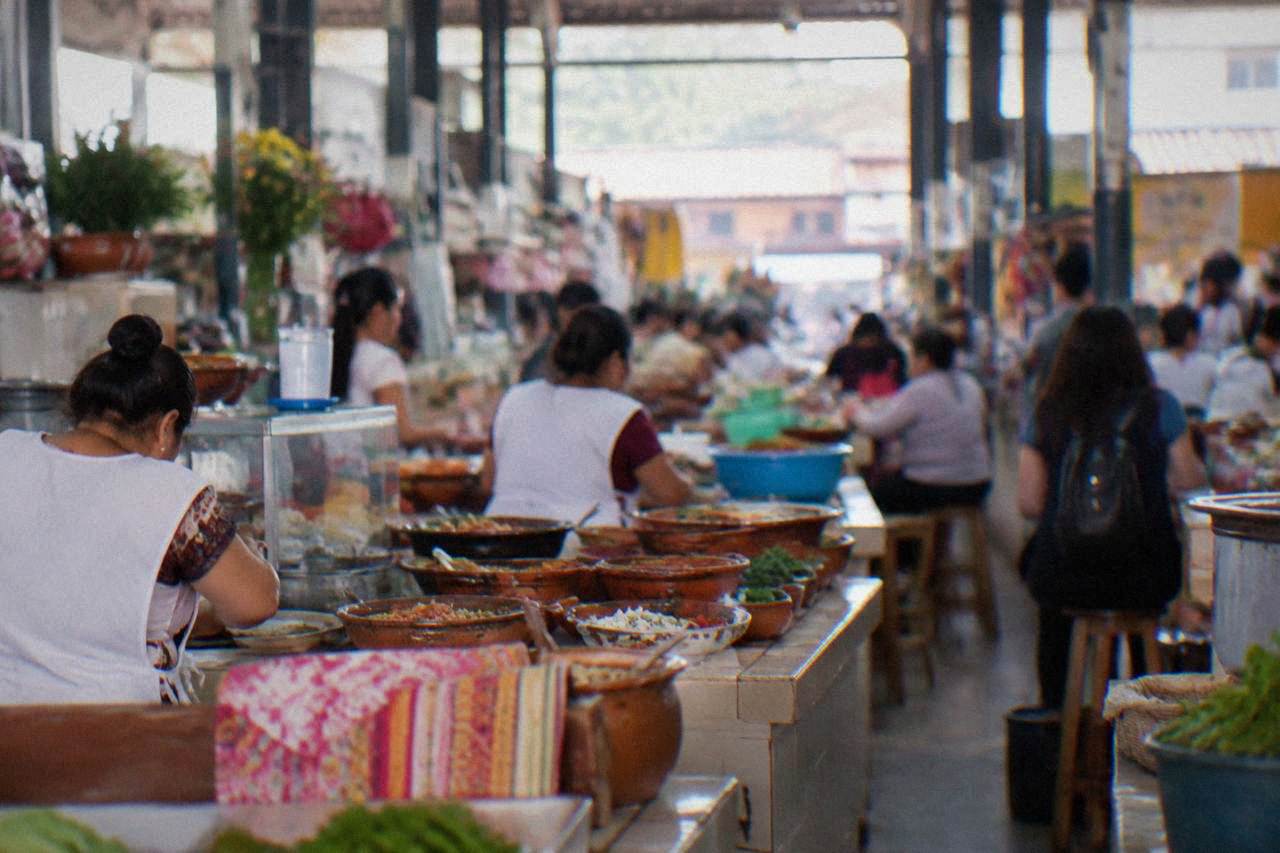
A meal in Oaxaca City is priced in Mexican pesos, and any specific figure for a plate depends entirely on where you eat it, from a market stall in the Centro Histórico to a restaurant on the Andador Macedonio Alcalá. Around those, the peso costs of a visitor's day appear in the tables below.
The macro picture comes from the state tourism indicators. Oaxaca City recorded 1,324,332 tourist arrivals across 2025, of whom 1,111,799 were national and 212,533 foreign, with hotel occupancy at 51.73 percent and an average stay of 2.00 nights. A short average stay and a domestic majority shape the food economy: the markets and street kitchens that serve residents also serve visitors, at prices set for a city where the municipality counted 270,955 inhabitants at the 2020 census.
It lands on the bed, not the plate, but it is the one food-adjacent figure the state actually publishes.
Where Do People Eat In Oaxaca City?
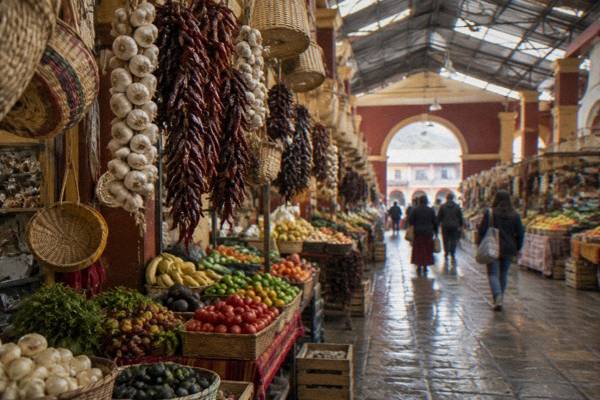
The eating geography of Oaxaca City runs through its historic markets: Mercado 20 de Noviembre, founded in 1893, Mercado Benito Juárez, inaugurated in 1894, and the Mercado de Abastos, serving the capital and nearby towns since 1978, per the state government's own pages on the city's markets. The Zócalo and the Andador Macedonio Alcalá concentrate restaurant seating around them. These halls are the reference point for local meal prices.
The state communication office describes 20 de Noviembre as a key food market with tianguis elements on Saturdays, and Benito Juárez as a historic central market near the Zócalo. The Abastos functions primarily as wholesale. None of the official pages carry opening hours; the practical point for a budget question is that these three halls anchor where the city itself eats, and a reader planning around them can start from the guide to Oaxaca's markets and shopping and the long answer on what food Oaxaca is famous for.
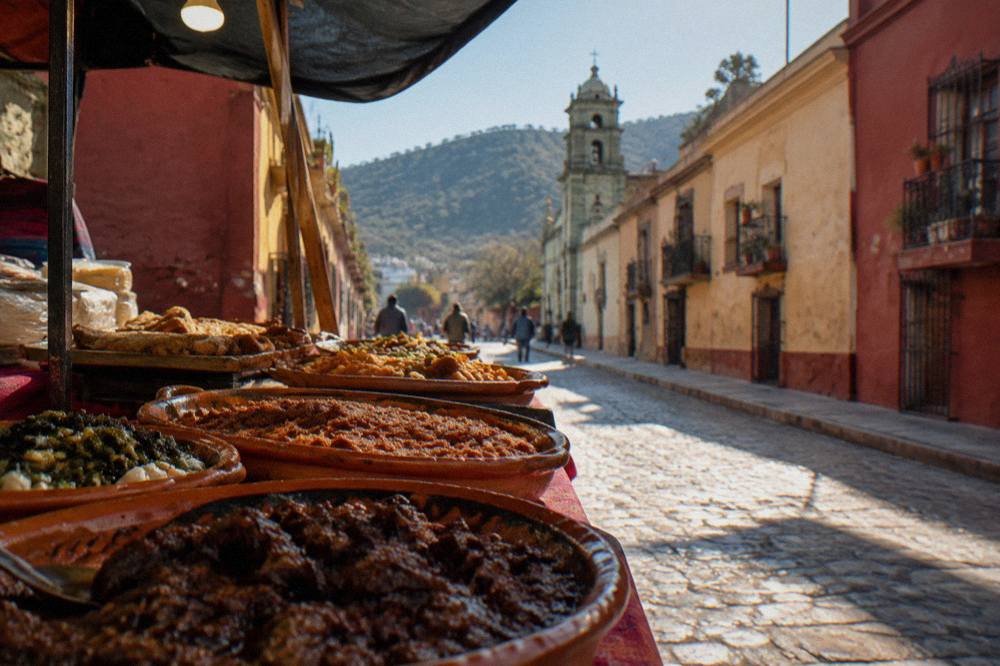
The founding years are not trivia; they mark three different cost tiers that coexist within a few kilometres. A Saturday tianguis at 20 de Noviembre, a weekday stall at Benito Juárez and a wholesale run to Abastos are three different economic acts, and the price of a meal at each is set by which of them you are standing in.
| Market | Role per state pages | Founding |
|---|---|---|
| Mercado 20 de Noviembre | Key food market, tianguis elements on Saturdays | 1893 |
| Mercado Benito Juárez | Historic central market near the Zócalo | 1894 |
| Mercado de Abastos | Wholesale market serving the capital and nearby towns | 1978 |
What Peso Costs Frame A Day In Oaxaca?
The peso figures a visitor can verify in Oaxaca are these: INAH Category I sites, including Monte Albán, Mitla and Yagul, charge 105 MXN for Mexican nationals and 210 MXN for foreign visitors; Category III sites, including Dainzú, Lambityeco and Zaachila, charge 80 and 145 MXN; the Guelaguetza's Palco A seats were 1,632 MXN in the 2026 edition; and the state lodging tax is 3 percent. Together they frame how far a peso goes in the city.
These are the anchors a planning reader can hold onto. They are admissions and taxes rather than menu lines, but they calibrate expectations: official cultural pricing in Oaxaca City sits in the low hundreds of pesos, not the thousands, and that calibration is what any serious budget estimate for meals should be measured against. The Guelaguetza Palco B seats were 1,321 MXN plus fees for the 2026 edition, with Palcos C and D free, sold through the official ticketing channel. The rest of the planning pages sit on Oaxaca Travel Guide.
| Item | Figures (MXN) | Source tier |
|---|---|---|
| Monte Albán, Mitla, Yagul entry | 105 national / 210 foreign | INAH pages |
| Dainzú, Lambityeco, Zaachila entry | 80 national / 145 foreign | INAH pages |
| Museo de las Culturas de Oaxaca entry | 105 national / 210 foreign | INAH page |
| Guelaguetza 2026 Palco A / Palco B | 1,632 / 1,321 plus fees | 2026 edition, past event |
| Feria del Mezcal entry | about 80 | Reported, 2026 edition |
| Lodging tax | 3 percent, or 5 via platforms | decree 884 |
The Feria del Mezcal figure carries attribution because this guide's fetch of the official page did not show the date and price on the page text; treat it and confirm before relying on it. The lesson for meals is the same: a peso figure is only as good as the page it sits on, and the tables above are the ones that clear that bar.
What Do Food Tours And Cooking Classes Cost In Oaxaca?
The only meal-related prices are the live prices of bookable food experiences in Oaxaca City: a markets tour with tastings, a market-and-cooking class pairing, an evening street food walk, and a small-group chocolate workshop sit in the tour list, each with its current price, rating and review count printed by its own listing.
That distinction matters. The tour list covers the full spread of eating experiences in the city, from a short markets walk with traditional tastings to a vegetarian cooking class built around a market visit, a longer traditional class, and an evening street food circuit. For readers comparing the city against other Mexican destinations, the companion answer on whether Oaxaca is expensive pulls the same discipline across the whole budget.
A guided walk is also the cheapest way to learn the food geography fast. The Culture, History and Traditions of Oaxaca City walk covers the centre with a professional local guide: Check availability. Readers who want to go deeper on where the city's eating money actually goes can follow where Anthony Bourdain ate in Oaxaca.
Cooking classes deserve a separate word because they invert the meal-cost question: instead of paying for one plate, you pay for the market run, the instruction and the meal you cooked, in one listing price. The tour list's classes include a vegetarian option with a market tour, a longer traditional class, a private mole class, and a family-recipe session, each printing its own live price. For a reader whose real question is "what will three days of eating here set me back", a class plus two market days plus one restaurant night is the structure the tour list supports best, and the answer on how many days in Oaxaca is enough maps that structure onto an itinerary.
Is Eating In Oaxaca Affordable Compared With Its Sights?
Yes, in the sense the numbers allow: the city's official cultural costs are modest in peso terms, with foreign-visitor entry to the major INAH sites at 210 MXN and the state's own festival seating at 1,632 MXN for the top tier in 2026, and nothing in the record suggests meals sit on a different order of magnitude. The market halls that anchor local eating have served the city for well over a century at resident-facing prices.
The comparison holds across the day-trip economy too. Monte Albán lies about 15 minutes from the Zócalo by the derived road distance, Tlacolula about 25 minutes and Mitla about 37, so a valley day built around eating in a market town costs the same admission logic as a city day: one Category I ticket at each INAH stop, plus whatever the meal itself runs.
What this guide cannot do is convert any of this into a per-meal figure, because the conversion would be invented. Between them, a reader planning a food budget for Oaxaca City has everything that can honestly be had.
Common Questions About Meal Costs In Oaxaca
How Much Does A Meal Cost In Oaxaca?
Meals in Oaxaca City are priced in Mexican pesos and vary by setting, from the historic market halls to restaurants around the Zócalo.
Is Oaxaca City Expensive For Food?
Where Is The Cheapest Place To Eat In Oaxaca City?
The city's food markets are the reference points: Mercado 20 de Noviembre, founded in 1893, with tianguis elements on Saturdays, and Mercado Benito Juárez, inaugurated in 1894 near the Zócalo, per the state government's pages. Official pages do not carry opening hours, so plan the visit loosely.
Do I Need Pesos For Meals In Oaxaca?
The local currency is the Mexican peso and official costs, including INAH admissions, are published in pesos. The exchange rate against the US dollar fluctuates, so no standing rate applies.
Are Food Tours In Oaxaca Worth It For Budgeting Meals?
A food tour or cooking class prices a whole eating experience in one listing figure, from a markets walk with tastings to a full cooking class with a market visit, so the cost is known before you commit. Each listing prints its own live price, rating and review count.