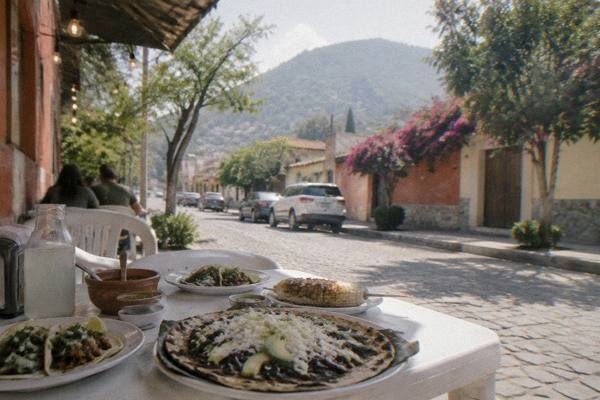
Where Did Anthony Bourdain Eat In Oaxaca?
Anthony Bourdain's Oaxaca City eating trail explained: the dishes, the markets and how to eat the same food today, with tours that cover the ground.
Anthony Bourdain filmed in Oaxaca on more than one occasion, and the through-line of every segment was the same: not one shrine restaurant but a whole eating culture, built on markets, moles, masa, chapulines and mezcal. Oaxaca City, the inland highland capital of the state of Oaxaca in Mexico, at about 1,550 m in the Valles Centrales, was where he ate and drank on camera, from the stalls of the central markets to mezcal poured in small portions. This page maps what that eating actually consisted of, dish by dish, and how a visitor today covers the same ground, because in Oaxaca the answer to "where" is less a list of addresses than a list of foods and the places that have always served them.
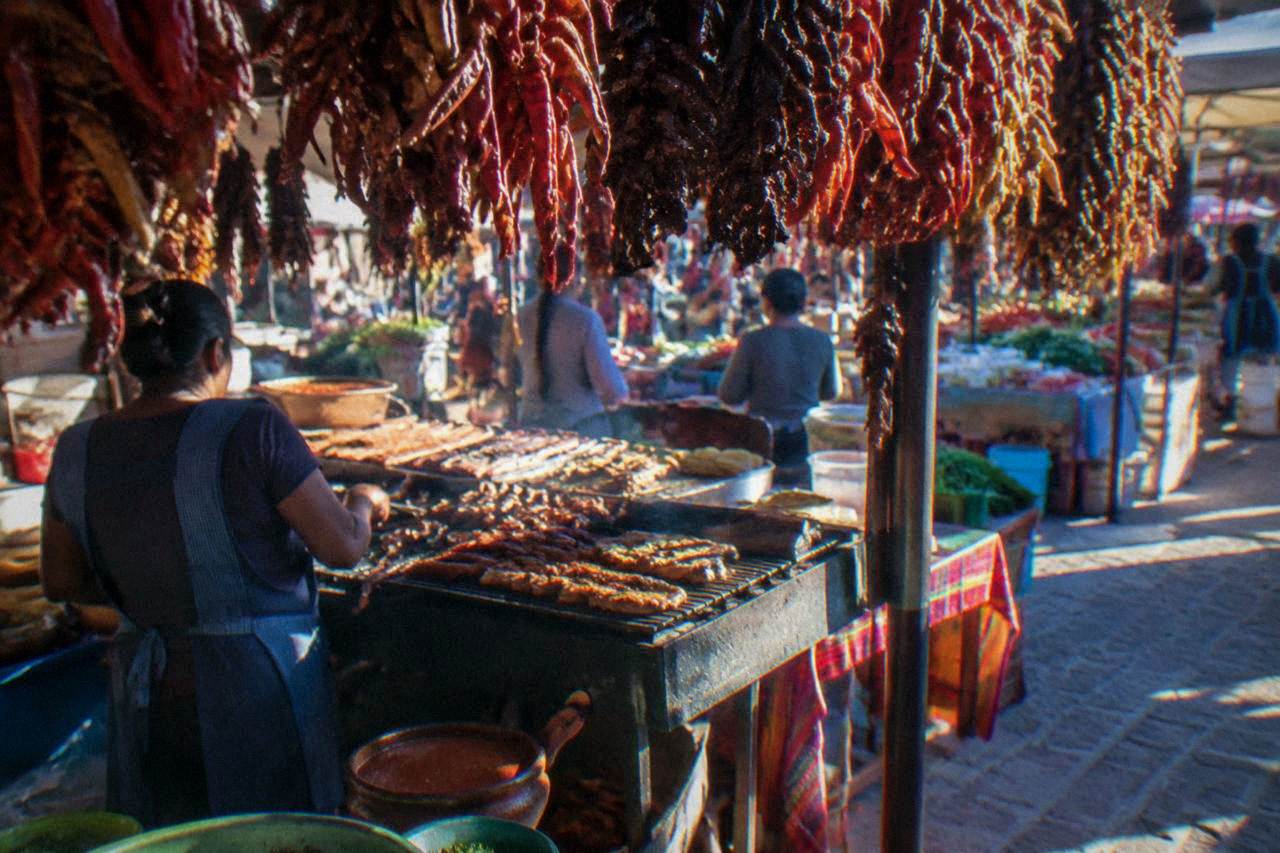
Anthony Bourdain ate his way through Oaxaca City's markets and street food rather than one single famous table, filming at Mercado 20 de Noviembre and Mercado Benito Juárez near the Zócalo, and centring the episode on Oaxacan home cooking: moles, tlayudas, quesillo, chapulines, tejate and mezcal. The markets of the historic centre, including Mercado 20 de Noviembre and Mercado Benito Juárez near the Zócalo, carried the market segments, and the region's mezcal culture filled the rest. For a traveller today the practical answer is the same: eat in the markets, eat the classic dishes, and taste mezcal where it is poured with explanation rather than as a party shot.
The reason the question keeps its pull is that Bourdain treated Oaxaca as a food destination in its own right, one of the places he returned to by choice. He was not hunting a chef's tasting menu. He sat where the cooking was plain, local and continuous with what people eat at home, and in Oaxaca that means the comedores inside the markets, the evening street grills, and the valley towns where the ingredients themselves come from.
What follows is the food, place by place and dish by dish, in the order a visitor can realistically eat it. Nothing here needs a reservation, and most of it needs nothing but an appetite and small denominations of pesos.
What Dishes Did Bourdain Put On The Map In Oaxaca?
Bourdain put mole, served over chicken or enchiladas, on the map, along with tlayudas, the large crisp tortillas spread with asiento, beans, quesillo and meat, plus chapulines, toasted grasshoppers eaten as a snack or taco filling, quesillo, tejate, Oaxacan chocolate and mezcal, with regional bread and salsas around them. Mole is the signature Oaxacan sauce family, served over chicken or enchiladas; tlayuda is the large crisp tortilla spread with asiento, beans, quesillo and meat; chapulines are toasted grasshoppers eaten as a snack or taco filling; tejate is a cold maize-and-cacao drink; and mezcal is the agave spirit the state is known for.
| Dish or drink | What it is | Where to eat it in Oaxaca City |
|---|---|---|
| Mole | Sauce family served over chicken or enchiladas | Market comedores, especially Mercado 20 de Noviembre |
| Tlayuda | Large crisp tortilla with beans, quesillo and meat | Evening street grills and market stalls |
| Chapulines | Toasted grasshoppers with chilli and lime | Market stalls and street vendors near the Zócalo |
| Tejate | Cold maize and cacao drink | Market drink stalls |
| Quesillo | String cheese, folded into tlayudas and quesadillas | Markets and street grills |
| Mezcal | Agave spirit, sipped in small portions | Tasting rooms and distillery visits |
These are not novelty items staged for television. They are the everyday food of the city, which is exactly why the segments aged well. A visitor who orders a tlayuda from an evening grill and a plate of mole in a market comedor is eating in the same idiom the cameras found.
The mezcal part of the story deserves its own trip out of the city, because the spirit comes from the valley and Sierra regions where agave grows and palenques work. Santiago Matatlán is repeatedly described on state government pages as the world capital of mezcal, and a countryside tasting visit is covered on the mezcal route from Oaxaca.
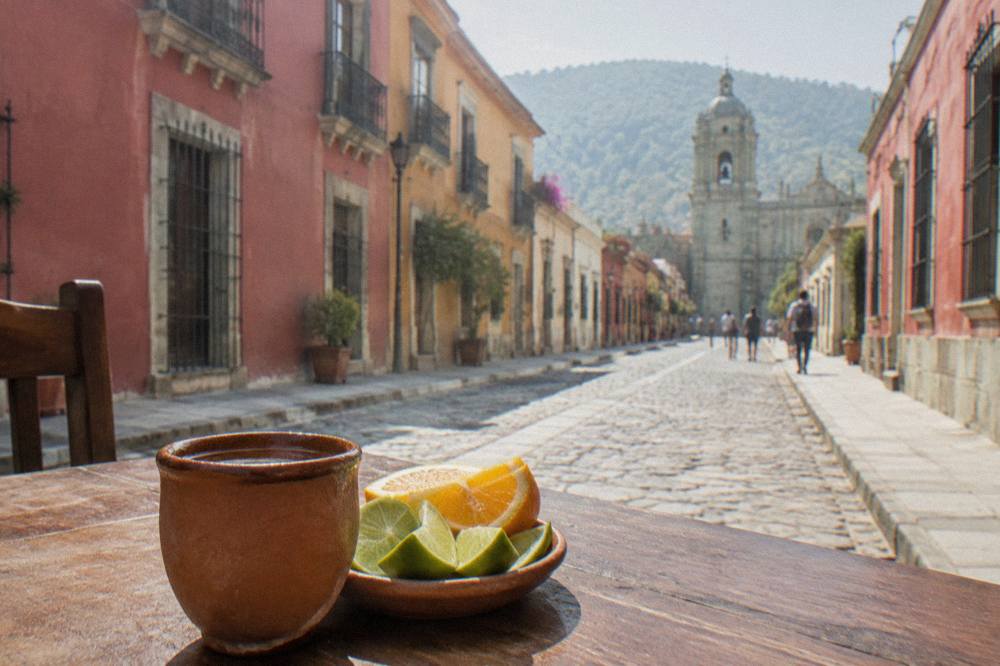
Which Oaxaca Markets Should You Eat In?
The two markets to eat in are Mercado 20 de Noviembre, the food market a block from the Zócalo where the smoke-filled meat hall and mole comedores sit, and Mercado Benito Juárez, the historic central market beside it for snacks, chapulines, tejate and ingredients. Both are within a short walk of the Andador Macedonio Alcalá, so a single afternoon can cover a drink of tejate in one and a full mole plate in the other.
The Zócalo itself, the Plaza de la Constitución, anchors all of this: it is the square from which the whole eating district spreads. The walk from there through the Andador to Santo Domingo de Guzmán passes the front doors of both markets, and it is the standard first-day route for anyone eating their way through the centre. The full picture of the city's layout and dining streets is in the guide to what to eat in Oaxaca.
Beyond the centre, the weekly valley markets are where the region's food system shows itself. Tlacolula holds its famous weekly tianguis, and the villages of the Tlacolula valley supply much of what the city's stalls sell. The Tlacolula Sunday market guide covers how to reach it and what to eat there, and it makes a strong pairing with a visit to the tlayuda stalls of Oaxaca, since the dish travels from the valley to the city grill every day.
Can You Still Eat The Bourdain Menu Today?
Yes, and without special access: every dish from those segments is standard daily food in Oaxaca City, from the market mole comedores at lunch to the evening tlayuda grills, with chapulines and tejate sold in the central markets all week. Nothing on the list is a heritage revival or a tourist reconstruction. The food is continuous, and the main decision a visitor faces is how much of it to organise alone versus with a guide who knows which stall does what best.
Eating it solo works well for confident travellers. The markets are compact, Spanish menus are short, and pointing works. The advantage of a guided walk is coverage: an evening tour that strings together more than a dozen tastings hits the street-food layer of the menu, the grills and stalls that only appear at night, in one pass. The evening walk is described on the site's own tour page, and you can Check availability alongside the internal write-up.
For the deeper layers, a cooking class covers mole and masa from the ingredient up, usually with a market visit built in, and the site's roundup of cooking classes in Oaxaca compares the options. A class answers the question the television segments could only gesture at: what actually goes into a mole, and how much of a day it takes.
How Does Mezcal Fit Into The Bourdain Oaxaca Story?
Mezcal was the drink half of the story, sipped in small portions with orange and sal de gusano, and in Oaxaca it is tasted either in the city's tasting rooms or out in the valley at the palenques and agave fields where it is made. Bourdain's segments treated it with the seriousness the spirit carries locally, as something to be understood, not downed, and that framing changed how international visitors drink it.
The practical versions of that today run from a short tasting in the centre to a full day in the countryside among the agave. The state's mezcal identity is real and administrative as well as cultural: the drink has protected-origin status, and Santiago Matatlán is described on oaxaca.gob.mx pages as the world capital of mezcal. A countryside tasting day covers the fields, the ovens and the tasting in one loop, and it pairs naturally with the valley's food towns. Everything else covered here is indexed on Oaxaca Travel Guide.
Travellers weighing the whole trip should read is Oaxaca worth visiting and what is Oaxaca famous for for the wider picture, since the food is one pillar of a city also known for Monte Albán and its festivals. How long to give it is answered in how many days in Oaxaca is enough; a serious eater should budget at least one day for the markets and one for the valley.
What Is The Best Way To Follow The Trail Without A Car?
The best way is a mix: walk the central markets on foot from any hotel in the historic centre, take a guided food or mezcal tour for the layers that need explanation, and leave the valley trips to organised day tours or colectivos, since everything edible inside the city is within walking distance. Oaxaca City is compact around the Zócalo, and the eating district is flat and pedestrian-friendly, which is why the question of whether Oaxaca is walkable usually answers itself on the first day.
For the valley, the arithmetic changes. Mitla, Hierve el Agua and the craft towns sit 25 to 60 minutes away by road, and a day tour that strings together the ruins, a mezcal stop and a market beats self-driving for a first visit. The planning questions, including whether a car helps at all, are covered in the best way to get around Oaxaca.
Common Questions About Bourdain's Oaxaca
Where Did Anthony Bourdain Eat In Oaxaca?
He ate through Oaxaca City's markets and street food, centring the visit on mole, tlayudas, quesillo, chapulines, tejate and mezcal rather than a single restaurant, with market comedores like those of Mercado 20 de Noviembre and the city's mezcal culture carrying the segments.
Can You Eat The Same Food In Oaxaca Today?
Yes. Every dish in those segments is everyday food: mole in the market comedores, tlayudas from evening grills, chapulines and tejate in the central markets, and mezcal in the city's tasting rooms or the valley's palenques.
Is Oaxaca City Good For Eating Without Spanish?
Yes. The menus are short, the dishes are visible at the stall, and pointing works in the markets. A guided food walk covers more ground and removes the language question entirely for the first evening.
Which Markets Are Best For Eating In Oaxaca City?
Mercado 20 de Noviembre for the cooked food and meat hall, and Mercado Benito Juárez beside it for chapulines, tejate and ingredients. Both sit a block from the Zócalo in the historic centre.
Do You Need A Tour To Eat Well In Oaxaca?
No, but a tour compresses the search. An evening street food walk covers more than a dozen tastings in one pass, and a mezcal day out reaches the agave fields and palenques that are hard to arrange alone.
The short version of the whole trail: start at the Zócalo, eat the markets at lunch, walk the Andador Macedonio Alcalá toward Santo Domingo de Guzmán, hit the evening grills for a tlayuda, and give one day of the trip to the valley for mezcal where it is made. That is the eating map the cameras found, and it is still open every day.