Why Is Oaxaca Different From The Rest Of Mexico?
Oaxaca City stands apart from the rest of Mexico through its indigenous-majority state, its Valles Centrales geography, its food and mezcal traditions, and its festival calendar. Here is what the sources actually say.
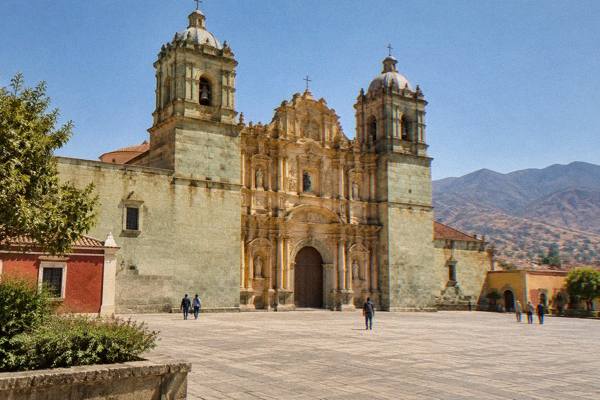
Oaxaca de Juárez is the capital of the state of Oaxaca, an inland highland city in the Valles Centrales at about 1,550 m, and the state around it is unlike any other in Mexico. The municipality counted 270,955 inhabitants at the 2020 census while the state held 4,132,148, and the city's historic core is inscribed by UNESCO together with Monte Albán as the "Historic Centre of Oaxaca and Archaeological Site of Monte Albán", property 415. Oaxaca de Juárez was founded in 1529 as Antequera. What follows is what primary sources say about the ways this city and its state diverge from the national pattern, from geography and climate to food, festivals and visitor numbers.
Oaxaca differs from the rest of Mexico in four measurable ways: it is the capital of a state with one of the country's largest indigenous populations, it sits in high inland valleys rather than on a coast, its cooking and mezcal traditions are recognised far beyond their region, and its festival calendar, from Guelaguetza to Día de Muertos, draws visitors at a scale recorded in official arrival figures. Each of these has a source behind it, and this page works through them one at a time, starting with the state and its people.
The state of Oaxaca reported 4,132,148 inhabitants at the Censo 2020, and the city itself 270,955. In 2025 the city recorded 1,324,332 tourist arrivals, of which 1,111,799 were national and 212,533 foreign, with hotel occupancy at 51.73 percent and an average stay of 2.00 nights. Those figures come from the state tourism indicators published by Sectur Oaxaca. A city of that size carrying that visitor load, without a beach or a port anywhere in the municipality, is the first structural difference from Mexico's coastal resort towns. For a broader look at the city's pull, see is Oaxaca worth visiting, and for the state-versus-city confusion the name creates, is Oaxaca a state or a city.
One naming trap worth clearing up: the city is officially Oaxaca de Juárez, and the state shares the shorter name. Guides, bus tickets and flight bookings use both, so check which one a listing means before you book anything.
What Makes The Geography And Climate Of Oaxaca Different?
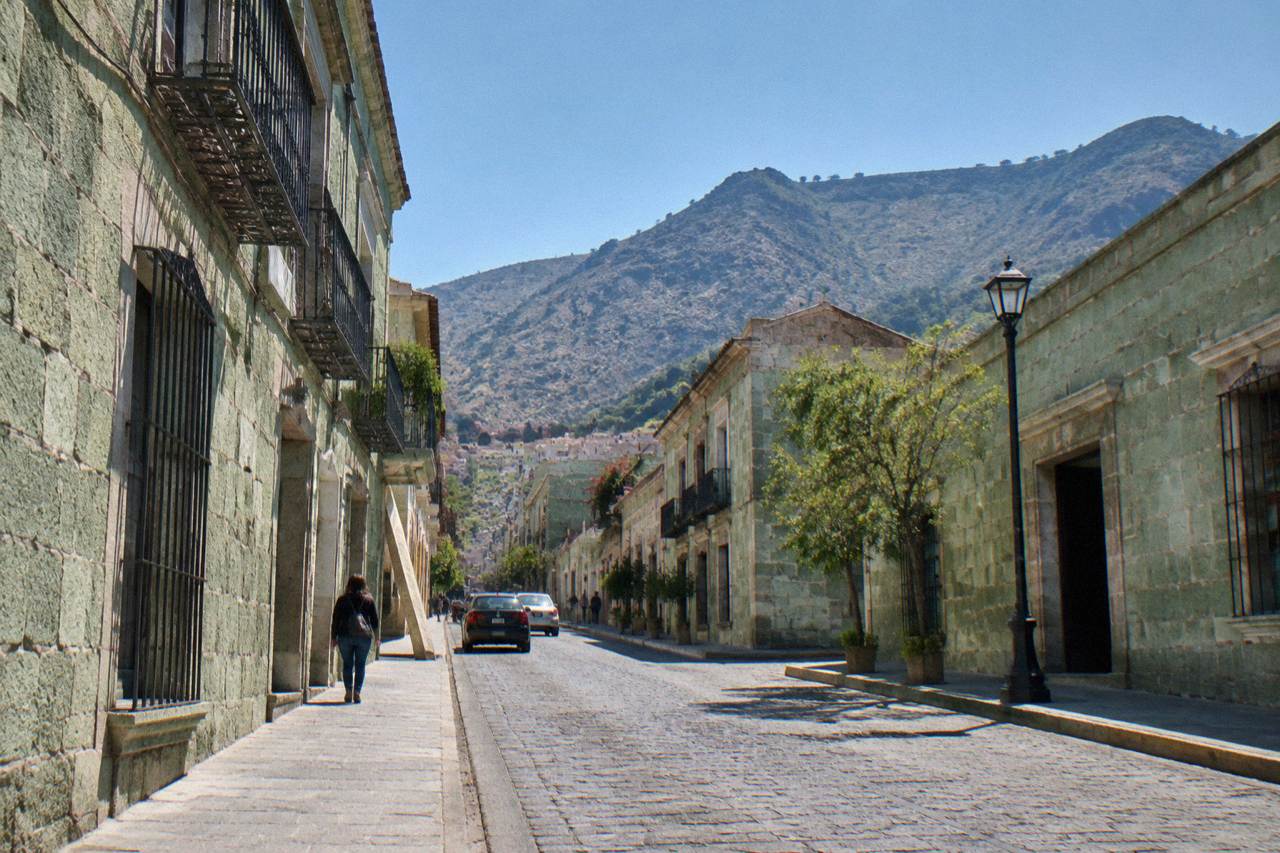
Oaxaca City is an inland highland city in the Valles Centrales at about 1,550 m, with a dry season from November to April and a rainy season from May to October, and no sea, port or beach anywhere in the city; the Pacific coast at Puerto Escondido is a far extension about 165 minutes away by the new highway, not a local trip. The SMN station normals for the city, covering 1991 to 2020, put June rainfall at 188.3 mm against January's 2.4 mm, and April's mean daily high at 34.9 C against January's mean daily low of 10.3 C. Annual rainfall totals 853.3 mm.
That altitude-and-valley combination produces a climate with no winter snow and no hurricane-season exposure of the kind the country's coasts carry. The same SMN table records 21.4 days of rain in September and 1.1 in February, which is why the rainy months feel green rather than grey: rain falls in a defined season and the dry months are genuinely dry. Mexico abolished daylight saving in 2022, so the city sits at UTC-6 all year, like the rest of the country's central zone. Other pages covering the same trip are gathered on Oaxaca Travel Guide.
| Month | Mean high C | Mean low C | Rain mm |
|---|---|---|---|
| Jan | 28.9 | 10.3 | 2.4 |
| Apr | 34.9 | 15.8 | 47.3 |
| Jun | 30.9 | 16.7 | 188.3 |
| Sep | 29.1 | 16.1 | 163.6 |
| Dec | 28.9 | 11.0 | 9.0 |
The figures above are station normals from the Mexican weather service, 1991 to 2020, and they describe the Valles Centrales rather than the state as a whole: the Sierra Norte and the Pacific coast have their own conditions.
How Do Oaxaca's Archaeological Sites Differ From Mexico's Others?
Oaxaca's INAH archaeological zones charge by category, with Monte Albán, Mitla and Yagul in Category I at 105 MXN for nationals and 210 MXN for foreigners, and Dainzú, Lambityeco and Zaachila in Category III at 80 and 145 MXN, a fee structure tied to individual sites rather than applied nationwide. Monte Albán recorded 416,675 visitors in 2025, Mitla 104,428, Yagul 10,185, Lambityeco 5,545 and Zaachila 4,229, per the Sectur indicators. Monte Albán is open Monday to Sunday 08:00 to 17:00 with last access at 16:00, while Zaachila opens Thursday to Sunday only, 10:00 to 16:00.
The visiting hours differ site by site and this is where a little planning pays. Atzompa closes at 16:00 with last access at 15:00, an hour earlier than Monte Albán. Mitla allows entry until 16:30. These schedules come from the INAH pages for each zone, and moving one site's hours onto another is the commonest planning error in the valley. A guided ruins walk such as the Monte Albán half day tour handles the timing for you; readers weighing the trip can start with is Monte Albán worth it.
| Site | INAH category | Nationals MXN | Foreigners MXN | Last access |
|---|---|---|---|---|
| Monte Albán | I | 105 | 210 | 16:00 |
| Mitla | I | 105 | 210 | 16:30 |
| Yagul | I | 105 | 210 | 16:00 |
| Dainzú | III | 80 | 145 | 16:30 |
| Lambityeco | III | 80 | 145 | 16:30 |
| Zaachila | III | 80 | 145 | 16:00 |
Zaachila's Thursday-to-Sunday window deserves a second look when you build an itinerary, because it does not match the other five sites in the table.
Want a walk that covers the city side of this history in a single outing? The Check availability link shows the operator's booking page for the culture and history walk through the historic centre.
Why Is Oaxacan Food Considered Different From Other Mexican Food?
Oaxacan cooking is built around a set of named local products, mole, tlayuda, mezcal, tejate, chapulines and quesillo, that carry regional identities of their own, and Santiago Matatlán is repeatedly described in state government material as the "Capital Mundial del Mezcal", a claim no other Mexican region makes. The state's own tourism and government pages frame the markets as keepers of that identity: Mercado 20 de Noviembre dates to 1893 and Mercado Benito Juárez to 1894, both sitting near the Zócalo in the historic centre. What the city's food scene offers is documented in what food is Oaxaca famous for.
Mezcal is the clearest single example of the difference. Government releases for the Feria del Mezcal describe an eleven-day fair at the Centro Cultural y de Convenciones in Santa Lucía del Camino with hundreds of stands, held as part of the Guelaguetza month each July, with entry reported at about 80 MXN. No other Mexican state festival centres a spirit the way this one does. Quesillo, the string cheese that travels under the name "Oaxaca cheese" across the country, and Oaxacan chocolate round out a short list of products the region has exported into national kitchens while keeping their local production intact, as covered in what is Oaxaca famous for.
A market-and-tasting walk is the efficient way to meet these foods in one morning, since the two historic markets sit a few blocks apart.
How Do Oaxaca's Festivals Differ From Festivals Elsewhere In Mexico?
Oaxaca's festival calendar is anchored by Guelaguetza, two Mondays in July at the Auditorio Guelaguetza on the Cerro del Fortín, and by Día de Muertos, which traditionally centres on 31 October to 2 November, and the 2026 Guelaguetza edition sold Palco A seats at 1,632 MXN and Palco B at 1,321 MXN while Palcos C and D remained free. State releases describe the whole of July as "mes de la Guelaguetza", with more than 140 activities in the programme, calendas on 18 and 25 July and convites on 1, 10 and 11 July in the 2026 edition. Noche de Rábanos keeps its standing date of 23 December.
The differences from the national pattern are structural, not just stylistic. Guelaguetza is a ticketed state production with a fixed venue and a published seat-price ladder, distributed through a single official ticket seller with a two-ticket-per-account limit to prevent resale, per the state announcements. Día de Muertos in the city adds cemetery visits at Xoxocotlán and neighbourhood celebrations in Jalatlaco to the standing pattern; the 2026 programme has not been announced, so plan around the traditional dates rather than a published schedule. Visitors sizing up a trip can compare notes in what is the best month to go to Oaxaca.
Is Oaxaca More Indigenous Than The Rest Of Mexico?
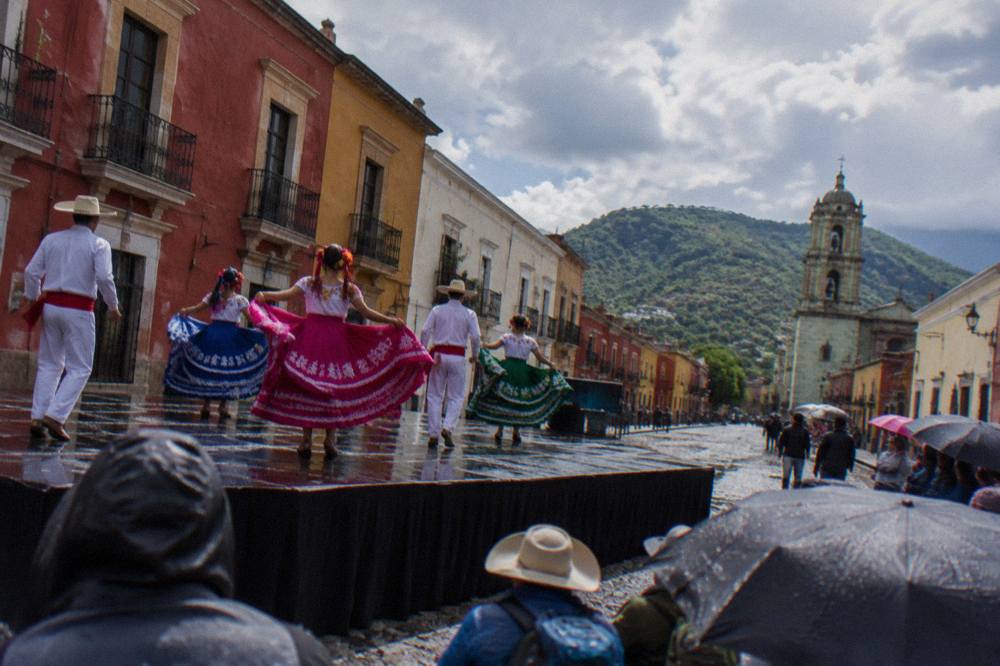
Oaxaca is one of Mexico's states with a large indigenous population, and that composition is the background the sources give for the state's many living languages, regional dress at events like Guelaguetza, and village-based craft traditions in places like Teotitlán del Valle, San Martín Tilcajete and San Bartolo Coyotepec. The 2020 census counted 4,132,148 people in the state, and the state's own tourism material presents the Valles Centrales as a network of communities with distinct crafts rather than a single homogenous region. That village structure is why a day out of the city can move between weaving, alebrije painting and black pottery in one loop.
The craft villages each sit within an hour of the Zócalo by road: Teotitlán del Valle about 26 minutes, Ocotlán about 37, and the state guide on this site covers the pattern in depth. What the sources support is the structure, communities identified with specific crafts, rather than any claim about how those crafts are made, which the published material here does not detail. The practical payoff for a visitor is that the valley's craft economy is visitable in a way a metropolitan crafts scene is not.
Is Oaxaca Safer Or Cheaper Than The Rest Of Mexico?
The published advisories treat Oaxaca state differently from several Mexican states: the US State Department lists it at Level 2, exercise increased caution, reported with no restrictions for US government staff in Oaxaca City, Monte Albán, Puerto Escondido or Huatulco, while the UK FCDO does not name Oaxaca among the areas it advises against, and Canada advises a high degree of caution for Mexico overall without singling the state out. Road blockades by teachers' unions are a standing risk that can disrupt road and airport access in the region, so build a little slack into arrival and departure days.
On cost, the state lodging tax runs at 3 percent on hotel-type stays, 5 percent for intermediaries, under the state fiscal law updated in December 2025. Local costs such as INAH tickets are charged in pesos, 105 or 210 MXN at the Category I sites, while bookable tours and tastings are priced in the operators' listings. Budget questions are handled in full on is Oaxaca expensive and safety ones on is Oaxaca safe for Americans right now.
Common Questions About Why Oaxaca Is Different
Why Is Oaxaca Different From The Rest Of Mexico?
Its inland valley geography, its state's large indigenous population, its named food and mezcal traditions, and its festival calendar set it apart, and each of these is documented in census data, UNESCO's listing for the Historic Centre of Oaxaca and Archaeological Site of Monte Albán, and state tourism indicators.
Is Oaxaca A City Or A State?
Both: Oaxaca de Juárez is the capital city of the state of Oaxaca. The municipality counted 270,955 inhabitants at the 2020 census and the state 4,132,148.
Does Oaxaca Have Beaches?
Not in the city. Oaxaca City sits inland in the Valles Centrales at about 1,550 m. The Pacific coast at Puerto Escondido is a far extension, about 165 minutes away by the new highway.
What Food Is Oaxaca Known For?
Mole, tlayuda, mezcal, tejate, chapulines, quesillo and Oaxacan chocolate, sold through historic markets including Mercado 20 de Noviembre, which dates to 1893.
What Language Zone Is Oaxaca In?
The city keeps UTC-6 all year under the America/Mexico City time zone, because Mexico abolished daylight saving in 2022.
Taken together, the sources describe a capital whose differences from the rest of Mexico are countable: two INAH fee categories across its valley sites, a dry season that runs November to April, a July festival with a published seat-price ladder, and a food vocabulary the whole country has borrowed. Reading the full Oaxaca Travel Guide coverage of the valley's sites and markets is the next step for turning that into an itinerary.