What Is The Rainiest Month In Oaxaca?
June receives more rain than any other month in Oaxaca City, with 188.3 mm in the SMN 1991-2020 normals. Here is the full monthly breakdown and what it means for a visit.
Oaxaca City, the inland capital of the state of Oaxaca in Mexico, sits in the Valles Centrales at about 1,550 m, and its climate splits cleanly in two: a dry season from November to April and a rainy season from May to October. The question travellers ask most is which single month brings the most rain. The answer is June. The SMN station normals for station 20079 in the city, covering 1991 to 2020, put June at 188.3 mm of rain, ahead of September at 163.6 mm and August at 131.8 mm. This page gives the full month-by-month breakdown, explains what the rainy season actually feels like hour by hour, and looks at what rain does and does not change for a visit. For the wider picture, the companion guide at Oaxaca Travel Guide covers the whole destination.
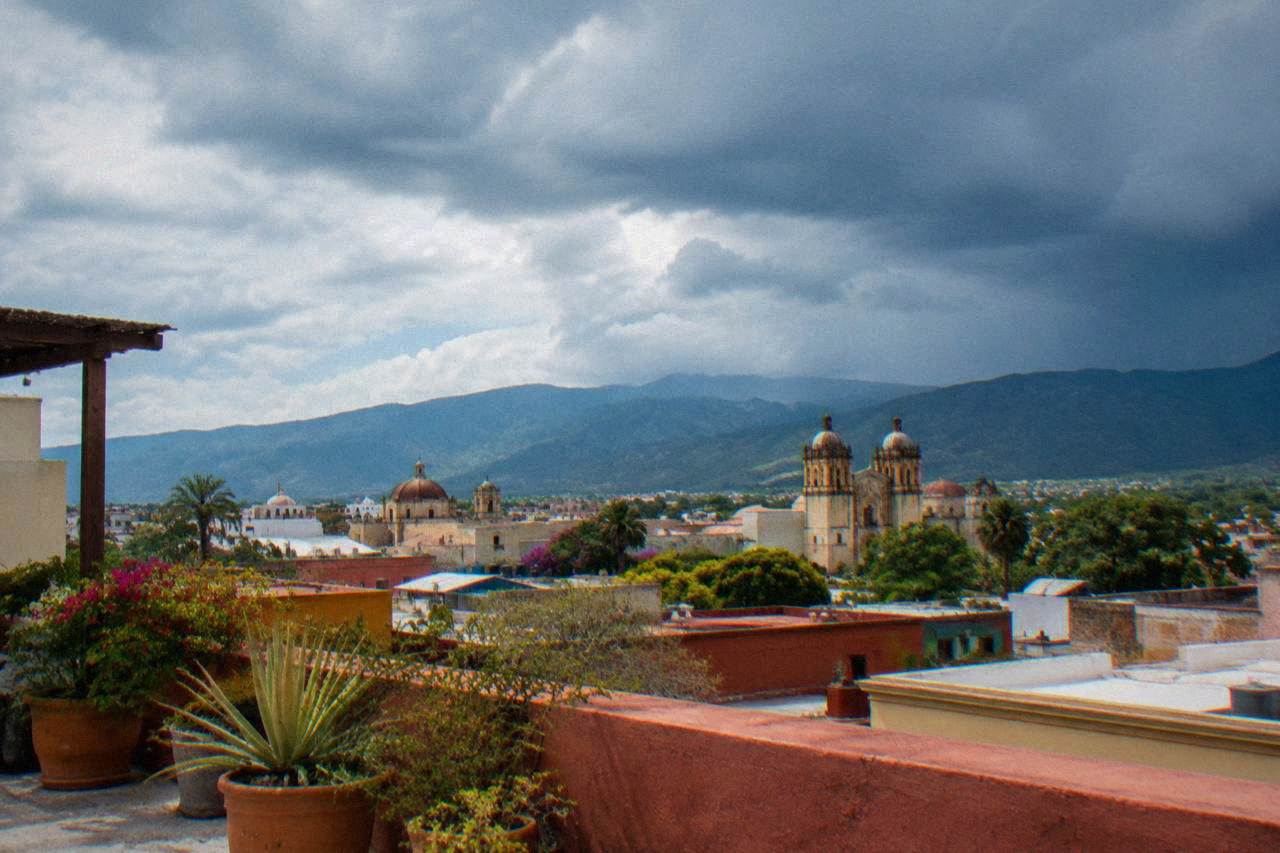
June is the month with the highest rain total in Oaxaca City, averaging 188.3 mm across the 1991 to 2020 station normals, with rain on 19.9 days of the month. September follows at 163.6 mm, then August at 131.8 mm, and the rainy season as a whole runs from May to October with its heaviest falls between June and September.
Those figures come from the SMN climatological normals for station 20079, the weather station in Oaxaca City itself, measured over the 30-year window from 1991 to 2020. The normals are averages, so any individual June can land above or below 188.3 mm. What the 30-year record shows is a clear pattern rather than a coin flip: the four months from June to September each average more than 118 mm, while no month from November to April averages more than 47.3 mm.
The count of rainy days tells the same story from a different angle. June averages 19.9 days with rain, July 20.4, August 20.5 and September 21.4. So September is actually the month with the most rainy days, while June is the month with the highest total volume. January, at the other extreme, averages 1.4 days with rain and 2.4 mm in total. If a traveller wants a single name for the month with the most rain by volume, the station normals give it to June.
How Much Rain Does Each Month Bring To Oaxaca City?
The monthly normals range from 2.4 mm in January to 188.3 mm in June, with an annual total of 853.3 mm. After June the totals step down through September's 163.6 mm, August's 131.8 mm and July's 118.6 mm, then fall away quickly: October averages 63.1 mm and November just 9.1 mm.
Here is the full table from the SMN station 20079 normals, 1991 to 2020, with mean daily high and low temperatures alongside the rain figures.
| Month | Rain (mm) | Days with rain | Mean high (C) | Mean low (C) |
|---|---|---|---|---|
| Jan | 2.4 | 1.4 | 28.9 | 10.3 |
| Feb | 4.6 | 1.1 | 31.1 | 11.6 |
| Mar | 17.6 | 4.1 | 33.3 | 13.6 |
| Apr | 47.3 | 7.6 | 34.9 | 15.8 |
| May | 97.9 | 13.7 | 33.8 | 16.7 |
| Jun | 188.3 | 19.9 | 30.9 | 16.7 |
| Jul | 118.6 | 20.4 | 30.1 | 15.9 |
| Aug | 131.8 | 20.5 | 30.0 | 15.9 |
| Sep | 163.6 | 21.4 | 29.1 | 16.1 |
| Oct | 63.1 | 12.0 | 29.3 | 14.5 |
| Nov | 9.1 | 3.5 | 29.0 | 12.3 |
| Dec | 9.0 | 2.4 | 28.9 | 11.0 |
Two things stand out. First, the jump between May and June is steep: rain nearly doubles from 97.9 mm to 188.3 mm in a single month. Second, the rain does not track the heat. April has the highest mean daily high at 34.9 C, yet it averages only 47.3 mm of rain, while the June to September months are cooler on average than April and far wetter. The dry months also bring the coolest nights: December averages a low of 11.0 C and January 10.3 C, so a dry-season visit means warm afternoons and genuinely cool evenings at this altitude.
The month-by-month detail, including what each month means for planning, is expanded in the Oaxaca Weather By Month guide, and the broader question of when to travel is covered in What Is The Best Month To Go To Oaxaca?.
What Does Rainy Season Rain Actually Look Like In Oaxaca?
The station normals give monthly totals, not hourly patterns, so no source on this page can promise showers arrive only in the afternoon. What the data does show is that even in June, rain falls on roughly 20 days of about 30, meaning several days each month stay dry, and monthly totals stay high because individual falls are heavy rather than constant.
That distinction matters for planning. A month averaging 188.3 mm spread across 19.9 rainy days works out to a little over 9 mm per rainy day on average, and convective highland rain often arrives in concentrated bursts rather than all-day drizzle. The normals cannot say at what hour the rain starts on a given day, and nothing on this page will claim it always comes at 16:00. Travellers consistently report afternoon and evening storms in the rainy season, but that is a pattern to plan around loosely, not a timetable.
The landscape responds directly to these figures. The hills around the city, the valleys toward Teotitlán del Valle and Tlacolula, and the mountain roads toward Hierve el Agua and the Sierra Norte turn green between June and September. Temperatures stay mild by the same mechanism: mean daily highs in the rainy months run 29.1 to 30.9 C, a few degrees below April's 34.9 C, and mean lows hold near 16 C.
Humidity and cloud are the trade for the green. The dry season gives the reliably blue skies the region is known for, at the cost of dust and the year's highest afternoon temperatures in March and April. Both seasons deliver pleasant mornings. For anyone weighing the trade-offs in more depth, Is Oaxaca Worth Visiting? works through what the city offers outside the weather question.
Does Rain Disrupt Tours And Day Trips In Oaxaca?
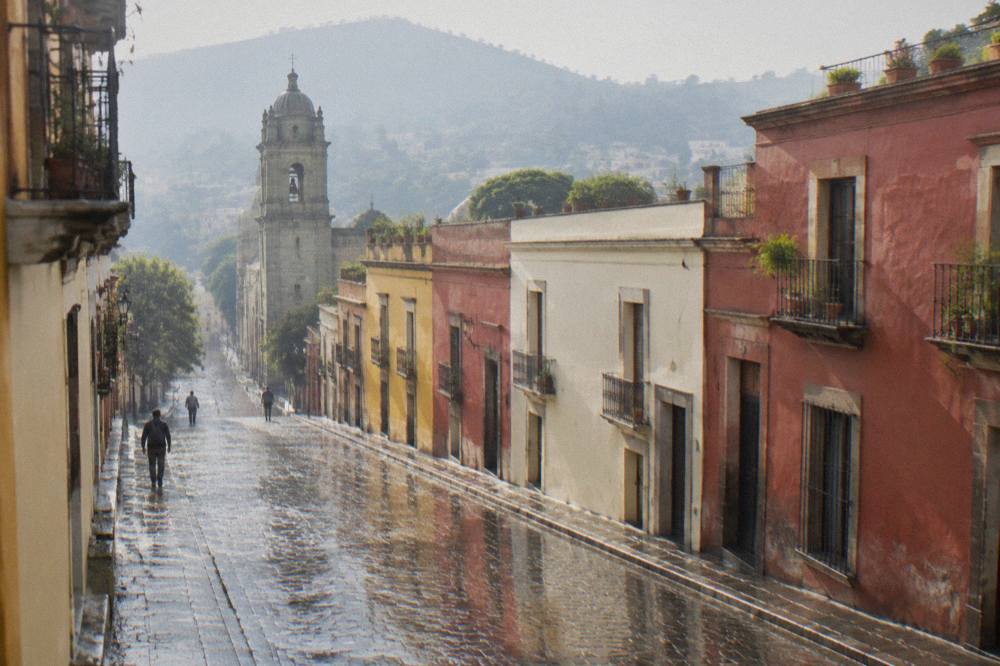
Rain rarely closes anything in Oaxaca City: the archaeological zones keep their published hours year-round, Monte Albán runs Monday to Sunday 08:00 to 17:00 with last access at 16:00 regardless of season, and market and museum schedules are not suspended for the rainy months. The real effects are on mountain roads and on comfort, not on opening hours.
Monte Albán, Mitla and Yagul all publish daily 08:00 to 17:00 hours, and the INAH pages attach no seasonal closure to them. The same holds for the city's indoor sights: the Museo de las Culturas de Oaxaca keeps its Tuesday to Saturday schedule, and the Jardín Etnobotánico runs its free guided tours Monday to Friday at 10:30, 11:00, 11:30, 12:00 and 17:00, and Saturday mornings from 10:30, in every month of the year. A rainy-season day in the city can still be filled from morning to evening.
Day trips are where the season earns its caution. Hierve el Agua lies about 57 minutes' free-flow drive from the Zócalo, and the last stretch is mountain road; heavy rain can make it slow, and real traffic and wet roads add time beyond any figure. The Sierra Norte villages are a far longer drive, about 142 minutes to Latuvi under free-flow conditions, and mountain weather deserves respect on those routes at any time of year. None of this means cancel: it means checking conditions on the day and leaving more time than the dry-season estimate.
City-based products handle rain well because the centre is compact and walkable, with markets, museums, chocolate shops and mezcal tasting rooms all within a short radius. A guided walk such as the Oaxaca Walking Tour, which covers culture and food across the centre, slots easily into a rainy-season morning, and you can Check availability on the operator's booking page. The same logic applies to Monte Albán, whose half-day guided format fits the typically drier morning window.
Planning around weather rather than against it is covered from the itinerary side in What Not To Miss In Oaxaca.
When Is The Dry Season And How Dry Is It?
The dry season runs from November to April, and the normals show November through March all under 20 mm per month: November 9.1 mm, December 9.0 mm, January 2.4 mm, February 4.6 mm and March 17.6 mm. April rises to 47.3 mm as the transition month, and May at 97.9 mm opens the rainy season proper.
| Season | Months | Rain range (mm/month) | Character |
|---|---|---|---|
| Dry | Nov to Apr | 2.4 to 47.3 | Long dry spells, dustier, blue skies |
| Rainy | May to Oct | 63.1 to 188.3 | Green landscapes, heavier falls, mild afternoons |
January is the month with the lowest total, 2.4 mm on 1.4 rainy days, and February follows at 4.6 mm on 1.1 days. In those months a full week without rain is the norm rather than the exception. The cost is atmospheric rather than thermal: the dry months include the year's highest afternoon temperatures, with April at 34.9 C, and the coolest nights, with December and January averaging lows of 11.0 and 10.3 C. Layers matter more in the dry season than an umbrella does.
The shoulder months reward attention. October's 63.1 mm is a steep drop from September's 163.6 mm, and November at 9.1 mm is effectively dry, yet the landscape still carries the green of the rains. Late October and early November are also when Día de Muertos fills the city, and the festival's standing pattern centres on 31 October to 2 November with weeks of related activity around it; the state's full programme for any given year is announced closer to the date, and the wider calendar is summarised in the Oaxaca Events And Festivals guide.
What Should You Pack For Oaxaca's Rainiest Months?
For June through September, pack a compact rain jacket or umbrella, shoes with grip for wet cobblestones and a light layer for evenings near 16 C, because rain in Oaxaca City arrives as heavy falls rather than cold drizzle and daytime highs still average 29.1 to 30.9 C in those months. The dry pair of shoes matters as much as the jacket.
Cobblestones in the historic centre become slick quickly, and the city's steep side streets channel water downhill after a burst. A dry bag or a simple zip pocket protects phones and documents on walking days. Nothing warm-weather needs replacing: the rainy months are not cold, and the same clothes that work in April work in July once a shell layer is added.
Two practical notes round it out. First, altitude: at about 1,550 m the sun is strong even under scattered cloud, and rain clouds can break into clear skies within an hour. Second, blockades: road blockades by teachers' unions are a standing risk in Oaxaca that can disrupt road and airport access at any time of year, unrelated to weather, so a buffer day before a flight is sound practice whenever it is possible. Weather-specific packing lists and altitude effects are covered elsewhere on the site; this page's brief is the rain.
Rain, in the end, is a scheduling input, not a verdict on the trip. June leads the normals at 188.3 mm, September carries the most rainy days at 21.4, and from November the city dries out almost completely. Choose the season that matches what the visit is for, then plan the days around it.
Common Questions About Rain In Oaxaca
What Is The Rainiest Month In Oaxaca?
June, with an average of 188.3 mm of rain in the SMN station 20079 normals for 1991 to 2020. September has the most rainy days, 21.4 on average, but a lower total of 163.6 mm.
Does It Rain All Day In Oaxaca During The Rainy Season?
No month averages rain on every day. June averages 19.9 rainy days and September 21.4, so several days in each month stay dry, and the monthly totals reflect heavy falls rather than continuous rain.
Which Month Has The Least Rain In Oaxaca City?
January, with 2.4 mm of rain on 1.4 days in the normals, closely followed by February at 4.6 mm on 1.1 days. November and December also average under 10 mm each.
Is Oaxaca's Rainy Season A Bad Time To Visit?
Not inherently. The rainy months bring the greenest landscapes and mean highs of 29.1 to 30.9 C, cooler than April's 34.9 C. The trade is heavy rain on roughly two days in three in the peak months, and slower conditions on mountain roads such as the route to Hierve el Agua.
Does Rain Ever Close Monte Albán Or The Other Sites?
The INAH pages list Monte Albán, Mitla and Yagul at Monday to Sunday 08:00 to 17:00 year-round, with no seasonal closure published. Weather affects travel time to the sites, not their opening hours.