What Is Worth Bringing Back From Oaxaca?
What to buy in Oaxaca City: alebrijes, barro negro, Teotitlán textiles, mezcal, chocolate and market finds, with where each one is made and what travels home well.
Oaxaca City, the inland highland capital of the state of Oaxaca in Mexico, is one of the few destinations where the souvenir question has a real answer with real geography behind it. The rugs come from Teotitlán del Valle, the alebrijes from San Martín Tilcajete, the black pottery from San Bartolo Coyotepec, and the mezcal from Santiago Matatlán, all of them towns in the Valles Centrales within a short drive of the Zócalo. What you buy here is not generic airport stock; it is the output of specific valley communities, and much of it can be bought at the source on a day trip or in the city's markets the day before you fly. This page sets out what is worth carrying home, where each thing is made, and what survives a long flight.
What Souvenirs Is Oaxaca City Known For?
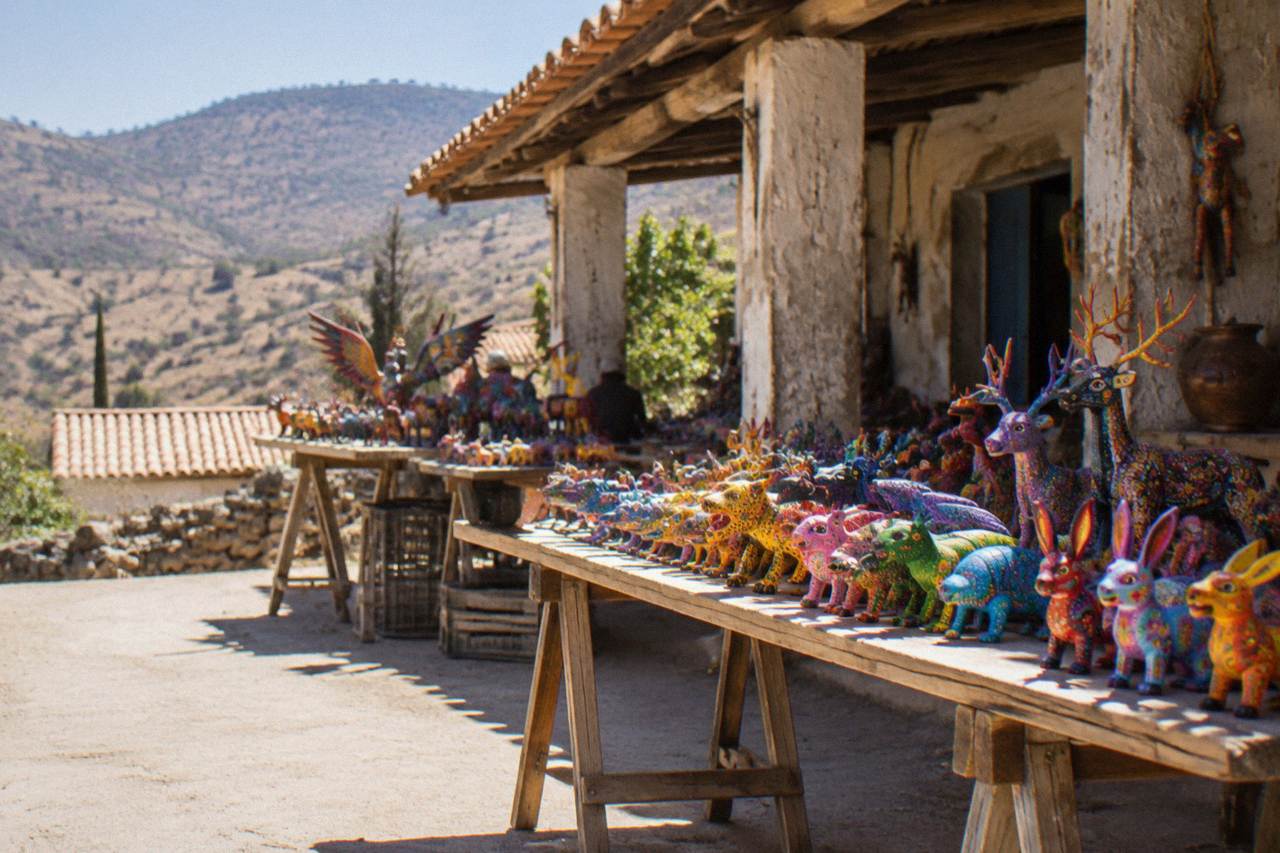
The souvenirs Oaxaca City is known for are alebrijes from San Martín Tilcajete, barro negro black pottery from San Bartolo Coyotepec, hand-woven wool rugs from Teotitlán del Valle, mezcal from Santiago Matatlán, Oaxacan chocolate, and market foods such as dried chiles, mole pastes and quesillo, and all of them except the perishables travel well in a suitcase.
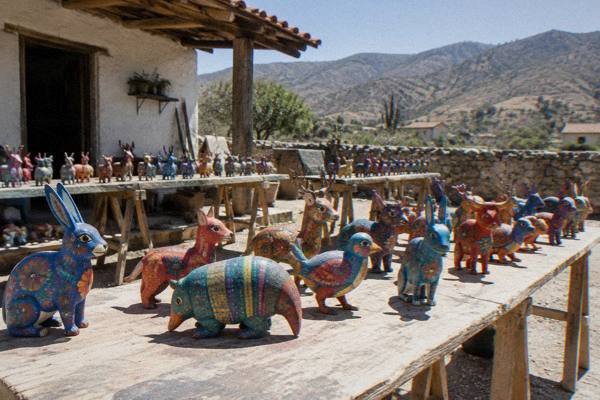
Each of those categories has a town attached to it, which is what separates Oaxaca shopping from most souvenir shopping. An alebrije bought in the city is likely to have been carved and painted in San Martín Tilcajete or by a family connected to it. The same logic applies to the rugs of Teotitlán del Valle and the barro negro of San Bartolo Coyotepec, and a visit to any of those towns puts you in front of the people who make the work rather than a reseller. The crafts route is a well-trodden one, and several operators run it as a day trip that strings the towns together.
Mezcal is the other headline purchase. Santiago Matatlán is described in state communications as the world capital of mezcal, and the town sits beyond Mitla at the eastern end of the Tlacolula Valley. Bottles bought at a palenque or in the city need to travel in checked luggage, and the box they come in is usually built for exactly that. Chocolate, dried chiles, mole pastes and coffee are lighter, cheaper to post and just as specific to the region.
For a first orientation before you buy anything, a guided walk works well: the two-hour Oaxaca walking tour covers culture and food around the centre and finishes you within walking distance of the market district, and you can Check availability on the operator's booking page.
What Is Worth Bringing Back From Oaxaca?
The purchases most worth bringing back from Oaxaca are a painted alebrije, a piece of barro negro pottery, a wool rug from Teotitlán del Valle if your luggage allows, a bottle of mezcal from a palenque or a reputable shop, ground Oaxacan chocolate, and a bag of dried chiles or a mole paste, because every one of these is made in a named valley community and cannot be bought in the same form anywhere else.
Work down that list by practicality. Small alebrijes and barro negro pieces fit in a carry-on with clothing packed around them; rugs roll and can go in the suitcase core or a dedicated duffel; mezcal must fly checked and sealed; chocolate, chiles and pastes are the cheapest way to carry the region's flavour home and make good gifts for people who will not fit a rug into their lives. Chapulines, the toasted grasshoppers sold in the city's markets, are a famously Oaxacan item too, though they are an acquired taste and do not keep indefinitely.
Ask before photographing inside family workshops, and expect cash to be preferred in the villages. Workshop etiquette of that kind is standard across the valley craft towns. If you want a day that combines the ruins with the two most portable crafts, alebrijes and black pottery, the Monte Albán, alebrijes and black clay day trip exists for exactly that combination.
Which Craft Villages Should You Buy From?
The main craft villages to buy from around Oaxaca City are Teotitlán del Valle for wool rugs, San Martín Tilcajete for alebrijes, San Bartolo Coyotepec for barro negro pottery, Santa María del Tule on the way east, and Ocotlán de Morelos for its Friday-market crafts and knives, and each can be reached in well under an hour of driving from the Zócalo.
The drive times below are free-flow estimates computed from the Zócalo; real traffic and mountain roads make them slower, so treat them as floors, not promises.
| Craft village | Known for | Drive from the Zócalo |
|---|---|---|
| Teotitlán del Valle | Hand-woven wool rugs and textiles | about 26 minutes |
| San Martín Tilcajete | Carved and painted alebrijes | not measured |
| San Bartolo Coyotepec | Barro negro black pottery | not measured |
| Santa María del Tule | The Tule tree and craft stalls | about 11 minutes |
| Ocotlán de Morelos | Friday market, knives and crafts | about 37 minutes |
| Tlacolula de Matamoros | Sunday market and valley goods | about 25 minutes |
Buying at the source does two things. It puts the money with the makers, and it lets you see the work in progress, which in Teotitlán means dyeing and looms and in Tilcajete means carving and fine brushwork. Readers planning the full loop will find detail in the site's guides to Teotitlán del Valle, San Martín Tilcajete and San Bartolo Coyotepec, each of which covers its town in more depth than this page can.
If you would rather have someone else drive the valley, the organized options are strong. The crafts-route tour to San Martín Tilcajete, Jalieza and Ocotlán strings three towns into one day, and the alebrije-painting workshop in Tilcajete with pickup turns the souvenir into something you painted yourself.
Where Should You Shop Inside Oaxaca City?
Inside Oaxaca City, the places to shop are the Mercado Benito Juárez and Mercado 20 de Noviembre pair just south of the Zócalo, the Mercado de Abastos on the city's edge for volume and wholesale, and the blocks of the Andador Macedonio Alcalá and the Jalatlaco and Xochimilco neighbourhoods for galleries, print workshops and higher-end craft shops.
The two centre markets split the work between them: Benito Juárez for food, chocolate, chiles, crafts and general mercantile stock, and 20 de Noviembre next door for cooked food and the smoke hall of grilled meats. Abastos, the big wholesale market, is where restaurant buyers go and where the same goods cost less, though it demands more Spanish and more patience. The city's printed-art scene is a quieter souvenir category that deserves a mention: print workshops in the centre sell original prints at prices that embarrass a poster shop, and a printed piece is flat, light and genuinely of the place. The wider set of guides lives on Oaxaca Travel Guide.
A guided food-and-markets walk is the efficient way to learn the market before you buy in it, since a local guide can name what each stall sells and which chile is which. Pair the shopping with the wider question of is Oaxaca worth visiting if your trip is still at the planning stage.
Does Mezcal And Food Travel Home Well?
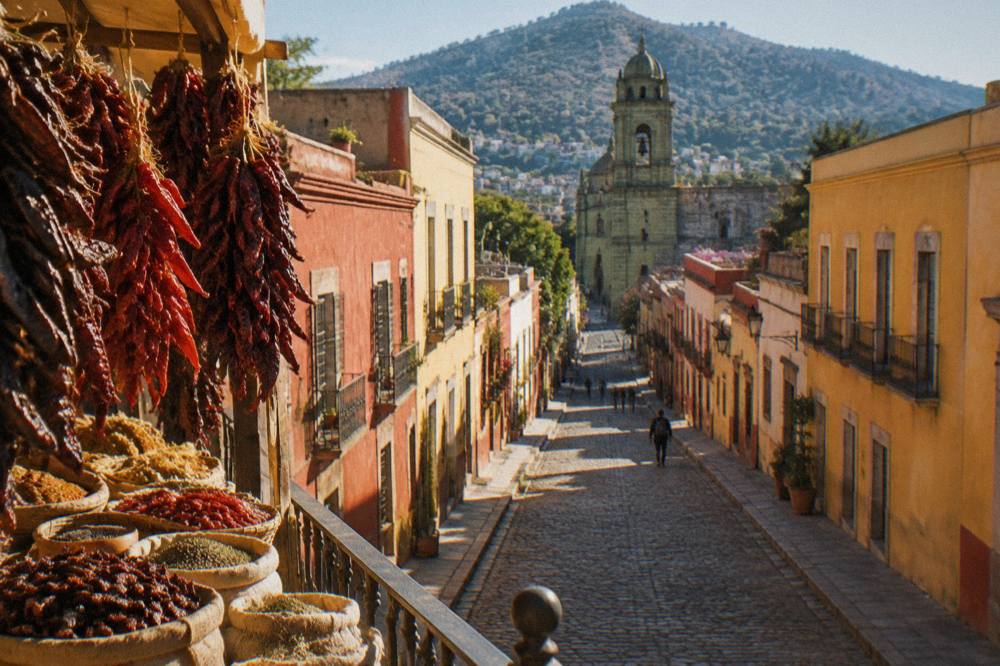
Mezcal travels home well in checked luggage if the bottle stays sealed and padded, chocolate and dried chiles travel extremely well, mole pastes travel well in sealed bags, and quesillo is the one famous Oaxacan food that does not travel, because it is a fresh string cheese meant to be eaten within days.
On liquids and customs, keep it deliberately short: check your airline's checked-baggage rules and your home country's customs allowance for alcohol before you buy, because those limits are set outside Mexico and change. What can be said firmly is practical. Palenques and shops in Oaxaca sell mezcal in boxes designed for transport, wrapping the bottle in clothing inside a hard suitcase is the standard method, and the wax-sealed tops common on artisanal bottles survive travel better than corks.
For the food buys, a simple rule holds: the drier it is, the better it flies.
| Item | How it travels | Best bought as |
|---|---|---|
| Dried chiles | Excellent; light and stable | Bulk bag, market stall |
| Oaxacan chocolate | Excellent in tablet form | Sealed tablets, market or mill |
| Mole paste | Very good when sealed | Vacuum bag or jar |
| Coffee | Excellent | Sealed bag, roasted to order |
| Mezcal | Good in checked luggage | Sealed bottle, boxed |
| Quesillo | Poor; fresh and perishable | Eat it in Oaxaca |
Chocolate deserves a special word, since Oaxacan chocolate is traditionally sold as hard tablets for dissolving into drink rather than as eating bars, and the market mills will grind cocoa with almonds, cinnamon and sugar to your own recipe while you wait. That custom, not a factory wrapper, is what you are carrying home. The site's guide to Oaxacan chocolate covers it properly.
Should You Buy On A Tour Or On Your Own?
Buying on a tour suits the craft villages, because a tour puts you inside family workshops in Teotitlán del Valle, San Martín Tilcajete and San Bartolo Coyotepec that an independent visitor would struggle to find, while buying on your own suits the city markets, where a guide adds context but the stalls need no introduction and bargaining is a matter of taste and Spanish.
The honest split is that workshops, not stalls, are what tours unlock. An alebrije family will show the carving and painting to a group that arrives with a driver they know; a walk-in visitor gets the shop. The same goes for weaving demonstrations in Teotitlán and the pottery kilns of Coyotepec. Inside the city, by contrast, the Mercado Benito Juárez and 20 de Noviembre are public spaces, and the money saved on not touring can go into the shopping.
The walks and market tours in the band above cover the two halves of that split, and each links through to its own page with what it covers and where it starts.
Common Questions About Bringing Souvenirs Back From Oaxaca
What Is Worth Bringing Back From Oaxaca?
An alebrije from San Martín Tilcajete, barro negro pottery from San Bartolo Coyotepec, a wool rug from Teotitlán del Valle, a sealed bottle of mezcal, Oaxacan chocolate tablets, and a bag of dried chiles or a mole paste. Each is made in a named valley community and none of them, except the quesillo, needs to be eaten before you fly.
Is Mezcal Allowed In Checked Luggage From Oaxaca?
Airlines generally allow sealed alcohol bottles in checked luggage, but the allowance and your home country's customs limit are set outside Mexico, so check both before you buy. Palenques and shops sell boxed bottles built for transport, and padding the bottle inside a hard suitcase is the standard method.
Where Do You Buy Alebrijes Near Oaxaca City?
San Martín Tilcajete is the alebrije town, and family workshops there sell directly to visitors. Alebrijes are also sold in the city's markets and craft shops, though buying in the village puts the purchase closer to the makers.
What Food Gifts Travel Best From Oaxaca?
Dried chiles, chocolate tablets, mole pastes and roasted coffee all fly well because they are dry and stable. Quesillo, the region's fresh string cheese, does not travel and is better eaten in Oaxaca.
Is Barro Negro Fragile For Travel?
It is pottery, so it needs wrapping, but small and medium barro negro pieces from San Bartolo Coyotepec pack safely in clothing inside a hard suitcase. The workshops sell pieces across sizes, and choosing with your return flight in mind keeps the risk low.
Whatever ends up in the suitcase, the purchases that last are the ones with a town and a maker behind them: an alebrije from Tilcajete, a rug from Teotitlán, a black clay bowl from Coyotepec, a sealed bottle from the Matatlán valley, and a bag of chiles from a market stall south of the Zócalo.