Is Queso Oaxaca Vegetarian?
A clear answer on whether queso Oaxaca (quesillo) is vegetarian, how it is made, what to ask in Oaxaca City markets, and where vegetarians eat well in the city.
Oaxaca City, the inland highland capital of the state of Oaxaca in Mexico, is famous for a cheese that carries its name: queso Oaxaca, the braided ball of stretchy white cheese known locally as quesillo. Visitors who do not eat meat often ask one specific question about it, and the honest answer is not a simple yes or no. It depends on how the curd was set, and that is decided at the dairy, not at the market stall. This page sets out what quesillo is, why rennet decides its vegetarian status, what to ask a vendor in the markets of Oaxaca City, and how the city feeds vegetarians generally, with a look at a cooking class that builds a whole menu around the question.
The stakes are low for a casual traveller and higher for a strict vegetarian, which is why the distinction deserves a page of its own rather than a one-word answer. Someone who eats cheese produced with animal rennet at home will eat quesillo in Oaxaca City without a second thought. Someone who checks labels for microbial rennet in their own country is applying the same standard here, and the standard points at the same ingredient. The cheese itself, its history in the market and its role in the city's cooking, is not in dispute; only the coagulant is.
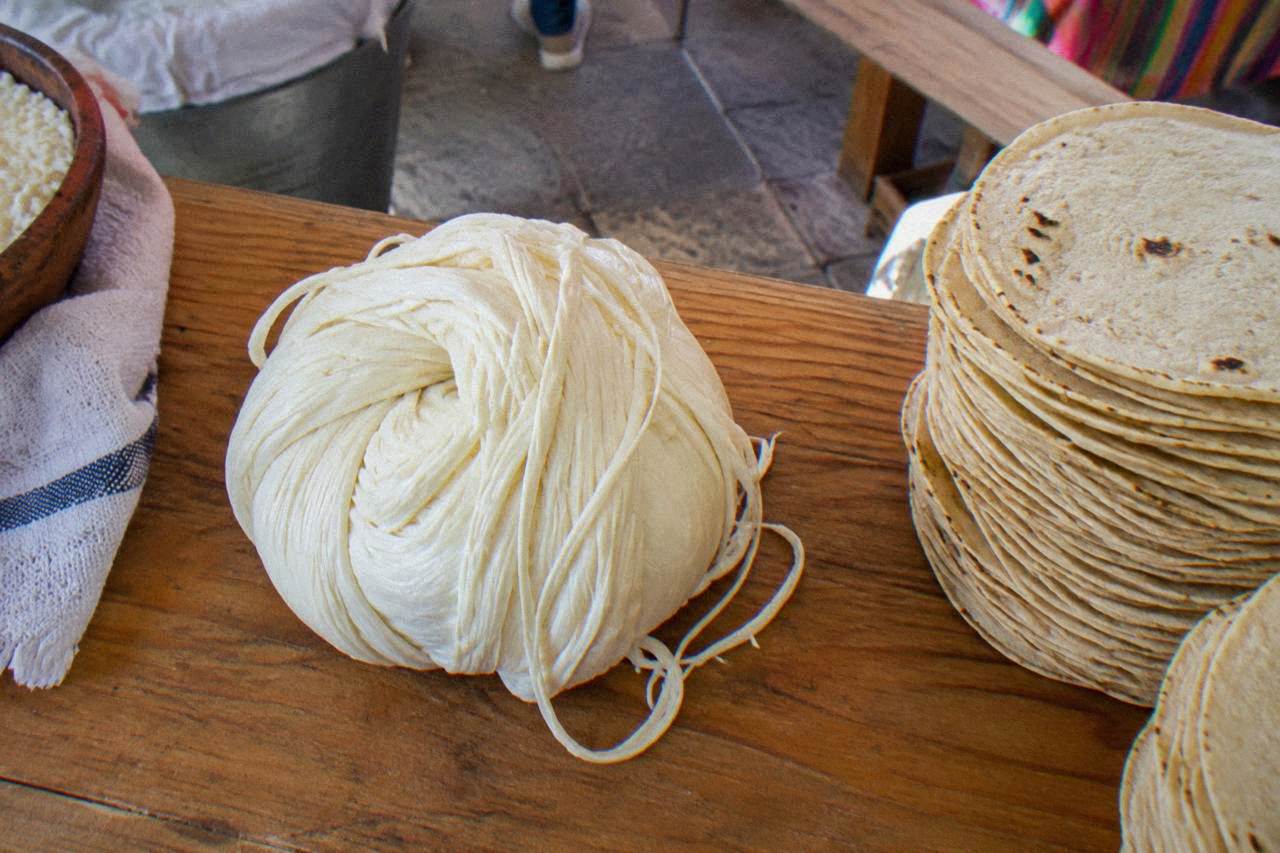
Queso Oaxaca is not reliably vegetarian. It is vegetarian only when the curd is set with a non-animal rennet, and traditional quesillo is set with animal rennet, so a vegetarian cannot assume a market ball is safe to eat. The practical rule in Oaxaca City is to ask before buying, and to treat unlabelled quesillo as not vegetarian unless a producer states otherwise.
The reason is the coagulant. All cheese needs something to set the milk, and rennet is the classic setting agent. Rennet of animal origin comes from the stomach of a young ruminant, which puts it outside most vegetarian definitions even though the finished product contains no meat. Microbial and vegetable rennets exist and produce legitimate pulled-curd cheese, and some producers use them, but nothing about the look, the stretch or the taste of a ball of quesillo tells you which one was used. A vendor who buys from a small local dairy may genuinely not know.
That is why the question is worth asking in person rather than settling from a distance. In the markets of Oaxaca City, including Mercado 20 de Noviembre and the central market area, the person behind the counter is usually the fastest route to an answer. A cheese labelled with an ingredient list, as supermarket versions are, will name the coagulant, and microbial rennet or "cuajo microbiano" on the label is the sign a vegetarian is looking for.
A useful habit is to ask the same question at every stall rather than deciding once. Two stalls ten steps apart in the same market can stock cheese from different dairies, and an answer that held on Monday can be stale the following week if a stall changes supplier. Regulars who cook with quesillo at home in Oaxaca City tend to settle on one stall they trust and stick to it, which is the same behaviour a vegetarian visitor is copying when they ask twice.
| Question to ask | In Spanish | What the answer tells you |
|---|---|---|
| What rennet is used? | ¿Qué cuajo usan? | Names the coagulant: animal, microbial or vegetable |
| Is the cheese made with animal rennet? | ¿El queso lleva cuajo animal? | A direct yes or no on vegetarian status |
| Does the label say? | ¿La etiqueta lo dice? | Packaged cheese lists the coagulant |
| Do you know the producer? | ¿Conoce al productor? | Small stalls may know the dairy directly |
| Is there another brand? | ¿Hay otra marca? | Opens the option of a different dairy's quesillo |
What Is Queso Oaxaca Made From?
Queso Oaxaca is a pulled-curd cheese made from milk, and the question for vegetarians is the curdling agent rather than the milk itself. The curd is heated, stretched and rolled into the braided ball that markets sell by weight, and the coagulant that formed the curd is the single ingredient that decides whether a vegetarian can eat it.
The making of the cheese is a stretching process. Once the curd sets, it is worked in hot water until it becomes elastic, then rolled into long ribbons and wound into the characteristic skein. That texture is what melts so well onto a tlayuda and pulls in strings inside a quesadilla. Nothing in the stretching stage involves meat, and the finished cheese is not aged with any animal product. The whole vegetarian question therefore collapses onto one ingredient line, the rennet, and onto whether the producer used an animal or a non-animal form of it.
It helps to separate the two objections a vegetarian might have. An objection to meat in the dish is not triggered by quesillo at all, since the cheese contains none. An objection to animal-derived ingredients beyond meat is triggered by animal rennet and by nothing else in a plain ball of quesillo, because the remaining ingredients are milk and salt. That narrowness is good news: one question, asked once at the stall, resolves the entire issue for that purchase.
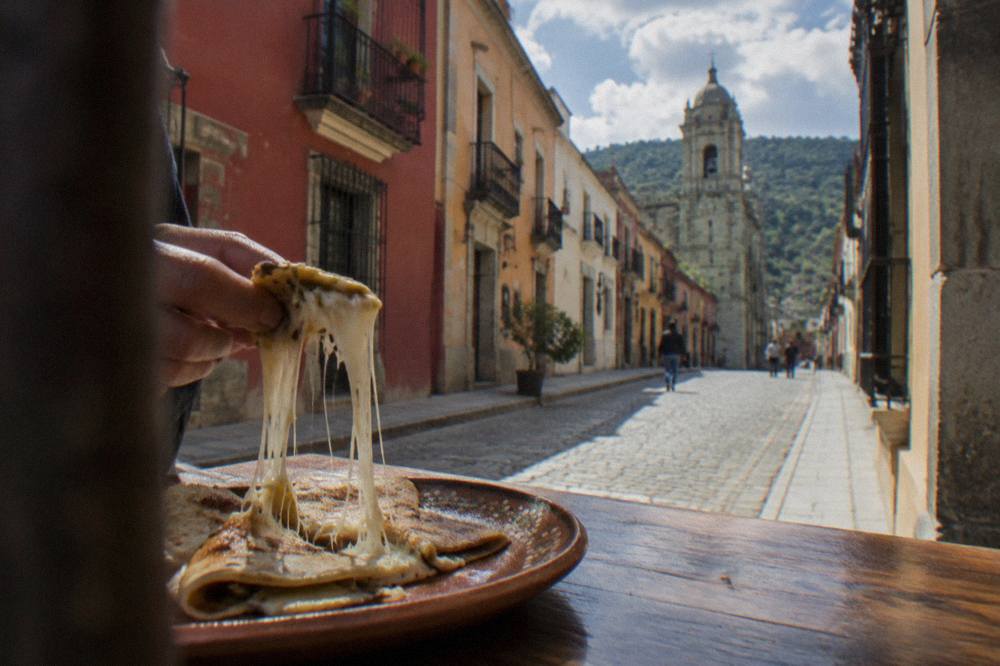
For context on how the cheese fits the wider table, what food Oaxaca is famous for runs through the city's staples, and quesillo threads through many of them. It is the cheese of the tlayuda, the empanada de quesillo and the quesadilla, and it appears shredded over beans and inside memelas. A vegetarian who establishes that one cheese is safe unlocks a large slice of the market menu, while one who cannot confirm it eats around a lot of dishes.
Where To Eat Quesillo In Oaxaca City As A Vegetarian?
The workable approach in Oaxaca City is to ask at the point of sale, buy labelled cheese where possible, and let market vendors and cooks tell you what they use. Markets such as 20 de Noviembre and Benito Juárez, plus the city's vegetarian-forward restaurants, are the places where the rennet question gets a real answer rather than a guess.
In the markets, ask the cheese stall directly using the phrases above. Stalls that sell to restaurants usually know their supplier, and some stock more than one producer's quesillo. Restaurants are a second line of questioning: a cook who makes quesadillas to order knows what cheese is in the kitchen, and asking "¿el quesillo lleva cuajo animal?" gets a straight answer far more often than silence does. The third route is packaged cheese from a shop, where the ingredient list states the coagulant and the guesswork ends. Other pages covering the same trip are gathered on Oaxaca Travel Guide.
The restaurant route deserves a note on timing. A kitchen in the middle of a rush answers a rennet question more briefly than the same kitchen at a quiet hour, and a vegetarian who cares about the answer is better served asking when the cook has a spare minute to check the packaging in the back. Street stalls that buy their quesillo daily from one dairy are often the easiest cases, because there is a single supplier and one answer covers everything on the griddle.
Cooking classes are a useful shortcut, because the instructor buys the ingredients and answers questions in context. A class that shops the market first and cooks a vegetarian menu afterwards covers both halves of the question, and the Check availability link shows the current dates for a vegetarian class with a market visit, taught in the city centre. The class page prints its own price and times, so nothing here needs to be guessed.
Can Vegetarians Eat Well In Oaxaca City?
Yes. Oaxaca City feeds vegetarians well even without the cheese, because the market table runs on beans, corn, chiles, vegetables and herbs, and dishes such as tlayudas, memelas and vegetable mole variants can be built without meat or ordered without quesillo. The rennet question narrows the cheese selection, not the cuisine.
The city's markets sell tasajo, cecina and chorizo alongside their vegetable stalls, but the plant side of the menu is deep. Corn arrives as tortillas, tlayudas, memelas and empanadas; beans and quesillo are the classic toppings; salsas run from mild to fierce; and dishes such as molotes, nopales and the region's moles have entries that contain no meat. A vegetarian who skips uncertain cheese still eats a full plate. The deeper guide to vegetarian and vegan food in Oaxaca maps the restaurants and market stalls that cook this way on purpose rather than as an accommodation.
Two cautions make the difference between a good week and a frustrating one. First, "sin carne" does not mean "sin quesillo": a tlayuda ordered without meat will usually still arrive with cheese unless you also say "sin quesillo". Second, lard is used in some market cooking, so vegetarians who avoid it should ask "¿usan manteca?" before assuming a bean dish is plant-based throughout. Both questions are ordinary in Oaxaca City and vendors answer them daily.
A vegetarian travelling with mixed company has an easy time of it in this city, because the same stall usually serves both diets from the same griddle. One person orders the tlayuda with tasajo, the other orders it plain with beans and salsa, and nobody needs a separate restaurant. That flexibility is one of the quiet advantages of a market-based food culture over a fixed-menu one.
Is Queso Oaxaca The Same As Quesillo?
Yes, in Oaxaca City the two names refer to the same pulled-curd cheese, with quesillo the local word and queso Oaxaca the name used elsewhere in Mexico and abroad. Visitors who ask for quesillo at a market stall in the city will be handed exactly the braided white cheese this page is about.
The naming matters for one practical reason: a shopper who asks a stall for "queso Oaxaca" in Oaxaca City will be understood, but the local term is the one on hand-written price signs and the one cooks use when they order. Beyond the city, and in exported packets, the same cheese travels under the Oaxaca name, which is how the question "is queso Oaxaca vegetarian?" is phrased by visitors from outside Mexico even though the rennet question is identical either way.
Neither name tells you anything about the coagulant, which is the small trap inside the naming question. A packet printed with the quesillo name and a packet printed with the queso Oaxaca name can come from the same dairy or from two dairies with two different rennets, so the label to read is the ingredient list, not the front of the package. Travellers who photograph an ingredient list they cannot parse and ask their cooking instructor the next morning are using the city's own teachers as their translation layer, which works.
For travellers whose interest in the city runs wider than one cheese, the overview of what Oaxaca is famous for covers the markets, the archaeology and the mezcal in one place, and the question of whether Oaxaca is worth visiting is a fair next stop.
Common Questions About Queso Oaxaca
Is Queso Oaxaca Vegetarian?
Not reliably. Queso Oaxaca is vegetarian only when the curd is set with a microbial or vegetable rennet, and traditional quesillo uses animal rennet. Ask the vendor or read the label before buying.
Does Queso Oaxaca Contain Meat?
No. The finished cheese contains no meat, but animal rennet, the coagulant used to set the curd in traditional production, is an animal product, which is why many vegetarians still avoid it.
How Do I Ask About Rennet In A Oaxaca Market?
Ask "¿qué cuajo usan?" or "¿el queso lleva cuajo animal?". Stallholders answer these questions routinely, and packaged cheese names the coagulant on the ingredient list.
Is Quesillo The Same Cheese As Queso Oaxaca?
Yes. Quesillo is the local name in Oaxaca City and queso Oaxaca is the name used outside the region for the same pulled-curd, braided white cheese.
Can Vegetarians Eat Tlayudas In Oaxaca City?
Often, with modifications. A vegetarian tlayuda needs no meat by request and no quesillo if the cheese's rennet is uncertain, and asking "sin carne, sin quesillo" covers both at the stall.
Are There Vegetarian Cooking Classes In Oaxaca City?
Yes, the city has classes built around vegetarian menus, some with a market visit first, and the operator's booking page shows current dates and prices.
The short version stands: queso Oaxaca is vegetarian when its rennet is, the label or the vendor settles it in one question, and Oaxaca City's market table keeps vegetarians fed either way.